
Innovation at the Scalpel Edge: Competition in Surgical Robotics
Prometheus memorably depicts an automated robot removing an alien embryo. Real laparoscopic systems such as da Vinci are principally surgeon-controlled assistance platforms, rather than film-like devices that diagnose and operate autonomously.
FDA clearance in 2000 supported commercialisation of da Vinci-assisted laparoscopy. Three-dimensional imaging, high-definition display and articulated instruments assist surgeons. The original forecast of 35% of operations within five years lacks a verifiable citation and baseline year and is not a current utilisation statistic.
Surgical robotics became a prominent medical-equipment sector, offering possibilities for further change in surgery.

Laparoscopic surgical robots: technology at the scalpel edge
01: From laparoscopy to robotic assistance
Laparoscopic surgery became prominent in the 1980s. Conventional multiport surgery generally uses three to five small incisions for a camera and instruments.
Compared with open surgery in suitable cases, multiport laparoscopy can reduce pain, shorten hospital stays and improve the appearance of incisions.
Laparoscopy can still cause bleeding, infection or organ injury. Pneumoperitoneum normally creates operative space and is not itself a postoperative infectious complication. Long-shafted instruments constrain dexterity and hand-eye coordination, requiring training in precise manipulation and visual judgement.
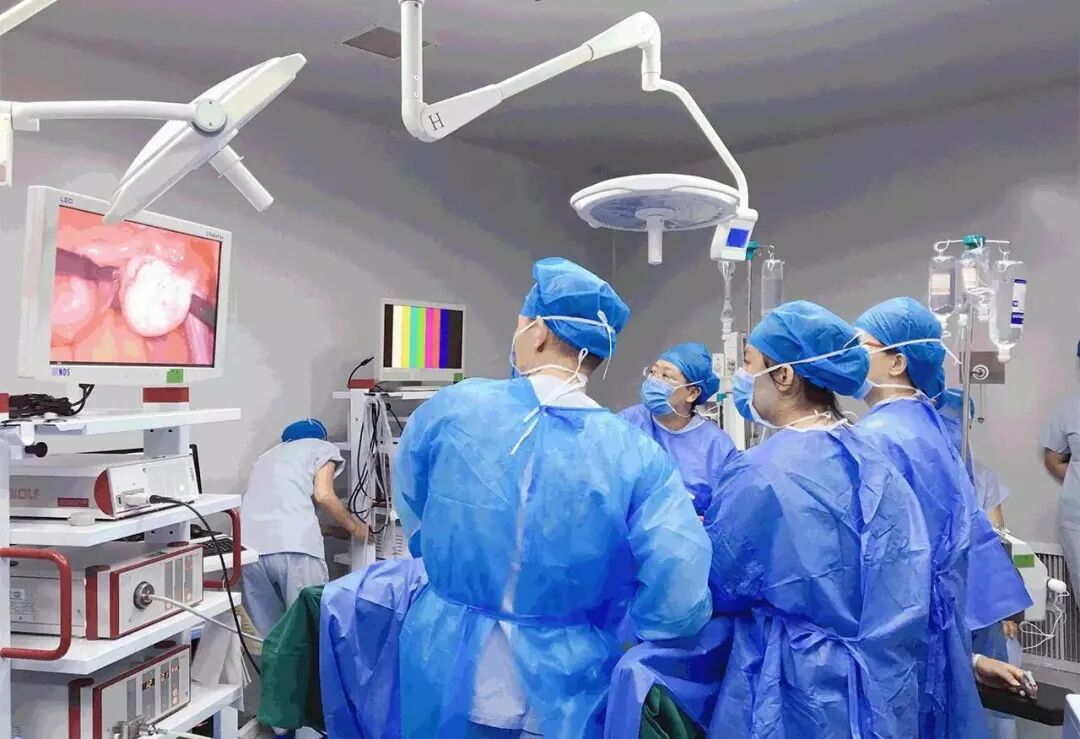
Da Vinci received US FDA clearance in 2000 and subsequently expanded its indications; its initial clearance was not limited to prostate cancer. It developed into a widely used robot-assisted laparoscopic platform.
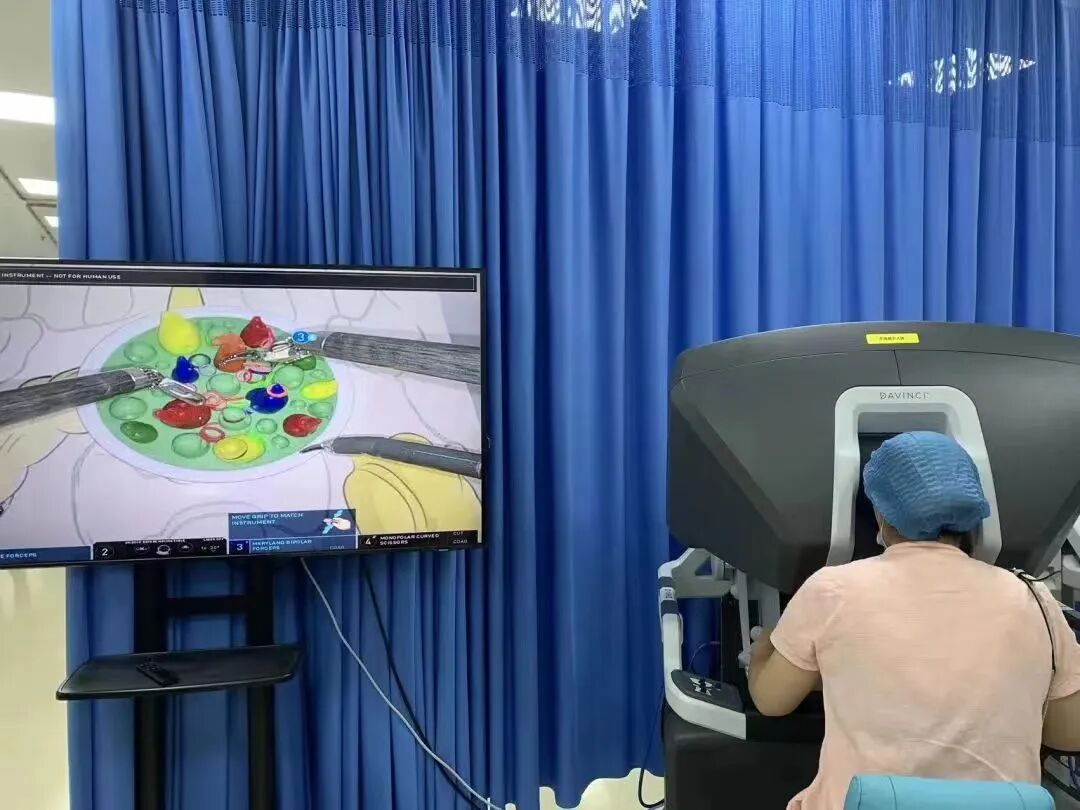
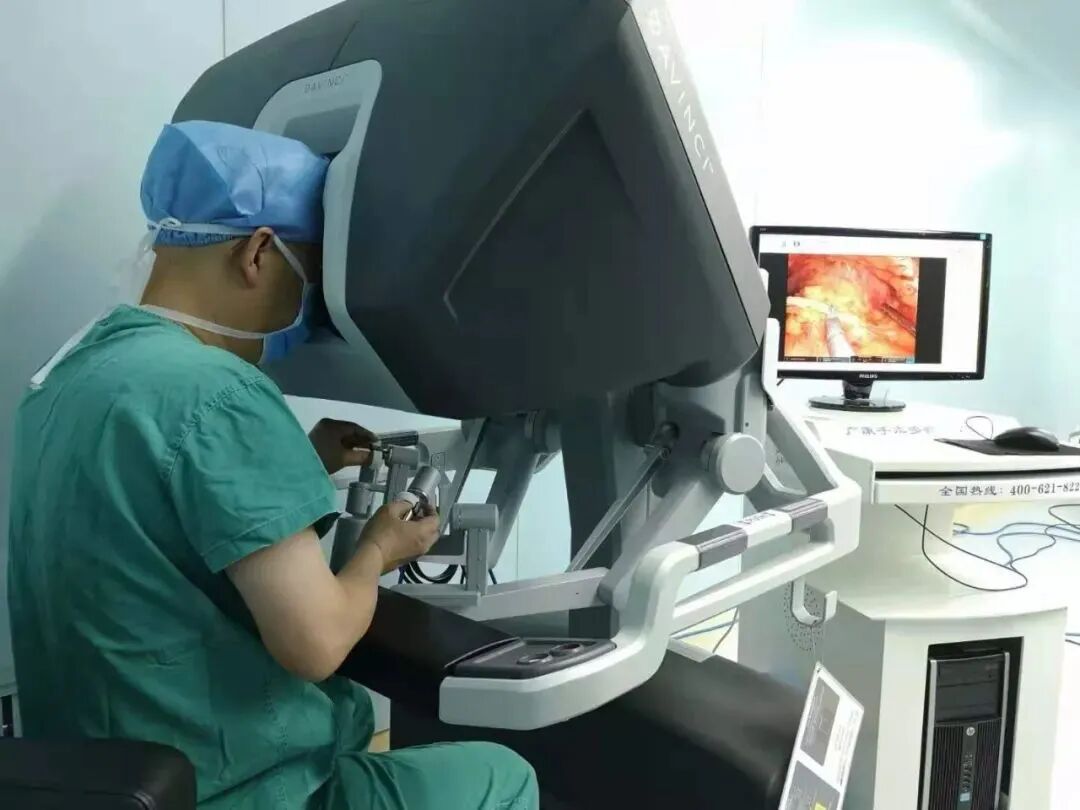
A console, support structures and tremor filtering can reduce operator burden and stabilise movements. Whether postoperative complications decrease depends on the procedure, patient and comparative evidence, rather than device functions alone.
02: Urology, gynaecology and general surgery
Urology includes familiar robotic procedures such as radical prostatectomy and partial nephrectomy. The original reports US robotic prostatectomy adoption above 70%.
Gynaecological uses include some benign and cancer-related procedures, supported by three-dimensional views and articulated instruments. This does not mean most operations are suitable or universally improved. Cervical-cancer radical surgery requires particular attention to oncological outcomes of minimally invasive versus open approaches. FDA has cautioned that device clearance does not establish long-term safety or effectiveness for every cancer treatment.
General-surgery applications include gastrointestinal, liver, biliary and pancreatic procedures, with increasing US use in hernia repair.
Intuitive, Medtronic and Johnson & Johnson compete
01: Intuitive and the da Vinci market position
Intuitive was founded in 1995, and the da Vinci family continued to develop dexterity, imaging and ergonomics. The original already-fifth-generation claim is inconsistent with its roughly 2022 context: da Vinci 5 received FDA clearance on 14 March 2024, a later development.
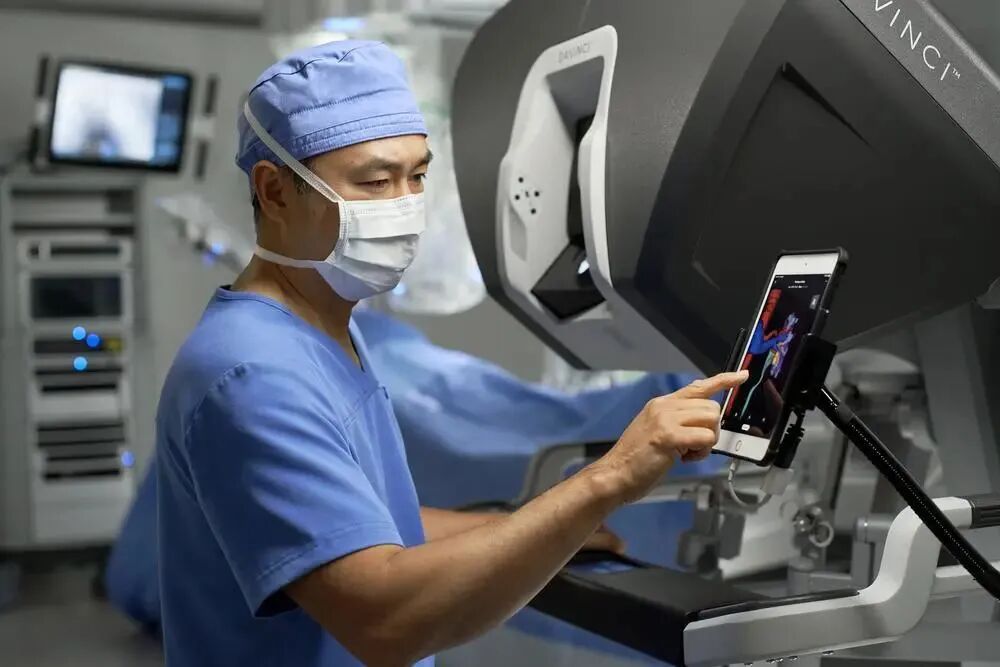
Da Vinci comprises a surgeon console, patient-side arms and imaging components, providing fine control, stereoscopic views and tremor filtering. It remains surgeon-operated and carries device and procedural risks; universal safety superiority or better outcomes cannot be guaranteed.
Video 1: Da Vinci robotic instruments
Key features include articulated EndoWrist instruments, high-definition three-dimensional imaging and console interaction. Wristed instruments extend dexterity and reach; magnified stereoscopic views support visibility; ergonomic controls reduce fatigue and filter tremor or unintended movement.
The original compares an approximately US$1.5 million US price with roughly US$3.5 million for a third-generation four-arm system in China, describing limited hospital bargaining power and high acquisition costs.

Video 2: A da Vinci system peeling a crayfish
02: Medtronic strategy
Medtronic was founded in 1949. Its Hugo robotic-assisted surgery system received European CE marking on 11 October 2021.
European hospitals began installing Hugo, expanding access to robotic-assisted procedures. The original interprets its entry as a challenge to long-standing da Vinci market dominance.
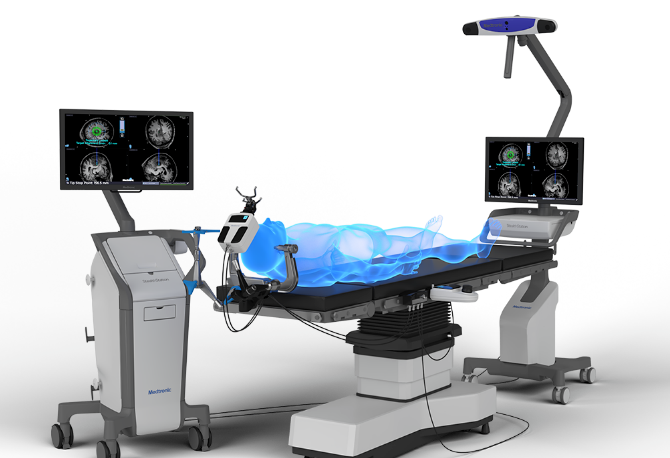
Hugo was designed to address cost and utilisation barriers. Its modular configuration includes a tower, console and independent arm carts, allowing flexible movement and potentially reducing the need for a separate fixed system in each operating room.
03: A prospective entrant from Johnson & Johnson
Johnson & Johnson was established in 1886. The original reports its November 2020 unveiling of a six-arm OTTAVA laparoscopic-robot concept.
The original describes an early six-arm OTTAVA concept with goals of table integration, limited extra floor space and improved workflow. These were not established approved clinical uses at the time. The subsequent 2023 design from Johnson & Johnson used four arms; this article preserves the earlier context.

Its integrated-table concept differs from the da Vinci boom configuration and modular Hugo carts. The original anticipates space and workflow benefits, mobility and support for several procedure types, potentially avoiding separate robots and costs.
MicroPort, KangDuo and WEGO enter the field
01: A Chinese-developed MicroPort system
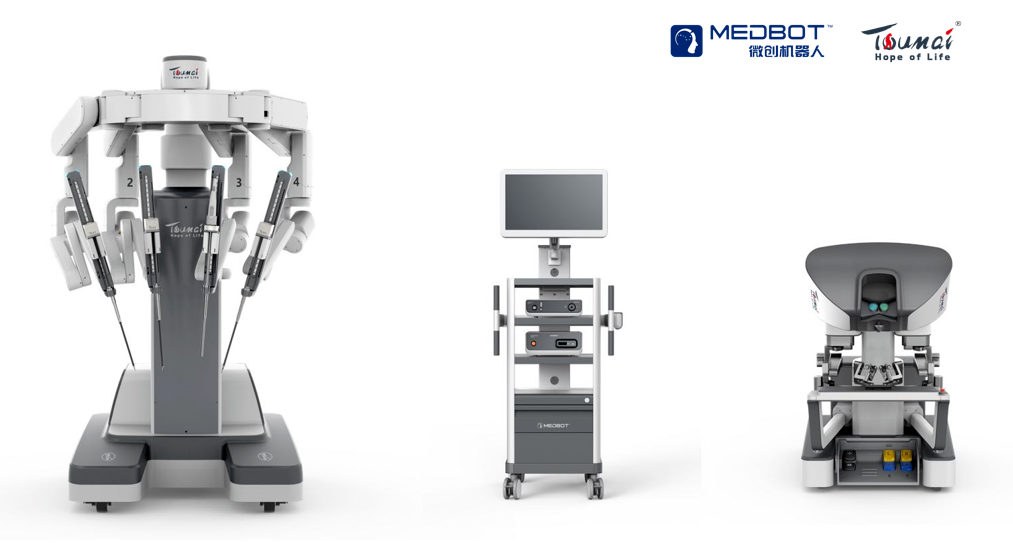
On 27 January 2022, MicroPort announced Chinese regulatory approval for its Toumai laparoscopic robot, describing it at that time as the first and only approved Chinese-developed four-arm system.
Toumai provides three-dimensional views and flexible wristed instruments. The original cites clinical trials supporting safety and effectiveness and hopes it will increase competition in China.
5G can support a specialist at a remote console and exploration of services for distant communities. The patient must still be in a qualified medical facility with anaesthesia, emergency support and an on-site team, rather than receive surgery at home. Network reliability, authorisation and contingency plans remain essential.
It reports two long-distance urological operations in June 2022 between Kizilsu in Xinjiang and Nanjing, nearly 5,000 kilometres apart, calling them the longest 5G robotic procedures in the world at the time.
02: KangDuo in urological surgery
Suzhou KangDuo was registered in 2014, and the original reports Chinese regulatory approval for its laparoscopic robot in June 2022.
Its system includes a surgeon console, multi-arm robot, multi-degree-of-freedom instruments, high-definition 3D vision and supporting equipment. The surgeon views anatomy stereoscopically and moves master controls to guide patient-side instruments.
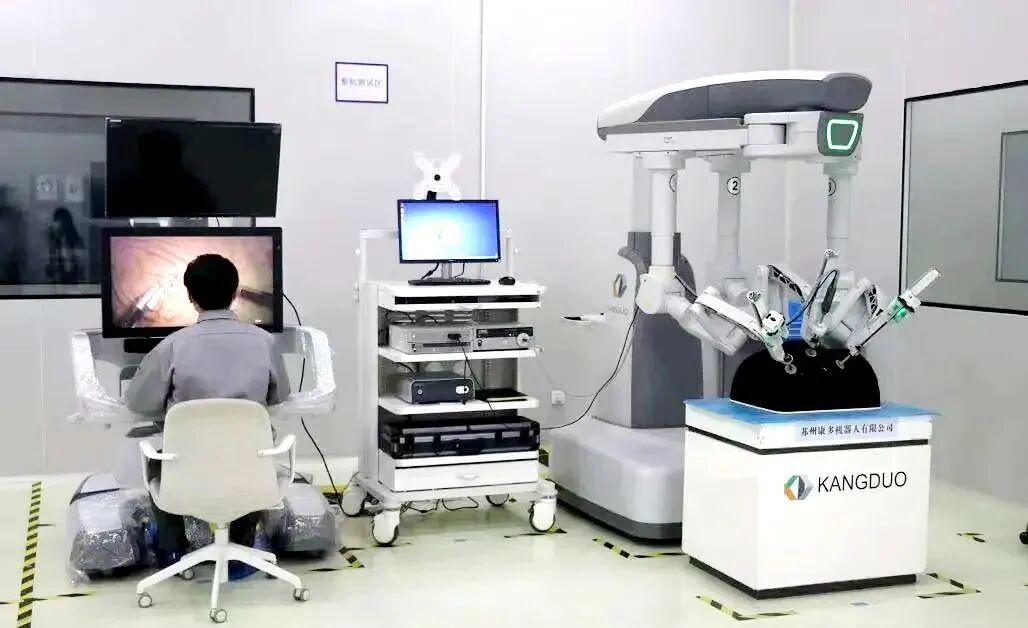
The original highlights dexterity, precision and an open dual-screen 3D console. A seven-degree-of-freedom master controller maps hand position and orientation, filtering tremor to support stable manipulation.
The original describes 540-degree instrument-tip rotation and an open dual-screen console as product functions. The ergonomic design aims to improve posture and comfort; it does not directly prove prevention of eye, neck or lumbar injury.
03: The WEGO platform
The original reports that WEGO laparoscopic endoscopic equipment received Chinese regulatory approval on 27 October 2021 and calls it the first domestic approved system.
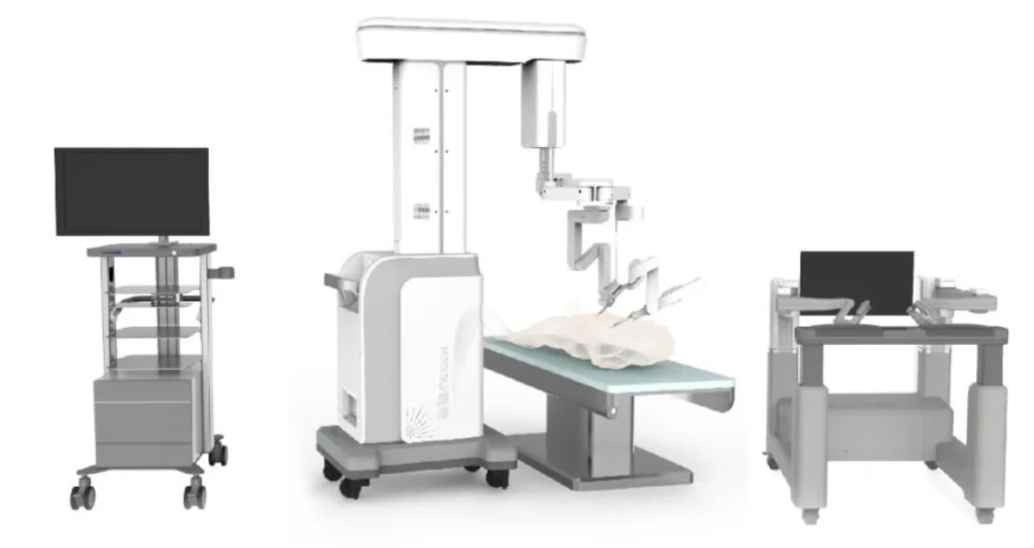
The system uses master-slave control and cable-driven instruments with multiple degrees of freedom, intended to improve dexterity. Folding arms support compactness and lower weight; mapping between master and slave separates position and orientation control. The original anticipates fewer complications, better quality of life, less fatigue and lower cost.
04: Policy support and domestic development
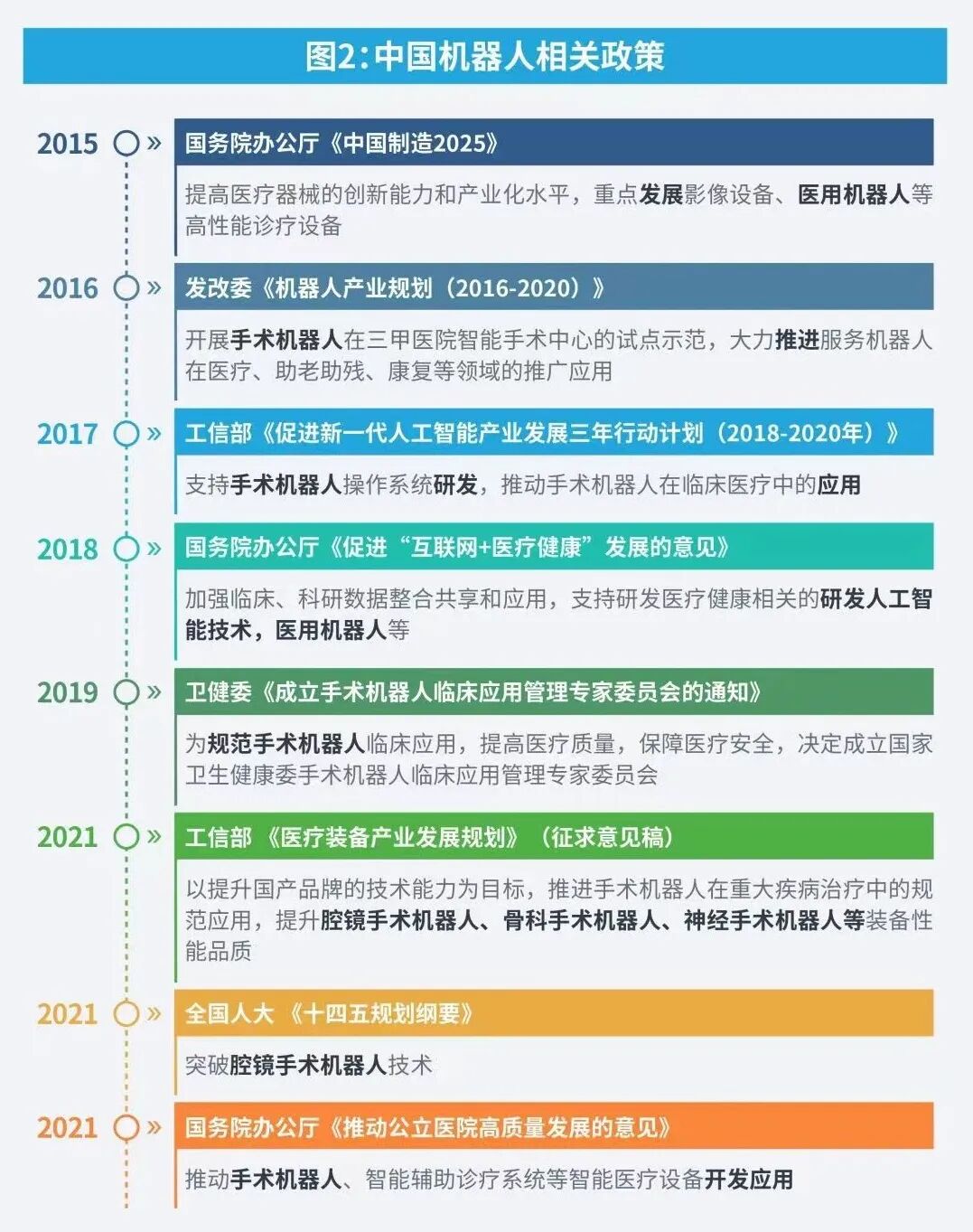
The Shanghai 2021 notice classified specified AI-assisted treatment as Category B for radical prostatectomy, partial nephrectomy, hysterectomy and radical rectal-cancer surgery, with a 20% initial patient-paid share for that item. It does not mean every patient pays only 20% of the whole operation. Other insurance rules and costs apply, and the historical notice is not a current benefits check.
The article argues that market expansion and policies encouraging domestic alternatives may increase adoption and competition with imported systems.
Competition and constraints
01: Growth potential in the Chinese market
Surgical robotics has several decades of overseas use. The original identifies the 2006 acquisition of a da Vinci system at Beijing 301 Hospital as an early milestone in Chinese clinical adoption.
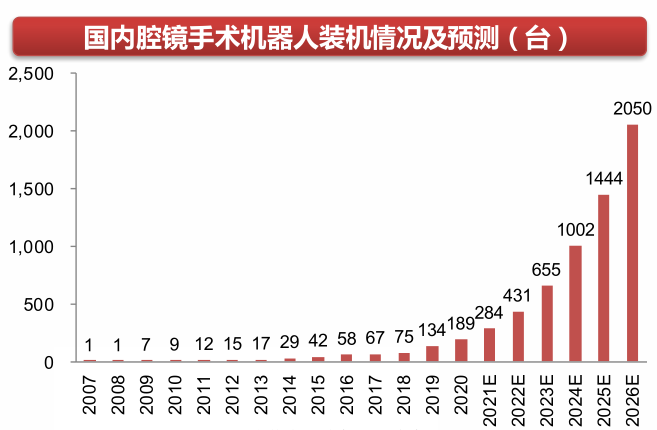
It reports fewer than five new domestic laparoscopic systems annually before 2013, around ten in 2014-2018, rapid growth in 2019-2020 and a hundred in 2021, and anticipates further growth.
The original describes the US as the largest market: US$1.7 billion in 2015 and US$2.9 billion in 2020, with procedures rising from 500,000 to 900,000 and 13.3% penetration. Its forecast for 2026 is 1.7 million procedures and 23% penetration.
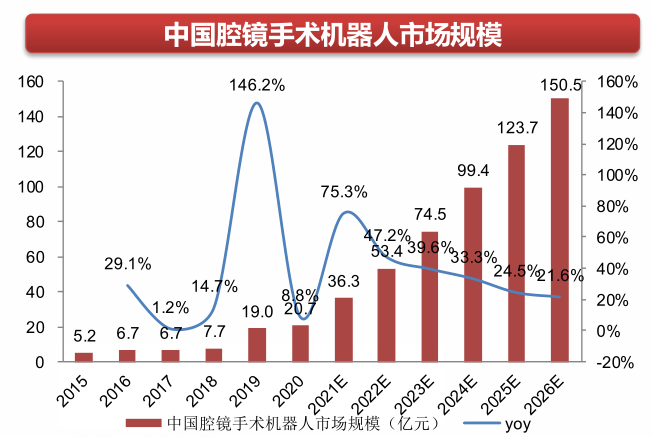
The original gives the Chinese 2020 market as US$2.07 billion and forecasts US$15 billion for 2026. The export does not identify its scope, currency basis or source, leaving possible unit confusion. These remain unverified historical forecasts, rather than citable market-size facts; growth should be assessed with reliable, consistently defined data.
02: Costs and prices constrain development
High procedural costs and difficult technical barriers can limit adoption in China.
The original nearly three hundred Chinese installations and 80% concentration in major tertiary hospitals are historical figures without a specified date or source. Appropriate robotic assistance may benefit smaller hospitals but cannot replace qualified surgeons, anaesthesia and emergency teams. Procurement, maintenance, training and consumable costs affect access.
Beyond system acquisition, some reusable da Vinci instruments have model-specific use limits and replacement requirements. Replaceable instruments are not entire robotic arms, and ten uses, four instruments or US$700-1,500 are not universal rules. The original RMB40,000-50,000, roughly 50% reimbursement and additional RMB20,000-40,000 are undated, unverified regional examples, unsuitable for estimating present individual costs.
03: Challenges for Chinese-developed systems
“Older doctors have better skills!” “If robots can operate, why do we need doctors?” “Can a machine handle unexpected events?” “Is a robot worth tens of thousands more if insurance will not cover it?” These are questions the article hears from patients.
Doubts about reliability and precision, together with higher costs, can hinder adoption. The original gives 11,000 Chinese robot-assisted laparoscopic operations in 2015 and 88,000 in 2021, and asks how to explain appropriate benefits and make treatment more affordable.

Although lower-priced domestic systems gained approvals, the original attributes some preference for expensive imported systems to strong brand trust or uncritical assumptions about quality.
It reports more than 320,000 cumulative da Vinci procedures in China and describes its dominant position. New platforms must gain patient trust and help clinicians learn unfamiliar systems; expanding domestic alternatives remains a substantial task.
04: Chinese manufacturing and technical development
Laparoscopic robots are complex, technically demanding systems with substantial clinical and commercial importance, making their development a priority in the view of this article.
Compatibility, identification systems and patent portfolios can create entry barriers. The original estimates four to five thousand patents without defining its count. Infringement liability depends on particular rights, jurisdiction and case facts; a fixed compensation of over RMB100 million per system cannot be assumed.
It argues that companies such as MicroPort, KangDuo and WEGO are important for Chinese surgical-robotics capability and clinical adoption.
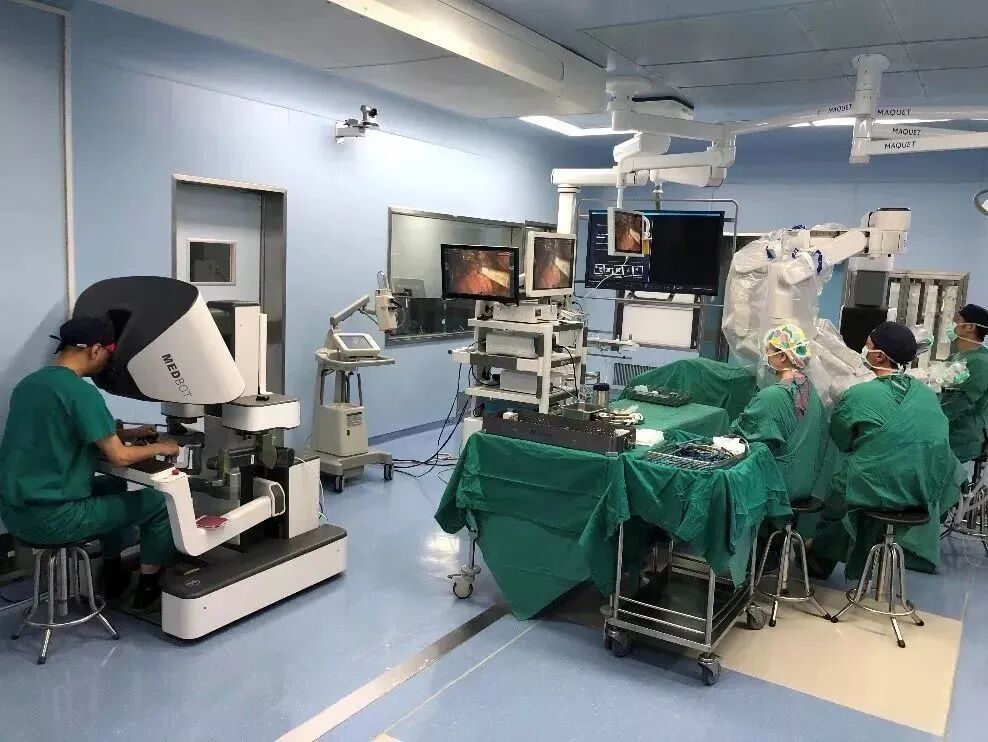
The article calls 2021 a starting year for domestic laparoscopic platforms: WEGO gained approval, and the MicroPort robotic business listed in Hong Kong. Toumai received approval in late January 2022 for urological laparoscopy, and KangDuo in late June 2022. It also describes an early cross-carrier, cross-network remote teaching procedure using 5G and a dedicated fixed line.
Approvals of domestic platforms expanded clinical and market choices. Improvements in precision, learning curves, surgical quality and total cost still require evidence for particular products and procedures. AI and 5G do not guarantee complete substitution or universally large price reductions.
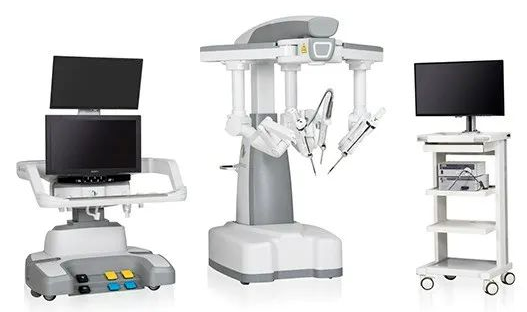
For da Vinci, the article calls this a defence of an established throne: challengers have arrived, while its influence remains.
For newer Chinese systems, it is a pursuit of technical competence and market trust, aiming to compete with da Vinci and increase domestic alternatives.
Who will become a leading laparoscopic platform in the years ahead? The article leaves that to further experience.
Material in this article was sourced online; please contact us regarding any infringement.
Migration review: this article preserves the industry context around 2022, rather than serving as a current device catalogue, fee schedule or treatment guide. Robotic assistance is not autonomous surgery, and device functions do not guarantee superior outcomes. Source limitations affect historical forecasts, installations, fees, market currencies and patent counts. The insurance 20% concerns an initial share of specified items. Two original videos are represented only by embed identifiers in the local export, with no playable local files.
Clinical review: FDA computer-assisted surgical systems
Historical source: Intuitive timeline
Historical review: da Vinci 5 clearance in 2024
Product source: da Vinci surgical instruments
Historical source: Hugo CE announcement in 2021
Subsequent design source: OTTAVA 2023 announcement
Historical source: Toumai 2022 approval announcement
Policy review: Shanghai insurance notice 13 of 2021
Sources and editorial history
Restored from a complete historical article exported from the PhDSciNet Official Account.
Editorial revision: Migration review: this article preserves the industry context around 2022, rather than serving as a current device catalogue, fee schedule or treatment guide. Robotic assistance is not autonomous surgery, and device functions do not guarantee superior outcomes. Source limitations affect historical forecasts, installations, fees, market currencies and patent counts. The insurance 20% concerns an initial share of specified items. Two original videos are represented only by embed identifiers in the local export, with no playable local files.