
English translation of the original Chinese article. Publication dates and the extent of recovered text are preserved. Figures retain their original labels. Read the Chinese original.

To begin, I would like to discuss “sensation.” People often say, “Go with your feelings.” This usually means that at a particular moment, they no longer need to consult tangible, objective conditions, but instead follow something invisible and intangible: a “feeling.” For example, ignoring the old advice to stay bundled up in spring and tolerate the autumn chill, we put on clothes when cold and seek relief when hot. In other words, we follow our hearts.
Follow Our Hearts?
As Crick argued in The Astonishing Hypothesis, consciousness must have a material basis.
Where do sensations come from? Certainly not from the heart, the blood pump usually situated slightly to the left of the center of the chest. The brain is the body's headquarters for sensation, a concept familiar to young and old alike. In fact, the brain does not command the sensory system alone: sensory fibers distributed throughout the body report back through electrical signals.
Figure 1. Image sourced from the internet.
How Do We Sense Temperature?
Ion-channel proteins provide the material basis for biological electrical signals. Sensory fibers detect warmth and cold because they contain protein receptors that perform temperature-sensing functions. These primarily involve ion channels that respond to temperature changes, altering the flow of cations and the electrical signals in nerve fibers. Research over the past few decades into the molecular basis of temperature-sensing proteins has identified many cation-permeable ion channels that open or close as temperature changes. TRP (transient receptor potential) channels are particularly interesting.
TRP is a family of cation channels. When the temperature of the body's surroundings changes, the corresponding TRP channels open or close, altering the electrical signals emitted by sensory fibers.
Our perception of temperature is subtle, rather than consisting simply of cold and hot. It can be described, at least approximately, in four ways: cold, cool, warm and burning hot. Cold and cool describe sensations associated with falling temperature, whereas warm and burning hot describe those associated with rising temperature. The difference is that cool and warm conditions do not harm the body, whereas the extreme temperatures perceived as cold or burning hot can be harmful. Different TRP channels perform different roles. TRPM8 is associated with cool and cold sensations, and TRPV1 can be activated by noxious heat. Other channels also contribute to sensations across different temperature ranges. The four subjective sensations cannot be assigned in a simple one-to-one correspondence to individual channels.
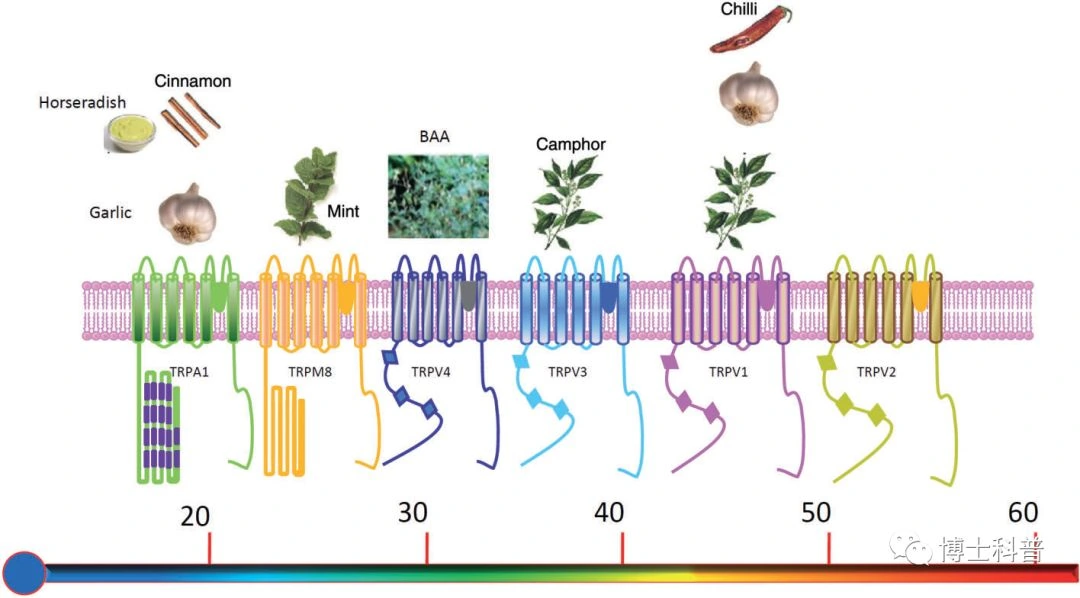
Figure 2. Image sourced from the internet.
Now let us return to the original question: where do sensations of cold and heat come from? As discussed above, these sensations arise when temperature causes the relevant ion channels to open or close. Cold and heat sensations therefore need not result from low or high temperatures: changing the opening and closing of TRP channels can also produce them. This is indeed what happens. For example, menthol in mint can open TRPM8 channels, so chewing mint-flavored gum produces a cool sensation. TRPV1, a member of the TRPV family, is also called the capsaicin receptor. As the name suggests, capsaicin in chili peppers can activate TRPV1 channels, which is why chili in food tastes burning hot.
Thinking further, how do temperature-sensitive channels sense temperature? Broadly speaking, temperature changes the conformation of temperature-sensitive channel proteins—that is, the shape into which a protein folds. If we understood the secrets of these conformational changes, could we alter the shapes of temperature-sensitive channels to create sensations of coolness or warmth? That sounds like a scene from a film, but perhaps it is not far from reality.
Additional References
- Official scientific background for the 2021 Nobel Prize: temperature sensing through TRPV1 and TRPM8
The text was recovered from the matching article retained by the WeChat account, with the original site's publication record preserved. The old WeChat promotional layout has been removed, and available original illustrations have been restored.
Editorial note: Restoration and correction on 2026-10-10: retained the original discussion of sensation and ion channels; corrected the heart's position and the specific name TRPV1. Subjective sensations of warmth and cold are not assigned strictly one-to-one to individual channels. The author credit 兰茜 comes from the body of this more complete retained version; it has not automatically been merged with the Nancy credit in another version.