

Historical science article: The original context, research account, and author's views are preserved below. The original publication date remains unverified; the author's identity and affiliation are retained as introduced in the manuscript.
Injections are a common way to administer medicines, but can cause pain and carry a risk of infection. Have you ever wondered whether a less painful method could deliver drugs directly into the body? Microneedle delivery is a form of transdermal drug administration being investigated for potentially lower pain and minimally invasive delivery; safety and effectiveness depend on the particular product and use. Since the 1998 microfabrication research, microneedle technology has evolved from solid microneedles made from silicon, metal, ceramic, and other solid microstructures to coated, hollow, and dissolvable microneedles made from biodegradable materials. Silicon, ceramic, metal, or polymers can be formed into patches, rollers, pens, and other configurations to pierce the epidermis. The manuscript describes diameters of 30–80 µm and lengths ranging from hundreds to thousands of micrometers, with various shapes. Investigated applications include water-soluble drugs, proteins, peptides, vaccines, and gene-related medicines.


Biopolymer Microneedles
Compared with conventional nondissolvable microneedle delivery, biopolymer microneedles offer a promising approach to transdermal administration because of their biocompatibility, potentially favorable safety, relatively high drug loading, and controllable release rates. Depending on treatment requirements, patches with different functions can be made using polymers with different degradation and swelling properties. Biopolymer microneedles are mainly being studied for minimally invasive delivery of drugs into the skin and extraction of skin interstitial fluid. Dissolvable designs may reduce cross-infection risk and leave no sharps after use, thereby reducing medical waste. Microneedles in patches are often designed to be less than 1,000 μm long. They can penetrate the stratum corneum and create temporary microchannels, delivering the loaded drug into the skin or extracting interstitial fluid for testing outside the body. Their length can be designed to reach a selected depth while reducing stimulation of nerves and blood vessels, but cannot guarantee that every design will avoid them. Thus microneedles can enable minimally invasive entry of various molecules into the skin, overcoming limitations of conventional transdermal delivery. Drugs can be placed on or within the tip and base to provide substantial loading for effective delivery across the skin (Figure 2). Microneedles made from polymers with different degradation and swelling properties can offer control over drug dose and release rate, facilitating biomedical applications.
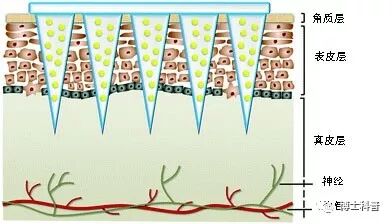
Because they can be minimally invasive and relatively low in pain, microneedles have become a research focus for drug delivery and extraction of interstitial fluid through the skin. Patches with different functions can be developed to meet different diagnostic and treatment needs, potentially contributing to human health. Microneedle patches have achieved promising results in transdermal delivery and interstitial-fluid sampling, but the stage of development differs by product and use. Animal-model studies are important, while some designs have also undergone human trials; the field cannot be described as having only animal validation and no human experiments. Further work remains on delivery efficiency and the site of drug release. Improving efficiency, defining release sites more precisely, and controlling release rates could be of great benefit to patients.
*This article expresses the author's personal views and does not represent this website's position. Other media, websites, or individuals who republish material from this website must identify the source and bear responsibility for copyright and other legal matters. Authors who do not wish their work to be republished, or wish to discuss republication fees, should contact us.
About the Author

Rita
Hello, everyone! I'm Rita.
Affiliation: Nanjing Tech University;
Research area: Design, fabrication, and application of portable devices for rapid in vitro diagnostics;
Thoughts on science communication: Sharing science and developments in technology can introduce methods outside our own fields. This can inspire researchers to develop and innovate new technologies, while also making scientific knowledge more accessible to people who are not researchers.
Editorial note
Editorial note: Rita's technical account and research outlook are preserved, with minimum qualifications to absolute claims of complete painlessness, universal safety and effectiveness, and exclusively animal testing. The 1998 paper included limited human pain testing, and a 2017 phase-1 human trial studied a dissolvable influenza-vaccine patch. This does not mean all microneedle products are approved for drug delivery. Cosmetic microneedling devices must be distinguished from specific drug or vaccine delivery systems; dimensions, effects, and risks depend on the particular design. The author's affiliation is a historical introduction, and the publication date remains unverified.
Supporting references
Henry et al., original microfabricated-microneedle study (1998)
Rouphael et al., phase-1 influenza microneedle-patch trial (2017)
FDA: specific intended uses of microneedling devices
Sources and editorial history
Restored from a complete historical article exported from the PhDSciNet Official Account.
Editorial revision: Editorial note: Rita's technical account and research outlook are preserved, with minimum qualifications to absolute claims of complete painlessness, universal safety and effectiveness, and exclusively animal testing. The 1998 paper included limited human pain testing, and a 2017 phase-1 human trial studied a dissolvable influenza-vaccine patch. This does not mean all microneedle products are approved for drug delivery. Cosmetic microneedling devices must be distinguished from specific drug or vaccine delivery systems; dimensions, effects, and risks depend on the particular design. The author's affiliation is a historical introduction, and the publication date remains unverified.