
Historical introduction: The following is the mRNA vaccine account actually retained in the export, in the context of the 2023 Nobel Prize. The full translation of the 2021 Nature article mentioned by the manuscript is absent from this export. The original publication date remains unverified.
Since the emergence of the novel coronavirus in 2019 and the global pandemic in 2020, mRNA vaccines have saved many lives. In the original manuscript's 2023 context, mRNA vaccine technology was attracting intense investment and had just been recognized by the Nobel Prize. It seemed as though, in only two or three years, mRNA vaccines had emerged from the laboratory and grown into the world's brightest rising star.

mRNA's Past: A Long and Remarkable History
In fact, the history of mRNA vaccine technology stretches far back. In 1961, three years after Francis Crick first proposed the central dogma in 1958 (Crick, F.H.C. (1958): On Protein Synthesis. Symp. Soc. Exp. Biol. XII, 139-163), Gros and colleagues, and a separate team including Brenner, Jacob, and Meselson, published evidence for messenger RNA. François Jacob later shared the 1965 Nobel Prize with André Lwoff and Jacques Monod; François Gros was not a recipient of that prize.
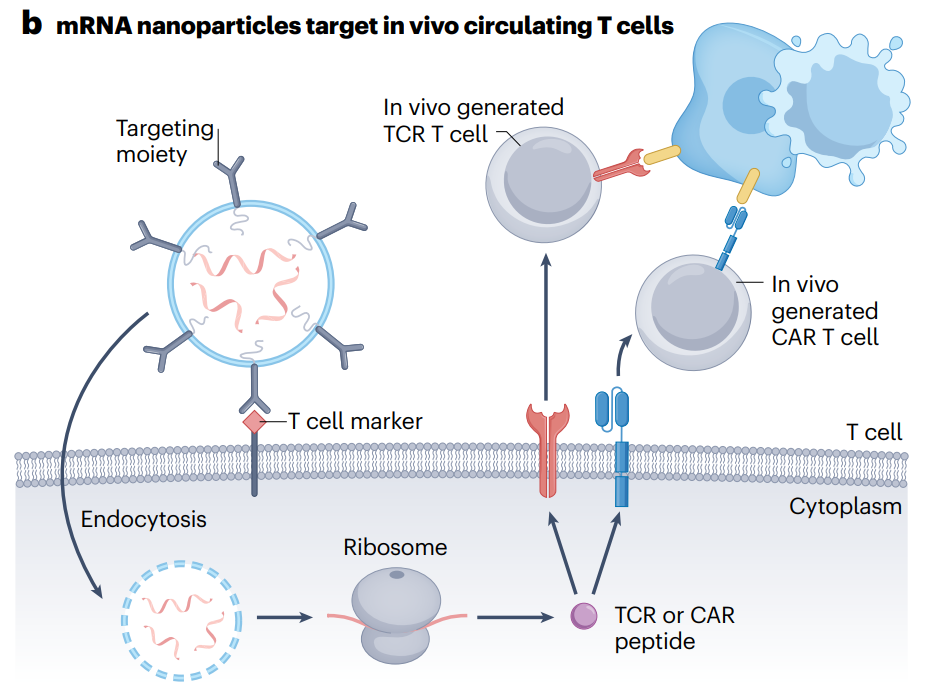
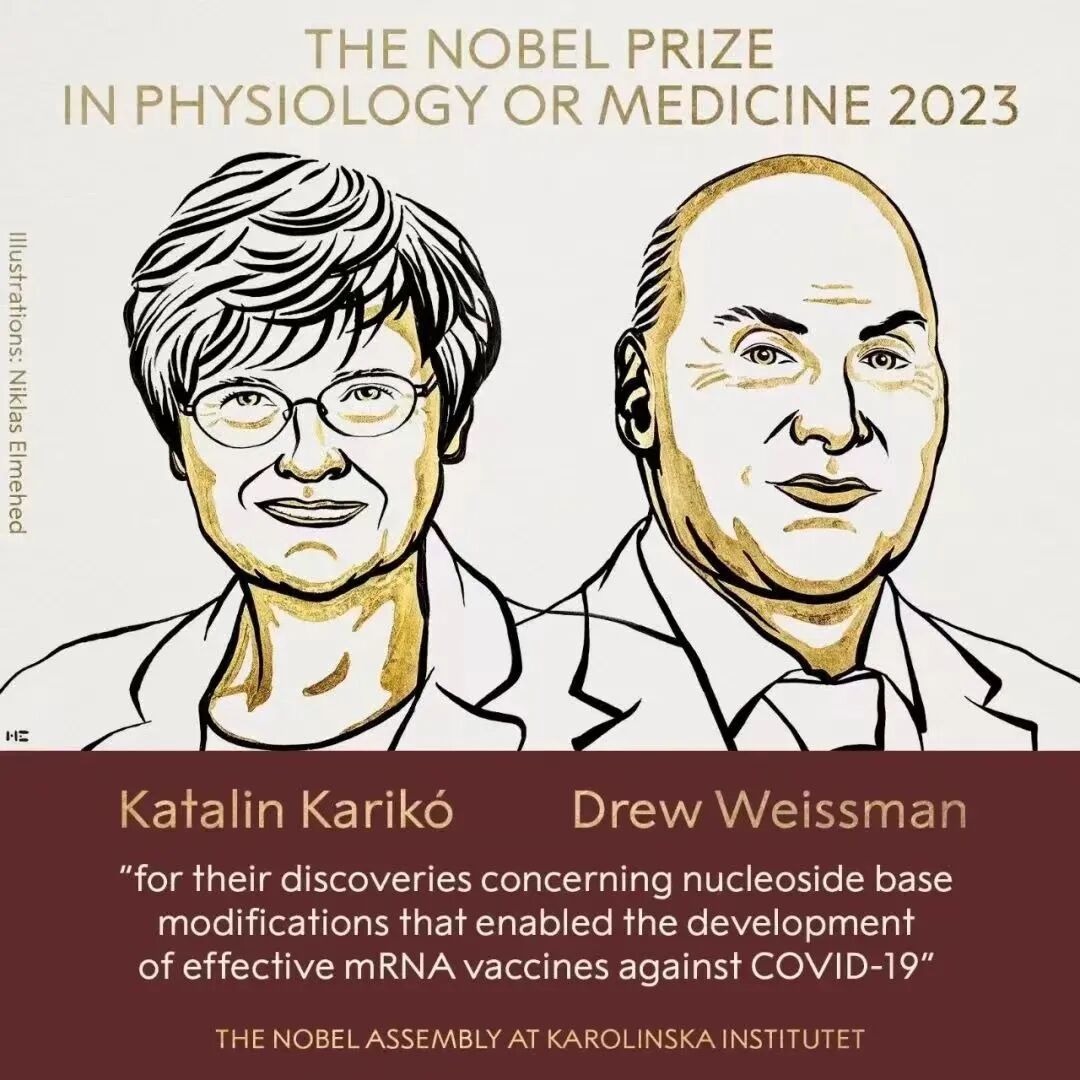
As students learn, messenger RNA is a crucial part of the flow of genetic information and is found widely across living systems. In principle, after genetic information has been transcribed from DNA into mRNA, the translation of that mRNA into protein does not require the mRNA to integrate into DNA. Under suitable delivery and expression conditions, cells can use mRNA from another organism to produce the protein it encodes, without hybridizing the organisms or editing the recipient's genome. This is part of the rationale behind mRNA vaccine technology, but does not mean any mRNA can automatically work in any species. The 2023 Nobel Prize specifically recognized discoveries concerning nucleoside base modifications that enabled effective mRNA vaccines against COVID-19.
Well-Deserved Recognition: mRNA's Rise to the Top
Putting this idea into practice was extremely difficult. First, mRNA normally functions within cells. Unprotected extracellular RNA is vulnerable to degradation and may activate innate immune recognition; its fate depends on its sequence, structure, chemical modifications, and surroundings, rather than all extracellular self-mRNA inevitably being cleared through the same immune mechanism. Second, mRNA is a large, negatively charged nucleic acid molecule, making it difficult to cross cell membranes on its own and creating a need for suitable delivery. At this point, mRNA vaccine technology seemed like an extraordinary skill with no practical use, forced onto the shelf.
How, then, were the bottlenecks in mRNA vaccine technology overcome?
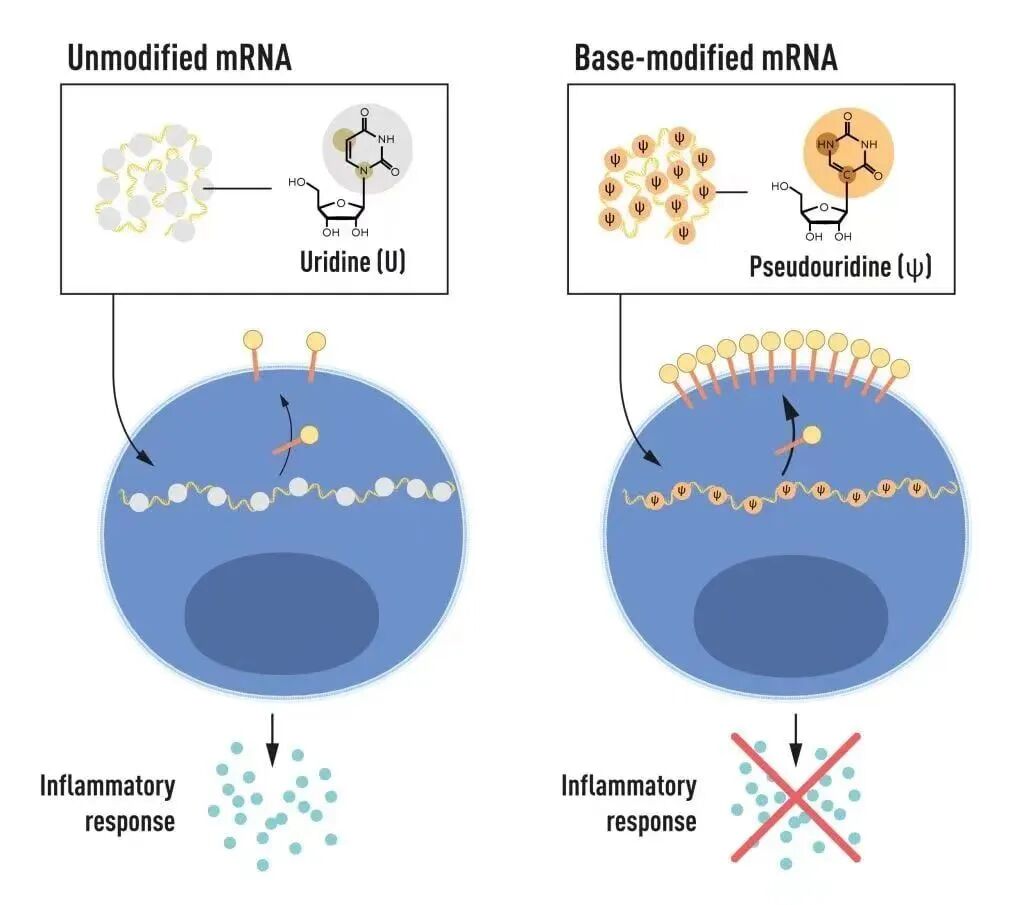
In most science articles written after the announcement of the 2023 Nobel Prize, the crucial turning point came in 2005. In their Immunity paper, Karikó and Weissman, with coauthors, reported that incorporating modified nucleosides such as pseudouridine in place of uridine could greatly reduce certain innate immune responses triggered by RNA (Karikó, K., Buckstein, M., Ni, H. & Weissman, D. Immunity 23, 165–175 (2005)). This was not a guarantee that every immune recognition or clearance process disappeared. The subsequent story of mRNA technology is often told as a smooth fairy tale: researchers soon recognized its potential; Derrick Rossi of Boston Children's Hospital founded Moderna; and in 2013, Karikó joined BioNTech, a company founded in Germany five years earlier, as a vice president. Ten years later, when the winds shifted once more, Moderna and BioNTech had become two major players in the field, and Karikó and Weissman shared the 2023 Nobel Prize.
In reality, the success of mRNA vaccines involved far more than a single flash of inspiration by the two great scientists Karikó and Weissman. Their achievements rested on the hard work and accumulated knowledge of hundreds of researchers over half a century.
For this installment, the original PhDSciNet manuscript says it selected an article published in Nature on September 14, 2021 for translation. That article appeared shortly before that year's Nobel announcements and described the academic and industrial perspectives on the rapidly emerging mRNA vaccine technology, as well as other scientists who made lasting contributions. The retained export contains this introduction and the source link, but not the promised full translation of the Nature article.
Original article link:
https://www.nature.com/articles/d41586-021-02483-w
Source: Nature
Some material in this article comes from online sources. Please contact us for removal if it infringes your rights.
Editorial note
Editorial note: This page restores the complete introduction in the export, the source references for five figures, and the source link. It does not claim to restore the full Nature translation mentioned at the end. The 1965 Nobel recipients were not Gros and Jacob alone; this has been corrected using the original 1961 papers and official list. Uridine, pseudouridine, and uracil must be distinguished. Immune recognition, RNA degradation, and delivery are different mechanisms, and the corresponding absolute statements have been minimally qualified. The 2023 prize and historical company account retain their original context; the publication date remains unknown.
Supporting references
Gros et al., original messenger-RNA paper (1961)
Brenner, Jacob, and Meselson, original paper (1961)
Official Nobel laureate list for Medicine, 1965
Karikó et al., original nucleoside-modification research (2005)
Official 2023 Nobel Prize in Medicine explanation
WHO: the 2020 pandemic characterization
Sources and editorial history
The introduction and illustrations in this official export have been restored. The full paper translation mentioned at its end is absent from the exported file.
Editorial revision: Editorial note: This page restores the complete introduction in the export, the source references for five figures, and the source link. It does not claim to restore the full Nature translation mentioned at the end. The 1965 Nobel recipients were not Gros and Jacob alone; this has been corrected using the original 1961 papers and official list. Uridine, pseudouridine, and uracil must be distinguished. Immune recognition, RNA degradation, and delivery are different mechanisms, and the corresponding absolute statements have been minimally qualified. The 2023 prize and historical company account retain their original context; the publication date remains unknown.