Historical compilation: This article preserves the scientific biography in the original manuscript. The English material is credited to Famous Scientists. No named author or translator could be verified from the export, and the original publication date remains unverified.
After organ transplantation, rejection reactions may occur. Allergy and autoimmunity are other, distinct phenomena involving immune recognition and regulation; they should not all be described as the same post-transplant failure of self-recognition.
How does the human immune system correctly distinguish its own cells from invading cells?
The Australian immunologist Macfarlane Burnet was deeply fascinated by this question and tried to unlock the remarkable science of 'self.'
In 1960, Macfarlane Burnet was awarded the Nobel Prize in Physiology or Medicine for his work on acquired immunological tolerance. His theory, like a lighthouse, helped guide immunology forward!
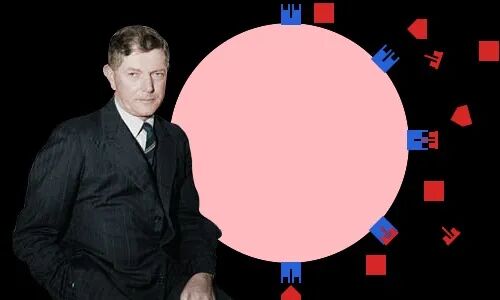
A Gifted Boy's Introduction to Medicine
Frank Macfarlane Burnet was born on September 3, 1899 in the small city of Traralgon, Victoria, Australia, which lies about 100 miles (160 km) south east of Melbourne.
His father, Frank Burnet, was a bank manager who had moved to Australia from Scotland as a young man. His mother was the daughter of a Scottish school teacher. Frank Jr., the second of their seven children, was known to his family and forever more as Mac. Mac grew up shy and solitary.

In 1909, Mac’s father was transferred over 200 miles west by his bank to the country town of Terang. Now age 10, Mac was schooled at Terang’s primary school.
He also began a hobby that became a lifelong passion – beetle collecting. Initially he was hampered in his new hobby, because the only information about biology he could find was in a 50 year-old edition of the Chambers Encyclopedia. From this he learned about the theory of natural selection, still decidedly new when the encyclopedia was published.
As his interest in biology grew, his parents subscribed to the fortnightly magazine Harmsworth’s Natural History, and then, casting his net wider, Mac purchased books about beetles and insects by mail order from Melbourne.
In his final year at primary school, he obtained a full residential scholarship for Geelong College, a prestigious private school.
In 1913, age 13, Mac traveled 100 miles east to begin boarding at Geelong College. He had grown to love the outdoor life in Terang, and did not enjoy high school much. He was an academically inclined, bookish scholarship boy, not entirely comfortable with the other students, who were excessively wealthy, assertive, and whose lives seemed to revolve around sport.
Fearful of derision from his fellow students, he kept his devotion to the study of beetles secret. He graduated from Geelong College in 1916 as its top student, winning a full residential scholarship to the University of Melbourne’s Ormond College, he decided to study medicine.
A Surgeon Drawn to Research
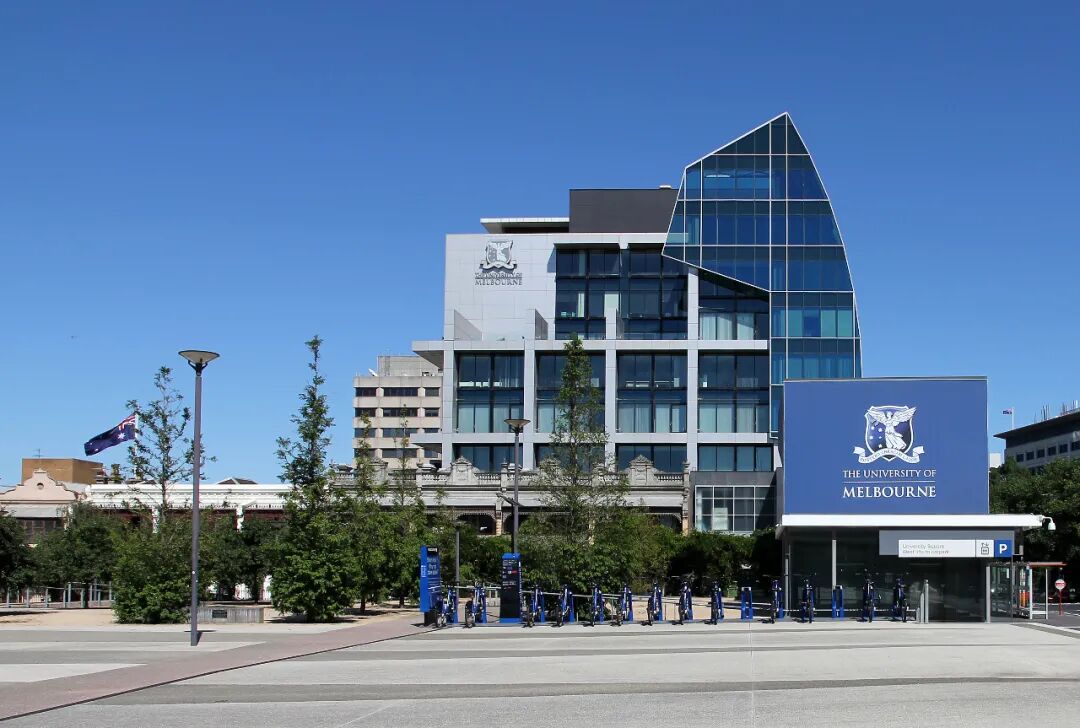
Burnet matriculated at the University of Melbourne in 1917, the penultimate year of World War I.
He graduated with a Bachelor of Medicine and a Bachelor of Surgery in 1922, age 22. He hoped to become a hospital doctor -he had felt a lot of job satisfaction while training in the operating theater and emergency department, but his hospital supervisor judged his personality was more suited to research work.
In 1923, he became senior resident pathologist at the Walter and Eliza Hall Institute at the Melbourne Hospital.

He left Australia in 1925 to work as an assistant curator at the Lister Institute in London, England. He was free to carry out his own research most of the time and he decided to study micro-organisms. The Institute was impressed by his ability, and awarded him a fellowship, allowing him to pursue his interests further.
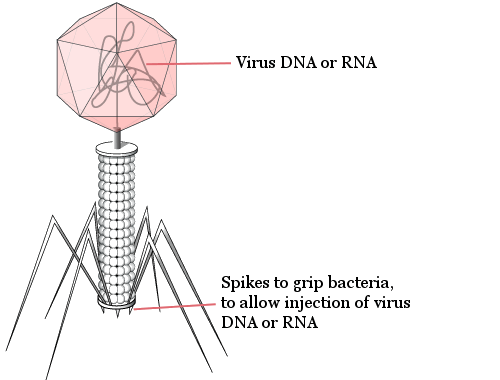
In 1928, the University of London awarded him a Ph.D. for his research into bacteriophages – viruses that infect bacteria.
He returned to Melbourne in 1928 as Assistant Director of the Walter and Eliza Hall Institute and, apart from returning to London for a year in 1932-1933 he remained in Australia for the rest of his career. He was appointed Director of the Walter and Eliza Hall Institute in 1944, and also appointed Professor of Experimental Medicine at the University of Melbourne.
Scientific Contribution: Acquired Immunological Tolerance
Burnet’s scientific discoveries and achievements were legion. Here we’ll concentrate on just two contributions: the theory of acquired immunological tolerance, for which he received a Nobel Prize; and the theory of clonal selection, which he believed was his most important work.
How does your body know what is self and what is non-self? This is a question that fascinated Burnet. How can our body’s immune response tell the difference between our own cells and invading cells?
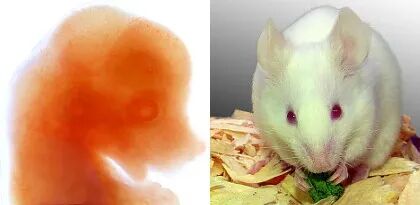
Burnet noted that normally our immune systems do not mount harmful antibody responses against their own cells. In 1949 he proposed, in a paper with Professor Frank Fenner, that if foreign cells are introduced into an embryo, then when the embryo develops into an independent individual, it will have no immune response to foreign cells of the type it encountered as an embryo: the embryo would have been made tolerant of the foreign cells. In other words, the immune system of an individual could be made to tolerate cells it would normally reject and attack.
In 1956, a team led by Peter Medawar at University College, London, confirmed Burnet’s theory with experiments on mice.
Normally, skin grafts from one mouse to another would fail, because the immune system of the mouse the skin was grafted to rejected the new skin. However, if a mouse at its embryo stage was exposed to cells from another mouse, then as an adult, it would accept a skin graft from that mouse. In other words, it was possible for foreign cells to be treated as ‘self.’
If cells from another mouse are introduced into an embryo at the right time, when the embryo grows into an adult, it will continue to tolerate cells from the other mouse.
The fact that tolerance of foreign cells could be acquired by a body led to advances in reducing the human immune response to transplants, allowing organ transplants to be carried out without rejection of the transplanted organ.
Burnet and Medawar shared the 1960 Nobel Prize in Physiology or Medicine for their discoveries.
Scientific Contribution: Clonal Selection Theory
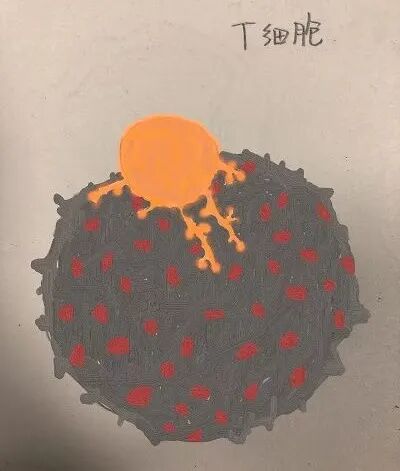
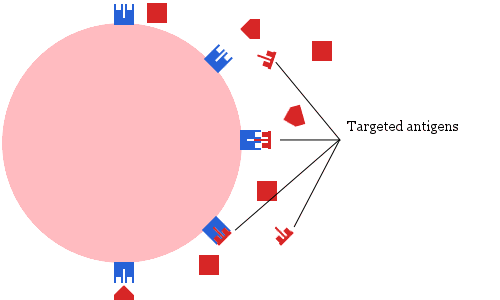
Lymphocytes are a type of white blood cell that can respond to foreign cells or other antigens using antigen receptors. Antigens can include molecular components of foreign cells; the word does not simply mean 'invading cells.' The manuscript uses about 100,000 receptors on a lymphocyte's surface as a simplified illustration.
Burnet proposed, correctly, that the antigen receptors on lymphocytes are specific to the lymphocyte. If a lymphocyte meets the antigen its receptors are programmed to fight, then this lymphocyte is triggered to make clones of itself, producing a large-scale immune response to the particular invading cell.
Burnet explained that after we have been exposed to a disease, there is an immunological memory of the disease because there are two types of lymphocyte:
·one type fights the infection immediately
·the other persists for a long time, resulting in immunity
Burnet proposed that some receptors are a very precise match to antigens, while others are less precise to try to ensure some sort of immune response to virtually any invading pathogen.
Burnet’s clonal selection theory is the basis of the science of molecular immunology.
His theory led to the development of some of the most important drug treatments available today based on monoclonal antibodies – these are made by immune cells, all identical, that are all clones of a single parent cell. Today monoclonal antibodies can be made that can bind specifically to almost any substance.
An Extraordinary Life of Achievement
In addition to his two biggest discoveries, Burnet also:
·discovered the causes of Q-fever and psittacosis
·described the recombination of influenza strains
·described the epidemiology of herpes simplex
·demonstrated (in part by injecting himself with the virus) that the myxomatosis virus does not attack humans
·improved the methods for cultivating viruses in hens’ eggs: his methods are the basis of today’s methods
“Burnet’s was a contemplative, almost a solitary, kind of genius. The majority of his papers were single-author works, using simple, elegant techniques, frequently of his own devising and requiring little more than a Pasteur pipette, a test tube, a fertile hen’s egg and a microscope.” —Gustav Nossal
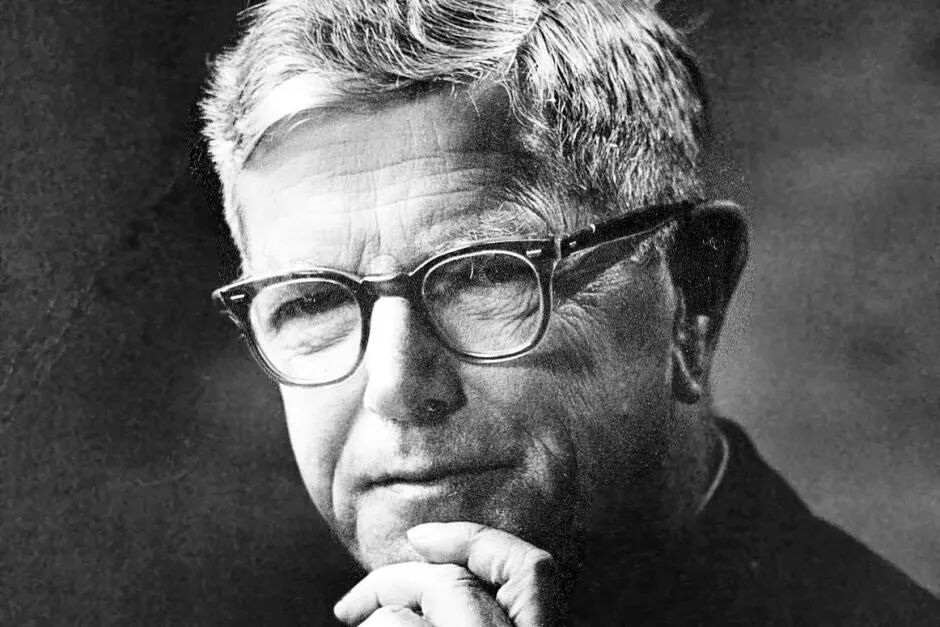
In 1951,Burnet been knighted, becoming Sir Frank Macfarlane Burnet.
Although he officially retired in 1966, age 66, he remained at the University of Melbourne as Professor Emeritus and continued to have a secretary to help with his work. He wrote 13 books in the 1966-77 period.
Macfarlane Burnet died, age 85, of cancer of the rectum, on August 31, 1985 at his son’s home in Port Fairy. The Australian Government organized a state funeral in his honor at the Toorak Uniting Church, Melbourne. He was buried at Tower Hill Cemetery, Victoria, close to a wildlife reserve.
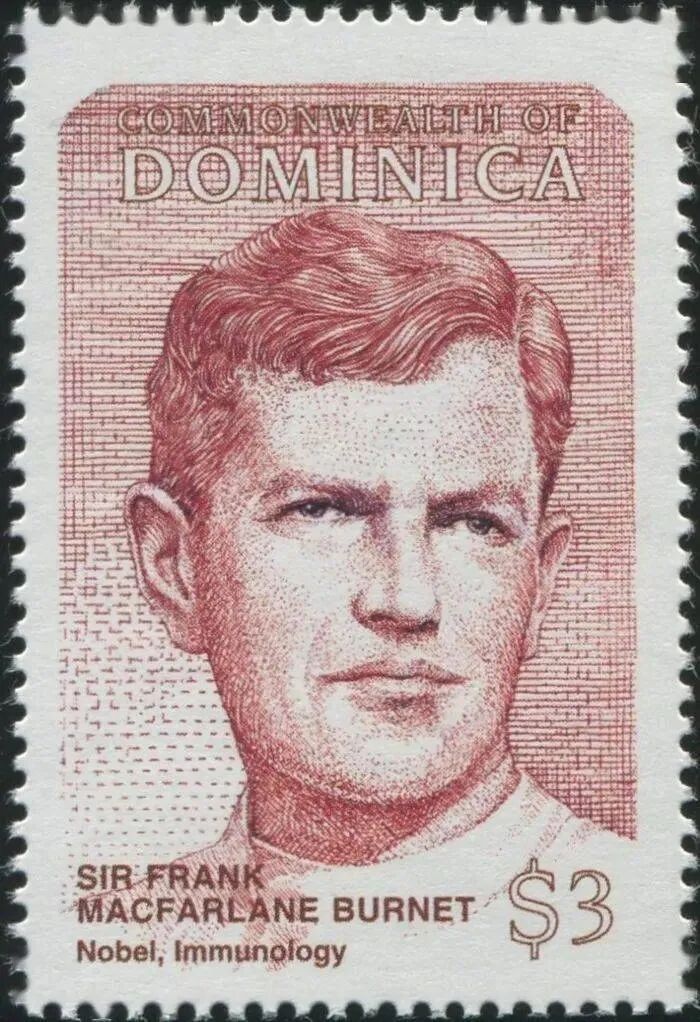
He was a prolific scientist who published more than 400 original research papers, ten books on virology, eleven on immunology, an autobiography, and several books on topics such as aging and genetics.
He was also a solitary genius. Most of his papers and experimental designs were his own individual work, using elegant techniques and the simplest of experimental tools.
A tribute to the great Sir Frank Macfarlane Burnet!
Original article link:
https://www.famousscientists.org/macfarlane-burnet/
Source: Famous Scientists
Some material in this article comes from online sources. Please contact us for removal if it infringes your rights.
Editorial note
Editorial note: The manuscript grouped transplant rejection, allergy, and autoimmunity together; their concepts have been distinguished, and normal self-tolerance qualified where needed. The year 1917 was the penultimate year of World War I, not two years before it began. Initial experimental evidence of acquired tolerance was published in 1953, with fuller studies in 1956; the manuscript's 1956 passage is retained as a later account. Self-injection and similar experiences remain historical records.
Supporting references
Original acquired-tolerance research, 1953
WEHI and the history of immunology
Sources and editorial history
Restored from a complete historical article exported from the PhDSciNet Official Account.
Editorial revision: Editorial note: The manuscript grouped transplant rejection, allergy, and autoimmunity together; their concepts have been distinguished, and normal self-tolerance qualified where needed. The year 1917 was the penultimate year of World War I, not two years before it began. Initial experimental evidence of acquired tolerance was published in 1953, with fuller studies in 1956; the manuscript's 1956 passage is retained as a later account. Self-injection and similar experiences remain historical records.