Historical compilation: This article preserves the scientific biography in the original manuscript. The English material is credited to Famous Scientists. No named author or translator could be verified from the export, and the original publication date remains unverified.
Without protective masks or sophisticated equipment, how did scientists more than a century ago conduct research in rudimentary laboratories?
Chemist Robert Bunsen's 'madcap' life offers us a vivid guide to laboratory safety!
This exceptionally skilled and daring chemist was fascinated by highly toxic chemicals, including arsenates, arsenites, and chlorides. He even boldly mixed two extremely toxic chemicals to synthesize cacodyl compounds. The work ultimately led to tragedy: a vessel containing a cacodyl compound exploded, permanently blinding his right eye!
Even after a chemical laboratory accident left him disabled, Robert Bunsen never stopped his research. The zinc–carbon battery, the Bunsen burner, and spectroscopic analysis—behind each of these major inventions was Bunsen's habit of courting danger!
In 1860, the Royal Society awarded Robert Bunsen the Copley Medal. Before the Nobel Prizes were established in 1901, the Copley Medal, regarded as the highest honor in science, was awarded to many scientists who made outstanding contributions!
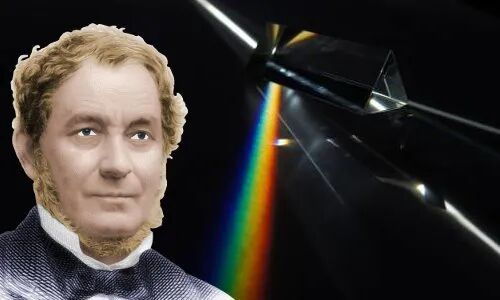
A Chemistry Prodigy Who Found Fame Young
Robert Wilhelm Bunsen was born on March 30, 1811, in Göttingen, Germany.
His father was Christian Bunsen, professor of modern languages and head librarian at the University of Göttingen. His mother came from a military family.
He attended elementary school and high school in Göttingen. When he reached the age of 15 he moved to the grammar school in Holzminden, about 40 miles (60 km) from Göttingen.
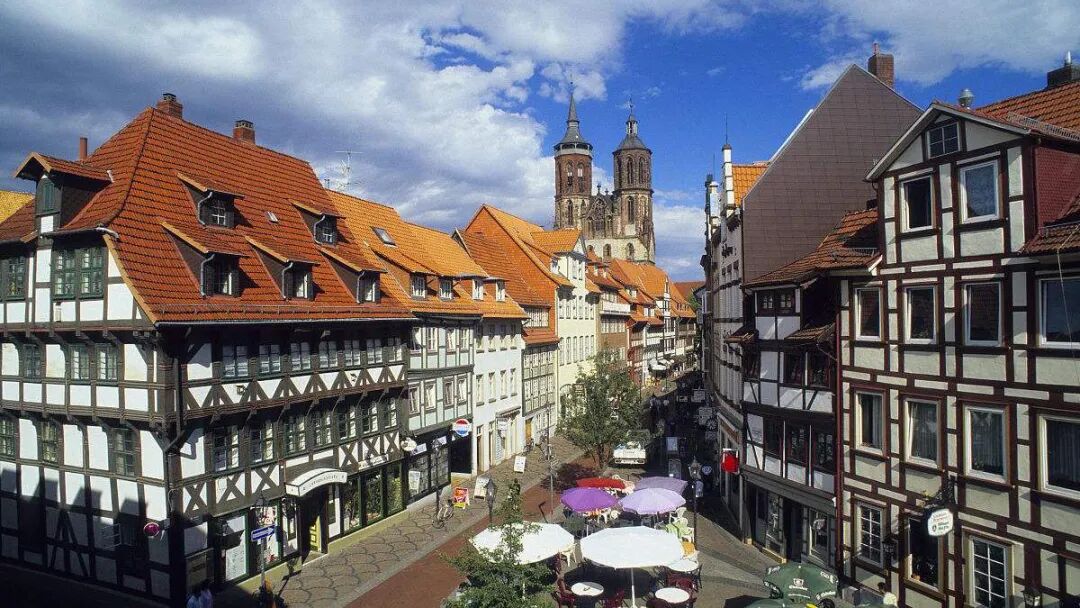
In 1828, aged 17, he started work for his degree at the University of Göttingen. He took courses in chemistry, physics, and mathematics, with some geology and botany. He won an award for his work on a humidity meter. When he wrote this work up in 1830, he was awarded a Ph.D. in chemistry – he was just 19 years old.
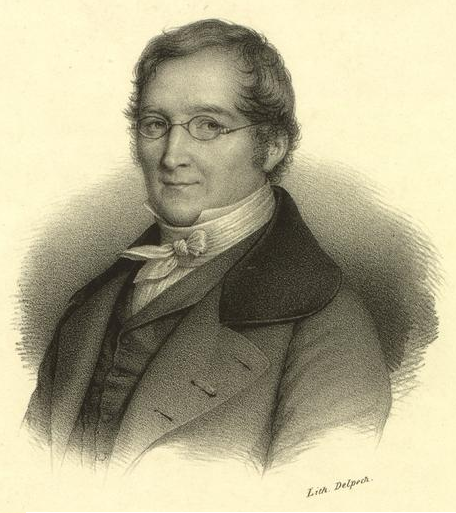
Bunsen stayed at Göttingen until he won a government scholarship to travel around Europe studying chemistry. He spend most of 1832 and 1833 learning chemical techniques in laboratories in Germany, Austria, Switzerland, and France. In France he spent time in Paris working with the famous chemist Joseph Gay-Lussac.
The Daring Scientist Who Experimented on Himself
In 1833, aged 22, Bunsen started working as a chemistry lecturer at the University of Göttingen. He had obtained his license to teach, but received no salary from the university. He tutored students and carried out research in the chemistry laboratories.
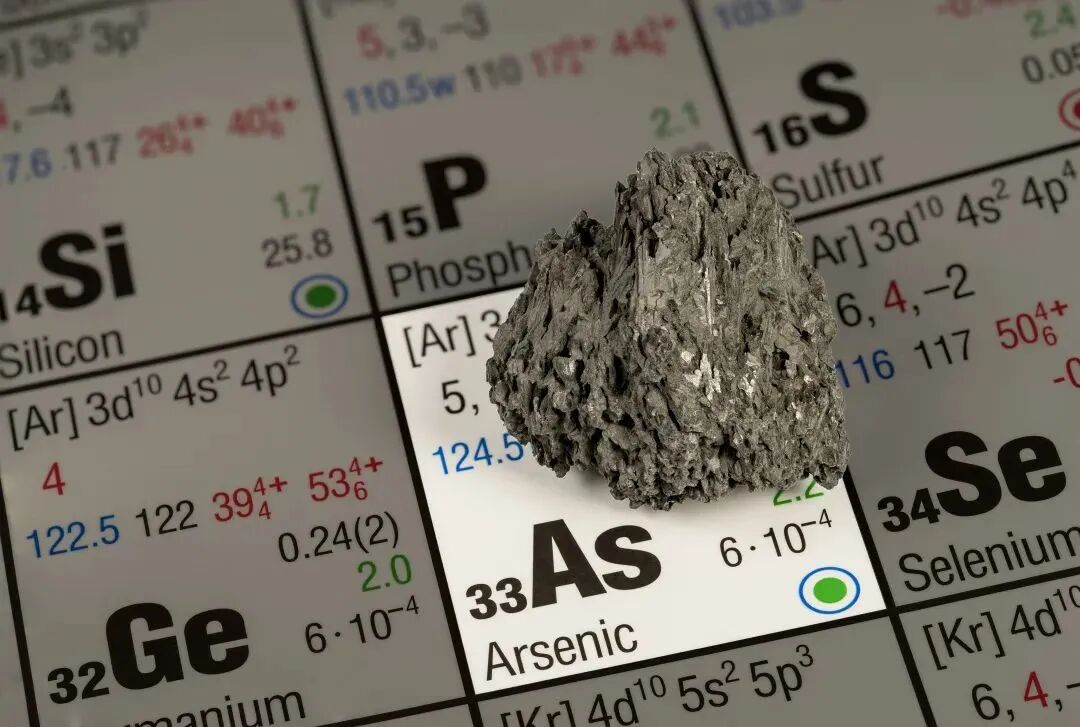
In 1834 he published his first important work. Working with the physician Arnold Berthold he discovered an antidote to arsenic poisoning.
He found that adding iron oxide hydrate to a solution in which arsenic compounds are dissolved causes the arsenic compounds to fall out of the solution as ferrous arsenate, which is an insoluble, harmless solid.
Bunsen developed an ongoing passion for studying the compounds of arsenic. Like the good chemist he was, he tried to take precautions against the toxic effects of these compounds: he devised a face mask with a breathing tube that fed him clean air from outdoors while he worked.
Some arsenic compounds, however, are explosive. Without warning, they explode in dry air. In 1843, nine years after finding the antidote to arsenic poisoning, Bunsen became a victim of such an explosion when a sample of an arsenic compound called cacodyl cyanide exploded, shattering his face mask and permanently blinding his right eye.
The explosion also resulted in Bunsen suffering severe arsenic poisoning. He was saved from death by the iron oxide hydrate antidote he discovered nine years earlier.
In 1841 Bunsen invented the zinc-carbon cell – often called the Bunsen battery. He saw this as an improvement on the expensive Grove cell, which was used, for example, to power telegraph lines. The Grove cell was a zinc-platinum cell. The platinum in it made it very expensive.
His replacement of expensive platinum with cheap carbon also allowed other researchers who had been deterred by costs to carry out work in electrochemistry.
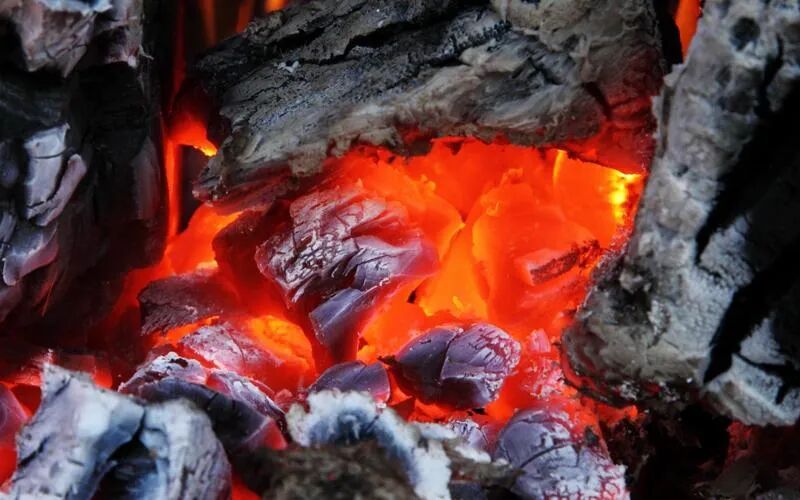
Bunsen developed new techniques to analyze gases. Between 1838 and 1846 he used his methods to study gases produced by industries. He found that in the steel industry, where heat was produced by burning charcoal, much of the charcoal was not burning completely. It was burning to form carbon monoxide, rather than producing much more heat by burning efficiently to form carbon dioxide.
To improve efficiency, Bunsen recommended the exhaust gases from burning charcoal, full of carbon monoxide, should be recycled to generate more energy by burning them to form carbon dioxide. Eventually, the reluctant industries changed their ways and adopted Bunsen’s recommendations.
Breakthroughs with the Bunsen Burner and Spectroscope
Chemists and alchemists before them were aware that if you sprinkled a sample of a substance into a flame, the color you saw helped you identify chemical elements in the sample. Lithium compounds, for example, burn with a rose-red flame, while potassium compounds burn with a lilac flame.
Bunsen observed that sodium compounds gave an orange-yellow flame. However, the fundamental color of the flame itself, before chemicals were sprinkled into it, could interfere with the test.
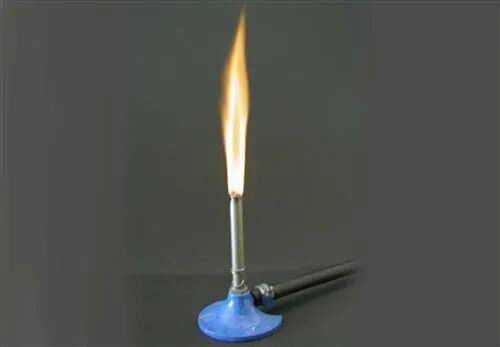
Bunsen’s response was his gas burner. By introducing air into the gas in the correct proportion before it burns, a clean, soot-free, almost colorless flame is produced. Using his burner, Bunsen used flame tests to analyze substances much more reliably than ever before.
Bunsen published the design of the burner in 1857, but did not patent his design. He did not wish to make profits from science.
His burner is now used not only for flame tests. It is used to heat samples and to sterilize equipment in medical laboratories all over the world.
Bunsen’s friend and colleague Gustav Kirchhoff was interested in the infant science of spectroscopy.
Spectroscopy was the science of splitting sunlight into the colors of the rainbow using a prism – much as Isaac Newton did in 1666.
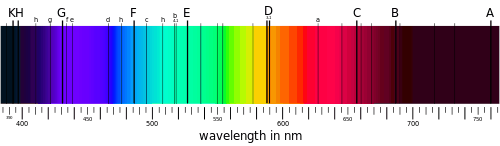
Many years later, in 1802, William Hyde Wollaston repeated Newton’s experiment, but looked at the spectrum of sunlight using a magnifying glass. He saw more than the colors of the rainbow: he saw seven dark lines within the colors.
In 1812, Josef Fraunhofer looked at a greatly magnified spectrum of colors from sunlight and saw over 500 of these dark lines. (We now know there are more than 3000 lines.)
Fraunhofer could not explain the lines.
Bunsen had first met Kirchhoff and worked with him at the University of Breslau, when he spent a year there in 1851. In 1852, Bunsen took the Chair of Chemistry at Heidelberg University. In 1854, he arranged that his friend Kirchhoff should follow him, to take the Chair of Physics. The pair then formed a highly productive research partnership.
Kirchhoff was interested in the new science of spectroscopy. He made the historic discovery that they were caused by cooler gases in the sun’s atmosphere absorbing particular wavelengths of sunlight. These dark-lined spectra are now called absorption spectra.
In 1859, Kirchhoff and Bunsen brought together a spectroscope and a Bunsen burner. The two scientists looked at the spectra of a variety of different substances in the hot flame of the Bunsen burner.
The results were stunning. Bright lines appeared in the spectrum: the elements, when strongly heated in the Bunsen burner’s flame, emitted light at particular colors or wavelengths. These bright-lined spectra are now called emission spectra.
Lines in the spectrum turned out to be a reliable ‘fingerprint’ for chemical elements. Every element absorbs or emits characteristic wavelengths of light, leading to different ‘fingerprints’ of lines for the different elements.

The Birth of Chemical Spectroscopy
A new science had been born – chemical spectroscopy.
Using their newly invented method, Bunsen and Kirchhoff discovered two new elements: cesium in 1860, and rubidium in 1861.
The beauty of spectroscopy is that tiny traces of a substance can be detected. This opened up a whole new field.
After Bunsen and Kirchhoff published their work, other scientists quickly realized the power of the new technology. This led to the discovery of more elements, including indium (1863), helium (1868), europium (1896), gallium (1875), and hafnium (1922).
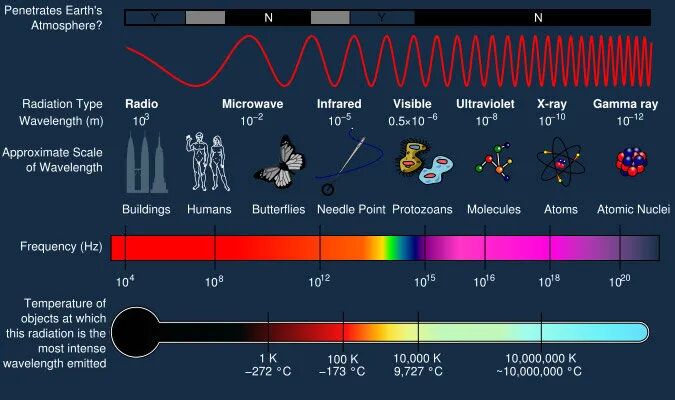
Today, spectroscopy encompasses all wavelengths of the electromagnetic spectrum. It is an enormously valuable method for solving a huge variety of scientific problems. Even living things can be analyzed with spectroscopy, such as when magnetic resonance spectroscopy is used to identify diseases in people.
Bunsen did a great deal of his laboratory work personally.
In 1860 he was awarded the equivalent of the Nobel Prize, in the form of the British Royal Society’s Copley Medal; he also won the Royal Society’s Davy Medal in 1877.
Robert Bunsen died aged 88 on August 16, 1899 in Heidelberg.

Here was a great chemist who dedicated himself to science!
He never married, devoting himself entirely to research. He repeatedly risked his life to obtain the most valuable experimental data. A laboratory accident cost him the sight of one eye, but it could not make him abandon his commitment to scientific research!
In an era when laboratory equipment was less advanced and safety rules less developed, the fearless efforts of scientists such as Robert Bunsen helped humanity's science and technology take great strides forward!
A tribute to Professor Robert Bunsen—and to the researchers who work tirelessly for scientific progress!
Original source:
https://www.famousscientists.org/robert-bunsen/
Source: Famous Scientists
Some material in this article comes from the internet. Please contact us for removal if it infringes your rights.
Editorial note
Editorial note: Robert Bunsen (1811–1899) was not a Nobel laureate; the Nobel Prizes were first awarded in 1901. The original manuscript used the series name 'Nobel Profiles'. Its category title has been corrected here to 'Scientific Profiles'. The dangerous experiments described in the article are historical accounts.
Supporting references
Royal Society: Robert Bunsen Archive Record
Nobel Foundation: Prize History
Sources and editorial history
Restored from a complete historical article exported from the PhDSciNet Official Account.
Editorial revision: Editorial note: Robert Bunsen (1811–1899) was not a Nobel laureate; the Nobel Prizes were first awarded in 1901. The original manuscript used the series name 'Nobel Profiles'. Its category title has been corrected here to 'Scientific Profiles'. The dangerous experiments described in the article are historical accounts.