Historical compilation: This article preserves the scientific biography in the original manuscript. The English material is credited to Famous Scientists. No named author or translator could be verified from the export, and the original publication date remains unverified.
Positron emission tomography (PET), one of the advanced imaging methods in nuclear medicine, uses radioactive substances to release positrons inside the body. Their interactions with other electrons enable three-dimensional imaging of molecular metabolism, receptor activity, and neurotransmitter activity, making the method important for early disease diagnosis!
In 1931, British physicist Paul Dirac theoretically predicted the existence of the positron. He proposed that this new particle was a mirror image of the electron, with the same mass but the opposite sign of electric charge.
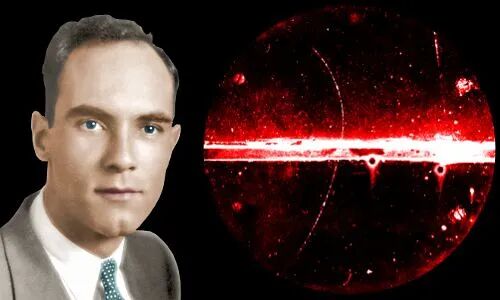
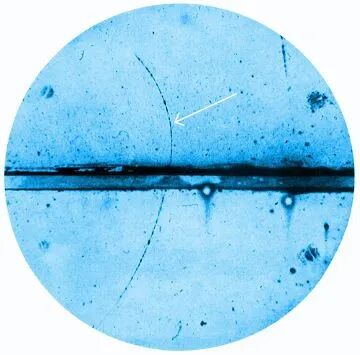
The following year, physicist Carl Anderson, who was studying cosmic rays, found tracks of positively charged particles in photographs taken in a Wilson cloud chamber.
After a series of experiments and calculations, Anderson found that these positively charged particles had properties fully consistent with Dirac's prediction. On August 2, 1932, Carl Anderson formally announced the discovery.
In 1936, Carl Anderson was awarded that year's Nobel Prize in Physics for his discovery of the positron!
Greatness Grows from Passion and Perseverance
Carl David Anderson was born on September 3, 1905 in New York City, USA. His father, also named Carl David Anderson, was a restaurant manager. His mother, Emma Adolfina Ajaxson, was a housewife. Carl was their only child.
In 1912, when Carl was six, his family moved from New York to Los Angeles. His parents were not interested in science, but from about age seven, Carl became increasingly interested in technology, building primitive radio sets.
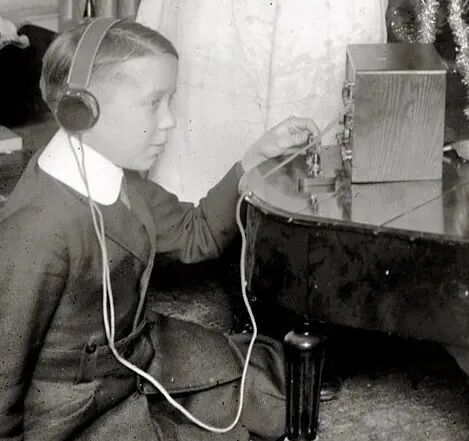
Carl Anderson hoped to become an electrical engineer. He attended L. A. Polytechnic High School, a public school that concentrated on technical subjects. He graduated from high school in 1923, age 17.
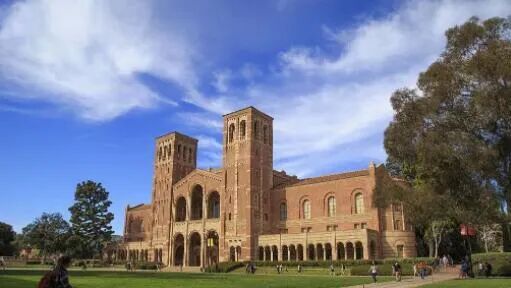
Next came Caltech (California Institute of Technology) in Pasadena where he intended majoring in Electrical Engineering.
In his sophomore year, he learned about modern physics and was astonished by how much he loved it compared with the more basic physics he learned at school. He changed to Physics as a major. In 1927, age 21, he received a Bachelor’s degree in both Engineering and Physics.
Anderson continued at Caltech as a graduate student, receiving a PhD in 1930, age 24. His doctoral thesis was entitled: Space-Distribution of X-Ray Photoelectrons Ejected from the K and L Atomic Energy-Levels.
He spent the rest of his working life at Caltech.
The Prediction and Discovery of the Positron
Anderson began working with Robert Millikan, famous for determining the amount of charge on the electron. Millikan was studying cosmic rays – high energy particles reaching the earth from the sun and the stars.
Cosmic rays produce interesting debris when they crash into our planet’s atmosphere. The debris contains subatomic particles, which are generally unstable and decay quickly into other particles.
To study cosmic rays, Anderson designed and built his own cloud chamber – a particle detector containing a supersaturated vapor. When a particle passes through the vapor, it knocks electrons off vapor molecules leaving ions behind. Vapor condenses on these ions, resulting in a trail that can be photographed. Anderson placed an electromagnet around his cloud chamber, which caused charged particles to follow curved trails. By studying a trail, he could deduce the properties of the particle that made it.
In 1931, Paul Dirac predicted the existence of antimatter:“A hole, if there were one, would be a new kind of particle, unknown to experimental physics, having the same mass and opposite charge to an electron. We may call such a particle an anti-electron.”
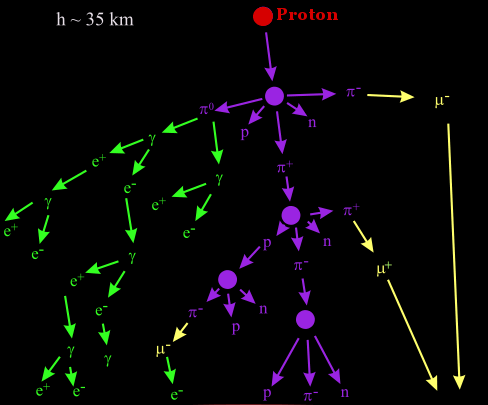
In 1932, Carl Anderson:
·Took photographs of tracks made by cosmic rays as they passed through a cloud chamber he had designed himself.
·Saw the track of a particle whose behavior was like no particle he had seen before.
·Correctly interpreted the track, stating it was made by a particle with the mass of an electron, but carrying the opposite charge.
·Realized he had observed antimatter – the antielectron predicted by Paul Dirac in 1931.
·Agreed to call the new particle the positron.
“On August 2, 1932, during the course of photographing cosmic-ray tracks… [tracks] were obtained, which seemed to be interpretable only on the basis of the existence in this case of a particle carrying a positive charge but having a mass of the same order of magnitude as that normally possessed by a free negative electron.”—Carl Anderson
In 1936, Anderson was awarded the Nobel Prize in Physics for his discovery of the positron.
A New Particle That Caused a Stir in Physics
In 1936, Anderson and his graduate student, Seth Neddermeyer, discovered the muon using the same equipment as Anderson had used to discover the positron. The muon is a subatomic particle with the same negative charge and spin as the electron, but 207 times more massive.
Anderson retired from Caltech in 1976, age 70.
Carl Anderson died, age 85, on January 11, 1991 at his home in San Marino, California.
Scientific progress depends on scientists' imaginative ideas and their persistent exploration.
In 1894, British physicist Charles Wilson began developing a cloud chamber to reproduce the striking sight of sunlight reflected from clouds in the laboratory. More than a decade later, after extensive theoretical investigation and experiments, the Wilson cloud chamber was successfully developed in 1911.
In 1931, Dirac's almost prophetic prediction opened the new concept of antimatter to physics. In 1932, Carl Anderson, observing particle tracks in a Wilson cloud chamber, confirmed the prediction and helped open a new path for discovering particles!
Across the vast universe and seemingly empty space, countless 'invisible' particles may still await exploration and discovery!
Original source:
https://www.famousscientists.org/carl-anderson/
Source: Famous Scientists
Some material in this article comes from the internet. Please contact us for removal if it infringes your rights.
Editorial note
Editorial note: Positron and antielectron are two names for the same particle, rather than an incorrect name used by Dirac. Following CERN's account and the English text in the manuscript, the date of Dirac's explicit prediction of the positron has been made consistent as 1931. Anderson's discovery remains dated 1932. The remaining historical narrative and original figure captions are preserved.
Supporting references
CERN: Cosmic Rays and New Particles
CERN: Dates of Dirac's Prediction and Anderson's Observation
Sources and editorial history
Restored from a complete historical article exported from the PhDSciNet Official Account.
Editorial revision: Editorial note: Positron and antielectron are two names for the same particle, rather than an incorrect name used by Dirac. Following CERN's account and the English text in the manuscript, the date of Dirac's explicit prediction of the positron has been made consistent as 1931. Anderson's discovery remains dated 1932. The remaining historical narrative and original figure captions are preserved.