

Historical compilation: This article preserves the scientific biography in the original manuscript. The English material is credited to Famous Scientists. No named author or translator could be verified from the export, and the original publication date remains unverified.
In the mid-twentieth century, nonflammable and nontoxic chlorofluorocarbons (CFCs) were widely used in everyday life. These highly stable compounds served as refrigerator coolants, propellants for insecticide aerosols, and blowing agents for plastic foams.
It was not until 1974, when Mexican chemist Mario Molina and colleagues published a paper in Nature emphasizing the threat posed by CFCs to Earth's ozone layer, that the scientific community began to recognize the enormous threat they could pose to Earth's environment.
In 1987, the United Nations invited 26 member states to sign the Montreal Protocol on Substances that Deplete the Ozone Layer in Montreal, Canada. It introduced substantive controls on industrial CFC emissions to prevent further deterioration and destruction of Earth's ozone layer.
In 1995, Mario Molina was awarded that year's Nobel Prize in Chemistry for his pioneering contributions to research on ozone formation and decomposition!
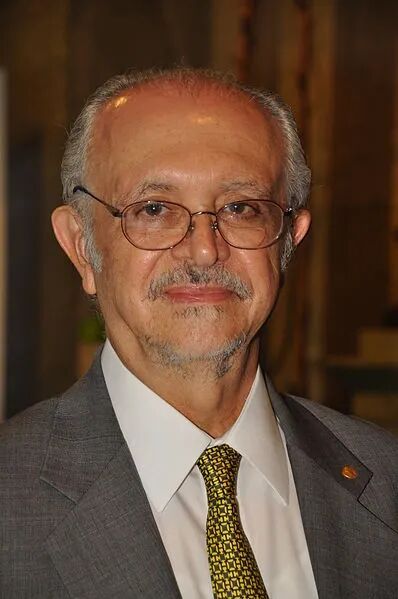
An Enduring Passion and Tireless Effort
On the 19th of March in 1943, Mario Molina was born to parents Leonor Henríquez de Molina and Roberto Molina Pasquel. His father was a lawyer as well as a diplomat who served in countries such as Ethiopia, Australia, and also the Philippines. Mario showed an interest in science at a very early age making his own chemistry lab in their home by turning the bathroom into his laboratory and experiment area. He was fascinated by his toy microscope and through this he first viewed amoeba and paramecia.
It had been a tradition in their family to study abroad for a time, and so Mario Molina with his love for chemistry, went to study at the Institut auf dem Rosenberg in Switzerland at the tender age of eleven years, after having completed his basic primary school education in Mexico.

During his school years in Europe however, Mario was disappointed that his classmates had little interest in chemistry. Because he had already made up his mind to be a chemist, on his return to Mexico, Mario Molina took his bachelor’s degree in Chemical Engineering at the Universidad Nacional Autónoma de México or the National Autonomous University of Mexico in 1965.
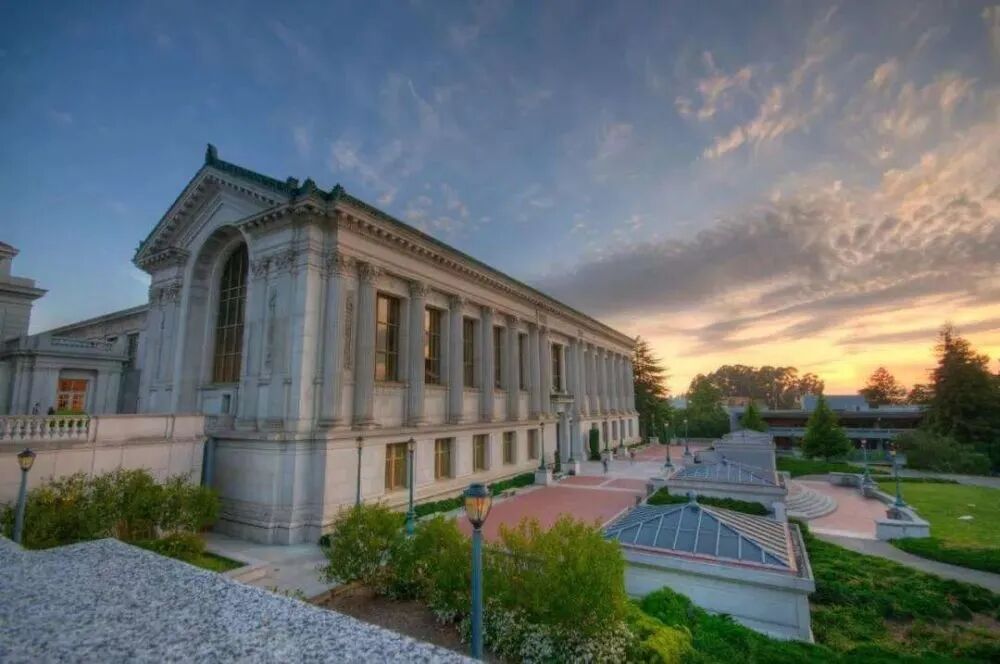
When he finished his undergraduate studies Molina went on to pursue his Ph.D. in physical chemistry. He had a challenging time because although his degree had given him training, Molina felt he needed a fuller, more rounded scientific education. He attended the University of Freiburg in Germany and obtained an advanced degree in 1967 studying kinetics of polymerizations. Continuing his studies after a year as working as an associate professor at his alma mater, Molina received his doctoral degree from the University of California in 1972.
At the University of California at Berkeley, Molina was part of the research group led by Professor George C. Pimentel who was a pioneer in developing matrix isolation techniques. Their goal was to study the molecular dynamics with the use of chemical lasers.
Ozone Depleters: Chlorofluorocarbons
After he completed his doctorate Mario remained for another year in Berkeley where he continued his research concerning chemical dynamics. He then joined Professor F. Sherwood Rowland’s group as one of the postdoctoral fellows and moved to Irvine, California. It was Professor Rowland who inspired Molina to research the effect on the environment of the industrial chemicals, chlorofluorocarbon gases (CFCs), which were accumulating in the earth’s atmosphere. With that project, Molina learned about a new field in chemistry;atmospheric chemistry.
Chlorofluorocarbons were used as propellants in spray cans and in refrigeration units. They are highly stable compounds and were first developed in the 1930’s as a non-flammable alternative to dangerous substances like ammonia.
Molina and Rowland devised the CFC ozone depletion theory together. Molina knew that as the CFCs drift up to higher altitudes, they are destroyed. What held Molina’s interest was what the consequences of these accumulated compounds would be. The scientists realized that as ultraviolet radiation decomposes the CFCs, chlorine atoms are produced which deplete the ozone layer. They found that a single chlorine atom is able to destroy around 100,000 ozone molecules before becoming inactive.
Their findings concerning their ozone depletion theory were published on June 1974 in “Nature”. They also made efforts to inform policy makers, so that laws to protect the earth’s ozone layer through regulation of CFC use could be considered.

A year later, Molina was appointed as one of the faculty members of the University of California, Irvine. Molina established his own program for the investigation of spectroscopic and chemical properties of different compounds which have an important role in the atmosphere. The compounds he focused on included hypochlorous acid, chlorine nitrate and chlorine nitrite.
While Molina had enjoyed his years in Irvine, it limited his time for doing experiments and after seven years with this academic position, he decided to join the Molecular Physics and Chemistry Section at the Jet Propulsion Laboratory 1982 in Pasadena, California. He was part of a small group and had the time and resources to conduct experiments of his own.
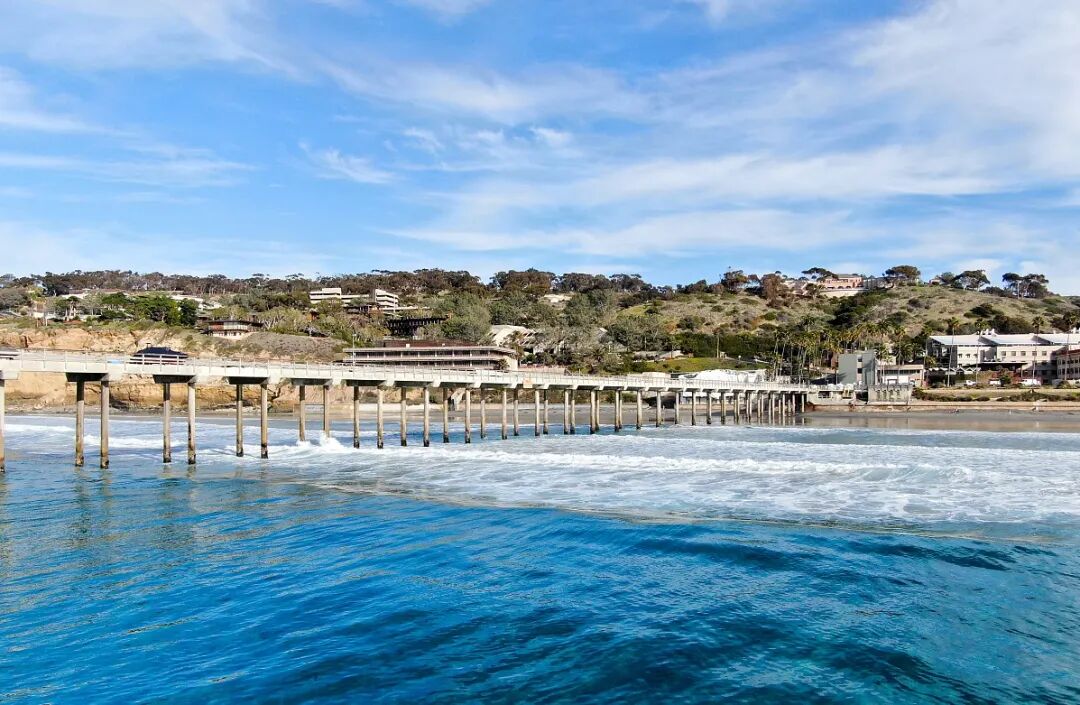
In 2004 Molina joined the Department of Chemistry and Biochemistry at University of California, San Diego and the Center for Atmospheric Sciences at the Scripps Institution of Oceanography.
A Pioneer in Environmental Protection
Mario Molina was awarded the 1995 Nobel Prize in chemistry with Paul J. Crutzen and F. Sherwood Rowland for their discovery of the role of CFCs in ozone depletion.
He also won the Esselen Award of the Northeast section of the American Chemical Society in 1987, the Newcomb-Cleveland awards from the American Association for the Advancement of Science, and the United Nations Environmental Programme Global 500 Award in 1989. In 1998, Molina received the Willard Gibbs Medal given by the Chicago Section of the American Chemical Society.
He has several honorary degrees from esteemed bodies of education such as Yale, Duke, and Harvard Universities. Molina is also received the Presidential Medal of Freedom on the 8th of August in 2013 from President Barack Obama.
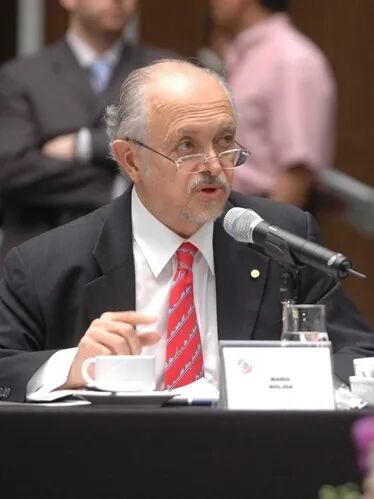
The Montreal Protocol on Substances that Deplete the Ozone Layer is the only international convention among the United Nations' hundreds of conventions to have secured participation from every country. Over more than thirty years, many countries met their agreed targets ahead of schedule, phasing out more than 80% of ozone-depleting substances.
As of 2016, more than one million tonnes of ozone-depleting substances had been phased out worldwide, and the ozone hole had been effectively contained. According to a study released by the Massachusetts Institute of Technology, the ozone hole would disappear entirely by the middle of the twenty-first century.
In an era when CFCs were widely used in daily life and industrial production, Mario Molina keenly focused on environmental protection, an issue deserving the attention of all humanity. His research established the enormous destructive effect of CFCs on Earth's ozone layer. In the face of doubts from scientists and manufacturers, he firmly called for a ban on their use and release!
Thank you, Professor Mario Molina, for your pioneering contributions to protecting the global environment!
Original source:
https://www.famousscientists.org/mario-molina/
Source: Famous Scientists
Some material in this article comes from the internet. Please contact us for removal if it infringes your rights.
Editorial note
Editorial note: The original banner described Molina as the discoverer of the Antarctic ozone hole. Here he is identified as a pioneer in revealing the threat posed by CFCs to the ozone layer. Farman, Gardiner, and Shanklin of the British Antarctic Survey announced the Antarctic ozone-hole discovery in 1985. His father's name and the mistranslation of 'chlorine atoms' as 'chlorine ions' have also been corrected using the original English and supporting sources. The 2016 figures and ozone-recovery projection retain their historical context and do not represent a current assessment.
Supporting references
British Antarctic Survey: The Ozone Hole Discovery
NASA: Ozone and the Catalytic Action of Chlorine Atoms
Interview with Mario Molina (Nobel)
Molina Autobiographical Extract Preserved by UNAM
Sources and editorial history
Restored from a complete historical article exported from the PhDSciNet Official Account.
Editorial revision: Editorial note: The original banner described Molina as the discoverer of the Antarctic ozone hole. Here he is identified as a pioneer in revealing the threat posed by CFCs to the ozone layer. Farman, Gardiner, and Shanklin of the British Antarctic Survey announced the Antarctic ozone-hole discovery in 1985. His father's name and the mistranslation of 'chlorine atoms' as 'chlorine ions' have also been corrected using the original English and supporting sources. The 2016 figures and ozone-recovery projection retain their historical context and do not represent a current assessment.