

Historical compilation: This article preserves the scientific biography in the original manuscript. The English material is credited to Famous Scientists. No named author or translator could be verified from the export, and the original publication date remains unverified.
A PhD from a prestigious university? A scholar trained by a famous scientist? An idealistic researcher devoted to science for a lifetime? James Black is sure to challenge your stereotypes of Nobel laureates!
James Black was a pharmacologist who never earned a PhD. He achieved remarkable success in industry and generated billions of dollars in profits for his employers, yet resolutely returned to academia in middle age to continue his research. In 1988, his work on beta-blockers earned him that year's Nobel Prize in Physiology or Medicine!
The drugs that saved countless lives helped him win science's highest honor, the Nobel Prize. One wonders whether that achievement brought some resolution to the sorrow of witnessing his father's death from heart disease when he was young.
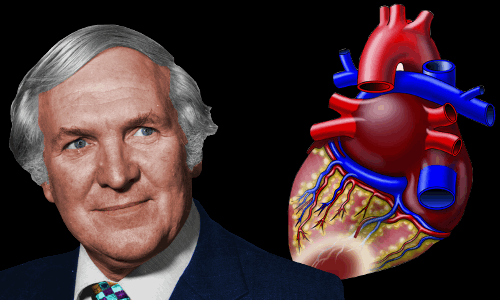
Medicine: The Beginning and the End
James Whyte Black was born on June 14, 1924 in the small town of Uddingston, Scotland, UK.
His father had left school at age 14 to become a coal miner and had later studied mining engineering at night school.
James was still an infant when his family relocated to the mining village of Auchterderran in the county of Fife, where his father had been appointed manager of a colliery. James’s mother was an enthusiastic Baptist. On Sundays the family would attend both morning and evening church services.
James’s father, like many miners, hoped his sons would not follow in his footsteps. He encouraged them all to get a good education and avoid the coal mines.

James was educated at Auchterderran Primary School followed by Cowdenbeath Secondary School, now renamed Beath High School.
His math teacher, Dr John Waterson, spotted James’s potential and urged him to enter, at age 15, the competitive entrance exam for the University of St Andrews. This surprised James, who despite studying music and math avidly, had thought of himself as taking life easy at school.
James’s brother William had already studied medicine at St Andrews. James had enjoyed leafing through his medical books and decided he would like to study medicine too. He passed the exam and was admitted to St Andrews.
He arrived at St Andrews in October 1940 with Britain under attack from Nazi Germany. A year earlier, Poland had been invaded by the Nazis from Germany and the Communists from the Soviet Union, starting World War 2.
People all over the United Kingdom were on full invasion watch.
At age 16, James Black started his medical degree. In his freshman year, he came into contact with the outstanding mathematical biologist Sir D’Arcy Wentworth Thompson. Black regarded Thompson, who was in his eighties, as an intellectual giant. Inspired by the great man, Black worked tirelessly on his medical courses and won a series of academic prizes.

In 1946, age 22, Black received his degree in medicine. He had studied for six years, but his scholarship had been for four years. He borrowed money for the final two years putting him in debt.
Hospital doctors were well paid, but he believed they lacked respect for their patients. He grew alienated from the profession as a result of incidents such as hearing surgeons refer to people as ‘the duodenal ulcer in bed 10′ rather than by their names.
Black began work as a research assistant in St Andrews’ physiology department, but soon decided to work overseas where he could earn more money and eliminate his debt. He traveled to Singapore, where he spent three years as a physiology lecturer at the King Edward VIII College of Medicine.
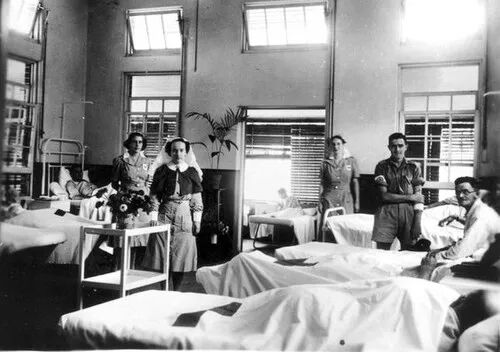
The Development of Beta-Blocker Treatment
In 1950, Black returned to the UK debt free and was appointed chair of the physiology department at the University of Glasgow Veterinary School. He carried out two pieces of research that bore on his future drug creations. He studied:
·the effects of serotonin on gastric acid secretions
·how to increase the supply of oxygen to prevent cardiac arrest in people suffering from narrowed coronary arteries, i.e. angina. Black was hit by an inspired thought. Rather than increase oxygen to the heart, which was difficult, what if the effects of the body’s natural adrenaline could be blocked, reducing the heart’s need for oxygen? While he was a medical student, Black saw his father die of a heart attack after a minor traffic accident. Black wondered if the adrenaline released into his father’s body after the accident – the famous fight or flight effect – had led to the cardiac arrest that killed him.
In 1948, Raymond Ahlquist had discovered two types of adrenaline receptors – he called these alpha and beta. Both are present in various body cells including heart cells. Ahlquist’s work was universally ignored until Black read Ahlquist’s paper in 1954.
Black began wondering if Ahlquist’s adrenaline receptors were the key to reducing the heart’s oxygen demand. He reasoned that if these receptors could be deactivated, the heart would ignore adrenaline, lowering its need for oxygen.
By 1956, Black was looking for a molecule that:
·was sufficiently like adrenaline to bind to the adrenaline receptors, blocking them to adrenaline
·was sufficiently unlike adrenaline to not activate the heart’s fight or flight mode

Synthesizing molecules was impractical at the veterinary school, so in 1958 Black pitched his idea to the UK’s biggest chemical company, ICI.
Soon he was leading a research group at the newly established ICI Pharmaceuticals at Alderley Park, Cheshire. He credited one of his group, John Stephenson, an organic chemist, with shifting his scientific approach from physiology to pharmacology.
Black’s was an entirely new approach to designing a drug. Previously, scientists would screen many different types of molecule to see if any were useful. Black, however, was trying to make a specific molecule.
A fellow scientist likened his approach to using a rifle bullet when everyone else was scattering shotgun pellets.
The result was propranolol, patented in 1962 and approved for medical use in 1964.
Black described his method for inventing new drugs as:
1.Identify the clinical problem.
2.Identify the underlying biological processes.
3.Identify the regulatory molecules and receptors involved.
4.Design molecules which antagonize this process by acting through the same receptor pathway.
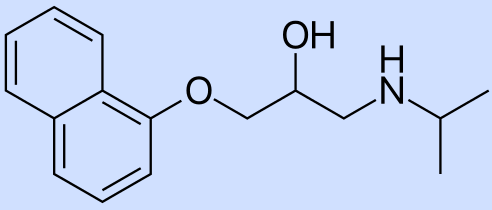
A Cross-Field Expert's Commitment to Helping Others
It’s not only heart disease that benefits from blocking adrenaline. Beta blockers also help to:
·lower blood pressure
·reduce performance anxiety
·reduce tremors
Tens of millions of beta blocker prescriptions are issued every year. They have saved or improved the lives of millions of people.
The principle of seeking a suitable blocking molecule led to Black’s next ground-breaking drug, cimetidine. He did this after moving to another company, Smith, Kline and French, where he worked from 1964 – 1973.
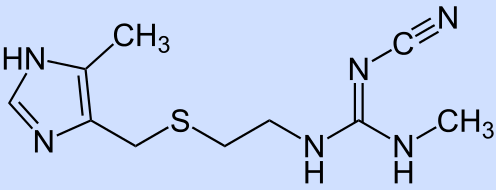
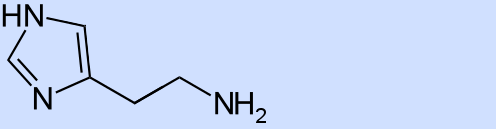
Black looked for a molecule that would mimic histamine. Histamine, produced naturally in our bodies, stimulates the production of digestive acid in the stomach, which worsens stomach ulcers.
Black hoped he could find a way of blocking histamine receptor sites. He achieved this with cimetidine. Under the brand name of Tagamet, cimetidine became the first drug ever to achieve annual sales of more than $1 billion. For a time it was the most prescribed drug in the world.
In 1973, Black left industry for good. He had made his employers billions in profits, but his inventions had not brought him great wealth. He carried out a variety of research projects as Chair of Pharmacology at University College London, Director of Therapeutic Research at the Wellcome Research Laboratories, Professor of Analytical Pharmacology at King’s College London. In 1992, age 68, he became Chancellor of the University of Dundee, stepping down in 2006.
James Black died at age 85 on March 22, 2010 in London.
The tragedy of his father's death from heart disease opened the story of a legendary pharmacologist's eventful life.
From ICI to Smith, Kline and French, the two drugs whose development James Black led—propranolol and cimetidine—were major milestones in pharmaceutical history. They made the two companies famous, brought billions of dollars in profits, and helped Black win the Nobel Prize.
Yet after creating such a remarkable legacy in industry, James Black resolutely left enormous wealth behind and returned to academia, devoting himself to research. At a drug-development center outside Manchester, amid green lawns and misty rain, ideas for new drugs formed in his mind. Back at a university after a long absence, surrounded by eager students and a lively campus, perhaps he regained a long-missed sense of ease and tranquility.
Behind that remarkable story were millions of patients given a new chance at life!
Original source:
https://www.famousscientists.org/james-black/
Source: Famous Scientists
Some material in this article comes from the internet. Please contact us for removal if it infringes your rights.
Editorial note
Editorial note: The historical company where Black worked in 1964–1973 was Smith, Kline and French, rather than the later GlaxoSmithKline. The text and closing account have been aligned with his Nobel Lecture and the original English. This history of drug development is not current treatment or prescribing advice.
Supporting references
Sources and editorial history
Restored from a complete historical article exported from the PhDSciNet Official Account.
Editorial revision: Editorial note: The historical company where Black worked in 1964–1973 was Smith, Kline and French, rather than the later GlaxoSmithKline. The text and closing account have been aligned with his Nobel Lecture and the original English. This history of drug development is not current treatment or prescribing advice.