Historical memoir: Jada Yuan’s personal recollections and the manuscript’s narrative context around 2021 are preserved below. The original account publication date is unverified; personal experiences and judgments are retained as narrated.
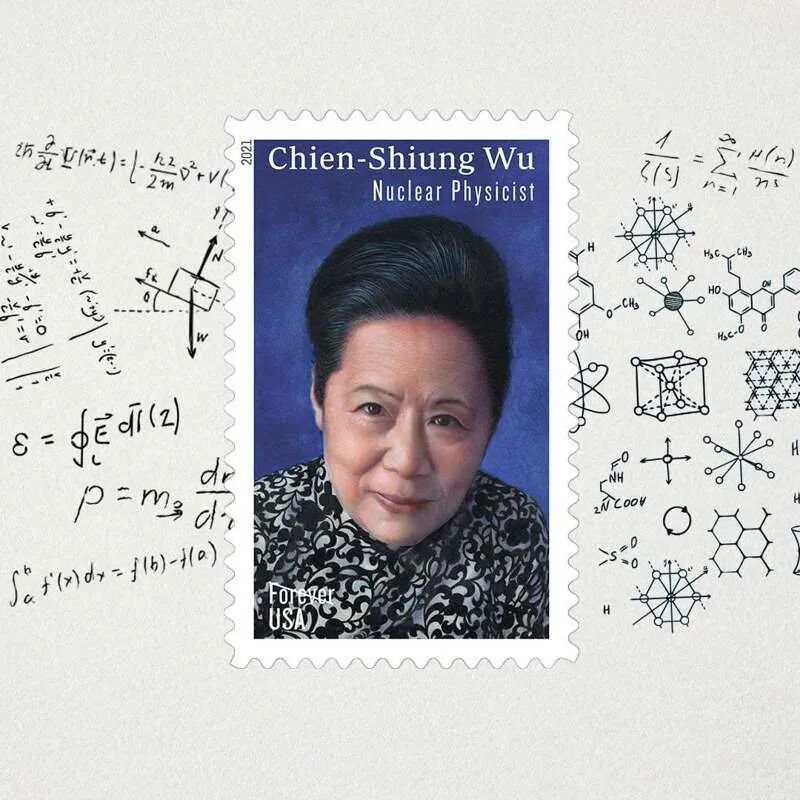
In 2021, the U.S. Postal Service issued a Forever stamp commemorating Chinese American nuclear physicist Chien-Shiung Wu. Since the United States was founded, only a handful of physicists, including Einstein, Fermi, and Feynman, have received this honour. Wu, determined to show the world the strength of Chinese women, was often called the “Chinese Madame Curie” and became the first woman to serve as president of the American Physical Society.
In this issue, let us follow Jada Yuan’s account into the remarkable life of her grandmother, nuclear physicist Chien-Shiung Wu!
Unveiling a statue: Remembering my grandmother
Someone pulled a cord and yellow fabric billowed down, revealing a three-story-tall statue of my grandmother.
It was May 2012, in a city just north of Shanghai. And there she loomed, a sculptor’s rendition of Chien-Shiung Wu, the pioneering, internationally renowned nuclear physicist, who left China in 1936 to pursue her education in the United States, and, in a lot of ways, resisted looking back. She disproved what was thought to be a fundamental law of nature and raised my dad in Manhattan and taught me how to use chopsticks as a kid.
In life, she stood maybe all of 5 feet, and shrinking with age. Now she was preserved as a young version of herself, seated a top an actual pedestal, draped in academic robes like the ones I’d only seen in photographs of her winning 16 honorary doctorates of science, including the first given to a woman at Princeton University. It took me a moment to comprehend that the statue was supposed to be her. So big, and so green — the same minty hue as the Statue of Liberty.
My parents and I had flown to Shanghai, where my grandmother had been born 100 years earlier in 1912, and then drove an hour north to where she was raised in a fishing village called Liuhe, built where the Yangtze River flows out to the Yellow Sea.
The local government had organized acentennial jubilee, which we experienced in a jet-lagged haze. I hadn’t expected the police-escorted motorcade, or the banners bearing her name strung across grand avenues. Or the raucous banquets with Communist Party officials every night.
Visits to China have always been achaotic parade of relatives I didn’t know I had and a cacophony of a familiar language that my American-born father and I have heard all our lives, but can rarely understand. We were just going where we were told.
The morning of the statue reveal, our relatives guided my father, Vincent Yuan (Chien-Shiung Wu’s only child), my mother, Lucy Lyon, and me (the only grandchild) to the front of a sea of foldout chairs covered in red and yellow fabric. Somewhere amid many untranslated speeches in Chinese, I heard my father’s name, then mine. My uncle gestured frantically for us to stand up and wave and soak in the applause. When my mother, who is blond-haired and blue-eyed and ethnically but not religiously Jewish, was introduced and stood up, the crowd of thousands gasped in unison.
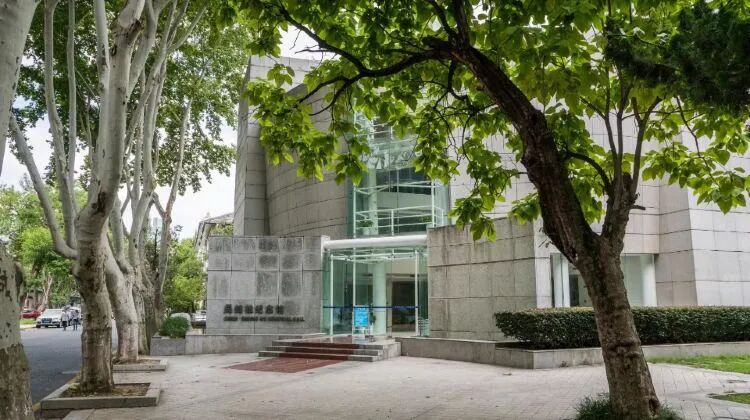
Trips to China to honor my grandmother were something we’d done before: In Nanjing, where she was an undergraduate, there’s a memorial hall. Another statue of her, in bronze, stands in Shanghai. On the centennial trip, we attended the opening of a museum that showcases her academic papers as well as the slit-legged qipao dresses she wore under her white labcoats. In her hometown, we visited classrooms at the school her father founded — mainly so his daughter could get an education. The children there sang songs about her.
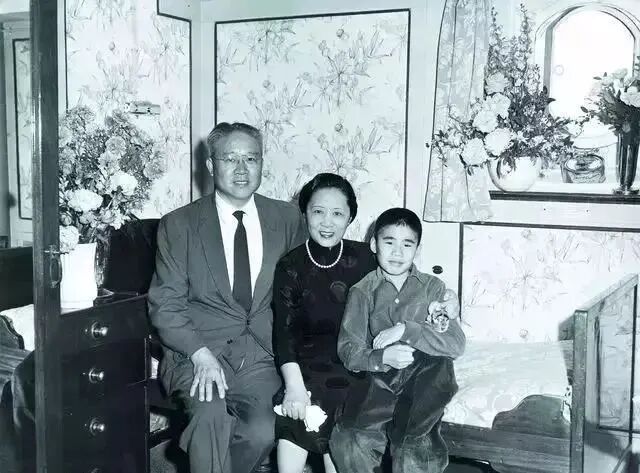
Chinese hero worship is impressive to witness — and surreal to experience when your grandmother is the one being revered. In New York, she had walked unnoticed between her laboratory at Columbia University and the nearby rent-stabilized faculty apartment she shared with my grandfather, who was a particle physicist, and my father, who would become a nuclear physicist.
It is easy to lose the real person in so much veneration. I am a keeper of my grandmother’s memory, but an imperfect one. The work that made her famous changed scientists’ understanding of the universe. It inspired countless girls and women, who contact me to this day.
Like many children who come from families of immigrants — or from families of scientists, or families who lived through war and destruction — I didn’t realize how little I knew of her life until it was too late to ask. Memories merge. Our family stories have been retold so many times in official accounts and biographies that it’s unclear which versions are true. The past is a closed chapter. The first generation works to distance itself from the old ways, the language, the food. Second-generation grandchildren, like me, circle back around, yearning to know more about where it all began.
In China, my grandmother was a rock star. Then, in early 2021, she became a kind of rock star here, too, when the U.S. Postal Service issued a commemorative Forever stamp in her honor.
The portrait on my grandmother’s stamp looks just like the woman I remember: wise, discerning, with her hair in an elaborate updo — its own achievement in physics. She has that mischievous half-smile that always made me wonder what she was thinking.
From teacher to queen of physics
We are all in a way just theorizing about the lives of those we were closest to; once they’re gone, we work with the data and notes that remain.
I am not an expert on nuclear physics, but here is what I understand: An experiment my grandmother conducted in 1956 proved a theory that shattered our fundamental understanding of the physical world. She took on a challenge no one else in her field would tackle, and demonstrated the “non-conservation of parity,” which showed that the laws of nature are not entirely symmetrical.
A phenomenonand its mirror image are not always the same.
The universedoes at times distinguish between left and right.
As Janna Levin, anastrophysicist at Barnard College, told me, my grandmother’s discovery of asymmetry may be at the root of why there was more matter than antimatter after the Big Bang — why there is something instead of nothing, why everything didn’t annihilate into oblivion, and, ultimately, why the universe as we know it exists at all.
My sense of who my grandmother was, on paper, comes from many sources, some as reliable as peer-reviewed science. A children’s book, “Queen of Physics, published in 2019, turned out to be strangely useful in my attempts to know more about her, the simplest possible telling.
What’s the most important thing to know about her career? Well, this:
Your grandmother should have won the Nobel Prize.
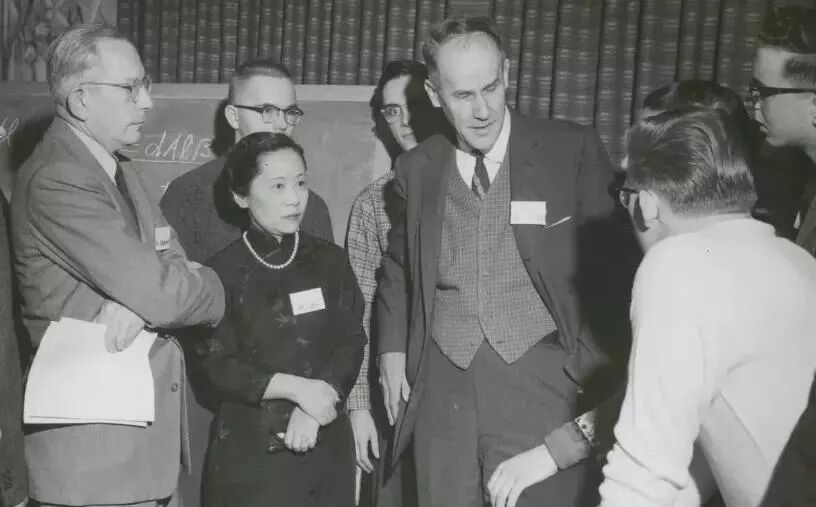
I started hearing that before I even understood her work (not that I could ever truly understand it). She is known worldwide as “the Chinese Marie Curie” and “the First Lady of Physics.” At Columbia, where she taught for decades, her students called her Madame Wu — or “the Dragon Lady,” if they were upset with her unrelenting perfectionism and the long hours she insisted they work in the physics lab. She preferred Professor Wu or Dr. Wu. I called her Grandma, although a Chinese kid with more exposure to the culture would have called her nai nai.
She never won the Nobel, but her name is frequently mentioned alongside giants of physics who did, like Curie, Einstein, Fermi and Feynman.
Chien-Shiung Wu was 11 when she left home, having outpaced what her parents’ school could teach her. She’d been lucky — a middle child with two brothers born to politically progressive parents, actual revolutionaries, who advocated for women’s rights and the education of girls.
Fifty miles of bumpy country roads lay between her and the highly selective girls school in Suzhou she attended tuition-free, training to be a teacher. At night, however, she borrowed physics and mathematics books from classmates, studying them insecret. Why physics? She never told me, but thrilling discoveries were coming out of Europe and America in the 1920s, propelled by Einstein’s theory of relativity. Wanting to be a part of that is as understandable as a young Patti Smith wanting to be in the East Village in the late 1960s.
She was 24 in 1936 when she began amonth-long Pacific crossing on the ocean liner that brought her to America. An uncle paid her way. She had to go; there was nowhere in China to get a PhD in atomic physics then. She thought she’d be back in a few years.
Waving from that boat was the last time she saw her parents alive.
When the postage stamp was being released, a reporter contacted my father and asked him about his mother. He CC’d me on his answers, which were more can did than he’d ever been with me.
Could he describe how she was as a mother?
She worked long hours in the lab and came home late at night, he replied. “She took care of me, but she needed to do her work.” She checked that he’d done his homework, but didn’t micromanage.
What did they do together for fun?
“We didn’t have much in common as far as fun went,” he wrote. “Her work was her life and her fun.” She preferred to spend time with him when they traveled, rather than the mundane day-to-day.
He learned something about his own childhood from reading about her: “Her students in her lab bought a pair of tickets to the circus for us so they could get her out of the lab for a coupleof hours,” he said. “She went off and returned in a half-hour with a big grin saying that she didn’t have to go, because the nursemaid had agreed to take me.”
Somehow I’d never tried to peel back the layers of fame in my own family. Even now it’s difficult, because if I dig too hard, I have to confront the idea that, in the course of her many achievements, Chien-Shiung Wu didn’t balance her work and her family life, and those choices have trickled down, through my father and then to me, in ways that I’m only beginning to understand after years of therapy.
My grandmother got off that ocean liner intending to work on her PhD at the University of Michigan, but changed her mind and enrolled at the University of California at Berkeley after a spontaneous visit. She’d been horrified to learn that Michigan didn’t let women enter through the front door of the student union. Then there was her Berkeley tour guide, another Chinese physics graduate student, Chia-LiuYuan, who went by Luke.
Luke was my grandfather, but there’s another love story here, which is less romantic — or perhaps more romantic, to physicists: Berkeley, where the cyclotron was invented, had a large accelerator that moved charged particles in spiraling paths and directed them at targets. As soon as my grandmother saw it, she knew she had to stay.
At Berkeley, she began her life’s work — the study of beta decay. It’s one of three major forms of radioactive disintegration (alpha, beta and gamma), and is a manifestation of the weak interaction, one of the fundamental forces, essential to the Sun’s fusion reactions. As the worldshe knew crumbled around her, she focused on unstable atoms that, in falling apart, shed little bits of themselves to move toward more stable configurations, emitting energy and becoming other elements.
Berkeley did not hire my grandmother for a permanent position. It was a harsh blow. None of the top 20 research universities in the country had a female physics professor at the time. (Even now, according to the National Science Foundation, fewer women earn degrees in physics than in any other field of science.)
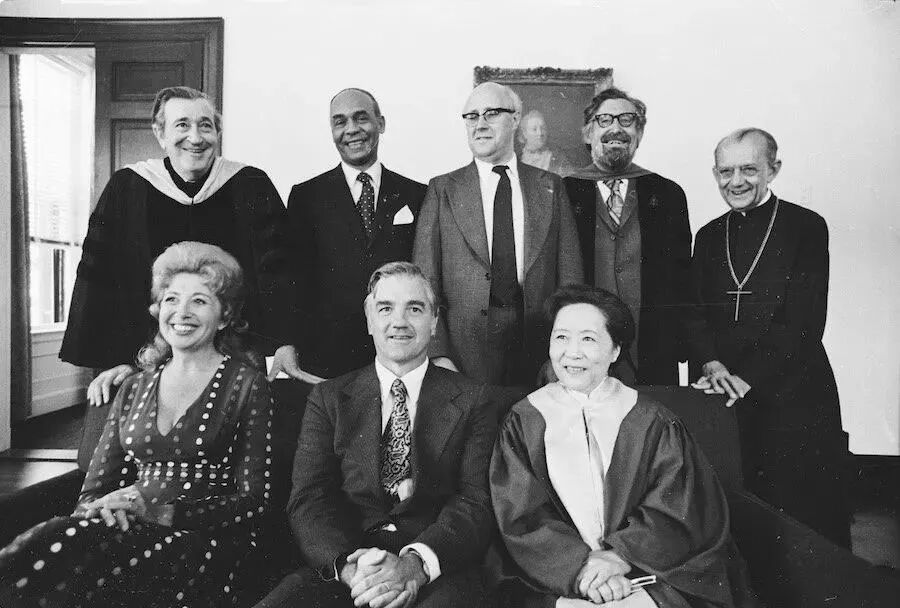
My grandfather, also unable to get adecent-paying position at Berkeley, was offered a plum spot at Caltech, then a job in New Jersey developing radar for the U.S. Defense Department. They married and moved east, the one time she’d trail after his career. She briefly taught at Smith College, where she relished mentoring young women, but her teaching duties left no time for research. A year later, in 1943, she signed on at Princeton, as one of its first female physics researchers.
A year after that, Columbia University lured her away for a secret wartime project. Two physicists in Columbia’s division of war research spent a day quizzing her, but avoided telling her anything about the work she’d be doing. Then they asked her to guess.
“I’m sorry, but if you wanted me not to know what you’re doing, you should have cleaned the blackboards,” she said.
They hired her on the spot, according to McGrayne.
The discovery of parity non-conservation
By the 1950s, the symmetry of the universe, including left-right symmetry or parity conservation, was considered fact. Parity states that the universe does not favor left or right, that the laws of physics apply equally to anything and its mirror image. It had been proved to apply to macro objects such as planets and baseballs.
But at the nuclear level, not so much. Scientists were using high-speed accelerators to explode particles into collections of smaller particles, and the results were coming out wonky. Either the experiments were flawed, or 30 years of physics were.
In the spring of 1956, a male colleague of my grandmother’s at Columbia, Tsung-Dao Lee, told her about a controversial paper he was writing with Princeton’s Chen-Ning Yang. It theorized that parity might not be conserved in weak interactions, one of the four fundamental forces of the universe. (Gravity is another fundamental force; their theory was as provocative as saying gravity only works sometimes.)
My grandmother, at 44, had earned a reputationas a tough and meticulous experimentalist. She was at home in the lab, proving whether the work of theorists like Lee and Yang had real application. She didn’t see physics as a mad dash to be first; she valued precision and being unimpeachably right.
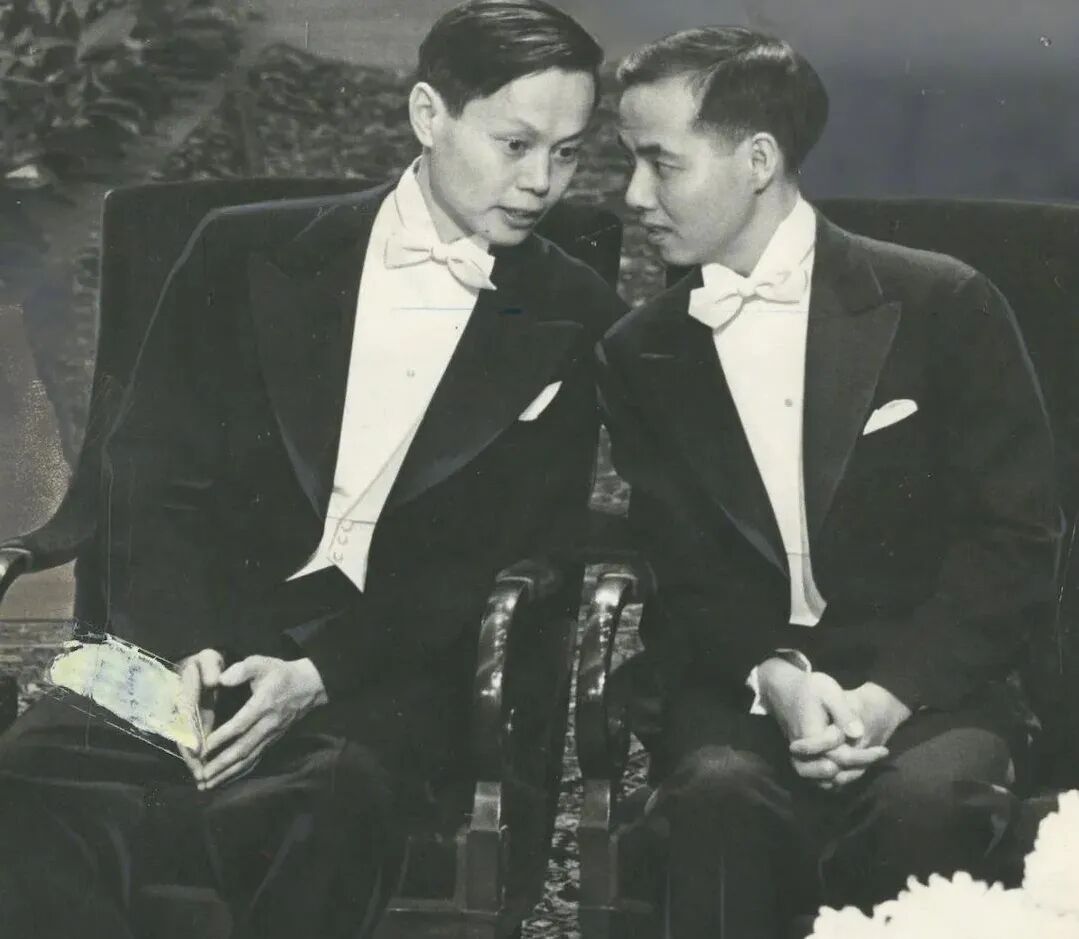
If the scientific world had not assumed Lee and Yang’s theory was far-fetched, there would have been a race of experimentalists trying to prove it. Yang later said my grandmother was the only person who understood the urgency and importance of testing their theory.
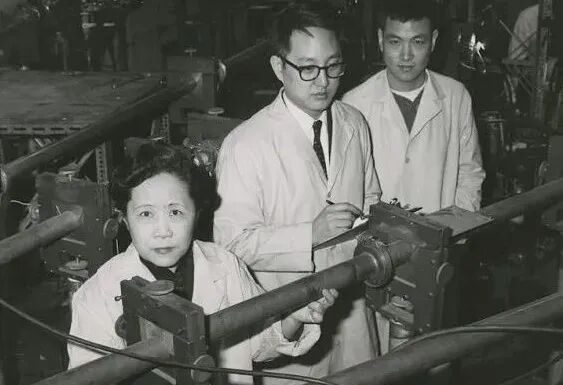
She suggested orienting an experimentaround the isotope cobalt-60, a strong source of beta decay, and bringing it down to near absolute-zero temperatures, eliminating variables and making it easier to measure the path and direction of electrons emitted during decay.
Columbia didn’t have the right equipment, so she collaborated with the cryogenics team at the National Bureau of Standards in Washington, led by Ernest Ambler, who was British American.Through the fall of 1956, she traveled from New York and back to use their lab, still teaching classes at Columbia while her husband and a nanny cared for their 9-year-old son.
Preliminary results of her experiment were astounding. In a major, measurable way, far more electrons were shooting out of the south pole of the nuclei than the north. She reversed their spin, and got the same lopsided effect.
On Christmas Eve, she boarded a trainback to New York, bringing good news to Lee and Yang: her work — “the Wu experiment,” as it came to be known — seemed to prove that parity was not conserved in beta decay.
The universe, it turned out, was slightly left-handed.
She went back to Washington on Jan. 2 to verify her results.
Two days later, Lee shared the news with a group of Columbia scientists — even though my grandmother had asked him not to, not yet.
This is important, because it directly impacted her ability to get credit for her discovery. Another group of Columbia scientists, led by Leon Lederman, were working on another experiment that Lederman realized could be modified to also test parity non-conservation. They confirmed my grandmother’s results in four days.
Word began spreading. My grandmother kept checking her results in repeat tests, under intense pressure to publish a paper that would beat Lederman’s. In physics, whoever submits — and publishes — first gets the glory.
Lederman held off submitting his, at Lee’s request; had they not been colleagues at Columbia, such niceties were not likely to have occurred. It wasn’t until Jan. 9 that my grandmother’s team pulled a bottle out of a drawer, a rare 1949 Chateau Lafite Rothschild Bordeaux, and toasted the overthrow of parity. Both papers were published in Physical Review on Feb. 15, 1957. Lederman’s paper acknowledged that he only started his experimentafter hearing of my grandmother’s results.
It was a triumph, but the damage, in a sense, was done. Later that year, the Nobel committee declined to award anyone on the experimental side; Lee and Yang won for their theoretical work, and were the first physicists of Chinese nationality to receive a Nobel.
Sexism seems present, if not directly overt. In 120 years, only four women have won a Nobel in physics. Chien-Shiung Wu’s work was lauded over the coming decades: an honorary doctorate of sciencefrom Princeton (where the university president called her “the world’s foremostfemale physicist”); tenure at Columbia; the National Medal of Science; thepresidency of the American Physical Society; and Israel’s prestigious Wolf Prize.
I don’t know what my grandmother thought about this, or if she thought much about it all, because it involves the sort of feelings she never brought up.
My dad says she would have wanted her work to speak for itself.
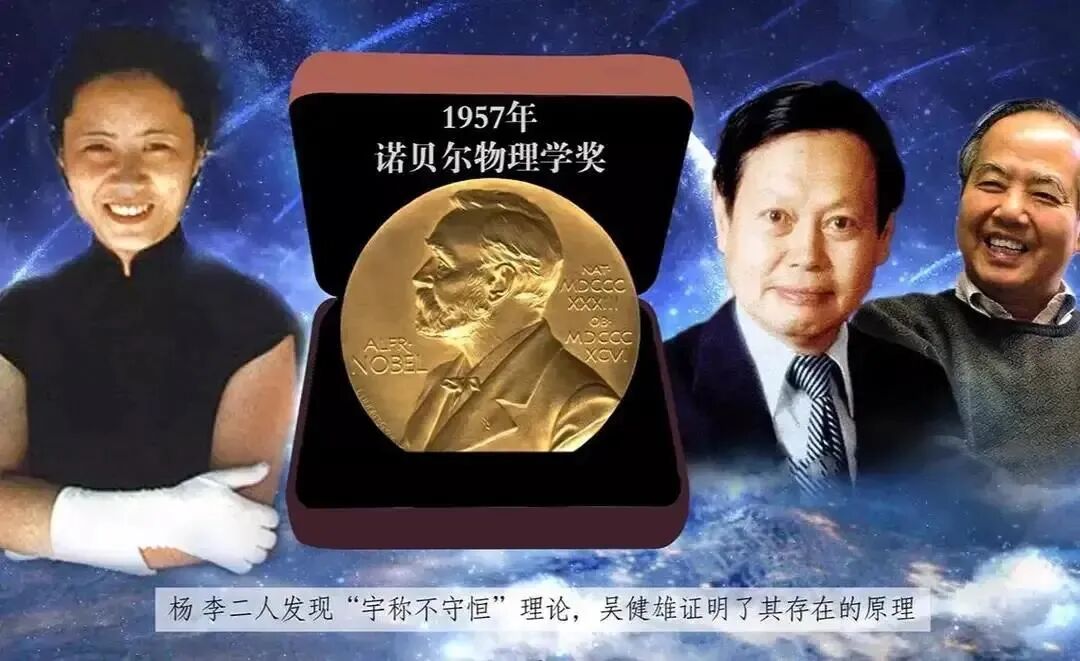
I always wondered why my father went into physics — why follow in such large footsteps? Was it pressure? Was it a need to bond with his mother by partaking in her greatest passion?
All of that, he told me recently, never occurred to him. He liked being a detective of science, working in a world where there were right answers, and a good experiment could prove them correct.
Twice a year, usually on school breaks, my parents and I went to New York to see my grandparents. In their apartment, amid the carved jade statues and scroll paintings, was a wall covered in framed photographs of my grandparents with various people I didn’t recognize. It took me until my teens to start asking who was in the pictures: Muhammad Ali, on the day he and my grandmother both received the Ellis Island Medal of Honor. Pope John Paul II. President Gerald Ford. Zhou Enlai, the first premier of the People’s Republic of China, whom she met when the country opened back up to the West in the 1970s.
Physics was a small world and my grandmother kept company with the greats. Ernest Lawrence, who invited her tostudy at Berkeley, won a Nobel for inventing the cyclotron. Her thesis adviser was Emilio Segrè, a future Nobel laureate from Italy — also stranded far fromhome after Mussolini took power.
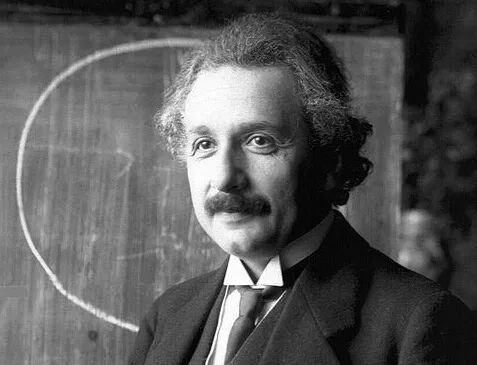
My father can’t confirm this tale, but I’ve heard it often: When he wasborn in Princeton in 1947, a friend of my grandma’s, a scientist who had also escaped the horrors of war, came to visit her in the hospital. That was Albert Einstein.
A lifetime devoted to dreams and dignity
The USPS had news for us: The stamp would be released on Feb. 11, 2021, in observance of International Day of Women and Girls in Science. It would be a Forever stamp, first class for all time.
Unless you’re a collector, stamps are just stamps — at least until your grandmother is on one. This stamp has connected me with long-lost cousins and former students of my grandmother’s. Little girls who love science have sent drawings of their new hero, C.S. Wu.
A friend in New York put the Dr. Wu stamp on 100 postcards for the Stop Asian Hate movement, which she encouraged people to send to their congressional representatives.
I told her she was over spending by 12 cents per postcard. She said having my grandmother’s face on them is far more important.
I like to think of my grandmother’s New York apartment as where I learned to appreciate being Chinese. It was this other world of ornate tea sets and the smell of steamed cabbage and conversations in Chinese that always made me think my grandparents were talking about me right in front of me.
A stamp seems like a fitting tribute, affixed to her favorite means of communication. I’ll never know to what degree language prevented us from knowing one another deeply. It reduced communication to its purest exchange: I knew she loved me.
I wonder if the stories I tell make her sound too much like the stereotype of stern Chinese grandmothers. When really, all she wanted me to see was the limitlessness to life; what can be gained by pushing past the barriers around you. She was fighting to be seen and respected at a time when women and Chinese people in America rarely were.
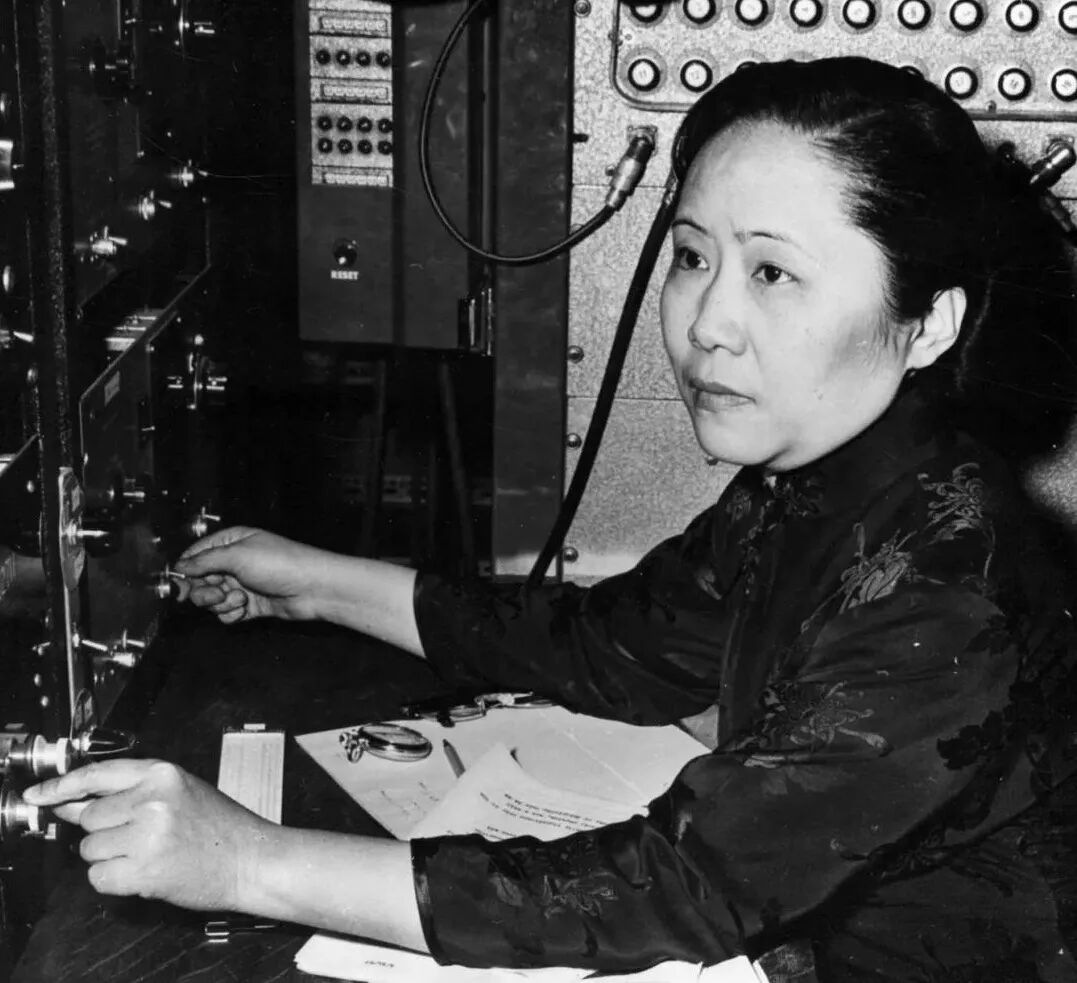
As early as 1965, she was giving speeches advocating for more women in science. At MIT’s symposium that year on women in science and engineering, she railed against the “unimpeachable tradition” of science being seen as a male field, and wondered aloud if atoms or DNA molecules “have any preference for either the masculineor feminine treatment,” the way our society did. “In ourpresent society of plenty and proficiency, is it too much to provide excellent professional child care during the day so that mothers can get away from monotonous household chores and work in their chosen fields?” she asked. Yes, it was important for scientists to have home lives, she said. “However, this noble human desire to be devoted companions and parents must, ideally, be equally shared by men.”
My last memory of my grandma is ofher in one of the beloved pair of armchairs upholstered in faded yellow corduroy, where she and my grandfather enjoyed sitting together. I was holding her hand, not long after she’d had her first stroke in 1996. She loved to lookout the window, down to the Barnard campus, where she marveled at the young women practicing basketball in a gymnasium with big windows.
Look at how strong they are, how fast, she’d say. Look how hard they work.
I was a month into the second semester of my freshman year at Yale when she died on a frigid Sunday in February 1997. She collapsed in her yellow armchair while my grandfather was making her lunch.
Decades have passed. My grandfather died six years after she did, after being hospitalized on a trip to China. The postage stamp has been a blessing — a time to reflect on my grandmother’s life and talk to my parents about their memories. But it’s been hard sometimes to keep up the facade of endless enthusiasm about honoring her. I don’t want to have to learn about her from history books. I just want to hold her hand again and ask her to tell me what it was like: the ride acrossthe ocean, the immeasurable sacrifice, the war, the rush of the Wu experiment, the singular thrill of discovery.
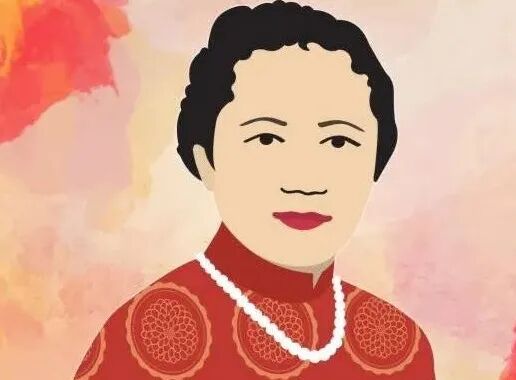
In Jada Yuan’s affectionate recollections, this beautiful, wise, elegant, and composed “Chinese Madame Curie” seems to approach us across time. Professor Chien-Shiung Wu was a pioneer who dared to break through the constraints of her era, an accomplished nuclear physicist often mentioned alongside Curie, Einstein, Fermi, and Feynman.
Professor Chien-Shiung Wu showed the world the strength of Chinese women!
Sources:
https://www.washingtonpost.com/lifestyle/2021/12/13/chien-shiung-wu-biography-physics-grandmother/
Article author: Jada Yuan (Chien-Shiung Wu’s only granddaughter).
Article editors: Mitao Wulong, Fantuan, and Kaluli (pen names).
Editorial note
This is Jada Yuan’s personal recollection of her grandmother, Chien-Shiung Wu. The stamp, number of female laureates, and family experiences retain their historical context around 2021; the original account publication date is unverified. During migration, omitted qualifications, family feelings, and units were restored to the Chinese from the manuscript’s English, and terms such as parity and tenure were corrected. APS records show that both parity-experiment papers were received on January 15, 1957, and published on February 15. Berkeley’s first cyclotron was a small prototype, not a warehouse-sized machine. Weak interactions are essential to solar fusion but are not the sole cause of solar radiation, and a beta-decay daughter nucleus need not be stable. The quoted link to matter and antimatter is speculative: the parity (P) violation demonstrated by the Wu experiment does not by itself explain the Universe’s excess of matter; mechanisms for matter–antimatter asymmetry involve conditions including CP violation. Other family memories, quotations, and the author’s views are preserved as narrated, rather than presented as independently verified biographical facts.
Supporting references
APS: Wu and colleagues’ parity-conservation experiment (received and publication dates)
APS: Garwin, Lederman, and Weinrich’s meson-decay experiment
Berkeley Lab: The early development of the cyclotron
NASA: Nuclear binding energy and weak interactions in solar fusion
Nobel Prize: Scientific background to the 2008 Physics Prize (CP violation)
USPS: The Chien-Shiung Wu First-Class Mail Forever stamp
Sources and editorial history
Restored from a complete historical article exported from the PhDSciNet Official Account.
Editorial revision: This is Jada Yuan’s personal recollection of her grandmother, Chien-Shiung Wu. The stamp, number of female laureates, and family experiences retain their historical context around 2021; the original account publication date is unverified. During migration, omitted qualifications, family feelings, and units were restored to the Chinese from the manuscript’s English, and terms such as parity and tenure were corrected. APS records show that both parity-experiment papers were received on January 15, 1957, and published on February 15. Berkeley’s first cyclotron was a small prototype, not a warehouse-sized machine. Weak interactions are essential to solar fusion but are not the sole cause of solar radiation, and a beta-decay daughter nucleus need not be stable. The quoted link to matter and antimatter is speculative: the parity (P) violation demonstrated by the Wu experiment does not by itself explain the Universe’s excess of matter; mechanisms for matter–antimatter asymmetry involve conditions including CP violation. Other family memories, quotations, and the author’s views are preserved as narrated, rather than presented as independently verified biographical facts.