English translation of the original Chinese article. Publication dates and the extent of recovered text are preserved. Figures retain their original labels. Read the Chinese original.

PhDSciNet Elements Team
Did you know?Radium was the fourth radioactive element discovered in human history, on December 21, 1898, by Marie Curie and Pierre Curie. Its English name, Radium, derives from a Latin word associated with rays. The discovery of radium laid the foundations of modern radiology, brought profound changes to science and philosophy in the twentieth century, and opened the door to exploring the mysteries of the atomic world. The resulting research into and use of radioactivity and nuclear energy profoundly changed human history and everyday life.
What Kind of Element Is Radium?
PhDSciNet's short answer: Radium is the sixth metal in Group 2 of the periodic table, the alkaline earth metals. It is exceptionally valuable and rare. Its mass fraction in the Earth's crust is only one part in a trillion, and its concentration in seawater is less than one part in ten quadrillion1. Over the past century, annual worldwide production of high-purity radium compounds increased only from a little over ten grams to several hundred kilograms. They are mainly extracted from uranium ores and nuclear-fuel residues. Although scarce, radium's radioactivity gives it a wide range of industrial and medical uses.
What Are Radium's Chemical Properties?
PhDSciNet's short answer: Radium atoms have two electrons in their outermost shell, making them highly reactive. The bright silvery-white luster of elemental radium quickly fades in air as a black Ra3N2 shell forms. In nature, radium always occurs in compounds, such as chlorides, bromides and hydroxides.
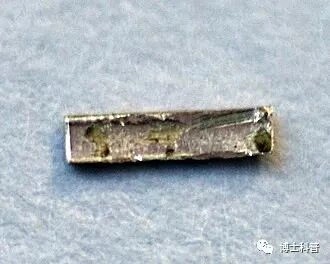
Figure 1: Radium metal
Radium's Remarkable Radioactivity
Radium is strongly radioactive. As it decays, it emits α and γ radiation and releases large amounts of heat—586.18 joules per gram of radium per hour. Radium has 33 isotopes in nature, from 202 to 234. Most have very short half-lives, ranging from a few hundred milliseconds to several years. The longest-lived is 226Ra, with a half-life of 1600 years; it is also the main naturally occurring isotope of radium2. Metal sulfides such as zinc sulfide and calcium sulfide can emit a soft, pale-green phosphorescence——Luminous watches came about in this way! For safety, however, radium has been replaced by promethium. Marie Curie also discovered that radium's radioactivity could kill stubborn cancer cells. Today, this discovery has developed into radiotherapy, a very common cancer treatment that has benefited many thousands of patients. But mishandled radiation can also kill healthy cells and tissues. Marie Curie died after developing leukemia as a result of prolonged exposure to radium radiation in her work.
An Interesting Fact: All elements with atomic numbers of 83 (bismuth) or above are radioactive, but some elements with atomic numbers below 83, such as technetium, also have only radioactive isotopes. More than 30 chemical elements on Earth are currently radioactive, and this number will continue to rise as more radioactive elements are artificially synthesized.
Radium's Principal Discoverer: Marie Curie
Marie Sklodowska Curie was a Polish-born French physicist and chemist. A pioneer in the study of radioactivity, she was the first woman to receive a Nobel Prize, the first person and only woman to receive two Nobel Prizes—one in physics and one in chemistry—and the only person to receive Nobel Prizes in two different scientific disciplines3. She was also the first female professor at the University of Paris. In 1995, she and her husband Pierre Curie were reinterred in the Panthéon, making her the first woman buried there on the strength of her own achievements. Her accomplishments included developing the theory of radioactivity and coining the English term “radioactivity,” inventing techniques for separating radioactive isotopes, and discovering two new elements: polonium (Po) and radium (Ra). Under her guidance, radioactive isotopes were first used to treat tumors. She founded a Curie Institute in both Paris and Warsaw; both remain important centers of medical research.
*This article represents the author's personal views, not those of this website. Other media, websites or individuals reproducing material from this website must acknowledge its source and assume responsibility for copyright and other legal matters. Authors who do not wish their work to be reproduced, or who wish to discuss reproduction fees or related matters, should contact us.
References
1Strutt, R. J. (7 September 2004). The Becquerel Rays and the Properties of Radium.
2G. Audi; A. H. Wapstra; C. Thibault; J. Blachot & O. Bersillon (2003). “The NUBASE evaluation of nuclear and decay properties”. Nuclear Physics A. 729: 3–128.
3Wikipedia: Marie Curie
Images from the matching WeChat article
The following images were recovered from the matching article retained by the WeChat account and restored in their original order.
Additional images were recovered from the matching article retained by the WeChat account and grouped after the main text. The historical archive text and existing editorial corrections are preserved.


