English translation of the original Chinese article. Publication dates and the extent of recovered text are preserved. Figures retain their original labels. Read the Chinese original.
PhDSciNet Elements Team
Did you know?Humans knew about lead as early as 7000 years ago. It is widely distributed, easy to extract and work, highly ductile and soft, and has a low melting point1. Lead is mentioned in the Book of Exodus in the Bible. As early as ancient Roman times, Rome had lead drainage pipes2.
What Kind of Element Is Lead?
PhDSciNet's short answer: Lead is a metallic element and the nonradioactive element with the greatest atomic weight. Elemental lead is a soft, highly ductile post-transition metal and also a precious metal. When heated, it readily combines with oxygen, sulfur and halogens. It reacts hardly at all with cold hydrochloric acid or cold sulfuric acid, but dissolves slowly in strongly alkaline solutions1.
What Are Lead's Chemical Properties?
PhDSciNet's short answer: Lead's original color is bluish-white. It is readily oxidized by oxygen in the air to form gray-black lead oxide. This forms a dense film on the surface, preventing further oxidation of the lead underneath. Lead has relatively stable chemical properties and is therefore resistant to corrosion1.
What Is Lead Used For?
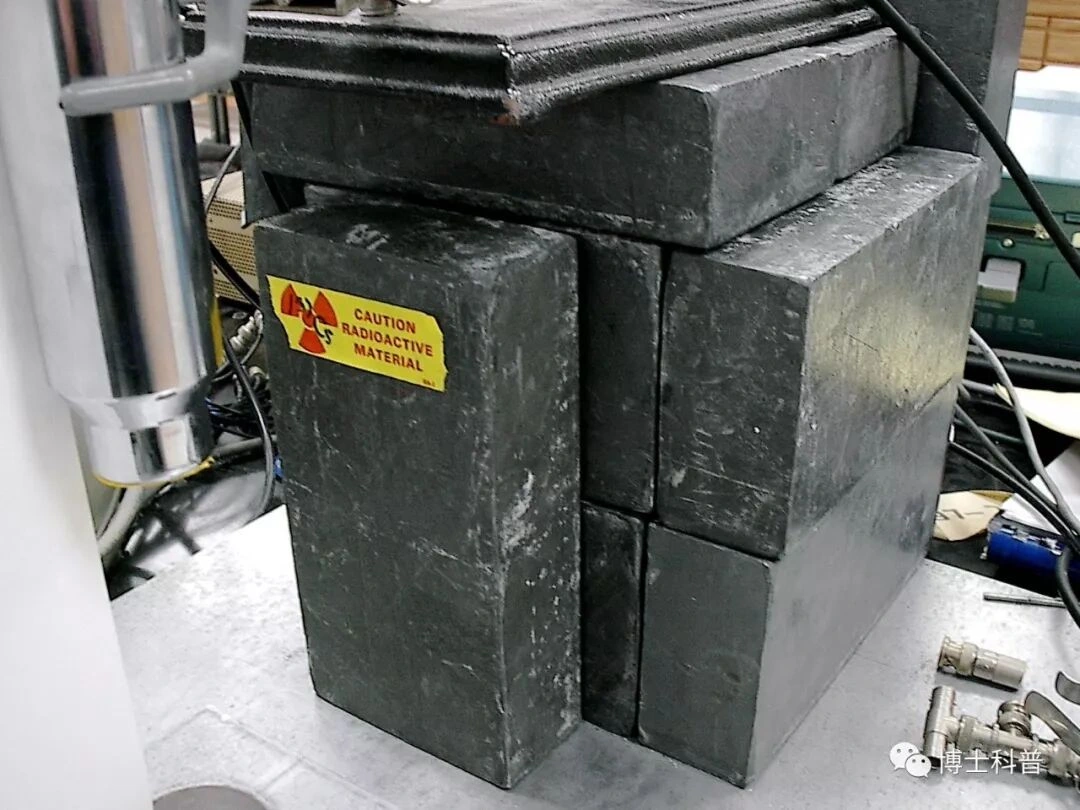
PhDSciNet's short answer: Lead is mainly used to manufacture lead-acid batteries. Lead alloys can be used as solder, and lead is also used to make protective equipment against ionizing radiation and X-rays. Building materials, bullets and shells, trophies and some alloys also contain lead1.
One of the most interesting and remarkable aspects of this element is that ancient lead is not only pure and dense, but also much less radioactive than newly mined metal. It is therefore an ideal material for shielding in high-precision physics experiments. However, because ancient lead also has precious historical value, many historians oppose melting it down1.
Figure 1: Lead bricks used for radiation shielding3
How Does Lead Harm the Human Body?
PhDSciNet's short answer: Lead and its compounds are toxic to humans. Once ingested, they accumulate mainly in bones, where some lead replaces the calcium in calcium phosphate and is difficult to eliminate. Chronic poisoning has a wide variety of symptoms. Early in poisoning, large numbers of immature red blood cells containing basophilic material appear in the blood, generally interpreted as a sign of impaired blood-cell development in the bone marrow. At later stages, suppression of bone marrow and destruction of red blood cells can cause anemia1.
Lead Is a Major Pollutant
Many chemicals in the environment eventually degrade into harmless compounds, but lead cannot be degraded further. Once released into the environment, its harmful effects are long-lasting. Lead also has substantial potential toxicity to many living tissues, so it has long been regarded as a major pollutant. Lead and particulate matter can be carried by the wind from cities to suburbs, from one province to another and even into other countries, affecting other regions. With the development of modern industry, lead pollution has become increasingly serious worldwide1.
Standards Established for Lead Pollution
Of all known toxic substances, lead has been documented most extensively in books. Ancient writings already recorded the dangers of using lead pipes to carry drinking water. The public can be exposed to lead through many routes, with particular concern about lead in petroleum products. Lead-containing pigments, especially some older products with high lead levels, have caused many deaths. Some countries have therefore established environmental standards requiring the lead content of pigments to be kept within 600 PPM. Several decades ago, houses were built with lead pipes or lead-lined pipes, and summer iceboxes also had lead linings. These have been prohibited in recent years and replaced by plastics or other materials. The generally accepted safety limit for lead in drinking water is 100 micrograms/liter, while the highest acceptable level is 50 micrograms/liter1.
*This article represents the author's personal views, not those of this website. Other media, websites or individuals reproducing material from this website must acknowledge its source and assume responsibility for copyright and other legal matters. Authors who do not wish their work to be reproduced, or who wish to discuss reproduction fees or related matters, should contact us.
References
1Baidu Encyclopedia: Lead
2[US] Theodore Gray. The Elements: A Visual Exploration (Color Collector's Edition) (Kindle Locations 2280). Posts & Telecom Press. Kindle Edition.
3Lead, Wikipedia
Images from the matching WeChat article
The following images were recovered from the matching article retained by the WeChat account and restored in their original order.
Additional images were recovered from the matching article retained by the WeChat account and grouped after the main text. The historical archive text and existing editorial corrections are preserved.


