English translation of the original Chinese article. Publication dates and the extent of recovered text are preserved. Figures retain their original labels. Read the Chinese original.
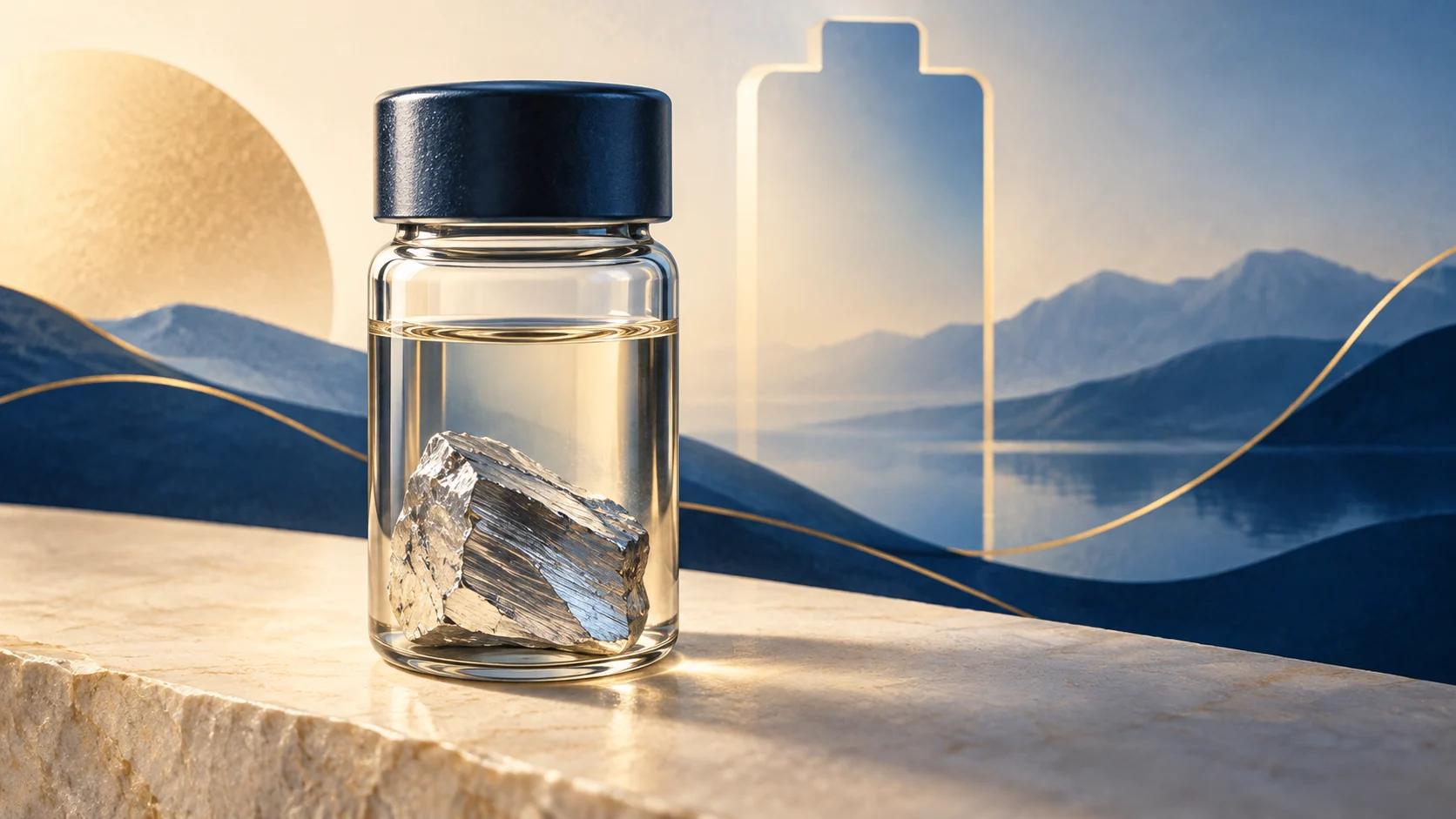
Do you know the lightest metal? It is lithium (Li). Lithium has a very low density, about 0.534 g/cm³—roughly half that of water. It reacts chemically when placed in water, however; the fact that it can float does not mean that contact with water is safe.[1]
What Kind of Element Is Lithium?
PhDSciNet’s short answer: Lithium has atomic number 3 and is the lightest member of the alkali metals. It is a soft, silvery-white metal.
In 1817, the Swedish chemist Johan August Arfwedson discovered lithium in a mineral called petalite and gave it the name “lithium”, but did not succeed in producing lithium metal. Interestingly, the word comes from the Greek for “stone”, because the two previously discovered alkali metals, sodium and potassium, had been extracted from plants. Only in 1855 could lithium be extracted in larger quantities and studied.[1]
What Are Lithium’s Chemical Properties?
PhDSciNet’s short answer: Beneath its beautiful appearance, lithium is chemically reactive. When placed in water, it reacts and releases hydrogen gas. It can also react with nitrogen in the air, so it must be protected from air and moisture during storage. The reactions and hazards of lithium and its compounds depend on the particular substance and conditions.[1]
How Is Lithium Used in Industry?
PhDSciNet’s short answer: Lithium has a very important place in the battery industry. From pacemakers and mobile phones to computers and cars, lithium-containing batteries are used in many electronic devices. A distinction is needed between batteries with a lithium-metal negative electrode and common lithium-ion batteries. The latter usually use graphite or other materials for the negative electrode; not all lithium-containing batteries have a lithium-metal negative electrode.[1][2]
Lubricants containing lithium compounds can also operate over a wide temperature range and are used in machinery. Alloys of lithium with aluminium or magnesium are lightweight and relatively strong, making them useful in manufacturing aircraft and other products.[1]
How Is Lithium Used in Medicine?
PhDSciNet’s short answer: Some lithium-salt medicines are used as mood stabilizers for conditions such as bipolar disorder. These are prescription medicines requiring medical supervision and blood tests. This does not mean that lithium metal or arbitrary lithium compounds can be taken without medical guidance.[3]
The Occurrence and Distribution of Lithium
PhDSciNet’s short answer: In nature, lithium generally occurs combined with other elements. In common compounds it has an oxidation state of +1; metallic lithium has an oxidation state of 0. Important lithium-bearing minerals include spodumene, petalite, lepidolite and amblygonite. Lithium can also be obtained from lithium-bearing brines.[1]
Summary
As the lightest metal, lithium plays a distinctive role in the periodic table. It has applications in batteries, lightweight alloys, lubricants, glass, ceramics and other fields, while new uses continue to be investigated.
References in the Original Manuscript
- [United States] Theodore Gray. The Elements: A Visual Exploration of Every Known Atom in the Universe (colour collector’s edition) (Kindle Locations 2770–2789). Posts & Telecom Press. Kindle Edition.
- 2. [China] 李蓉. Exploring the Chemical Elements. Anhui Normal University Press. Kindle Edition.
- 3. [China] https://zh.wikipedia.org/wiki/锂
- 4. [China] https://baike.baidu.com/item/锂
Sources for This Factual Revision
- Royal Society of Chemistry: Lithium
- US Department of Energy: Battery500 Progress Update
- NHS: About lithium
Editorial note: Restored from a local original manuscript and factually revised on October 10, 2026. Corrected lithium’s oxidation states, distinguished lithium-metal batteries from lithium-ion batteries, narrowed the medical statements, and removed unverified details about flames, nuclear weapons and resource lifetimes. The historical publication date and author credit have been retained.


