
PhDSciNet Elements Team / Yan Hao
Magnesium participates in countless important processes, from the activities of life to industrial production. Yet perhaps its most memorable feature is the dazzling white light emitted when a strip of magnesium burns.
1. What kind of element is magnesium?
PhDSciNet answers: Magnesium (Mg) is a reactive metallic element. It is the twelfth element in the periodic table, in Group IIA, and belongs to the alkaline earth metals. Its atomic mass is 24.3050, and its stable isotopes are ²⁴Mg, ²⁵Mg, and ²⁶Mg. Magnesium is the eighth most abundant element in the Earth’s crust. It occurs mainly in minerals such as magnesite, whose principal component is magnesium carbonate (MgCO₃), and dolomite (CaMg(CO₃)₂), as well as in mineral water, seawater, and other waters.
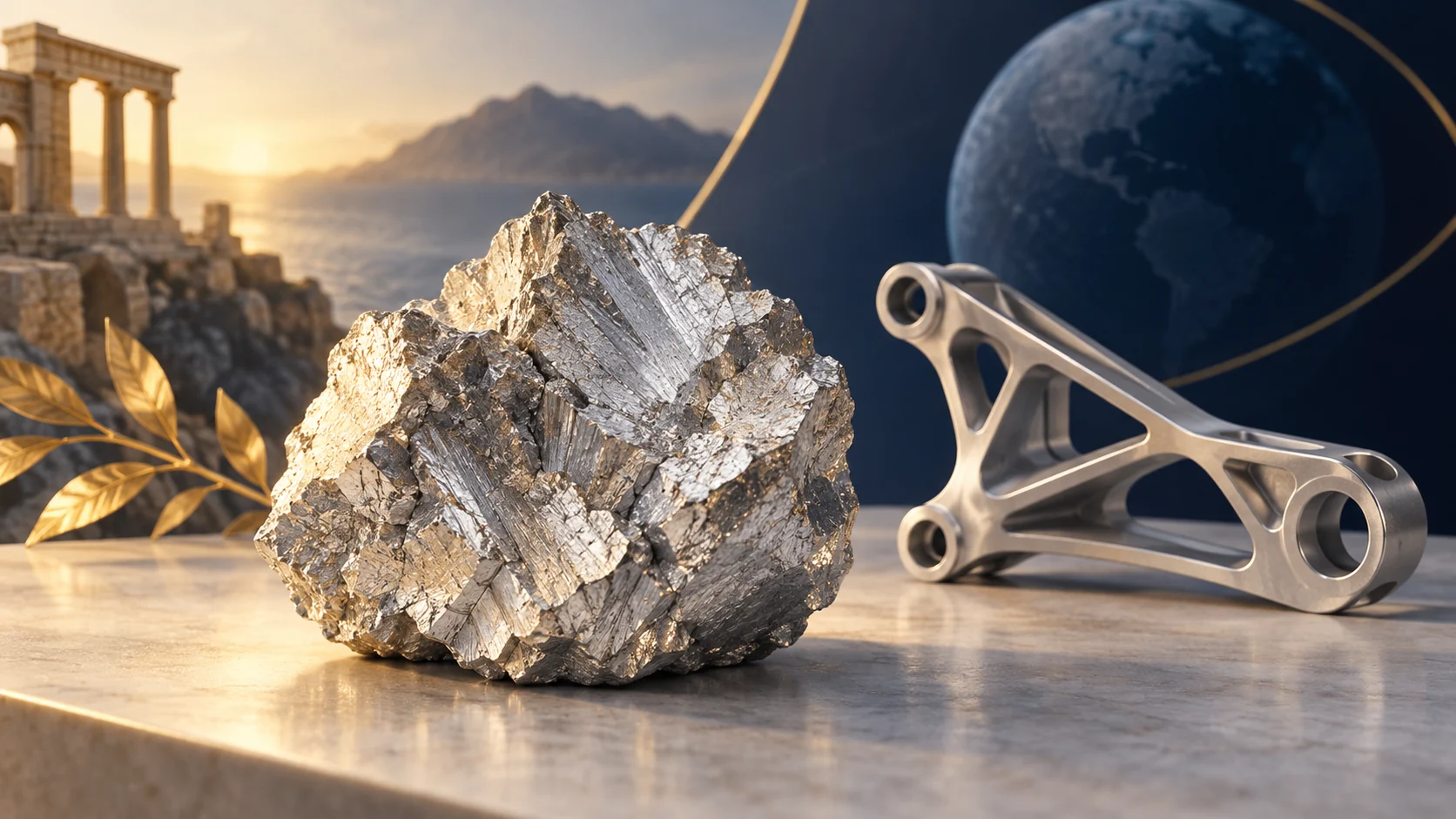
The English name magnesium comes from the Greek “Magnesia,” referring to magnesia, a mineral found in the Magnesia region of Greece whose principal component is magnesium oxide. In ancient Roman times, people believed this mineral could be used to treat disease. In 1755, Joseph Black identified magnesium as an element in Edinburgh, Britain. In 1808, Humphry Davy obtained pure metallic magnesium by electrolyzing magnesium oxide.
2. What properties does metallic magnesium have?
PhDSciNet answers: Metallic magnesium is a low-density, silvery-white metal. Its density is only 1.74 times that of water. Magnesium has a melting point of 650 °C and a boiling point of 1090 °C. It is a strong reducing agent, can react with boiling water to liberate hydrogen, and can burn in air, nitrogen, and even carbon dioxide.

3. What are the applications of metallic magnesium?
PhDSciNet answers: In the chemical industry, magnesium’s reducing properties make it a common reducing agent for obtaining metals such as titanium, zirconium, uranium, and beryllium from their compounds.
Magnesium is one of the lightest structural metals. Magnesium-containing alloys have characteristics including low weight, high specific strength—the strength-to-weight ratio—good vibration damping, good thermal-fatigue performance, resistance to aging, good thermal conductivity, strong electromagnetic shielding, excellent die-casting properties, and easy recyclability. Magnesium is a new generation of high-performance structural material that can replace steel, aluminum alloys, and engineering plastics. As electronics and communications devices become more highly integrated, thinner, lighter, and smaller, magnesium alloys are ideal materials for housings used in transportation, electronic information and communications equipment, computers, audiovisual equipment, portable tools, electric motors, forestry and textile equipment, nuclear-power equipment, and other products.
4. Dazzling white light
PhDSciNet answers: Magnesium burns in air with a dazzling white light and also emits strong radiation in the ultraviolet region, which human eyes cannot see. In the early days of photography, people used magnesium powder and magnesium filaments for illumination. Magnesium still plays an important role because of this property. Magnesium powder is an essential raw material in festive fireworks and an indispensable component of incendiary devices and illumination flares. On stage, it can be used to create brightly glowing effects such as lightning.
5. Magnesium and life
PhDSciNet answers: A normal adult body contains about 25 g of magnesium, of which about 50%–60% is found in bones, with most of the remainder in soft tissues. Magnesium is indispensable to the normal activities of living organisms. It is necessary for the metabolism of calcium, vitamin C, phosphorus, sodium, potassium, and other substances, and plays important roles in normal neuromuscular function, blood-glucose conversion, and other processes.
The main clinical manifestations of magnesium deficiency include emotional unease, irritability, spasms in the hands and feet, and heightened reflexes. Foods rich in magnesium include whole seeds, unmilled grains, leafy green vegetables, legumes, and nuts. By comparison, fish, meat, milk, and fruit contain less magnesium; some refining processes lower magnesium content, but the effect varies with the type of food and degree of processing and cannot be generalized to all processed foods.
In plants, magnesium ions can activate various phosphomutases and phosphokinases during photosynthesis and respiration. Magnesium can also activate DNA and RNA synthesis. It is a component needed to synthesize chlorophyll. When magnesium is deficient, the veins remain green while the areas between them turn yellow and sometimes reddish-purple. Severe deficiency causes brown, necrotic spots.
*This article presents the author’s personal views and does not represent the views of this website. Other media outlets, websites, or individuals reproducing material from this website must identify its source and take responsibility for copyright and other legal matters. Authors who do not wish their work to be reproduced, or who wish to discuss remuneration for reproduction, should contact us.
References
1 Wikipedia, Magnesium
2. Chinese Wikipedia, Magnesium
3. Baidu Baike, Magnesium
4. Chinese Wikipedia, Magnesite
5. Chinese Wikipedia, Dolomite
Additional verification sources
Royal Society of Chemistry: Magnesium
US National Institutes of Health: Magnesium Fact Sheet
Sources and editorial history
Restored from a complete historical article exported from the PhDSciNet Official Account.
Editorial revision: Melting and boiling points, magnesium distribution in the body, and descriptions of food processing were checked against the Royal Society of Chemistry and the US National Institutes of Health. The complete original manuscript and revision records are retained.


