PhDSciNet Elements Team / Cao Xun
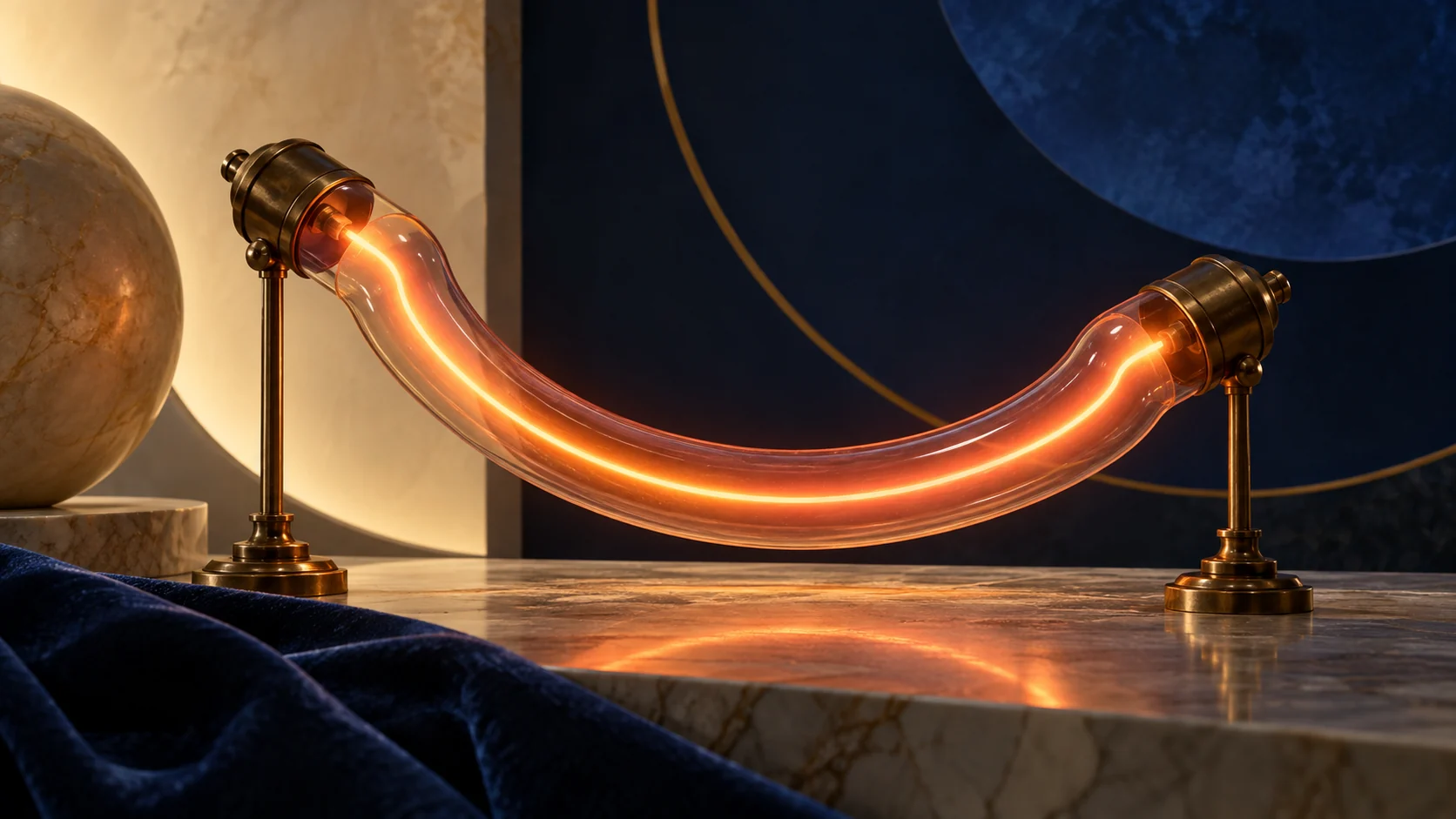
Neon is a colorless noble gas belonging to Group 18 (formerly Group 0). The light it emits is bright reddish-orange, so it is often used in neon lights. Unlike most other elements, stable compounds of neon have not yet been produced; in nature, it exists entirely as a monatomic gas.
1 What kind of element is neon?
PhDSciNet answers: neon is a colorless, odorless, tasteless, monatomic gas. Its chemical symbol is Ne and its atomic number is 10 (Figure 1). Its melting point is −248.59 °C, its boiling point is −246.046 °C, and its gas density is 0.9002 g/L at 0 °C and one atmosphere. Neon has low solubility in water: at 25 °C and a neon partial pressure of 1 bar, approximately 0.00045 mol dissolves per kilogram of water. During an electrical discharge, neon glows orange-red.

2 How was neon discovered?
PhDSciNet answers: after discovering argon and helium in succession, the British chemist William Ramsay demonstrated experimentally that their properties differed from those of the other known elements. He therefore proposed adding a new group to the periodic table. Based on Mendeleev’s classification of the elements, he predicted that this group should also contain an element with an atomic mass of 20. In 1896–1897, assisted by Travers, Ramsay tried to follow the method used to find helium by heating rare metal-containing minerals to obtain the predicted element. Their experiments kept failing until June 12, 1898, when they finally found neon. Its symbol is Ne, and its name comes from the Greek neos, meaning “new.”
3 How is neon gas prepared?
PhDSciNet answers: because neon exists only in elemental form, it is generally obtained by separating it from air. Specifically, a neon–helium gas mixture is collected while oxygen and nitrogen are produced in an air-separation tower. Pure neon is then obtained through condensation using liquid hydrogen or physical adsorption with activated carbon and silica gel.
4 What are neon’s main uses?
PhDSciNet answers: besides illuminated advertising signs (Figure 2), neon can be used in vacuum tubes, high-voltage indicators, helium–neon lasers, lightning arresters, and television fluorescent screens. Liquid neon can serve as a cryogenic coolant in some high-energy physics research. Neon gas can also fill lamp bulbs and tubes; these are distinct uses.

5 What safety measures can prevent harm from neon gas?
PhDSciNet answers: neon itself is nontoxic, but at high concentrations it can displace oxygen in air and cause asphyxiation. Work requires ventilation, oxygen monitoring, and professional protective measures. Air containing less than 19.5% oxygen is oxygen-deficient; action must not wait until it reaches 18%. Entry into oxygen-deficient environments and respiratory protection require professional assessment, and ordinary filtering masks do not supply oxygen. Symptoms of oxygen deficiency can include faster breathing, difficulty concentrating, fatigue, weakness, agitation, nausea, vomiting, coma, convulsions, or even death. The extremely low temperature of liquid neon also requires precautions against frostbite.
*This article expresses the author’s personal views and does not represent those of this website. Other media, websites, or individuals reproducing material from this website must identify the source and assume responsibility for copyright and other legal matters. Authors who do not wish their work to be reproduced, or who wish to discuss reproduction fees or related matters, should contact us.
References
1 Dictionary of Common Chemical Elements, edited by Lin Yin and Li Xiang. Yuanfang Publishing House.
2 Baidu Baike: Neon
3 “Neon lamp,” Wikipedia. (Cover image)
Additional sources checked
Royal Society of Chemistry: Neon
US National Institute of Standards and Technology: Neon solubility data
Canadian Centre for Occupational Health and Safety: Confined spaces and oxygen deficiency
US Occupational Safety and Health Administration: Respiratory protection standard
US National Oceanic and Atmospheric Administration: Neon hazard data
Sources and editorial history
Restored from a complete historical article exported from the PhDSciNet Official Account.
Editorial revision: Neon’s group, melting and boiling points, and water solubility were checked, and the liquid-neon use and oxygen-deficiency protection statements were corrected. The complete original and revision record are retained.


