
Historical compilation: This article preserves the scientific biography in the original manuscript. The English material is credited to Famous Scientists. No named author or translator could be verified from the export, and the original publication date remains unverified.
Immunologists found that stimulation by foreign substances—antigens associated with bacteria, viruses, pollen, and other materials—can activate humoral immunity, with lymphocytes producing corresponding antibodies.
Each distinct antibody is a distinct protein. How can the human body encode and express so many different antibodies?
This was the great puzzle that once troubled immunology: the genetic mechanism that generates antibody diversity.
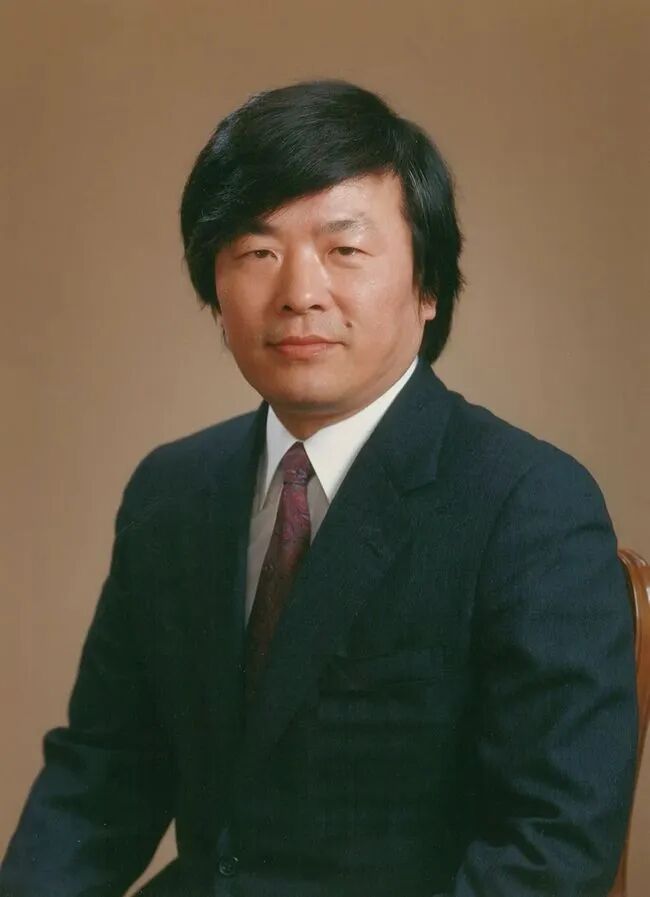
In 1987, the Japanese immunologist Susumu Tonegawa received that year's Nobel Prize in Physiology or Medicine alone for revealing the genetic mechanism of antibody diversity. His research solved a major puzzle in immunology.

A Journey Through Education, with His Original Passion Intact
Susumu Tonegawa was born on September 5, 1939 in the city of Nagoya, Japan.
Susumu’s father, Tsutoma Tonegawa, was an engineer with a textile company; he was moved to a different small factory town every few years, so the family never settled in one place. Susumu’s mother, Miyoko Masuko, was a homemaker.
Susumu’s parents wanted their children to get the best possible education. They sent Susumu and his older brother to live with their uncle in Japan’s capital city, Tokyo, where they attended the renowned Hibiya High School. Susumu’s favorite subject at school was chemistry; he applied to study it at the University of Kyoto, passing the entrance exam at his second attempt. He enrolled at Kyoto in the spring of 1959, age 19.
In his senior year, Susumu Tonegawa became fascinated with the molecules of life, such as proteins and nucleic acids.
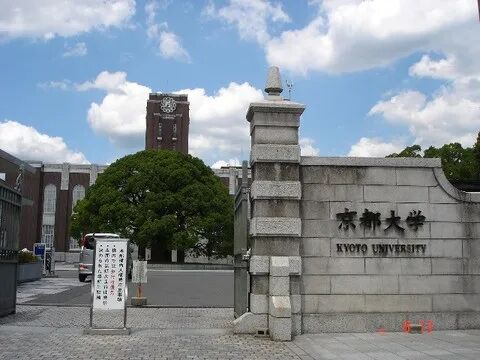
After graduating with a bachelor’s degree in chemistry in 1963, Tonegawa decided to pursue his fascination with molecular biology as a graduate student. He was accepted by the University of Kyoto’s Institute for Virus Research, but after just a few months his doctoral advisor gave him some advice: if you really want to learn about molecular biology go to the United States. Tonegawa followed this advice and in the fall of 1963 became a graduate student at the University of California, San Diego. He graduated with a Ph.D. in 1968, age 28.
Tonegawa decided to remain in San Diego, carrying out post-doctoral research at the Salk Institute.
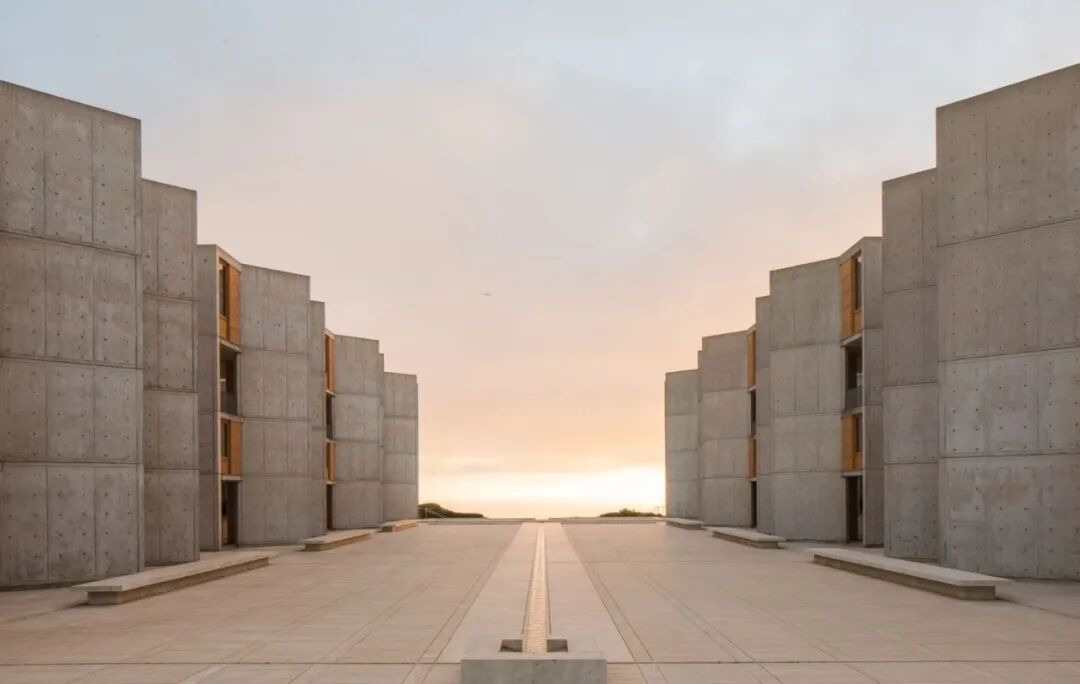
In January 1971, Tonegawa’s American visa ran out. He moved to Switzerland to work at the Basel Institute for Immunology, where he remained for 10 years. His first year involved a lot of frustration because he knew very little about immunology. Within a few years, however, his discoveries earned him the Nobel Prize.

Secrets of the Immune System: Antibodies and Antigens
Every day our bodies encounter a huge number of bacteria, viruses and other pathogens(antigen). An antigen might, for example, be a virus or bacterium, or it could be a specific molecule on the surface of a bacterium. When our immune systems detect antigen they release antibodies to destroy it.
Any antigen invading the body will be targeted by a specific antibody. The enormous numbers of antigens we encounter every day do not make us sick every day because the immune system is usually effective in targeting each and every one of them with a suitable antibody.
Part of the reason the immune system can perform this amazing feat is that it is adaptive:
·it remembers antigens encountered previously and rapidly build antibodies to destroy them
·it can create new antibodies to counter the threat of antigens not encountered previously
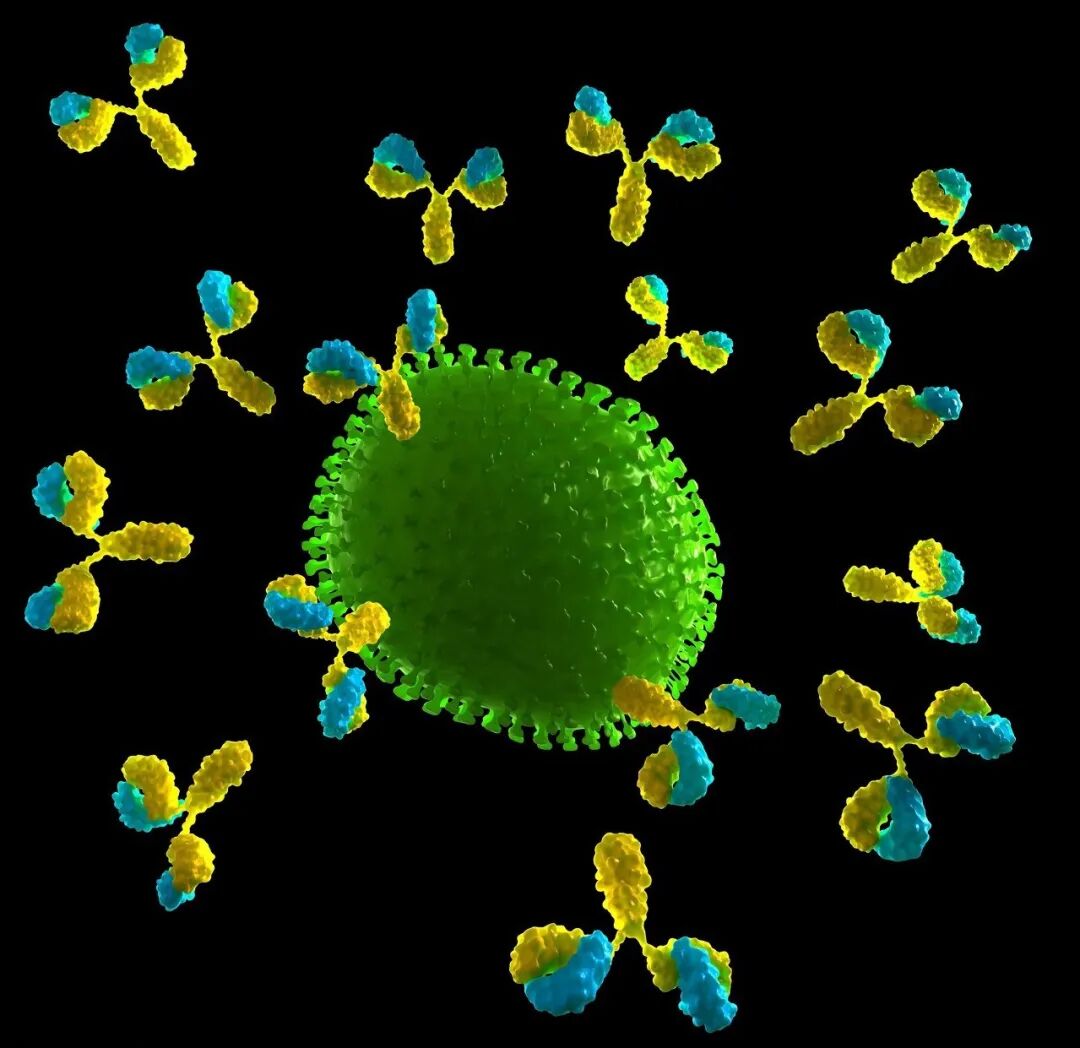
The adaptive immune system functions through lymphocytes, a type of white blood cell. Two varieties of lymphocyte are crucial to the adaptive immune system – these are called B cells and T cells.
These cells have binding regions that target and bind to specific antigens.
Schematic of lymphocyte. The blue receptors can bind only to a specific antigen. For B lymphocytes, if this antigen is encountered in the body, differentiation into antibody-secreting plasma cells can result in the release of a large number of antibodies equipped with the appropriate binding site to attack the specific invader. Antibody diversity comes about because huge numbers of B lymphocytes are created with different binding sites.
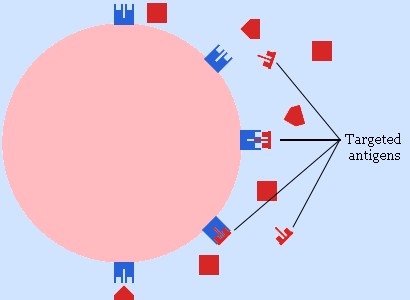
Every different antibody made by our immune systems is a different protein. Humans have about 20,000 genes, and if we made the simplistic assumption that each gene could make only one protein. How then can we ever produce the hundreds of millions of different antibodies that are needed to defeat the enormous range of antigens we meet? This – the puzzle of antibody diversity – is the puzzle Tonegawa solved.
In simple terms, Tonegawa found that antibodies are not governed by a rule of one gene → one protein.
More specifically, Tonegawa compared DNA from mouse embryonic cells and antibody-producing cells and found somatic rearrangement of antibody-gene segments. In other words, during B-lymphocyte development, antibody-gene DNA segments can recombine to form rearranged sequences capable of encoding different antibody proteins.
Unlocking the Remarkable Code of Antibody Diversity
The diversity is not seen everywhere in the antibody, but is seen where it is important, in the binding region of the antibody that specifically targets an antigen. This diversity is caused by a reshuffling of genetic material now known as V(D)J recombination. Tonegawa’s work did not reveal to us the whole V(D)J recombination system, but he made the initial breakthrough. He then built on this breakthrough with further discoveries, as did other researchers.
The letters V, D, and J in V(D)J recombination refer to segments of DNA. The letters have these meanings:
·V: variable
·D: diversity
·J: joining
A further letter, C, refers to the constant region of the antibody gene.
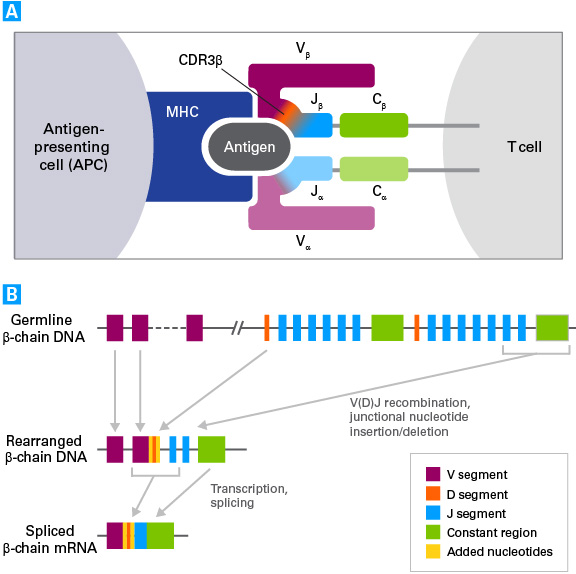
In 1976, Tonegawa and his collaborator compared DNA from early mouse embryos and antibody-producing plasmacytoma cells. Their results indicated that DNA segments in the antibody-producing cells had rearranged relative to the embryonic DNA. This rearrangement helped explain the production of many different antibodies.
In 1978, Tonegawa and his team at the Basel Institute proved their earlier conclusion correct, establishing in experiments that portions in an antibody gene had rearranged.
In the following schematic, results obtained by Tonegawa and other workers show how a gene rearranges to produce a new antibody.
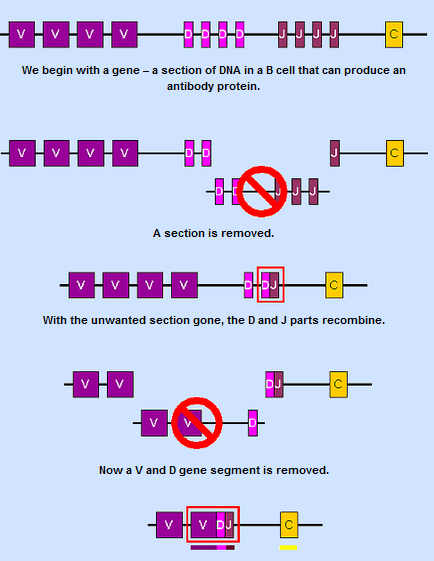
Recombination produces a rearranged coding sequence from which a cell can express a different antibody. The entire process is more or less random. If the new antibody proves useful in combating an antigen currently in the body, then the new antibody will be produced on a large scale.
Susumu Tonegawa discovered how the immune system produces millions of different antibodies to combat almost any micro-organism. In doing so, he solved the tantalizing long-term puzzle of antibody diversity.
Tonegawa was awarded the 1987 Nobel Prize in Physiology or Medicine for his work.
Decoding the Storage and Recall of Memory
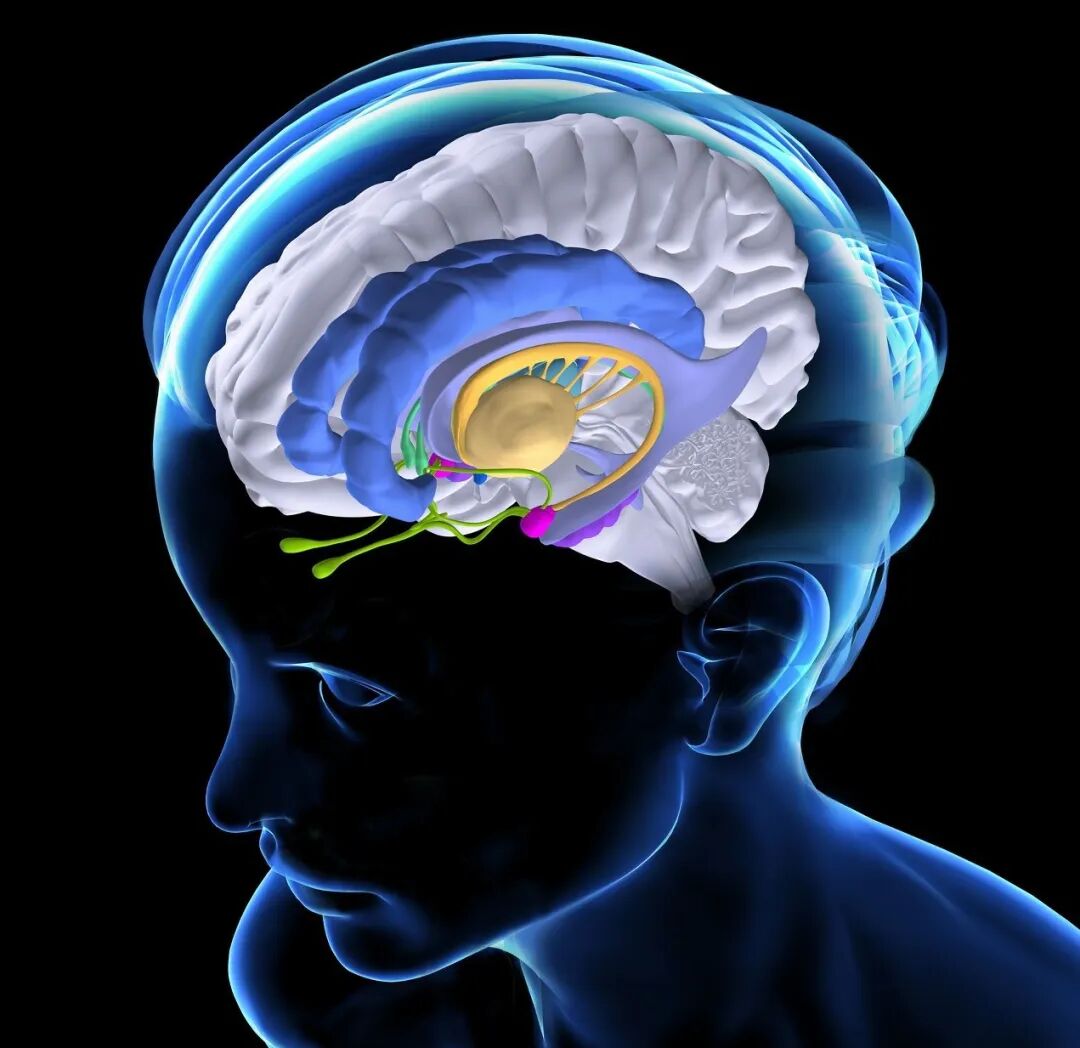
In 1981, Tonegawa left Basel for the Massachusetts Institute of Technology in Cambridge, Massachusetts. There he continued researching problems in immunology for about 10 years, before switching his focus to the brain, trying to understand how we learn and how memories are created and stored at the level of molecules and cells.

Working with genetically engineered mice, Tonegawa found he could use light (optogenetics) to study the specific cells that hold memory information in the part of the brain called the hippocampus. He found that the particular memories studied in these experiments could be encoded by populations of relevant cells. If such a population of cells is stimulated with light from an optic fiber sitting in the hippocampus, the mouse will behave as if it is recalling a memory.
False memories can be implanted in mice. By locating the brain area in the hippocampus associated with fear, Tonegawa discovered this area could be artificially stimulated so that mice with no reason to be fearful act fearfully.
Tonegawa hopes that his work will lead to breakthroughs in Alzheimer’s disease, amnesia, and depression.
As Tonegawa has said, a scientist's most important abilities are the capacity to doubt and a rich imagination.
This great scientist, whose contributions were outstanding, brought a remarkable imagination and a rigorous, meticulous attitude to his experiments, becoming Japan's first recipient of the Nobel Prize in Physiology or Medicine.
Great honors could not stop him from moving forward. After receiving the Nobel Prize for his contributions to immunology, Tonegawa turned decisively to brain and memory research using molecular and cellular methods, becoming a leading investigator of the cellular basis of memory!
His continued ability to challenge old theories and develop new ideas never ceases to impress!
Original article link:
https://www.famousscientists.org/susumu-tonegawa/
Source: Famous Scientists
Some material in this article comes from online sources. Please contact us for removal if it infringes your rights.
Editorial note
Editorial note: 'Adults' was mistranslated as adult humans; the comparison is now specified from Hozumi and Tonegawa's original 1976 experiment as embryonic and antibody-producing cells. 'One gene can make only one protein' has been framed as a simplistic assumption. Antibody secretion is restricted to B cells and their plasma-cell descendants, and V/J/C use variable, joining, and constant-region terminology. Somatic DNA rearrangement does not mean continual creation of new inherited genes throughout the body. Memory findings are restricted to the described mouse experiments and particular memories, not established human clinical use.
Supporting references
Hozumi and Tonegawa's original 1976 research
Liu et al., original mouse-memory research (2012)
Sources and editorial history
Restored from a complete historical article exported from the PhDSciNet Official Account.
Editorial revision: Editorial note: 'Adults' was mistranslated as adult humans; the comparison is now specified from Hozumi and Tonegawa's original 1976 experiment as embryonic and antibody-producing cells. 'One gene can make only one protein' has been framed as a simplistic assumption. Antibody secretion is restricted to B cells and their plasma-cell descendants, and V/J/C use variable, joining, and constant-region terminology. Somatic DNA rearrangement does not mean continual creation of new inherited genes throughout the body. Memory findings are restricted to the described mouse experiments and particular memories, not established human clinical use.