
Historical compilation: This article preserves the scientific biography in the original manuscript. The English material is credited to Famous Scientists. No named author or translator could be verified from the export, and the original publication date remains unverified.
At midnight on October 17, 1849, in an apartment in Paris, the 'poet of the piano', Fryderyk Chopin, felt a final episode of severe pain in his lungs. A few hours later, he died at thirty-nine. The disease that took his life was tuberculosis, the deadly infection then spreading across Europe.
The manuscript cited figures of '700 tuberculosis deaths per 100,000 people in late-eighteenth-century London' and 'nearly a quarter of Europe's population dying by the mid-nineteenth century' to describe the disease's devastation. Neither historical statistic could be verified from the preserved manuscript, and the latter should not be treated as an established proportion of Europe's entire population. Known as the 'white plague', tuberculosis haunted the world like a frightening ghost.
In the 1940s, penicillin, discovered and developed through the work of Alexander Fleming, Howard Florey, and Ernst Chain, saved thousands of lives but was powerless against tuberculosis. The white plague hung over Europe, and the shadow of death was approaching!
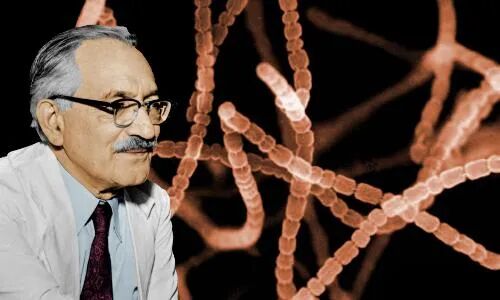
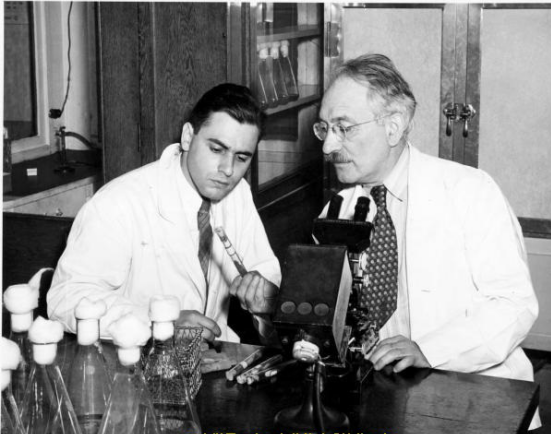
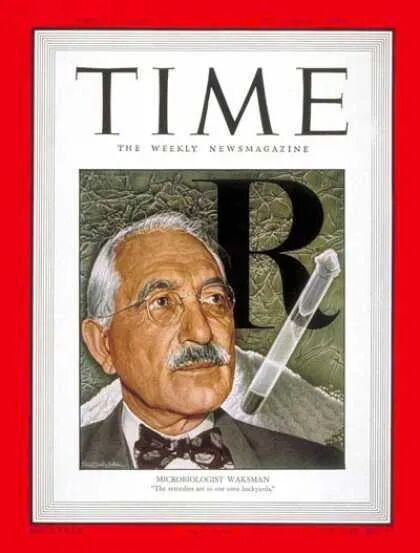
In 1939, with funding from pharmaceutical giant Merck, soil microbiologist Selman Waksman began leading students in a systematic search for antibacterial substances that could be isolated from soil microorganisms. In 1943, his student Albert Schatz successfully isolated streptomycin. In 1944, Merck developed streptomycin suitable for use in humans!
In 1952, Selman Waksman was awarded that year's Nobel Prize in Physiology or Medicine for his contributions to soil microbiology, which provided the theoretical and practical foundation for discovering streptomycin!
A Difficult Journey to Education
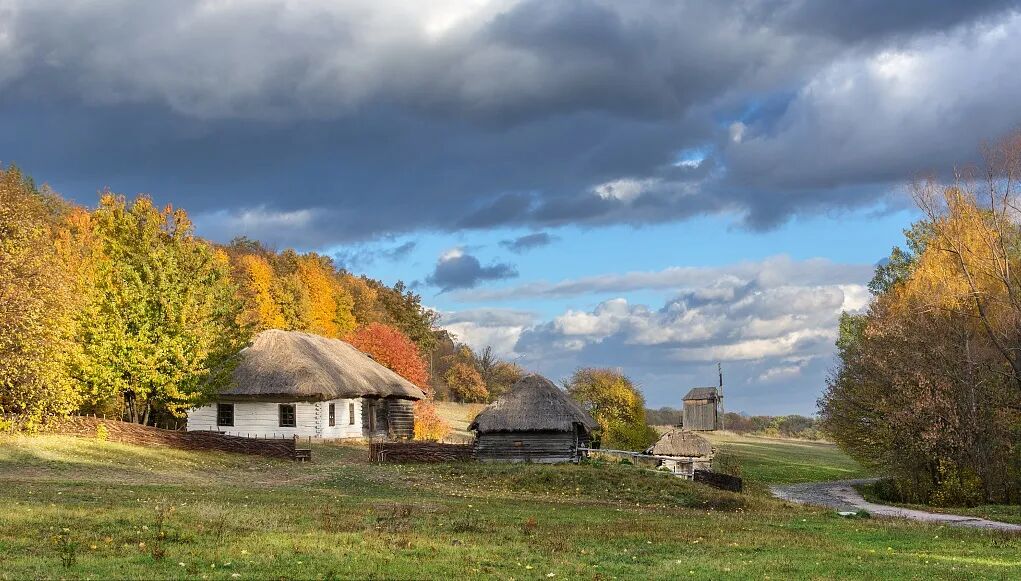
Selman Abraham Waksman was born on July 22, 1888 in Nova Pryluka, a small, remote town in the Russian Empire. Today it is in Ukraine.
Selman’s mother was Fradia London, a textile merchant. His father was Jacob Waksman, a former soldier who inherited property from his father and became a landlord. Selman’s family was Jewish.
In 1907, age 19, he tried to pass the exams for the Matriculation Diploma – the high school qualification for university entrance – but failed. Among the reasons for this were:
·Government policy made it difficult for Jewish students to receive an official education.
·His parents were more interested in his religious education than secular education.
·His small hometown was a long way from the city grammar schools which trained pupils to pass the Matriculation Diploma, so he relied on private tutors rather than qualified teachers.
·Although he knew a lot, his knowledge was poorly organized.
·When he took the Matriculation Diploma exams, a Geography examiner having found Salman could not name the river flowing through Berlin, refused to ask him further questions and gave him a mark close to zero.
In 1909, two major events occurred in Selman Waksman’s life:
·In spring, he passed his first set of diploma exams.
·In summer, his beloved mother died.
The following year, he passed the final exams and obtained his Matriculation Diploma, but immediately encountered a new problem. The Russian government placed severe quotas on the number of Jews allowed into universities, so only a small number of elite Jewish students were admitted each year. Waksman’s exam marks were not elite marks.
He decided to leave for the USA to join his cousins there. Waksman’s cousins had a small farm on the outskirts of Metuchin, New Jersey.
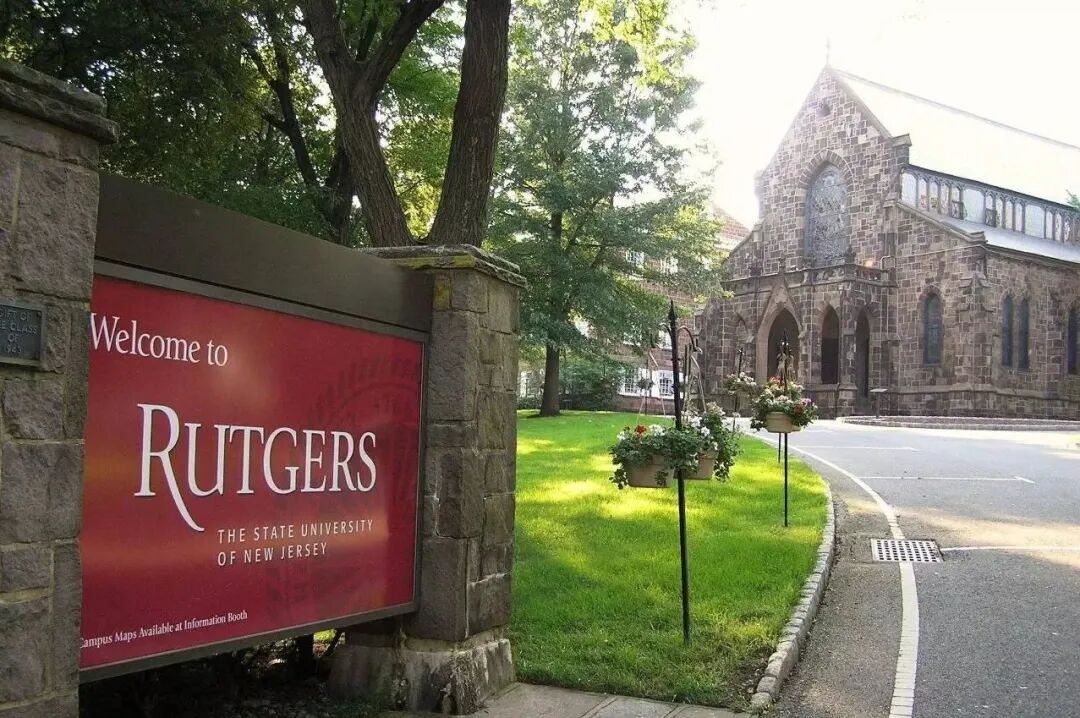
Just a few miles from the farm was the town of New Brunswick, home of Rutgers College – now Rutgers University. Waksman visited the college and met Dr. Jacob Lipman, another Russian immigrant, soon to be Dean of the College of Agriculture. Waksman had already been accepted by Columbia University’s Medical School, but Lipman persuaded him switch to Rutgers.
Waksman spent the next few months working on his cousin’s farm, learning about agricultural practices. In the fall of 1911, age 23, he became a freshman at Rutgers with a New Jersey State Scholarship.
He completed the work he needed for a bachelor’s degree in three years. Lipman arranged for him to spend his final year working with graduate students counting different groups of microorganisms present in soil.
The Discovery and Use of Streptomycin
Waksman had problems with one of the first cultures he grew from soil – he could not decide if the organisms were bacteria or fungi. Eventually, he identified the organisms as actinomycetes.
The Actinomycetales would become one of his lifelong research interests, especially Actinomyces griseus, later renamed Streptomyces griseus by Waksman. This organism produces streptomycin, the antibiotic that made Waksman a household name in the middle of the twentieth century.
In June 1915, Waksman received his Bachelor of Science degree, majoring in Soil Bacteriology. At age 27, he became one of Lipman’s research assistants at Rutgers, increasingly ignoring the work Lipman assigned him in favor of studying Actinomycetales.
Waksman was awarded his master’s degree in 1916. Two years of researching Actinomycetales at the University of California, Berkeley brought him a Ph.D. in Biochemistry in 1918, after which he returned to Rutgers to join the faculty.
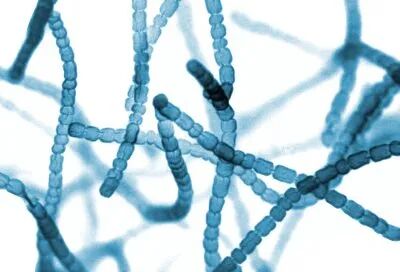
In 1923, Waksman and his student Robert Starkey discovered that actinomycetes colonies growing in soil killed many common soil bacteria.
1927: published his 897-page Principles of Soil Microbiology; it became the standard textbook in the field.
1937: returned to researching the effectiveness of actinomycetes as killers of bacteria. Helped by two students, he made good progress.
1939: expanded his research team to eight after reading of Rene Dubos’s discovery of a soil microorganism that yielded an antibacterial substance. Waksman’s expanded team discovered four bacteria-killing chemicals: actinomycin, clavacin, fumigacin, and streptothricin – sadly, all were toxic to animals.
1941: coined the word ‘antibiotic’ to describe antibacterial drugs.
1943: his newest Ph.D. student, Albert Schatz discovered that a strain of Streptomyces griseus from the soil around Rutgers Agricultural School produced an antibiotic. Waksman and Schatz called the new antibiotic streptomycin.
The Mayo Clinic tested streptomycin in animals and reported it was not toxic. Waksman asked the clinic’s researchers to test streptomycin on tuberculosis-infected guinea pigs – it cured them. The clinic asked Waksman for more streptomycin to test on humans. Schatz produced it. The Mayo clinic’s researchers found streptomycin could indeed cure humans suffering from tuberculosis.
It was a momentous discovery: until then, tuberculosis had been an incurable disease, claiming the lives of young and old alike, including the early deaths of many brilliant scientists and mathematicians. The only way of combating tuberculosis was good hygiene and avoidance.
1944: Merck ran large scale clinical trials establishing streptomycin was effective against a number of penicillin-resistant diseases, including TB, cholera, bubonic plague, and typhoid fever. Merck built a factory in Virginia to produce streptomycin.
1952: Waksman was the sole recipient of the Nobel Prize in Physiology or Medicine for:“ingenious, systematic and successful studies of the soil microbes that led to the discovery of streptomycin.”
The Patent Dispute over a Remarkable Drug
The story does not end there, however.
Between 1939-1950, Waksman patented 8 antibiotics, assigning the royalties to the Rutgers Research and Educational Foundation. However, the assignment was not written in stone and a new split was agreed in which 80% of royalties went to Rutgers and 20% to Waksman, who planned to use the money primarily to support streptomycin research at other universities.
In 1949, Schatz learned that Rutgers had started paying some of the royalties to Waksman as salary. Schatz did not approve of Waksman receiving money in this way and filed a civil suit in March 1950.
The case did not go to court. Waksman gave Schatz legal recognition as the co-discoverer of streptomycin.
In 1951, Waksman used half of his personal royalties to create the Waksman Foundation for Microbiology at Rutgers University.
Albert Schatz was angry when Waksman was the sole recipient of the 1952 Nobel Prize. Schatz believed he should have shared the award. The Nobel committee disagreed, saying Schatz was an assistant whose work was directed by an eminent scientist.
Waksman received many awards for his work, including:
1948: Elected to the National Academy of Sciences.
1948: Albert Lasker Award for Basic Medical Research.
1950: French Legion of Honor.
1950: Leeuwenhoek Medal – awarded once every decade for the greatest contribution to microbiology.
1952: Nobel Prize in Physiology or Medicine.
Selman Waksman died, age 85, on August 16, 1973 in Woods Hole, Massachusetts.
In nineteenth- and twentieth-century Europe, overshadowed by the white plague, romantic artists elevated tuberculosis to an almost sacred status. It became the fashionable 'disease of artists'.
The Romantic poet Byron once told a friend that if he had to die, he would choose tuberculosis, because it would make his final moments seem so interesting. In a letter to his friend Keats, Shelley wrote that he still looked consumptive, and that tuberculosis favored someone who wrote as beautifully as he did.
The pale, thin appearance produced by rapidly declining vitality, the dreamy gaze and natural blush caused by a low fever—the admiration of tuberculosis' morbid beauty could not cancel out the pain of illness or the terror of death.
The advent of streptomycin therefore seemed like an incomparable miracle. In the face of disease, someone is always willing to step forward and save countless people from suffering!
Original source:
https://www.famousscientists.org/selman-waksman/
Source: Famous Scientists
Some material in this article comes from the internet. Please contact us for removal if it infringes your rights.
Editorial note
Editorial note: The historical accounts of streptomycin's discovery and the patent dispute are retained, including the contribution of student Albert Schatz. Two tuberculosis mortality statistics in the introduction lack verifiable sources and have been explicitly identified as claims in the manuscript rather than verified statistics; no new mortality rates have been invented to replace them. The account of drug research is not current prescribing advice.
Sources and editorial history
Restored from a complete historical article exported from the PhDSciNet Official Account.
Editorial revision: Editorial note: The historical accounts of streptomycin's discovery and the patent dispute are retained, including the contribution of student Albert Schatz. Two tuberculosis mortality statistics in the introduction lack verifiable sources and have been explicitly identified as claims in the manuscript rather than verified statistics; no new mortality rates have been invented to replace them. The account of drug research is not current prescribing advice.