Historical compilation: This article preserves the scientific biography in the original manuscript. The English material is credited to Famous Scientists. No named author or translator could be verified from the export, and the original publication date remains unverified.
The brain is among the most important and mysterious organs in the human body.
Scientific research has estimated an average of approximately 86 billion neurons in the adult human brains studied, despite the brain weighing only about 1.5 kilograms, or roughly three pounds. This is an approximate result from specific samples, not an identical count for every person's brain or a precise match to the number of galaxies in the universe.
Former US President Barack Obama once said that, as humans, we can identify galaxies light-years away and study particles smaller than an atom, yet cannot uncover all the secrets of the three pounds of matter between our ears.
From treating the brain as a mysterious 'forbidden territory' to using anatomy to explore its deepest secrets, countless life scientists have pressed forward and devoted immense effort to this work.
They include the Spanish neuroscientist Santiago Ramón y Cajal, whose work made a major contribution to the neuron doctrine. In 1906, he was awarded that year's Nobel Prize in Physiology or Medicine for his important contributions to the study of nervous tissue.
An Artistic Boy's Cemetery 'Exploration'
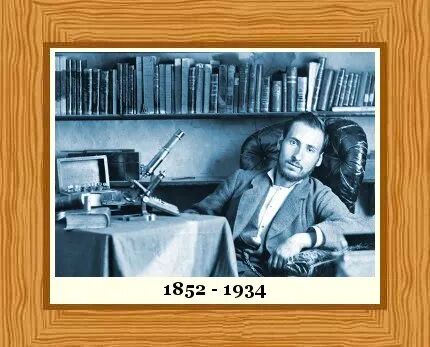
Santiago Ramón y Cajal was born in Petilla de Aragón in northern Spain on May 1, 1852. His mother’s name was Antonia Cajal. His father, Justo Ramón Casasús, was a surgeon and Professor of Applied Anatomy.
Ramón y Cajal was a mischievous boy, often in trouble at school. He attended several schools, as his family tried to find one he would settle down in and behave properly.
He was very good at drawing, but he did not enjoy the strict and sometimes violent discipline of the monks who taught at his schools.
His father lost patience with the boy and withdrew him from school, apprenticing him to a barber, which did not work out well, and then a cobbler, which also did not work out well. Ramón y Cajal wanted to be an artist and he was very strong-willed. He returned to high school in the town of Huesca.
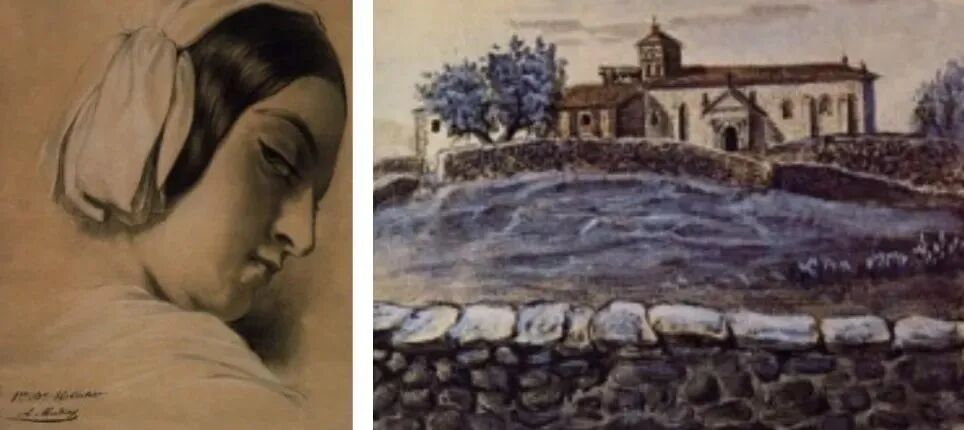
In the summer of 1868, his anatomist father took the 16 year-old boy to graveyards where the bones of ancient burials had come to the surface. His father hoped that by interesting his son in drawing the bones, he would excite his interest in anatomy.
His father’s ploy worked, because in 1868 Ramón y Cajal enrolled to study medicine at the University of Zaragoza, where his father was a professor.
He performed well at university, under his father’s guidance, and became very skilled at dissection.
In 1873, after five years at medical school, Ramón y Cajal graduated. He was now qualified to practice medicine. He was just 21. Soon he was conscripted into the army.
A Transformation During Military Service
After a few months in the army Ramón y Cajal applied successfully for the Medical Corps.
In 1874, his army unit moved to the Spanish colony of Cuba, where the Ten Years’ War of independence had been fought since 1868. The following year he was posted back to Spain from the tropical nightmare of Cuba. He was suffering from dysentery and malaria. The malaria almost killed him.
Out of the army, he spent time in the care of his mother and sisters in the foothills of the Pyrenees Mountains in northern Spain.
In late 1875, Ramón y Cajal started as a graduate assistant at the University of Zaragoza. In early 1877, he was promoted to acting assistant professor and awarded a Ph.D. degree in medicine.
In 1879, he became the Director of the Anatomical Museum in the University of Zaragoza’s Faculty of Medicine.
In 1883, he moved to become Professor of Descriptive Anatomy in the University of Valencia’s Faculty of Medicine.
In this early part of his career, he worked on the causes of inflammation, cholera, and the structure of epithelial material.
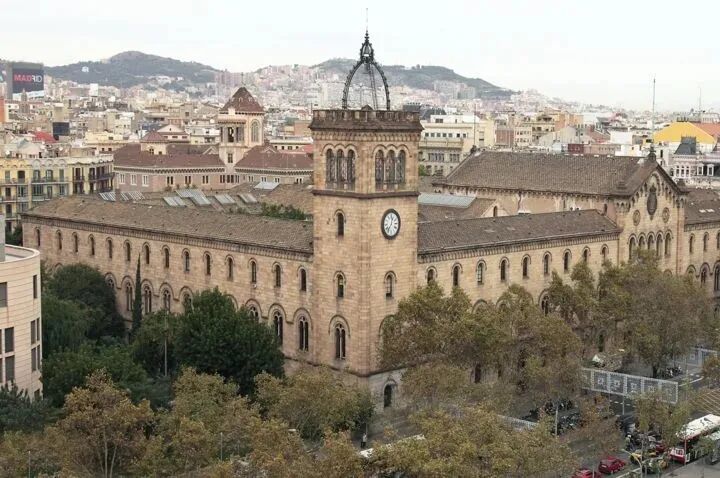
In 1887, he took the chair of Histology and Pathological Anatomy at the University of Barcelona. It was here he began to make serious use of Golgi’s Method, which would ultimately lead to his Nobel Prize.
In 1892, he became Professor of Anatomy and Histology in the Pathological School of Medicine at the Central University of Madrid. He stayed in this position for thirty years, until he retired in 1922.
A Historic Advance in the Neuron Doctrine
In 1873, Camillo Golgi found that treating nervous tissue with potassium dichromate and then impregnating it with silver nitrate could form silver-salt deposits, making some nerve cells and their processes clearly visible against the background. Nerve cells are also called neurons.
Nerve cells are extremely important, because they carry information through the body using chemical and electrical signals. Nerve cells carry information to the brain from, for example, our senses such as sight and hearing. Nerve cells also carry the brain’s response back to the body causing, for example, muscle movements.
Golgi’s method of staining neurons allowed them to be seen with great clarity for the first time. It was not perfect, however, because fewer than five percent of neurons took up the stain.
In 1887, Ramón y Cajal began using Golgi’s method to study neurons. He improved the method by using higher concentrations of the chemicals, cutting thicker sections of material to study under the microscope, and only using the method to study those neurons that it performed best on. These were neurons with unmyelinated axons. This meant that the axons – these are the structures that carry nerve signals – were not surrounded by fat. Bird brains and mammal embryos contain unmyelinated axons, so were ideal for Ramón y Cajal’s work.
He found he could stain a much greater proportion of neurons than Golgi could.
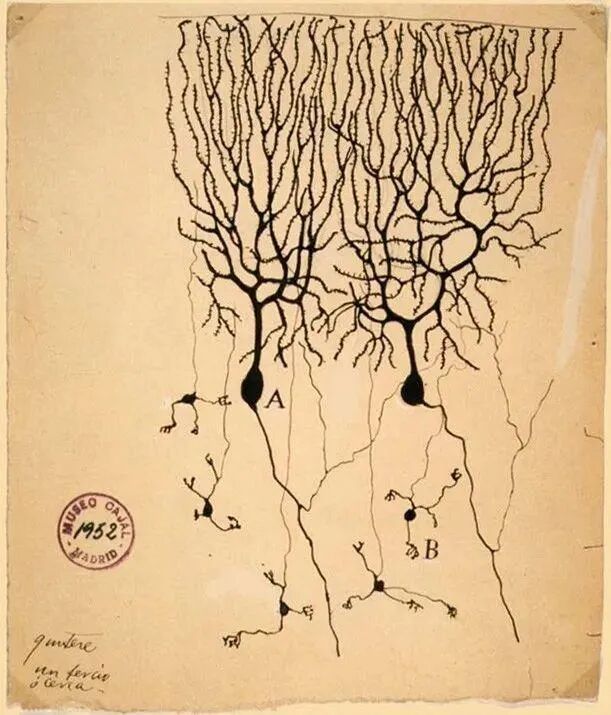
Within a year Ramón y Cajal published a groundbreaking result. He discovered that the nervous system in bird brains is made up of individual cells touching one another – he could show this clearly, because of the high proportion of cells he was able to stain.
This discovery, in 1888, made it the peak year of his work, according to Ramón y Cajal. It allowed him to establish proof of the neuron doctrine.
The neuron doctrine holds that neurons are separate, distinct cells rather than a fused continuous cellular reticulum. They can nonetheless form interconnected functional networks through synapses.
Golgi, disagreed strongly with the neuron doctrine. He maintained that neurons formed an interlinked network which behaved as a single entity. In fact, this was the position of most scientists until Ramón y Cajal established his neuron doctrine.
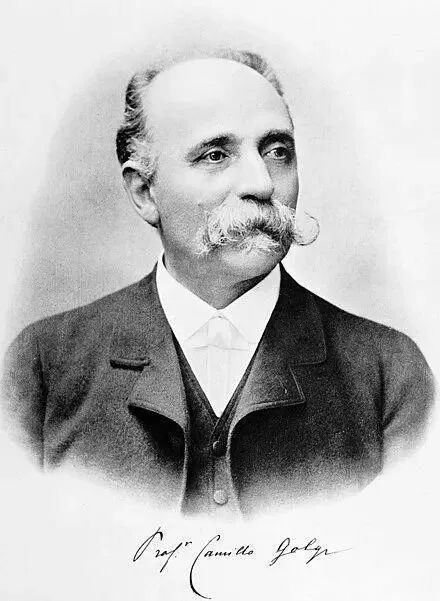
The Nobel Prize committee decided that Ramón y Cajal and Golgi should share the 1906 Nobel Prize for Medicine/Physiology, even though the two scientists held absolutely opposite views about how the nervous system worked. If one of them was right, the other one must certainly be wrong.
Ramón y Cajal had much better evidence for his position.
It’s likely that Golgi’s prize was for the discovery of the basic technique that allowed Ramón y Cajal to prove the neuron doctrine.
As regards sharing the Nobel Prize with his rival, awarded “in recognition of their work on the structure of the nervous system,” Ramón y Cajal said: What a cruel irony of fate, to pair together, like Siamese twins united by the shoulders, scientific adversaries of such contrasting character!
More charitably, in his autobiography he wrote of the shared prize: The other half was very rightly awarded to the illustrious professor of Pavia, Camillo Golgi, the inventor of the method with which I accomplished my most striking discoveries.
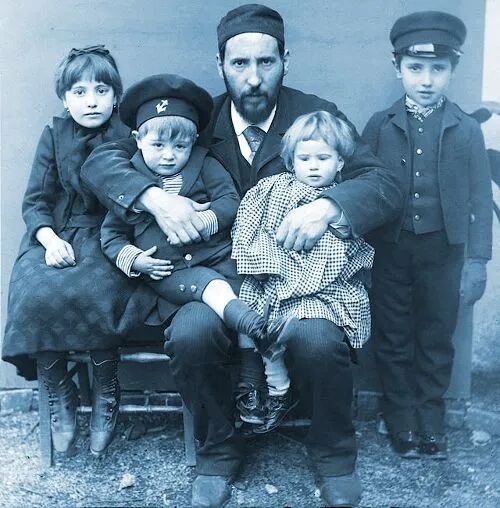
Santiago Ramón y Cajal had once been a 'troublesome boy' who gave his father headaches. Quick-thinking and passionate about art, he was a young inventor, a cobbler, and a barber, and later a renowned physician and neuroscientist.
With drawing skills that seemed possessed by the spirit of Leonardo da Vinci, together with an explorer's passion for neuroscience and the brain, Cajal produced intricate, beautiful, precise diagrams of its interior. Combining scientific rigor with exquisite beauty, they revealed the remarkable structure within the brain!
The complex and magnificent pictures of the brain that emerged from Santiago Ramón y Cajal's pen inspire an irresistible sense of awe!
Original article link:
https://www.famousscientists.org/santiago-ramon-y-cajal/
Source: Famous Scientists
Some material in this article comes from online sources. Please contact us for removal if it infringes your rights.
Editorial note
Editorial note: The original headline 'the first person to draw the human brain' was too broad and unsupported, so it now describes a pioneer in mapping nervous tissue. Approximately 86 billion neurons is the sample-mean estimate reported in a 2009 study, not a fixed count for every brain or a precise equality with all galaxies in the universe. The staining synopsis refers to silver-salt deposits rather than reducing a complex process to one salt fixed on cell membranes. Neurons being separate cells does not mean that they lack interconnected functional networks. The historical dispute and the fact of the shared Nobel Prize are preserved.
Supporting references
Azevedo et al. 2009: original study of brain-cell numbers
Original technical research on modified Golgi impregnation
Sources and editorial history
Restored from a complete historical article exported from the PhDSciNet Official Account.
Editorial revision: Editorial note: The original headline 'the first person to draw the human brain' was too broad and unsupported, so it now describes a pioneer in mapping nervous tissue. Approximately 86 billion neurons is the sample-mean estimate reported in a 2009 study, not a fixed count for every brain or a precise equality with all galaxies in the universe. The staining synopsis refers to silver-salt deposits rather than reducing a complex process to one salt fixed on cell membranes. Neurons being separate cells does not mean that they lack interconnected functional networks. The historical dispute and the fact of the shared Nobel Prize are preserved.