Historical compilation: This article preserves the scientific biography in the original manuscript. The English material is credited to Famous Scientists. No named author or translator could be verified from the export, and the original publication date remains unverified.
If one disease could change human history, malaria might be it.
For a long time, people knew little about the source of this ancient and terrifying infectious disease. The ancient Romans believed that foul air from marshes caused malaria; the Sumerians attributed it to Nergal, the god of pestilence; and people in ancient India called this highly infectious and deadly illness the 'king of diseases.'
In the late nineteenth century, the original manuscript reports, hundreds of millions of people in tropical and subtropical regions contracted malaria each year and more than three million died. Forests and marshes became places people feared to enter. Witnessing this suffering, a young doctor who loved the arts wrote these lines: 'Terrible killer, one day I shall defeat you… I know there must be a key that will uncover your cunning trail.'
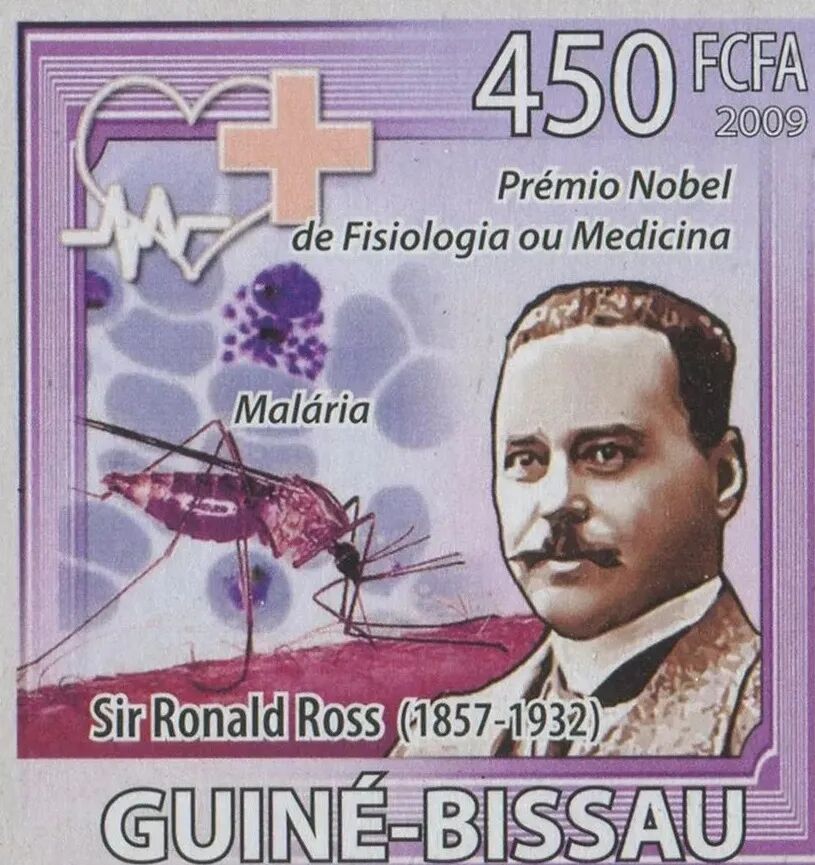
In 1902, Ronald Ross, the young doctor who had vowed to tackle malaria, received that year's Nobel Prize in Physiology or Medicine. Through years of difficult research, he had helped uncover the elusive route by which malaria spread and fulfilled the ambitious promise he had made in his youth.
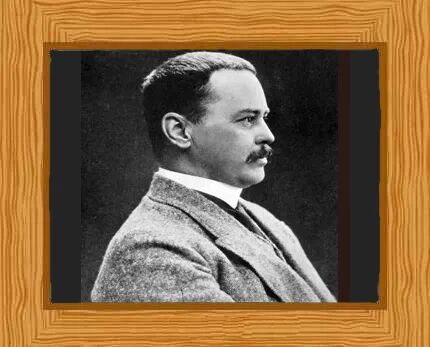
A Talented Young Doctor
Ronald Ross was born on 13 May in 1857 at the Himalayan hill station in Almora, India. He was the eldest son of Sir Campbell Claye Grant Ross, a general of the British Army and Matilda Charlotte Elderton. The eldest of ten children, aged eight, he was sent to England where he lived with his great uncle, a retired doctor.
He was sent in 1869 to a boarding school in Springhill, near Southampton. He was still just a boy when he developed a love for music, literature, poems, and mathematics. At the age of 14, he won a prize for mathematics and was presented with the book “Orbs of Heaven” which sparked his interest in this field.

Aged 16, Ronald secured first position in the drawing exams. Because of his love for poems and literature, he initially wanted to be a writer; but he accepted his father’s wishes and enrolled at St Bartholomew’s Hospital Medical College in London in 1874.
Initially Ross was not fully committed to the path he has chosen and spent a lot of his time writing plays, poems and composing his own music. Nevertheless, Ross graduated in 1880 having passed the examinations for the Royal College of Surgeons of England in 1879.
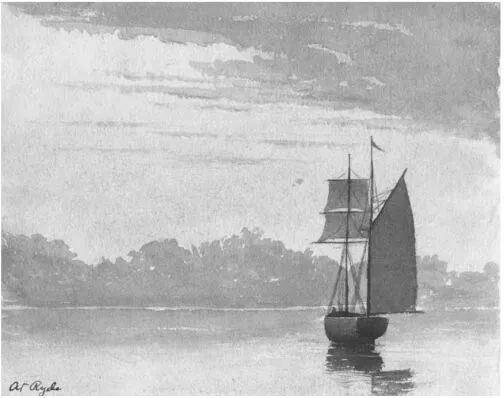
Ross then worked as a ship’s surgeon, his first position being on a transatlantic steamship. At the same time, he advanced his knowledge by studying to obtain a license for the Society of Apothecaries. Passing on his second attempt in 1881, he qualified which allowed him to join the Army Medical School and he entered Indian Medical Service in 1881.

Research That Changed His Career
Ross, now qualified, left for India in September 1881 and moved around India with various postings for seven years.
In 1883, Ross became the Acting Garrison Surgeon of Bangalore and it was then he realized how to control mosquitoes and the propagation of malaria by limiting the mosquitoes’ access to water.
During a return to England on a furlough in 1888 Ross continued his education and obtained a Diploma in Public Health from the Royal College of Physicians and Royal College of Surgeons. Ross also took a course in bacteriology taught by Professor E.E. Klein.
Ross developed an interest in malaria research and corresponded with Patrick Manson, the leading British expert on tropical diseases. French army doctor Laveran and Manson had both observed a parasite in blood samples of malaria victims and suggested that this parasite was the cause of malaria.
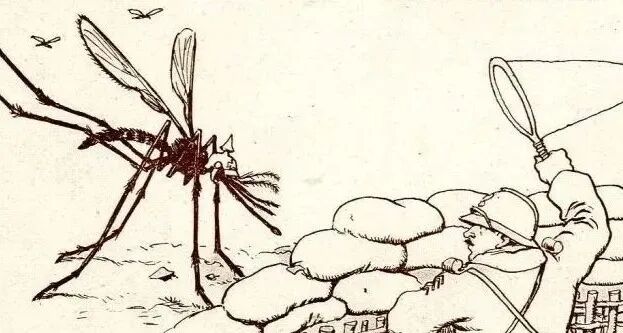
In 1894 Ross set his mind on determining how mosquitoes propagated malaria. For two and a half years, he achieved little success. In the spring of 1897 Ross was granted research leave and spent some time at the malaria infected area of Sigur Ghat, near the hill station of Ootacamund. There, he caught malaria and managed to treat himself successfully with quinine.
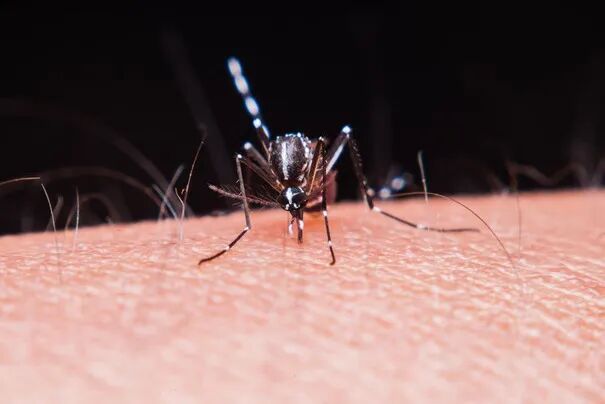
In August 1897 he managed to culture 20 adult “brown” and “dapple-winged” mosquitoes from collected larvae and fed them on the blood of a malaria victim. Ross then dissected the stomach of a mosquito that had fed on the blood of a malaria victim and discovered the malarial parasite; this established Laveran and Manson’s hypothesis as a fact.
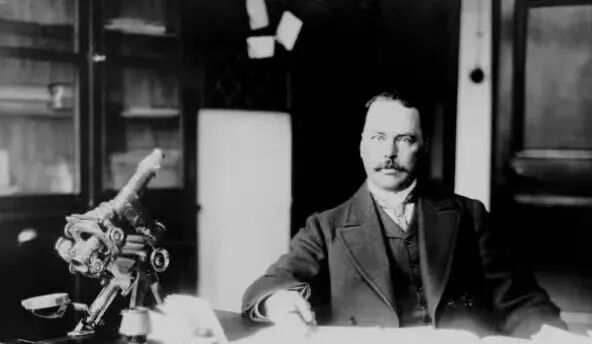
His research continued while he was working at the Presidency General Hospital in 1898 in Kolkata. From time to time, he went around the village to collect mosquitoes with the help of the Indian scientist Kishori Mohan Bandyopadhyay.
In July 1898 Ross discovered that the salivary gland in the mosquito was the storage site of malarial parasites. He used infected birds to demonstrate the full life cycle of the parasitic organism.
The Highest Art: Saving Lives
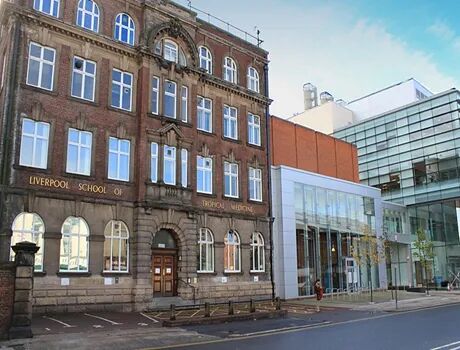
Ross resigned from the Indian medical Service in 1899 and returned to England where he became a lecturer at the Liverpool School of Tropical Medicine.
He was elected a Fellow of the Royal Society in 1901 and to the Royal College of Surgeons the same year. Ross continued his work on malaria prevention and was promoted as the Professor and Chair of Tropical Medicine of the Liverpool School of Tropical Medicine come 1902.
He was awarded a Nobel Prize for “his work on malaria, by which he has shown how it enters the organism and thereby has laid the foundation for successful research on this disease and methods of combating it” in 1902.
Ross was a prolific writer during his career. His book “The Prevention of malaria” was published in 1910. Ross was knighted in 1911 and in 1912 he was appointed as London’s Physician for Tropical Diseases at King’s College Hospital.
During the First World War Ross was made a consultant in malaria to the War Office.
The Ross Institute and Hospital for Tropical Diseases was founded in 1926 and Ross was the first director, a position he held until his death.
He married Rosa Bessie Bloxam in 1889 and they had four children, two sons and two daughters. He died due to a long-term illness coupled with asthma on 16 September 1932, aged 75 and was buried next to his wife in Putney Vale Cemetery.
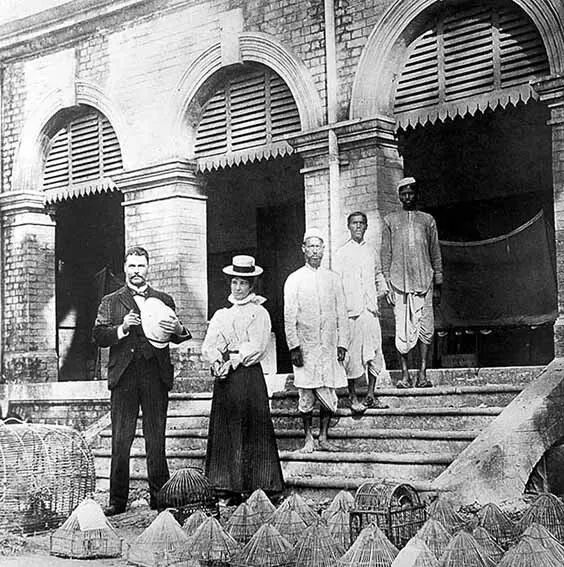
Moving through tropical forests and devoting decades to medical research, Ronald Ross—the young man who had loved the arts and made an ambitious promise—carried on with the courage of someone who had faced danger himself. After working day and night, he finally achieved his youthful goal: to find malaria's elusive trail!
In 1897, after finding malaria parasites in mosquitoes, Ronald Ross excitedly wrote these lines in his experimental notebook: 'Today, I cannot hold back tears of gratitude. You, the culprit that killed millions! At last I have found your cunning footsteps; countless people will be saved.'
Medicine may not have been this gifted young dreamer's first calling, but it became the work to which he devoted his life. If that was an unexpected turn of fate, it was surely one full of surprises: saving lives, after all, is also the highest art!
Humanity's struggle against malaria did not stop there. In 2015, the Chinese scientist Tu Youyou received that year's Nobel Prize in Physiology or Medicine for discovering artemisinin, which became a foundation of important antimalarial medicines. From 1902 to 2015, this is both a passing of the medical torch and a history of humanity's unyielding struggle against malaria!
Original article link:
https://www.famousscientists.org/ronald-ross/
Source: Famous Scientists
Some material in this article comes from online sources. Please contact us for removal if it infringes your rights.
Editorial note
Editorial note: Laveran discovered the malaria parasite in 1880. Ross's key work in 1897 found malaria parasites in mosquitoes and advanced understanding of transmission; these are not the same first discovery. The caption has been clarified to describe parasites in the salivary glands, and the closing date 1992 corrected to 1902. The manuscript's historical infection and death totals and treatment experiences are not current statistics or medication advice. Its Chinese rendering of the quoted poem is retained.
Supporting references
Scientific background of the 2015 Nobel Prize in Medicine
Sources and editorial history
Restored from a complete historical article exported from the PhDSciNet Official Account.
Editorial revision: Editorial note: Laveran discovered the malaria parasite in 1880. Ross's key work in 1897 found malaria parasites in mosquitoes and advanced understanding of transmission; these are not the same first discovery. The caption has been clarified to describe parasites in the salivary glands, and the closing date 1992 corrected to 1902. The manuscript's historical infection and death totals and treatment experiences are not current statistics or medication advice. Its Chinese rendering of the quoted poem is retained.