Historical compilation: This article preserves the scientific biography in the original manuscript. The English material is credited to Famous Scientists. No named author or translator could be verified from the export, and the original publication date remains unverified.
The pyramids, standing for thousands of years, have drawn the attention of countless scientists eager to explore their remarkable interiors.
In 2015, scientists launched the ScanPyramids project to investigate the pyramids without damaging their physical structure. On November 2, 2017, Nature published its latest finding: using high-energy particles from outer space, scientists had discovered a large void long hidden inside the Great Pyramid of Khufu.
In fact, as early as 1967, a physicist had proposed this ingenious plan: using cosmic-ray detectors to investigate the rooms inside a pyramid!
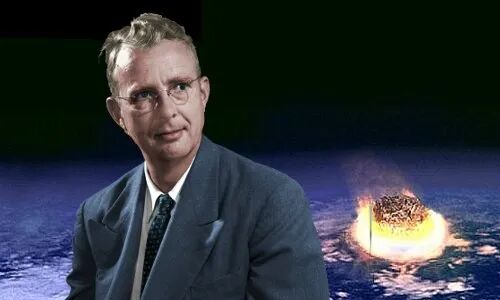
He was Luis Alvarez, named by the American Journal of Physics as one of the twentieth century's most talented and creative experimental physicists.
In 1968, Luis Alvarez was awarded that year's Nobel Prize in Physics for his decisive contributions to elementary particle physics.
An Early Education in Physics
Luis Walter Alvarez was born on June 13, 1911, in San Francisco, California. His father, Walter Clement Alvarez, was a doctor and author who wrote a large number of medical books.
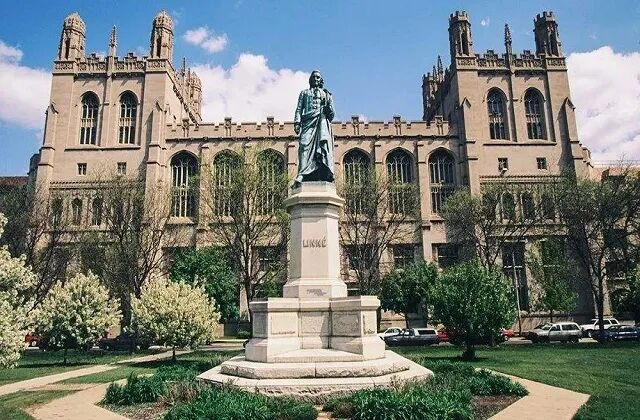
In 1926, when he was 15, his father changed jobs and the family moved to Rochester, Minnesota. Luis graduated from Rochester High School, then started a Bachelor of Science course at the University of Chicago in 1928, intending to major in chemistry.
After a couple of years, his grades in chemistry were not as good as he had hoped – he was scoring Bs. Also, he had also grown much more interested in physics, so he decided to major in physics instead. He graduated with a B.S. in physics in 1932, then continued as a graduate student at Chicago, where he was awarded a master’s degree in 1934, and a Ph.D. in physics in 1936.
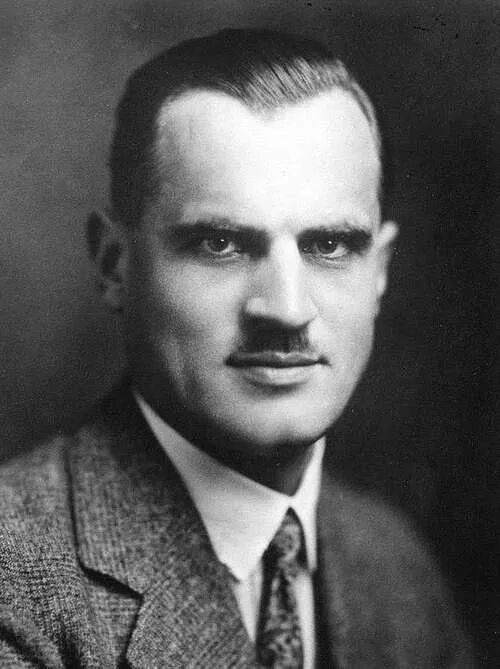
Even at the beginning of his time as a graduate student, Luis Alvarez was at the cutting-edge of physics. His doctoral advisor was Arthur Compton, winner of the 1927 Nobel Prize in Physics for his discovery that electromagnetic radiation, such as visible light, has particle-like properties.
In 1932, Alvarez built an array of Geiger counters to study cosmic rays. In 1933, using the data he had gathered, he and Compton published a paper in the Physical Review establishing that cosmic rays are positively charged particles. Compton gave much of the credit for the work to his young graduate student.
After completing his Ph.D. in 1936, Alvarez returned to his home state, beginning work as an experimental physicist at the University of California’s Radiation Laboratory in Berkeley.
A Scientific Genius Working Across Fields
Luis Alvarez was a highly talented and highly imaginative experimental physicist. He had a particular talent for devising experiments.
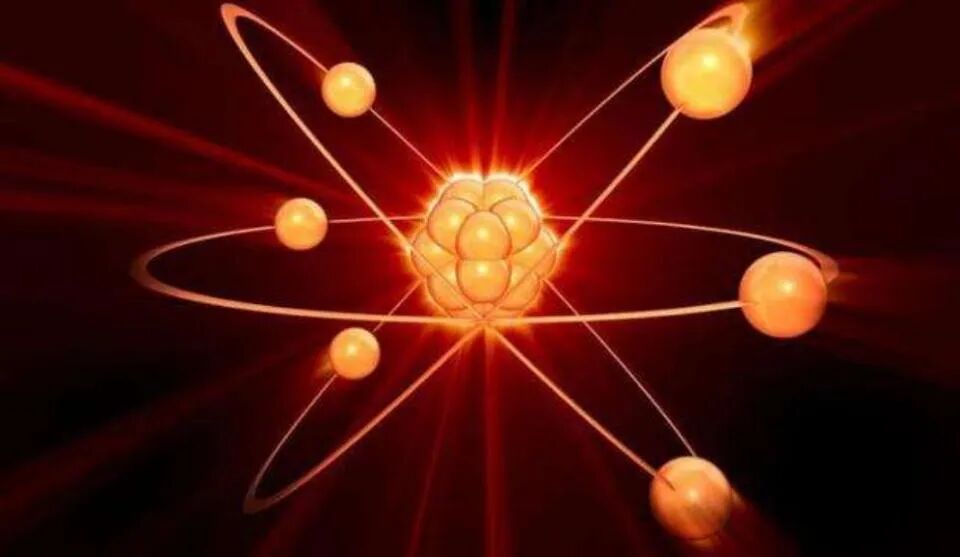
One of the ways radioactive atoms transform into new elements is capture of an orbiting electron by the nucleus. The electron combines with a proton to form a neutron. The atom now has one proton fewer than it used to, and so has become a new element.
This process had been predicted by theorists but never observed. In 1937 Alvarez devised a new experiment to ask Mother Nature whether the process really happened. He looked for the X-rays expected to be emitted by a nucleus when it captured an electron. The experiment worked and K-electron capture became an established phenomenon in physics.
Luis Alvarez proved that K-electron capture was not just another theory – it actually happens.
Alvarez was an enthusiastic pilot; he learned to fly in 1933.
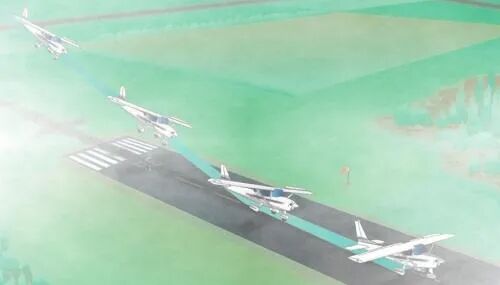
In the early 1940s he invented the Microwave Phased Array Antenna. This was a form of radar that gave ground crew unparalleled precision in determining the position of an aircraft in flight. The invention allowed ground crew to give clear instructions to pilots as their aircraft approached runways preparing to land.
The system was particularly useful when visibility was poor, such as in fog, or other adverse weather, or when pilots were inexperienced. Alvarez’s invention was used by the military and civil authorities in various countries for decades, greatly enhancing air safety.
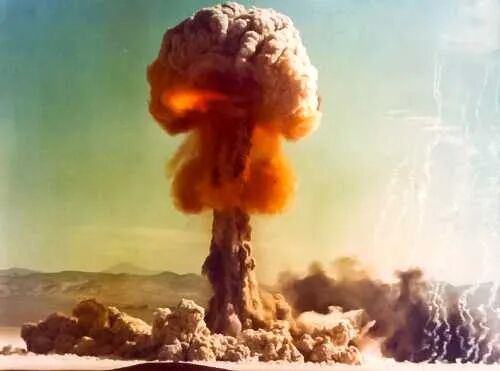
In 1943, during World War 2, Alvarez was asked if it would be possible to tell scientifically if Germany had its own atom bomb project. He knew that research and development into atom bombs produces radioactive gases, such as xenon-133. These gases could be detected with the right equipment; and Alvarez was an equipment expert. He said aircraft should fly over Germany carrying radiation detectors to detect the telltale gases. The flights took place and found no evidence Germany had an atom bomb project.
In 1944, Alvarez arrived at Los Alamos, New Mexico, to work on the Manhattan Project. There he devised an electrical detonation method for the plutonium bomb.
New Discoveries of Subatomic Particles
When the war was over, Luis Alvarez moved back to Berkeley as a full professor. He was soon busy again with experimental physics. It was an exciting time to be in particle physics, and the atom smashers at Berkeley made it an ideal place for new discoveries.
When Alvarez first went university, only two fundamental particles had been known: the proton and the electron. By 1932, the year he completed his degree, the horizons of particle physics had widened greatly with the discovery of two new particles: the neutron, discovered by James Chadwick; and the positron, discovered by Carl Anderson.
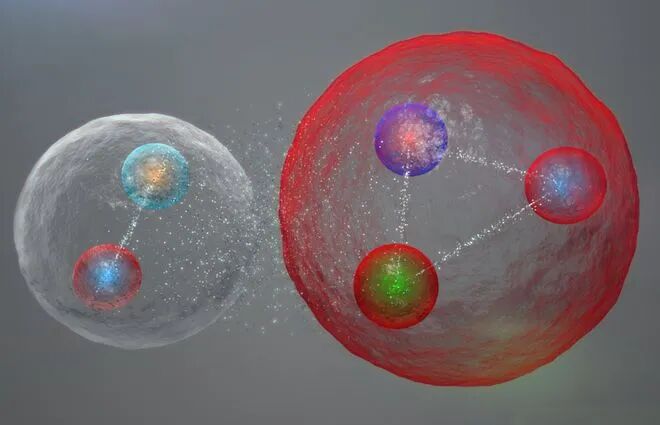
Further discoveries – K mesons and hyperons – expanded the particle world in the late 1940s, and by 1950 the pion family of particles had become known.
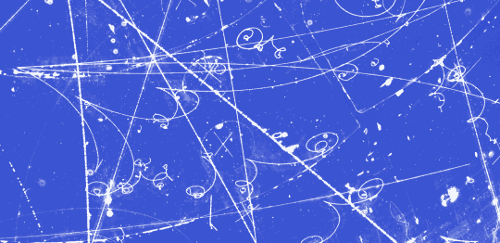
These discoveries relied on a device called the cloud chamber, in which subatomic particles left vapor trails.
One day in 1953 Alvarez got talking to a young physicist. The young man was Donald Glaser. Over a meal at a conference, Glaser told Alvarez about his new invention – the bubble chamber – which was an improved way of tracking subatomic particles. Glaser would go on to win the 1960 Nobel Prize for this invention.
Alvarez thought about what Glaser had told him. Glaser had used a bubble chamber filled with liquid ether. Alvarez decided that a bubble chamber filled with liquid hydrogen would be a perfect way of tracking particles coming out of an accelerator. The idea was that the liquid hydrogen would boil wherever a high energy particle passed through it, leaving a trail whose path would allow the particle’s properties to be calculated. By early 1954, Alvarez had put together a small-scale liquid hydrogen bubble chamber at Berkeley.
By 1956, a large chamber was in operation. In the late 1950s this chamber was used to discovery a variety of new particles and resonance states. Alvarez was awarded the 1968 Nobel Prize for his decisive contributions to elementary particle physics.
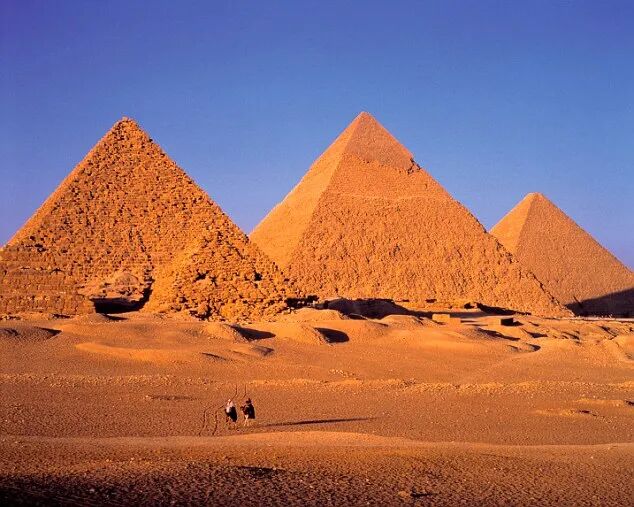
In 1967, Alvarez had the ingenious idea that hidden chambers in Egypt’s pyramids could be revealed by making use of cosmic rays to take a X-ray type photo.
He placed a cosmic ray detector in an existing chamber below in the Pyramid of Chephren – the second largest of the Pyramids of Giza. The rate that cosmic rays arrived at the detector would reveal any spaces within the pyramid’s structure. Alvarez was able to study about one-fifth of the pyramid’s volume, but found no new chambers.
He was an accomplished pilot. The radar technology Luis Alvarez helped improve enabled ground controllers to give pilots clear instructions in bad weather and poor visibility, providing greater safety for flight!
He was also a remarkably talented physicist. The hydrogen bubble chamber and measuring instruments improved and built by Luis Alvarez helped scientists observe extremely short-lived particles—resonances—and made a decisive contribution to elementary particle physics!
Of course, we can also call him the 'Sherlock Holmes' of science! Thanks to Luis Alvarez's meticulous work and tireless scientific exploration, we were able to investigate the mysteries inside pyramids decades ago.
Every one of his investigations left a vivid mark on the history of science!
Original source:
https://www.famousscientists.org/luis-alvarez/
Source: Famous Scientists
Some material in this article comes from the internet. Please contact us for removal if it infringes your rights.
Editorial note
Editorial note: The original Chinese translation rendered 'pion' incorrectly as 'ion'; it has been corrected here to 'pi meson' in line with the original English. The term 'fundamental particle' retains its historical context. The manuscript combined two adjacent English paragraphs into one Chinese paragraph. Only the Chinese paragraph division has been adjusted to restore the bilingual correspondence; no substantive content has been removed.
Supporting references
Particle Data Group: Meson Classification Tables
Sources and editorial history
Restored from a complete historical article exported from the PhDSciNet Official Account.
Editorial revision: Editorial note: The original Chinese translation rendered 'pion' incorrectly as 'ion'; it has been corrected here to 'pi meson' in line with the original English. The term 'fundamental particle' retains its historical context. The manuscript combined two adjacent English paragraphs into one Chinese paragraph. Only the Chinese paragraph division has been adjusted to restore the bilingual correspondence; no substantive content has been removed.