Historical compilation: This article preserves the scientific biography in the original manuscript. The English material is credited to Famous Scientists. No named author or translator could be verified from the export, and the original publication date remains unverified.
On February 12, 2012, the Russian postal service issued a commemorative stamp honoring the legendary Russian physicist Pyotr Kapitsa!
Pyotr Kapitsa was exceptionally talented in physics and equally good at seizing opportunities to learn. In 1921, after immense family tragedy—the successive deaths of his father, wife, and two children—he visited the University of Cambridge and met the outstanding scientist who would nearly transform his life: Ernest Rutherford, the 1908 Nobel laureate in Chemistry.
Pyotr Kapitsa hoped for a chance to remain at the Cavendish Laboratory, led by Ernest Rutherford. When gently told that the laboratory was already full, Kapitsa won Rutherford over with wit and humor: 'Your laboratory has thirty people; even adding one more person would fall within the margin of experimental error.' Decades later, that fortunate error became a memorable story in physics.
In 1978, Pyotr Kapitsa was awarded that year's Nobel Prize in Physics for his major contributions to basic research in low-temperature physics!
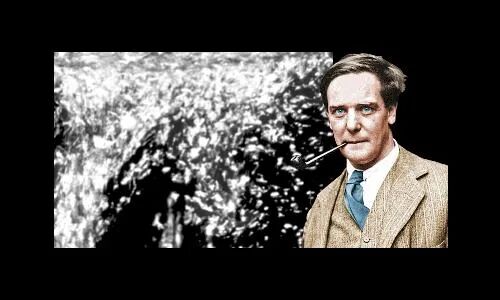
A Life-Changing Meeting of Kindred Minds
Pyotr Leonidovich Kapitsa was born on July 9, 1894 on Kronstadt, an island fortress near Saint Petersburg, capital of the Russian Empire. His father, Leonid Petrovich Kapitsa, was a colonel in the army’s Engineering Corps. His mother, Olga Ieronimovna Stebnitskaia, was an academic folklore researcher.
At age 11, Pyotr began attending a classically oriented grammar school, however, he was hindered by his bad spelling – this quirk stayed with him all his life. After two years, his mother moved him to a technical school. Pyotr graduated in 1912 with high honors.
Lacking a classical education in Greek and Latin, Pyotr Kapitsa could not be admitted to a university. Instead, he studied Electrical Engineering at Saint Petersburg’s Polytechnic Institute.
Kapitsa graduated with a degree in Electrical Engineering in 1918, age 24. He continued at the Polytechnic Institute as a lecturer.
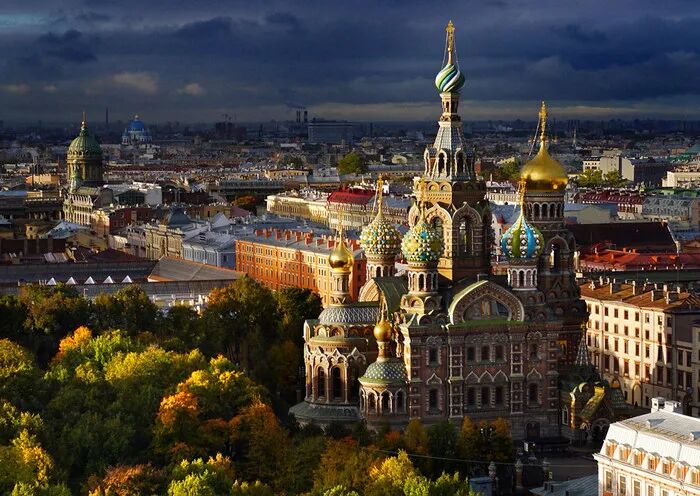
In 1921, age 27, Kapitsa left Saint Petersburg to study for a PhD with Ernest Rutherford at the University of Cambridge’s renowned Cavendish Laboratory. Kapitsa received his Physics doctorate two years later.
He reveled in the quest for scientific truth at the Cavendish Laboratory, regarding the larger than life Rutherford as his scientific father. Rutherford recognized Kapitsa’s outstanding skills as an experimental physicist and enjoyed his unconventional sense of humor.
In 1922 Kapitsa founded a weekly club bringing together the younger physicists to present their work informally. The club, known to everyone except Kapitsa himself as the Kapitsa Club, became very popular. Kapitsa and Paul Dirac became great friends.
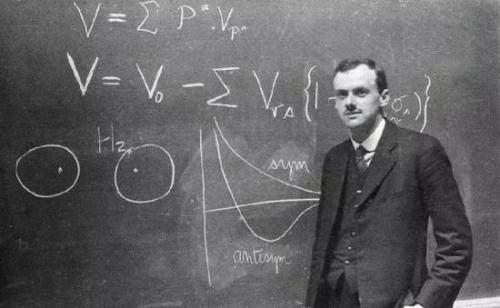
Remarkable Discoveries Amid Turbulent Times
Kapitsa prospered at Cambridge.
In 1924, he was appointed as the Cavendish’s assistant director of magnetic research. He developed techniques to produce ultra-powerful magnetic fields.
In 1928, he discovered that in a very strong magnetic field the electric resistance of various metals depends on the magnetic field strength, a straight line relationship now known as Kapitsa’s law of magnetoresistance.
In 1930, Kapitsa was appointed director of Cambridge’s Mond Laboratory, the Cavendish Lab’s state-of-the-art offshoot, whose construction was completed in 1933.
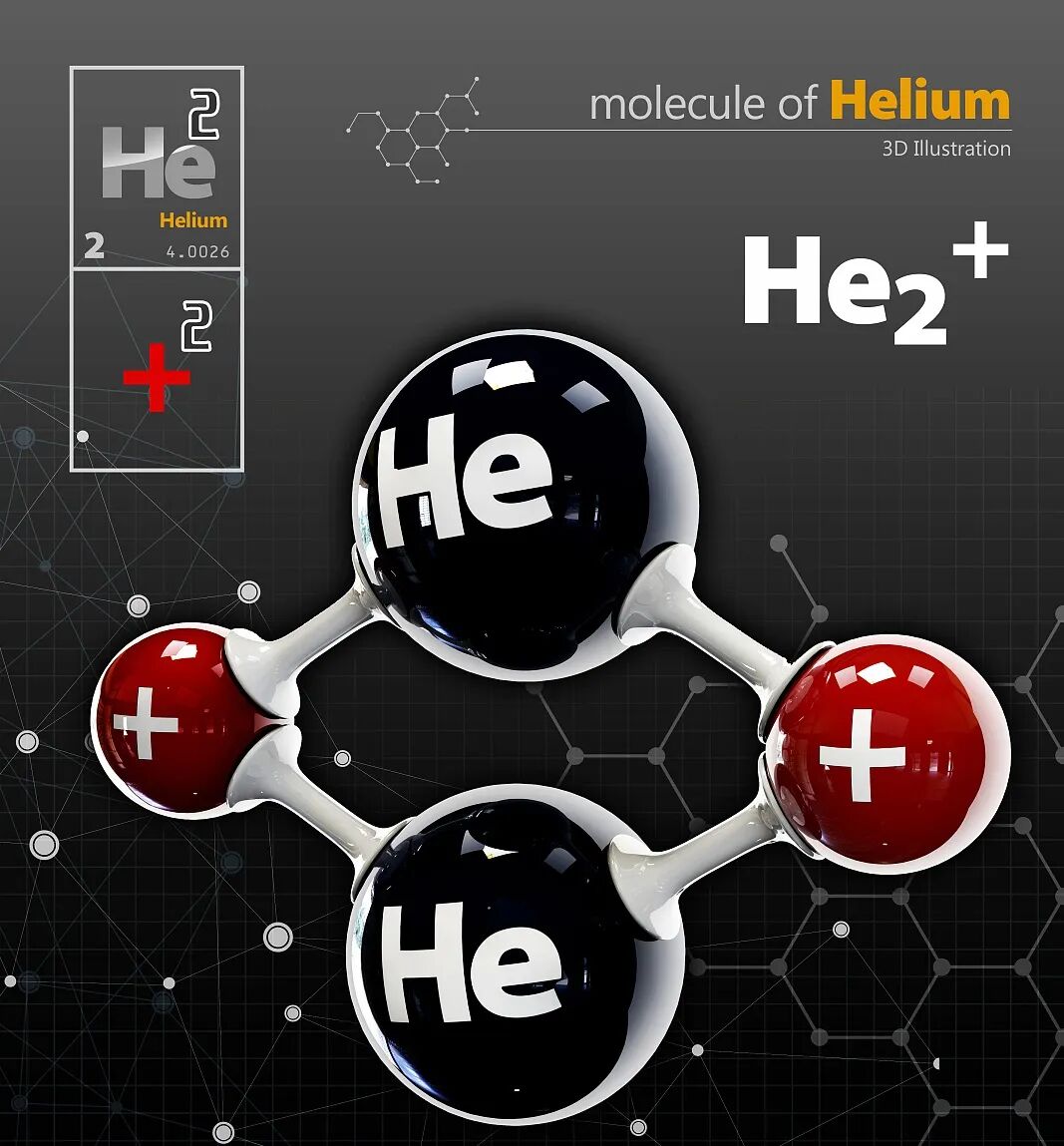
In 1908, Heike Kamerlingh Onnes had made a significant breakthrough when he liquefied helium for the first time. At normal pressures helium is liquid only at exceptionally low temperatures – within a few degrees of absolute zero. When Kamerlingh Onnes studied its properties, he noticed a peak in liquid helium’s density at 2.19 K. This turned out to be a crucial phase transition called the lambda point, now measured to be 2.17 K.
In 1933, Kapitsa developed a brilliant new process to liquefy helium based on cooling by volume expansion. He built a refrigeration machine in the Mond Laboratory that could liquefy helium at the astonishing rate of one liter per hour.
In 1934, Kapitsa returned to the Soviet Union for a conference. (He traveled to his homeland most summers to see his mother.)
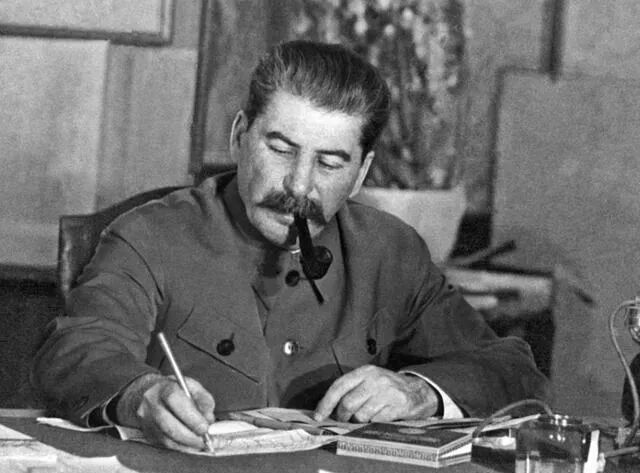
However, Joseph Stalin’s Communist government was becoming increasingly paranoid. The Soviet Union’s Great Terror had started. After Kapitsa arrived in Russia, officials canceled his exit visa and told him he would not be allowed to leave again. He was now trapped in a country whose government was homicidal.
Show trials followed by executions of anyone whose actions were perceived to be un-Marxist or who was thought to be plotting against Stalin became common. Often there wasn’t even a trial – people were simply murdered.
Kapitsa was encouraged by officials to do physics, which he did, albeit at first in terrible despair. The Soviet government agreed to buy Kapitsa’s equipment from the Mond Laboratory, and Rutherford arranged its shipment to Moscow.
In 1935, Kapitsa accepted the job of head of the Institute of Physics of the Russian Academy of Sciences in Moscow.
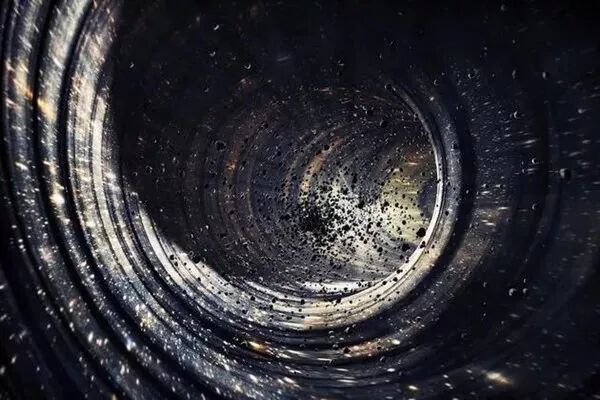
In 1937, Kapitsa discovered superfluidity when he measured the flow of liquid helium through a tiny gap of 0.5 microns between two discs. He found that below the lambda temperature helium flowed astonishingly easily. He published his results in Nature on January 8, 1938 noting that:“Helium below the lambda point enters a special state that might be called a ‘superfluid’.”
In the same edition of Nature, John Allen and Don Misener at Cambridge’s Mond Laboratory announced their discovery of the same behavior in helium. They had measured the flow of helium through capillary tubes rather than between discs. Kapitsa, however, had priority. He submitted his paper on December 3, 1937. Allen and Misener’s paper was submitted 19 days later.
A Nobel Laureate with Many Honors
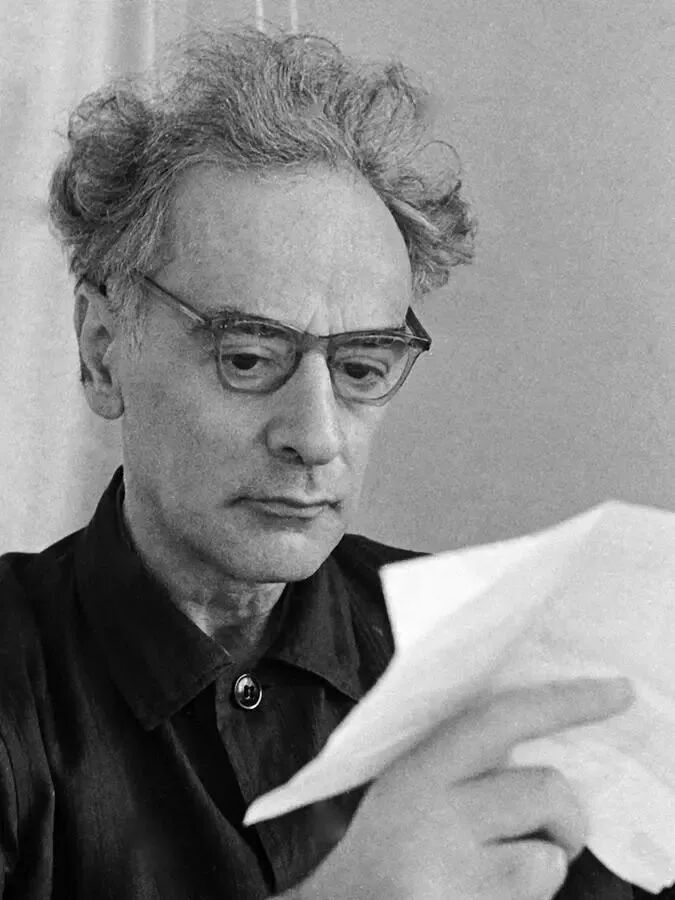
In 1937, Lev Landau was 29 years old. He was one of Russia’s greatest theoretical physicists. Two of his physicist friends, Lev Shubnikov and Lev Rozenkevich ‘confessed’ that Landau was head of an organization working against the Soviet Union. Both physicists were then executed by Stalin’s secret police, the NKVD.
In 1938, Landau was arrested and held in the notorious Lubyanka prison. After two months of coercion, he was told he was going to be transferred to Lefortovo Prison, infamous for its torture of prisoners. Landau then ‘confessed’ to his crimes.
Kapitsa saved Landau. Kapitsa had just invented an important new method of oxygen production, and so he was in favor with the Communist hierarchy. He exploited this by writing to both Stalin and the Prime Minister telling them about the remarkable behavior of superfluid helium – how it flowed without friction. He told them only Landau had sufficient talent to explain this.
In May 1938, Landau was released after a year in prison to work with Kapitsa. Within months, he fulfilled Kapitsa’s expectations, explaining superfluidity in terms of energy phenomena called phonons and rotons. Landau was awarded the 1962 Nobel Prize in Physics for his work.
Despite receiving many invitations, for 30 years Kapitsa was refused permission to leave the Soviet Union for any purpose. This changed in 1965 when he was allowed to travel to Denmark to receive the Niels Bohr Gold Medal. This was one of a number of prestigious awards he received, including:
·1929: Elected Fellow of the Royal Society
·1942: Faraday Medal
·1944: Franklin Medal
·1959: Lomonosov Gold Medal
·1965: Niels Bohr Gold Medal
·1966: Rutherford Medal and Prize
·1978: Nobel Prize in Physics
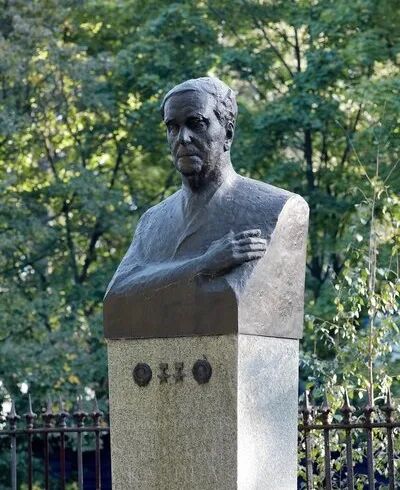
Pyotr Kapitsa died age 89 on April 8, 1984 in Moscow. He was buried in the city’s Novodevichy Cemetery.
Against the backdrop of a turbulent era, Pyotr Kapitsa began an eventful life.
He was an exceptionally talented physicist. The pulsed high-magnetic-field technique and helium liquefier using a piston expansion engine whose development he led opened a path to studying matter under extreme conditions—strong magnetic fields and very low temperatures—and became landmarks in the history of low-temperature physics!
He was also a principled defender of others. Under Stalin's rule, millions lost their lives. Loss of freedom and threats to his own life could not stop Pyotr Kapitsa's commitment to justice. With his help, Lev Landau became another great figure in physics!
An individual's strength may not change an era, but it can leave an indelible mark on it!
Original source:
https://www.famousscientists.org/pyotr-kapitsa/
Source: Famous Scientists
Some material in this article comes from the internet. Please contact us for removal if it infringes your rights.
Editorial note
Editorial note: Following the full name recorded by Nobel, the Chinese name is standardized as Pyotr Leonidovich Kapitsa; the manuscript had confused the given name and patronymic. The caption retains Saint Petersburg as the location while removing an undated capital designation, and the helium caption does not presume a molecular form. The stamp issue date and the remaining life story remain accounts from the manuscript; the original publication date is unverified.
Supporting references
Nobel: Pyotr Leonidovich Kapitsa Name Record
Sources and editorial history
Restored from a complete historical article exported from the PhDSciNet Official Account.
Editorial revision: Editorial note: Following the full name recorded by Nobel, the Chinese name is standardized as Pyotr Leonidovich Kapitsa; the manuscript had confused the given name and patronymic. The caption retains Saint Petersburg as the location while removing an undated capital designation, and the helium caption does not presume a molecular form. The stamp issue date and the remaining life story remain accounts from the manuscript; the original publication date is unverified.