Historical compilation: This article preserves the scientific biography in the original manuscript. The English material is credited to Famous Scientists. No named author or translator could be verified from the export, and the original publication date remains unverified.
His childhood was marked by silence and pain. An unhappy family life shaped his taciturn personality, and his economy with words was reflected in his scientific writing.
He pursued the utmost mathematical beauty. In a 1963 Scientific American article, he described this pursuit by saying that it was more important for an equation to have beauty than for it to agree with experiment!
His name is inseparable from quantum mechanics, one of the twentieth century's most important scientific achievements. With a rich imagination and concise logic, he advanced its development.
He was Paul Dirac. In 1933, Dirac and Erwin Schrödinger jointly received the Nobel Prize in Physics for discovering new productive forms of atomic theory, associated with the Dirac and Schrödinger equations.
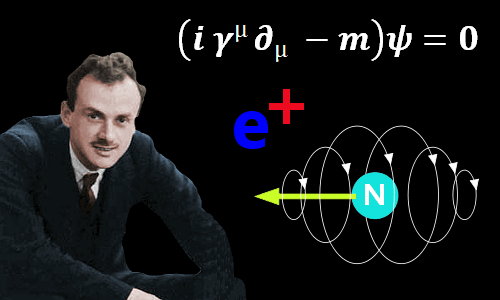
A Silent and Unhappy Childhood
Paul Adrien Maurice Dirac was born in the city of Bristol, England, UK on August 8, 1902.
His father was Charles Dirac, a school teacher and private tutor who had emigrated from Switzerland to the UK. His mother was Florence Holten, a former librarian. Paul had an unhappy childhood. His parents disliked one another and there was often tension in their home.
Paul noticed that his father spoke only French, while his mother spoke only English. Nobody ever visited their home and for a while Paul believed men and women spoke different languages!
Paul was his father’s unwilling companion: his father forced Paul to speak French, and Paul was not allowed to leave the table if he made any mistakes in that language, which invariably he did. Paul had a lifelong stomach acid problem, which was only correctly diagnosed when he was elderly. As a result of this problem he often vomited at the table because his father would not allow him to leave it. He learned to minimize his French language mistakes by minimizing the number of words he spoke.
Paul ended up despising his tyrannical father and in later life refused to speak French anywhere. In fact, Paul grew to hardly speak at all.
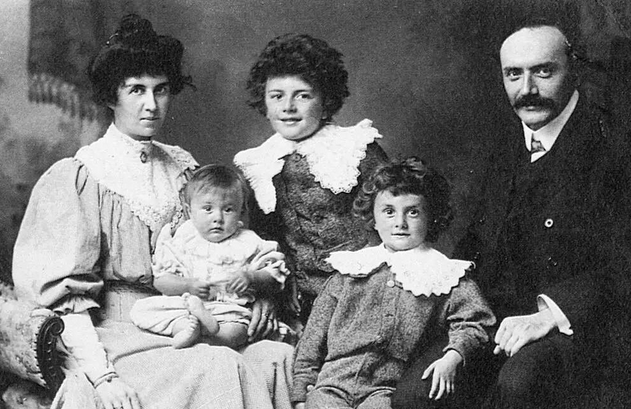
Paul’s first school was the Bishop Road Primary School.
At age 12 he started high school – the Merchant Venturers’ Technical College, where his father taught French, and was top of nearly all his classes.
In September 1918, aged 16, Paul Dirac began a degree course in electrical engineering at the University of Bristol. He graduated with first class honors in 1921. After completing his engineering degree, Dirac hoped to study mathematics at the University of Cambridge, but the scholarship he was offered was inadequate.
Instead, he continued free of charge at the University of Bristol, graduating at age 21 after two years of study with a first class honors degree in mathematics.
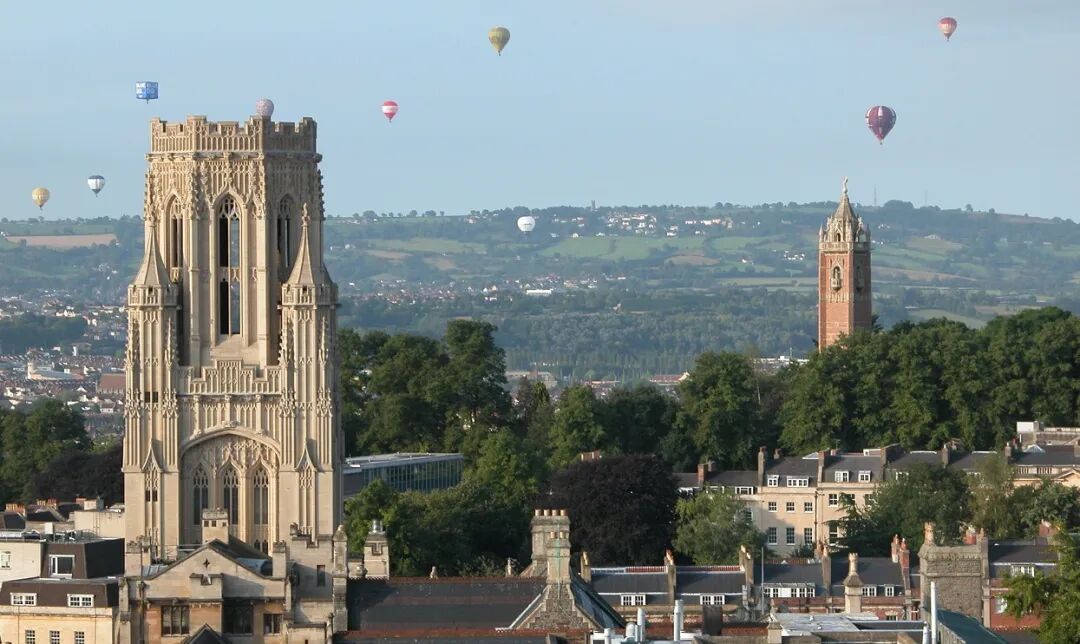
In 1923, aged 21, Dirac left his parents’ home for graduate school at Cambridge, where he researched general relativity and quantum mechanics.
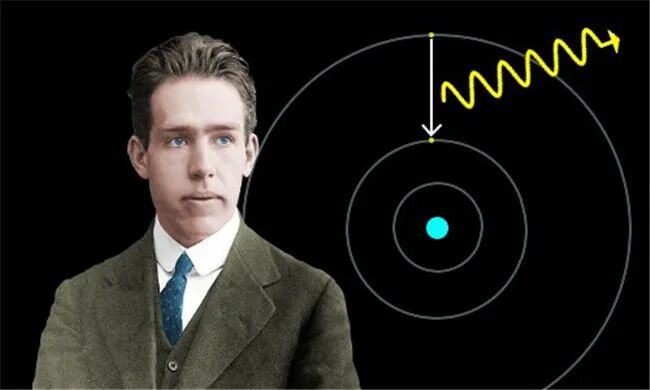
His doctoral advisor, Ralph Fowler, a mathematical physicist, introduced Dirac to the new atomic model of Niels Bohr. In Bohr’s model, electrons were restricted to defined circular orbits around the nucleus. An electron could not have just any amount of energy. It could only have the specific energy defined by the orbit it occupied.
If an electron dropped from a high energy orbit to a lower one, it released energy as light. Similarly when incoming light caused an electron to jump to a higher energy orbit, that light was absorbed by the atom.
Dirac then learned about Arnold Sommerfeld’s work, which was in better agreement with experiments than Bohr’s theory, he had replaced circular electron orbits with elliptical orbits.
By the end of 1924, Dirac had completely mastered quantum theory as it then stood, but he was unhappy with its aesthetics. He had studied Einstein’s general theory of relativity, which struck him as mathematically beautiful, and he believed something equally beautiful was needed to replace Bohr’s theory.
The Emergence of Heisenberg's Matrix Mechanics
In September 1925, Fowler asked Dirac for his opinion about an unpublished paper he had received from a young physicist by the name of Werner Heisenberg.
Heisenberg had imagined an electron restricted to moving back and forth in a line. The likelihood of the electron jumping to a higher energy level was represented not by one number, but an array of numbers – a matrix.
Heisenberg’s matrices had a property he could not account for: if you changed the order in which they were multiplied, you got a different result. It’s a bit like finding that 5 x 4 is different from 4 x 5.
Also, where Bohr’s electron orbits had been easy to get a mental picture of, Heisenberg’s theory was purely mathematical; there was no prospect of visualization.
Heisenberg’s exciting discovery was that his matrices offered a way of developing atomic theory from observed, experimental numbers.
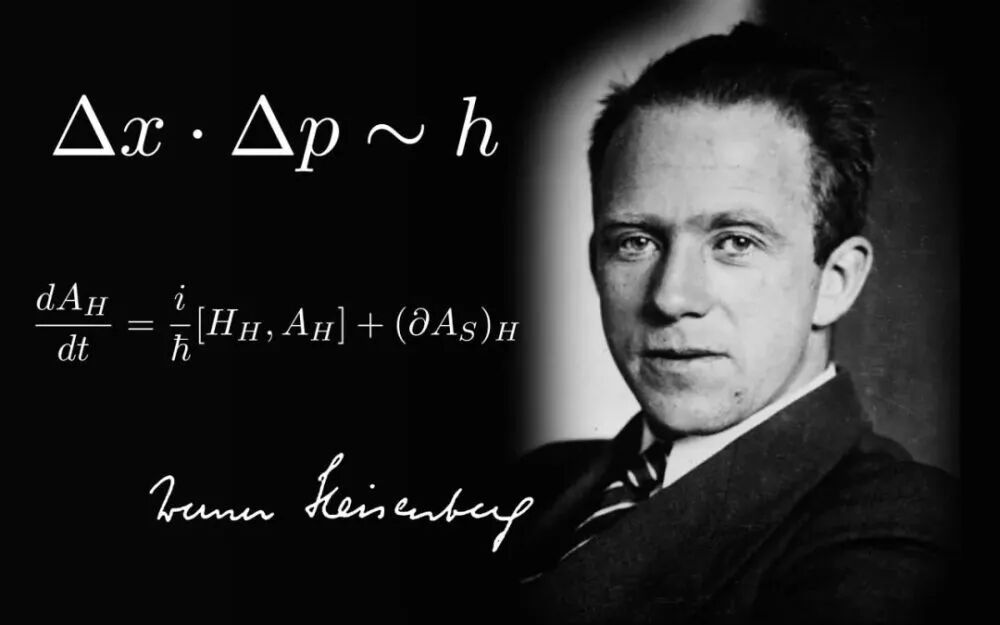
About a month after reading Heisenberg’s paper, Dirac was pondering the AB ≠ BA question in quantum mechanics. He recalled something called a Poisson bracket. This was his key to unlocking a deeper meaning from Heisenberg’s work.
By early November, working almost around the clock, Dirac had written a paper which he entitled The Fundamental Equations of Quantum Mechanics.
Taking an entirely different approach to Heisenberg’s, Dirac presented quantum mechanics in a way that made clear its links with Isaac Newton’s classical mechanics. As a matter of courtesy, he sent a copy of his paper to Werner Heisenberg.
It took only three weeks for Dirac’s paper to be published by the Royal Society.
Werner Heisenberg and his boss Max Born at the University of Göttingen in Germany were amazed by Dirac’s paper. Heisenberg quickly wrote back to Dirac, explaining that some of Dirac’s results had already been achieved at Göttingen, but less elegantly than in Dirac’s paper, and he asked Dirac some technical questions.
Heisenberg and Dirac became lifelong friends.
Wave Mechanics and Quantum Electrodynamics
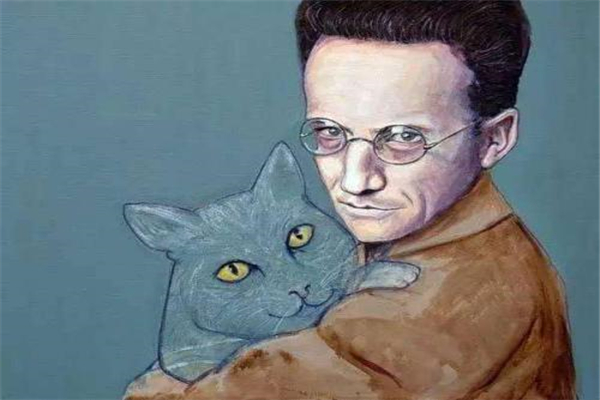
And then Erwin Schrödinger entered the scene with an alternative view of quantum mechanics – wave mechanics. Not only did his results match experiments, they allowed scientists to get some degree of visualization again, although less than had been offered by Bohr’s obsolete theory.
Heisenberg thought Schrödinger’s visualization was aesthetically ‘disgusting.’ Schrödinger was contemptuous of Heisenberg’s unvisualizable theory. The pair heartily disliked one another.
Dirac got his Ph.D. in June 1926, aged 23. With his doctorate complete, Dirac left Cambridge at the start of 1927 to spend time working at the world’s centers of quantum mechanics – Copenhagen and Göttingen.
While in Copenhagen, Dirac foreshadowed Heisenberg’s famous uncertainty principle, writing that regarding the initial position and momentum values of a quantum: “one cannot answer any question on the quantum theory which refers to the numerical values for both”.
Quantum electrodynamics – often abbreviated to QED – describes the quantum interaction of light and matter.
Dirac launched QED with his 1927 paper The Quantum Theory of the Emission and Absorption of Radiation. His new theory unified the previously separate phenomena of the light-wave and the light-quantum.
It was the first theory that dealt successfully with the fact that when an atom absorbs a photon, the light disappears from the universe; and when an atom releases light, a photon appears in the universe. No theory before had accounted for the creation and annihilation of quantum objects such as photons.
Dirac at the time used a picture of an infinite supply of zero-energy photons to describe the production of radiation, available for release as real photons when energy was supplied. This is a historical description of the theory, not a modern conclusion that atoms literally contain infinitely many real photons.

The Emergence of the Dirac Equation
Back in Cambridge, in October 1927, Dirac focused hard on electron behavior. Heisenberg and Schrödinger’s quantum mechanics worked perfectly well for slow moving electrons, but failed for electrons traveling at substantial fractions of the speed of light.
Dirac now sought to combine quantum mechanics with Einstein’s special theory of relativity to create an all-encompassing theory of electrons.
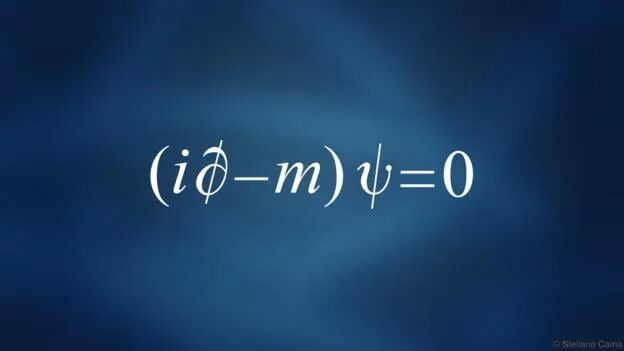
He began with Schrödinger’s wave equation. For weeks he played with equations and matrices and relativity, treating time as a quantum variable. By the beginning of December, Dirac had created an equation of great beauty and great power – the Dirac Equation.
The insights into the behavior of matter Dirac conveyed with a few mathematical symbols are remarkable, although the equation needs rather more symbols when fully expanded. The mathematical symbols of Dirac's equation described the electron's properties. The spin and magnetic field of the electron arose naturally from the equation.
In early February 1928, Dirac’s paper The Quantum Theory of the Electron was published by the Royal Society. Physicists all over the world looked at in amazement and admiration.
Dirac’s The Quantum Theory of the Electron is widely regarded as one of the greatest physics papers ever written.
Dirac and others were perplexed by one aspect of his new equation – it produced double the expected number of electron states. At first, Dirac dismissed this absurd looking result:
In May 1931, with other options exhausted, Dirac foretold the existence of antimatter. His paper was published in September 1931.
“A hole, if there were one, would be a new kind of particle, unknown to experimental physics, having the same mass and opposite charge to an electron. We may call such a particle an anti-electron.”—Paul Dirac
In 1932, Carl Anderson at the California Institute of Technology discovered Dirac’s positively charged electron in cloud chamber experiments.Dirac’s anti-electron is now called the positron.
And so a bizarre particle first seen in the mathematical symbols of Dirac’s equation turned out to be a real particle – a particle so real that today it is utilized in hospitals to detect cancers through positron emission tomography.
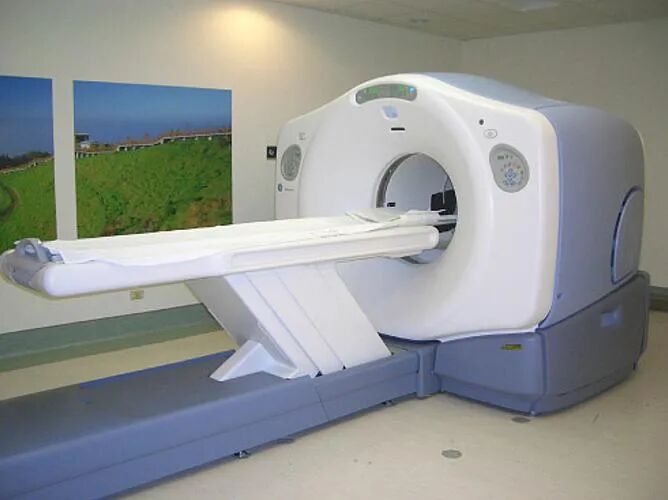
In 1930, Dirac completed his book: The Principles of Quantum Mechanics. For students of the subject, it became the essential work.
Even Albert Einstein would cry out, “Where’s my Dirac?” if he had a quantum problem.
In 1932, aged 30, Dirac was appointed to Cambridge’s Lucasian Chair of Mathematics, once held by Isaac Newton.
Dirac and Schrödinger shared the 1933 Nobel Prize in Physics, “for the discovery of new productive forms of atomic theory.”
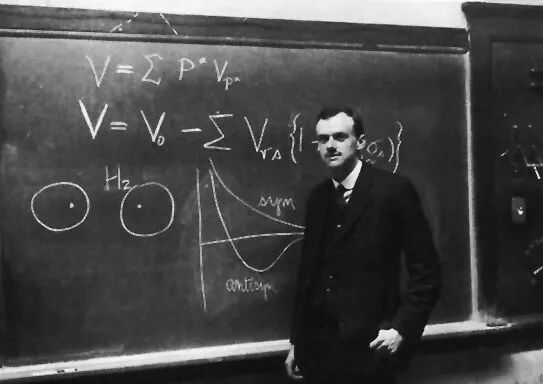
Dirac's Other Theoretical Achievements
Early in 1931, Dirac produced a startling new theory.
He began by asking: why is electric charge quantized? In other words, why is electric charge always packaged in quantities equal to integer multiples of the charge found on the electron and the proton?
Dirac's theory offered a possible explanation: if a magnetic monopole exists in the universe, a quantum-mechanical consistency condition can impose charge quantization. This is a conditional theoretical connection, not experimental proof that monopoles exist.
However, never in history had a magnetic pole been seen in isolation. North poles were always accompanied by south poles and vice versa. Furthermore, magnetic monopoles would violate Gauss’s law for magnetism, ∇.B = 0, one of Maxwell’s equations.
The fact that a magnetic monopole had never been seen was one of the main reasons that in 1980 Alan Guth proposed the universe had gone through a short period of inflation. Inflation explained the lack of monopoles, while standard big bang theory until then had predicted them.
Magnetic monopoles have still not been seen, but the universe is a big place for the solitary monopole needed to explain charge quantization to hide!
Research continues.
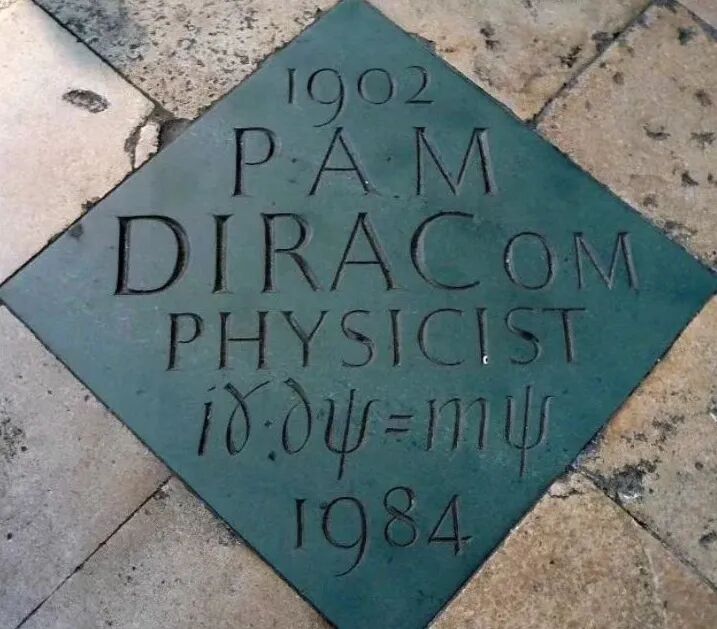
Niels Bohr once said that, among physicists, Dirac had the purest soul.
This great physicist advanced quantum mechanics, proposed the famous Dirac equation, and theoretically predicted the positron. His lifetime of outstanding contributions was matched by indifference to fame; he declined most honors, including a knighthood the British Crown wished to offer him in 1953.
Paul Dirac devoted his life to scientific research and left us, with extraordinary concision, one of the universe's most beautiful equations. He died in 1984, bringing his legendary life to a close.
Original article link:
https://www.famousscientists.org/paul-dirac/
Source: Famous Scientists
Some material in this article comes from online sources. Please contact us for removal if it infringes your rights.
Editorial note
Editorial note: 'Twice as many electrons' has been corrected to twice as many electron states, as in the original English. An equation describes electron properties rather than literally creating electrons. Uncertainty prevents simultaneous arbitrary precision of position and momentum, not all measurement of either quantity. The infinite zero-energy-photon picture is explicitly historical. A monopole's existence could constrain charge quantization; charge quantization alone is not evidence that monopoles have been discovered. Dirac's quotation about mathematical beauty remains his historical personal viewpoint.
Supporting references
Dirac's original Nobel lecture
CERN: record of Dirac's 1931 paper
Dirac 1931: Quantised Singularities
Sources and editorial history
Restored from a complete historical article exported from the PhDSciNet Official Account.
Editorial revision: Editorial note: 'Twice as many electrons' has been corrected to twice as many electron states, as in the original English. An equation describes electron properties rather than literally creating electrons. Uncertainty prevents simultaneous arbitrary precision of position and momentum, not all measurement of either quantity. The infinite zero-energy-photon picture is explicitly historical. A monopole's existence could constrain charge quantization; charge quantization alone is not evidence that monopoles have been discovered. Dirac's quotation about mathematical beauty remains his historical personal viewpoint.