
Historical compilation: This article preserves the scientific biography in the original manuscript. The English material is credited to Famous Scientists. No named author or translator could be verified from the export, and the original publication date remains unverified.
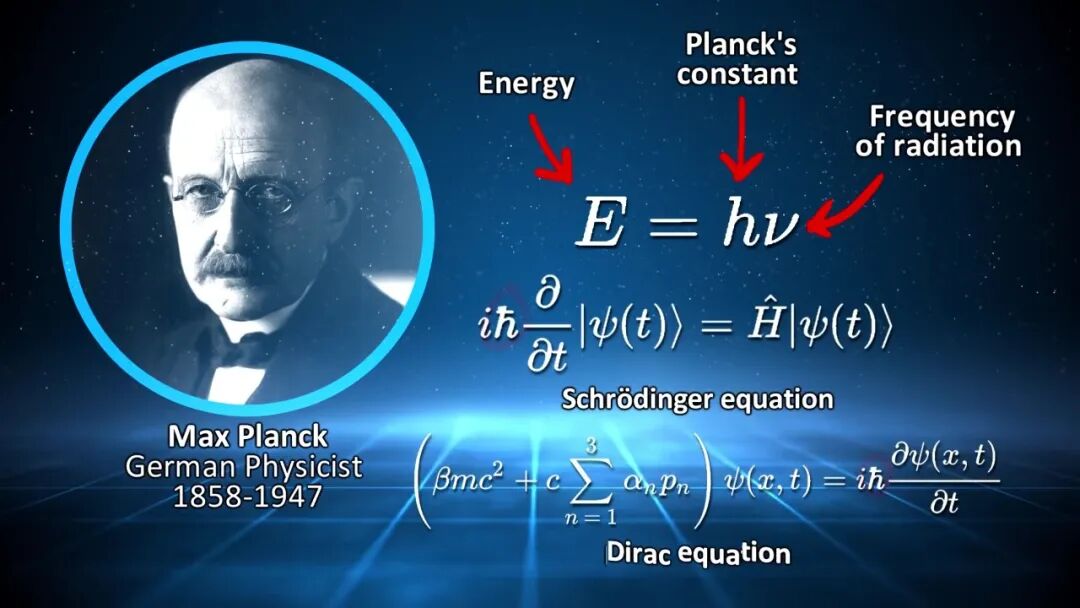
On December 14, 1900, Max Planck, a professor at the University of Berlin, presented his celebrated formula. This day is often treated as the birth of quantum physics.
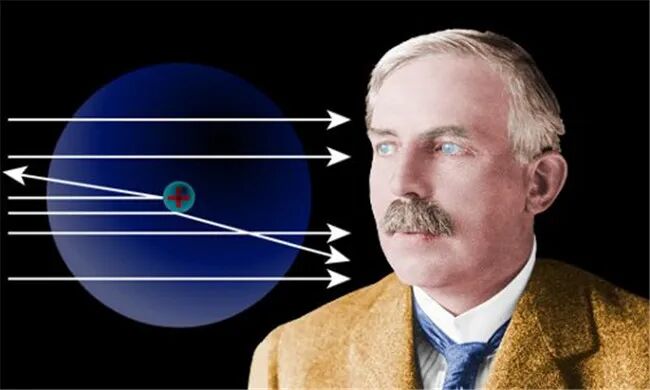
In 1911, Ernest Rutherford proposed his famous atomic model. He held that almost all of an atom's mass was concentrated in a very small central region—the nucleus—with electrons outside it, pictured as moving in orbits around it.
In 1913, Niels Bohr creatively combined Planck's quantum ideas with Rutherford's atomic model in his investigation of atomic structure.
In 1922, the Danish physicist Niels Bohr was awarded that year's Nobel Prize in Physics for his contributions to the theory of atomic structure. Later, he donated his Nobel gold medal to fundraising for Finland during wartime.
A Young Physicist's Academic Beginnings
Niels Henrik David Bohr was born on October 7, 1885 in Denmark’s capital city, Copenhagen. He was the second of three children in a prosperous, upper-class family.
His father was Christian Bohr, a brilliant physiology professor who would later be nominated twice for a Nobel Prize. His mother was Ellen Adler, daughter of a wealthy Danish politician.
His father had been raised in a Lutheran family and his mother in a Jewish family. Niels was baptized as a Lutheran at the age of six to please one of his grandmothers.
Niels’ parents were deeply passionate about their children’s education. Niels was taught at home until he started formal schooling aged 7 at the Gammelholm Grammar School. The school was both an elementary and high school. It had strict discipline and expected its students to work hard.
His father brought home a variety of fellow professors from the University of Copenhagen and the Bohr children were allowed to listen to the conversations, which were wide-ranging, discussing science, philosophy, and the arts.
Niels was good at most school subjects, but was rather weak in his own native language, Danish. While he loved talking, he had a thorough dislike of writing essays. Naturally talented in mathematics, he became increasingly drawn to the sciences.
Physics especially interested Niels and by the time he was a teenager he was correcting the mistakes in his schools’ textbooks. In addition to his intellectual vigor, he was also unusually strong physically.
His father saw Niels had the potential to become an outstanding scientist. However, neither of Niels’ parents wanted their son to grow up with narrow interests. They ensured he was well-educated culturally and in sports.
His father was particularly enthusiastic about the works of the German author Goethe and would regularly recite large tracts of Faust to his children. His father also loved soccer and encouraged his sons to play at school and university.

In 1903, aged 17, Niels graduated from high school. Later that year he began his studies at the University of Copenhagen. He studied astronomy, chemistry, mathematics, and majored in physics.
In February 1905, while he was working towards his degree, The Royal Danish Academy of Sciences announced a gold medal would be awarded for the best research paper on methods for measuring the surface tension of liquids. This was a prize intended for experienced scientists, not undergraduates. Niels was aware of his own growing strength in physics and he was ambitious; he decided he would enter the competition.
He was fortunate in having a professor for a father. His father allowed him space in his physiology laboratory to do experiments. For months Niels worked alone and obsessively during the night, making his own equipment and using it to form water jets and make measurements.
The paper he submitted at the end of October 1906 was sufficiently brilliant to win him a gold medal – a remarkable achievement for an undergraduate. He shared the prize with Peder Pedersen, 11 years his senior, who would soon become a professor of electrical engineering.
Niels Bohr graduated with a B.S. degree in 1907.
A Momentous Era in Physics
In the years 1907–1911, Bohr completed his M.S. and Ph.D. degrees in physics. In both cases he turned his attention to the electron theory of metals.
Bohr was entering physics at a particularly exciting time.
·In 1897, when Bohr was 12, J. J. Thomson discovered the electron.
·In 1898, Ernest Rutherford discovered alpha and beta particles emitted by uranium.
·In 1905, Albert Einstein unleashed a barrage of new ideas in his miracle year, writing four world-changing papers on: Brownian motion, the equivalence of mass and energy, the photoelectric effect, and special relativity.
·In 1911, Ernest Rutherford proposed the nuclear model of the atom.

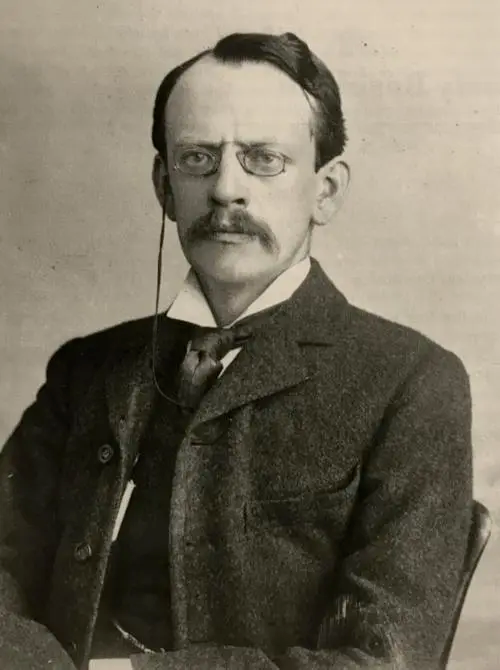
Bohr was awarded funding for a year’s postdoctoral work overseas and had the good fortune to be one of the chosen few accepted to work in J. J. Thomson’s Cavendish Laboratory at the University of Cambridge in England. He arrived in October 1911.
Bohr, then 26 years old, made a bad start with Thomson. With an outrageous lack of subtlety, the first thing the young physicist said to the great man was ‘this is wrong’ and pointed to a page of a book authored by Thomson. Perhaps this unfortunate first meeting had something to do with it, but Bohr found it hard to get to grips with the Cavendish Lab’s work. The research did not appeal to him.
By the end of 1911, Bohr had met another great physicist, Ernest Rutherford, whose laboratory was at the University of Manchester. He asked Rutherford if he could transfer there to work with him. Rutherford said yes, providing Bohr got Thomson’s approval first.
And so, in March 1912, Bohr caught the train to Manchester to work with the man who would both inspire him and become one of his greatest friends.
Rutherford had won the 1908 Chemistry Nobel Prize for his work in radioactivity. In 1911 he had proposed the nuclear model of the atom. However, despite Rutherford’s high reputation, his claim that the atom was made of a tiny, very dense, positively charged nucleus surrounded by negatively charged electrons had met with a lukewarm response from other physicists.
Bohr became increasingly interested in Rutherford’s model of the atom, particularly the behavior of its electrons, the subject of his Ph.D. thesis.
He and Rutherford became the greatest of friends and in years to come they and their wives would spend happy vacations together.
Bohr returned to Denmark in the fall of 1912 with two foremost ideas: Firstly, he wanted to understand the behavior of electrons in the atom.
Secondly, he resolved to model his own behavior as a physicist on Rutherford’s. Bohr found Rutherford’s boundless energy, enthusiasm, and knowledge inspiring. Also he had found the intellectually exhilarating atmosphere of the Rutherford group highly agreeable. He hoped one day to build an equally outstanding research group in Copenhagen.
The Emergence of Bohr's Theory of Atomic Structure
Bohr secured lecturing work on his return to the University of Copenhagen.
Meanwhile, his theoretical physics research focused on understanding the electron’s place in the atom.
Bohr knew Rutherford’s picture of the atom disagreed with the laws of classical physics. These said that negatively charged electrons must radiate energy and be pulled into the positively charged nucleus. Even when he wrote his Ph.D. thesis, Bohr stated that it was impossible for classical physics to explain behavior at the atomic scale.
Now he looked to the new quantum physics of Max Planck and Albert Einstein.
Quantum physics had established that when an object radiates heat or light waves, the emission comes not in a continuous stream, but rather in distinct packets of wave energy.
Einstein called these distinct packets light quanta; they were later widely called photons. Like all waves, photons have a speed, frequency, and a wavelength.
Planck deduced that the amount of energy carried by a photon could be found by multiplying just two numbers. These were the light’s frequency and a number we now call the Planck constant. His equation said E = hf, where E is energy, h is the Planck constant, and f is frequency.
For a single photon of frequency f, its energy is E=hf. Photon numbers are integers, so energy exchange in a radiation mode of given frequency is counted in units of hf. The energy unit is hf, not h; photons of different frequencies have different energies, so all photons are not restricted to integer multiples of one universal energy number.
No matter how hard Bohr worked, no matter how much literature he read, and no matter how much he discussed the problem with colleagues, he could not find a way of bringing quantum theory, into the electron’s behavior in the atom.
Then, in February 1913, came the breakthrough. He heard about the Balmer Series and the Balmer Formula.
In 1885, the Swiss mathematician Johann Balmer had stumbled upon a mathematical formula that predicted the wavelengths – and hence colors – of light emitted by hot hydrogen. There was no theoretical basis for the formula. It just worked!
Into Balmer’s formula Bohr substituted Planck’s formula and some other important numbers including the electron’s mass, and its charge.
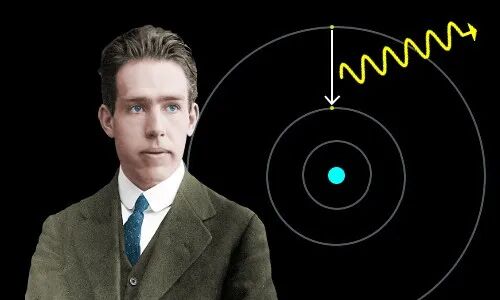
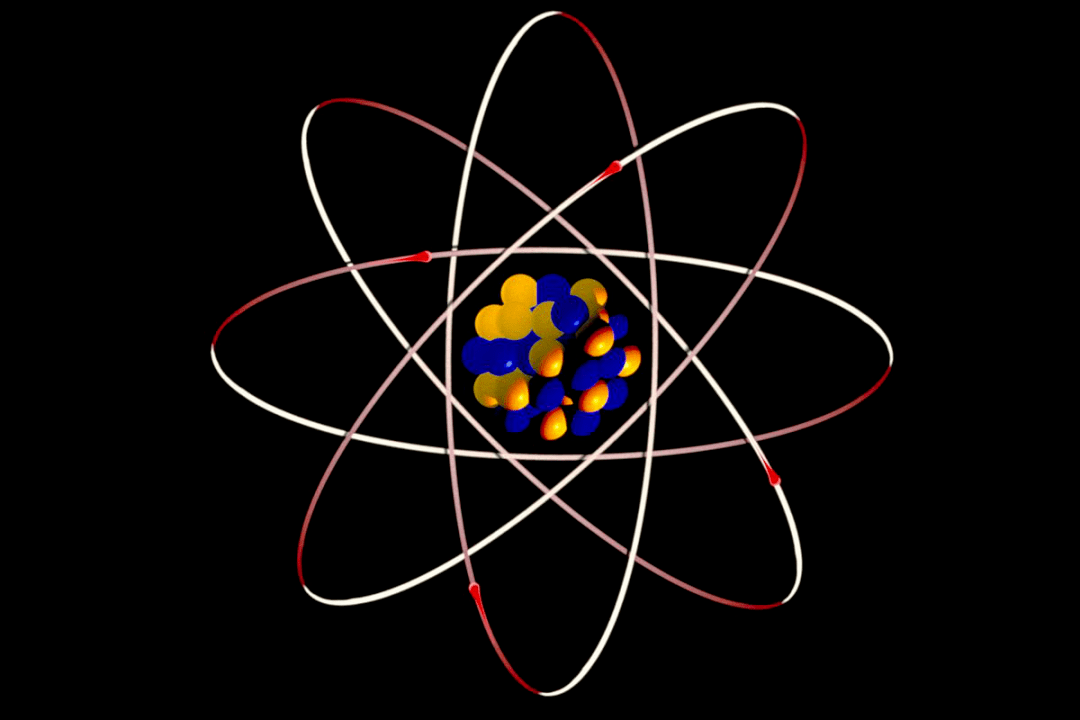
The mathematical result, in simple terms, was an atom that can be pictured as a tiny solar system. Just as planets orbit the sun, electrons orbit the atomic nucleus in fixed orbits. The farther an electron is from the nucleus, the higher its energy. Unlike planets, more than one electron can share an orbit around the nucleus.
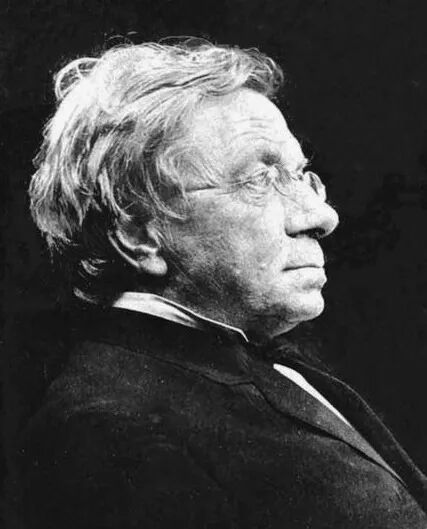
Scientists had long wondered precisely how matter could absorb and emit light. Bohr’s new model of the atom offered the explanation.
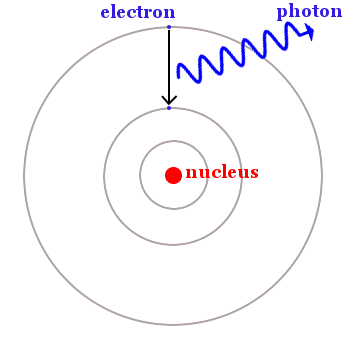
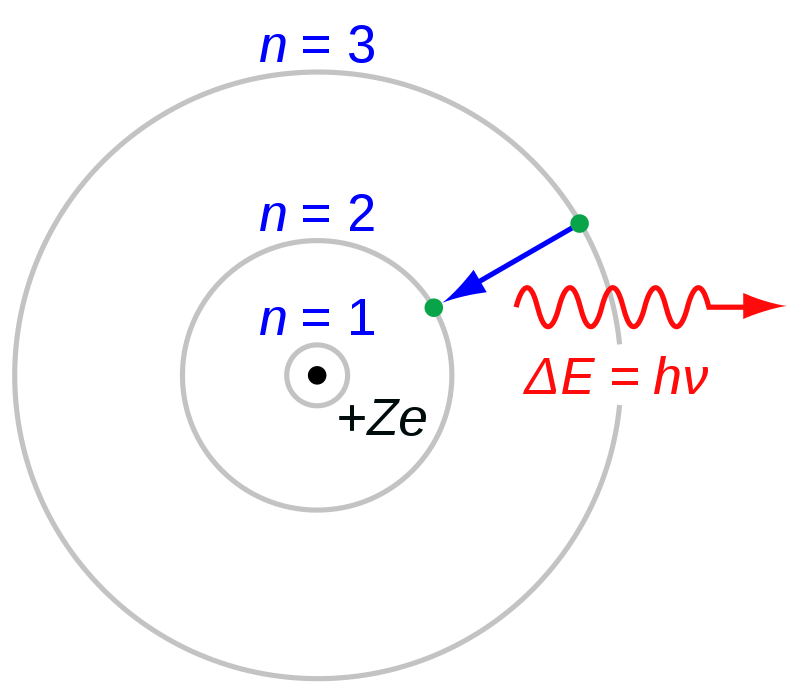
Bohr said electrons are restricted to particular circular orbits, but can jump from a lower energy orbit to a higher energy orbit by absorbing light. They can also do the opposite and fall from a higher energy orbit to a lower energy orbit by emitting light – as shown in the image below.
In classical physics, electrons could have any energy. In the new quantum physics electrons were confined to defined orbits of fixed energy. Other electron energies were forbidden.
When an electron absorbed energy it made a quantum leap, disappearing from one orbit and appearing in a higher one across a forbidden energy zone. When an electron lost energy it disappeared from a higher energy orbit and appeared in a lower energy orbit separated by a forbidden zone.
Quantum theory ‘explained’ why electrons do not radiate away their energy as they fall into the nucleus, because this process is forbidden: the nucleus is not an allowed energy orbit for an electron.
Quantum theory also explained the spectra of atoms, showing the intense colors in spectra were related to the energies of electron orbits in atoms.
A Pioneer of Quantum Chemistry
Bohr showed that the chemical properties of the elements result mainly from the behavior of electrons occupying the highest stable orbit – these are called the valence electrons. In doing so, he explained much of the periodic table’s structure and founded a new scientific discipline – quantum chemistry.
In 1912, many scientists had not even taken on board Rutherford’s model. In 1913, Bohr combined mathematics with his powerful physical intuition to establish that electrons orbit the nucleus in defined paths.
However, his theory only worked well for atoms with one electron – in other words hydrogen or ionized helium. Nevertheless Bohr’s was the crucial step – he opened the door. Soon the quantum world was knee-deep in industrious physicists eagerly exploring its bizarre nooks and crannies.
In the 1920s, Werner Heisenberg and Erwin Schrödinger provided a much improved quantum view of the electron’s place in the atom.
Bohr published three famous quantum papers in 1913. In doing so, his reputation as a physicist enjoyed its very own quantum leap. He gave seminars at the University of Göttingen in Germany – the center of the mathematical universe – and accepted an offer from Ernest Rutherford to return to Manchester in a senior academic research role.
The outbreak of World War 1 complicated matters, but Bohr worked from 1914 – 1916 in Manchester.
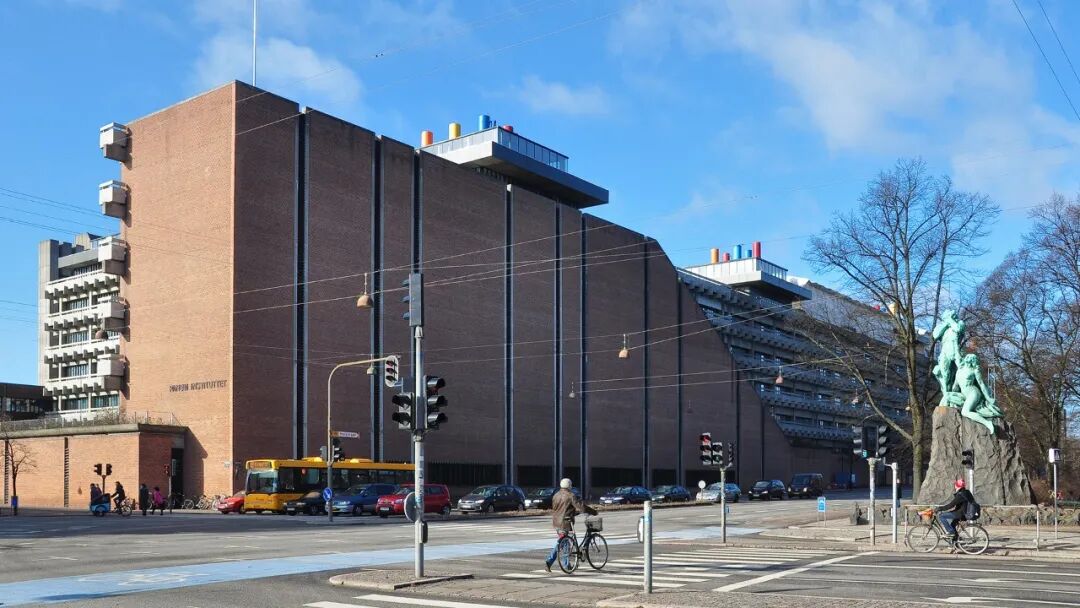
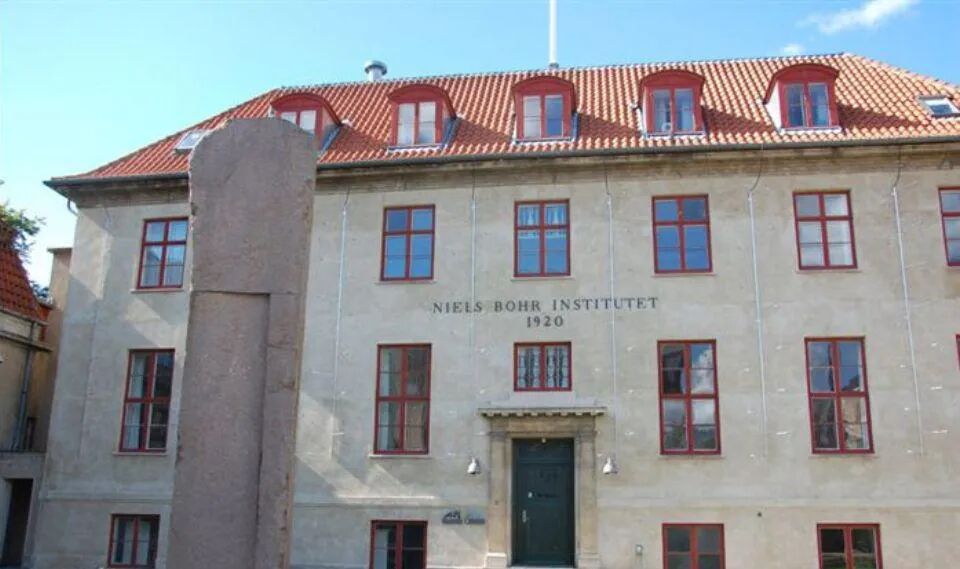
He then returned to Copenhagen to be the university’s first chair of theoretical physics. He raised money to establish a theoretical physics research institute as part of the university, modeled on Rutherford’s research group. Werner Heisenberg and several other architects of the new quantum mechanics developed their ideas in Copenhagen under Bohr’s leadership.
Today the Niels Bohr Institute continues to operate at the forefront of the physical sciences.
Bohr was awarded the 1922 Nobel Prize in Physics for the work he did in 1913.
For Niels Bohr, scientific research was a process of inheriting ideas, challenging them, and creating new ones.
This Danish physicist clearly recognized the serious shortcomings of classical theory in explaining microscopic phenomena. Creatively combining Planck's quantum theory with Rutherford's concept of the nucleus, he proposed a model with planetary-like orbits and became a brilliant star in an era full of exceptional physicists!
The Institute for Theoretical Physics in Copenhagen, which opened in 1921 at Niels Bohr's initiative, provided an important setting for discussion and development of quantum theory. Researchers working there and elsewhere contributed to matrix mechanics, the uncertainty principle, and statistical interpretations of quantum mechanics, making outstanding contributions to the revolution in modern physics.
The genius is gone, but his achievements endure!
Original article link:
https://www.famousscientists.org/niels-bohr/
Source: Famous Scientists
Some material in this article comes from online sources. Please contact us for removal if it infringes your rights.
Editorial note
Editorial note: Rutherford's nuclear-model date is consistently given as 1911 and the institute's formal opening as 1921. The Chinese reversal of the substitution into Balmer's formula has been corrected. In E=hf, h has the dimensions of action, not energy; the quantum is hf for a given frequency. 'Photon' is later terminology. Bohr's orbits belong to a historical atomic model, not literal modern planetary trajectories for electrons. Quantum theory developed through many researchers and institutions. The medal donation remains the manuscript's historical account, with no year inferred from the export time.
Supporting references
Fermilab: the atomic nucleus in 1911
Niels Bohr Institute: establishment of the institute
Lewis 1926: the naming of the photon
Sources and editorial history
Restored from a complete historical article exported from the PhDSciNet Official Account.
Editorial revision: Editorial note: Rutherford's nuclear-model date is consistently given as 1911 and the institute's formal opening as 1921. The Chinese reversal of the substitution into Balmer's formula has been corrected. In E=hf, h has the dimensions of action, not energy; the quantum is hf for a given frequency. 'Photon' is later terminology. Bohr's orbits belong to a historical atomic model, not literal modern planetary trajectories for electrons. Quantum theory developed through many researchers and institutions. The medal donation remains the manuscript's historical account, with no year inferred from the export time.