Historical compilation: This article preserves the scientific biography in the original manuscript. The English material is credited to Famous Scientists. No named author or translator could be verified from the export, and the original publication date remains unverified.
Is he a beautiful figure you glance past in a textbook?
Step into the eventful life of German physicist Max Planck, and you can see his confidence and composure in his prime: 'I do not expect to discover a new continent; I only hope to understand the existing foundations of physics, perhaps deepening them.'
His firm convictions can also move you deeply. Max Planck was a steadfast revolutionary and a central figure in German science. His fairness, integrity, and learning earned great respect in Germany. Under Nazi rule, he opposed genocidal policies and remained in Germany, doing his best to protect scientists from other countries and German physicists. In doing so, he endured immense family tragedy and pain.
In 1918, Max Planck received physics' highest honor—the Nobel Prize in Physics! From a young dreamer to a Nobel laureate, his life was one of commitment, conviction, and resilience!
The Unknown in Science Is Fascinating
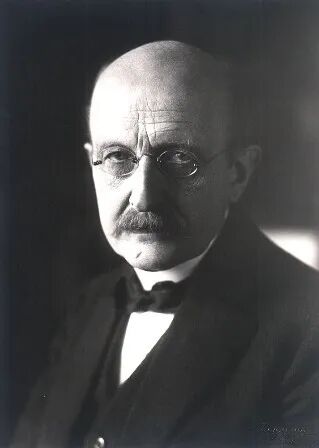
Max Karl Ernst Ludwig Planck was born in Kiel, on the north coast of Germany, on April 23, 1858. He had five older siblings.
His father, Johann Planck, was a law professor who came from an academic family. Max’s mother’s name was Emma Patzig. Max attended elementary school in Kiel. In 1867, when he was 9 years old, his family relocated over 500 miles to Munich in southern Germany, where his father had been offered a tempting professorship.
Max enrolled at the Maximilians Gymnasium – a school for academically able children. One of his teachers, the mathematician Hermann Müller, noticed Max was rather gifted mathematically, so he offered him extra lessons in astronomy and mechanics.
Frequently it happens that students who are talented mathematically are also talented musically, and this was the case with Max Planck, who composed classical music, had perfect pitch, and played the cello and piano expertly. As if that were not enough, he also had a beautiful singing voice.
Before he left high school, Planck decided he would pursue science as a vocation while music would remain an enjoyable hobby. He would later recall why he chose to become a man of science:“as a direct result of the discovery that pure reasoning can enable man to gain an insight into the mechanism of the world about us.”
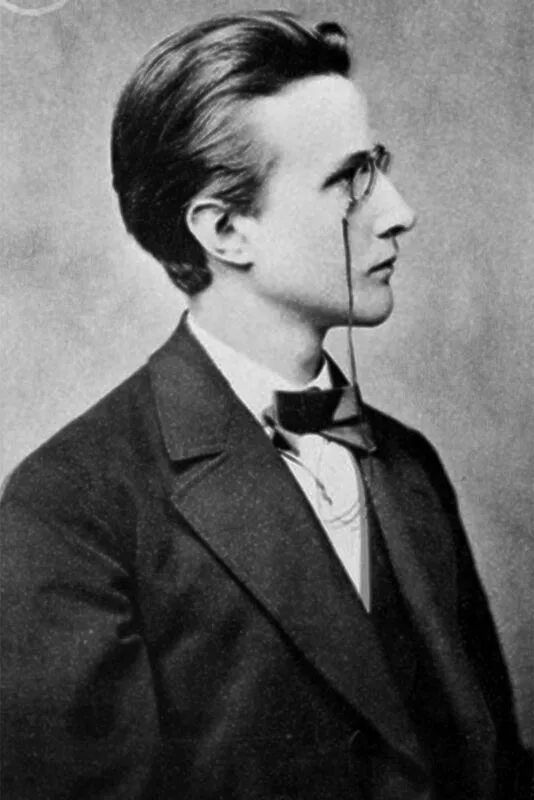
In 1874, age 17, and now a freshman at the University of Munich, Planck spoke to Professor Philipp von Jolly about the merits physics. Jolly famously replied:“In this field [physics] almost everything is already discovered, and all that remains is to fill a few insignificant gaps.”
Undeterred, Planck chose to study physics. One day he was destined to find evidence to prove the absurdity of his professor’s beliefs. In fairness to Philipp von Jolly – and although it’s hard to believe today given the rapid march of science and technology – many physicists of that era shared Jolly’s view: they believed they had already discovered and understood most of what there was in the universe to be discovered and understood!
At university Planck discovered he did not enjoy experimental work. His mathematical talent found its natural home in the world of theoretical physics.

A Founder of Quantum Physics
In the winter semester of 1877, age 20, Planck transferred for a year to Berlin’s Friedrich Wilhelms University where he was taught by two of the giants of physics – Hermann von Helmholtz and Gustav Kirchhoff.
In Planck’s opinion, each of these renowned men of science delivered lectures distinguished only by their dreariness.
Nevertheless, he and Helmholtz became great friends. Planck admired – indeed almost worshiped – Helmoltz for his scientific integrity, honesty, kindness, modesty, and tolerance.
One of Helmholtz’s passions in physics was thermodynamics – the study of the relationships between temperature, heat, energy, and work. Planck grew increasingly fascinated by thermodynamic theory.
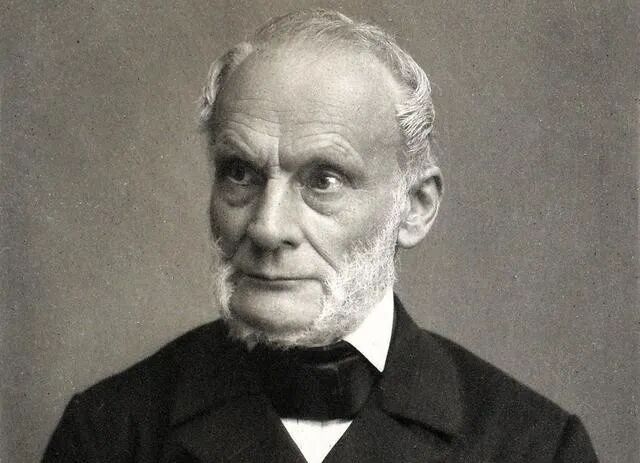
He began his own program of work in the field, spending endless hours poring over papers written by Rudolf Clausius, one of thermodynamics’ founders.
Unlike the lectures he attended, he found Clausius’s work to be interesting, well-delivered, and clear.
After his year in Berlin, Planck returned to Munich in late 1878 where he passed his state exam allowing him to teach physics in high schools.
A few months later, in February 1879, he submitted a doctoral thesis concerning the second law of thermodynamics. Three months later he defended his thesis in an oral examination and – age 21 – was awarded a Ph.D. in physics.
Funnily enough, from the questions he was asked during his thesis defense, Planck drew the conclusion that none of the professors who interrogated him understood his thesis!
A year later Planck successfully submitted a further thermodynamics thesis for his habilitation – a much more demanding qualification than the Ph.D., which allowed its holder to become a professor if such a job became available.
At age 22, Planck became a physics lecturer (unpaid) at the University of Munich. Without any salary, he continued living with his parents. His research focused on entropy – a quantity sometimes defined in a loose sense as a measure of the amount of disorder at the atomic level.

Finally, almost on his 27th birthday, Planck became an associate professor of theoretical physics at the University of Kiel, where he probed ever more deeply into thermodynamics. He continued making progress in this difficult field, but made no major breakthroughs.
At age 31, in April 1889, Planck returned to Berlin to take over the lecturing duties of Gustav Kirchhoff, who had died in the fall of 1887.
In 1892 Planck became a full professor of theoretical physics. By all accounts his students found his lectures much more interesting than Planck had found his predecessor’s. One of his students, the British chemist James Partington, described Planck’s lectures:“using no notes, never making mistakes, never faltering; the best lecturer I ever heard. There were always many standing around the room. As the lecture-room was well heated and rather close, some of the listeners would from time to time drop to the floor, but this did not disturb the lecture”.
Two of Planck’s Ph.D. students would later win Nobel Prizes in physics: Max von Laue and Walther Bothe.
The scene was now set for Planck’s momentous discovery – quantum theory.

He Was the Missing Piece in Physics
Most theoretical physicists make their mark when they are young. Max Planck was 42 when he finally left an indelible mark on the world.
The problem he solved in 1900 was prompted by puzzlement over the electromagnetic spectrum emitted by hot objects.
When things get hot they radiate energy. For example, if you were to observe a blacksmith heating a horseshoe, you’d notice that when the shoe gets hot it glows a red color, and when it gets even hotter it glows white.
Physicists considered the case of a black body – a body which absorbs all electromagnetic radiation that falls on it. When it is heated, a black body radiates energy in the form of electromagnetic waves. These waves have a broad range of wavelengths such as visible, ultraviolet, and infrared light.
BUT, in the 1800s people noticed the colors of light radiated in experiments did not agree with those predicted by theory. In scientific language, there was a mismatch between the wavelengths radiated by hot objects and the wavelengths predicted by classical theories of thermodynamics.

In order to match theory with observations Planck made a revolutionary proposal. If you’re not already familiar with quantum theory, to understand what he proposed, it might help to think about a times table – for example the three times table – 3, 6, 9, 12, 15… in which only numbers divisible by 3 are allowed and all other numbers are forbidden.
Planck’s idea was that energy is emitted in a similar manner. He proposed that only certain amounts of energy could be emitted – i.e. quanta.
This was the birth of quantum theory. Planck found that his new theory, based on quanta of energy, accurately predicted the wavelengths of light radiated by a black body.
Planck found that, for radiation of frequency ν, the size of an energy quantum is hν, where h is the Planck constant. The energy E of a single photon can be calculated from the following equation:

where E is energy, h is Planck’s constant, and ν is the frequency of the electromagnetic radiation. Planck’s constant is a very, very small quantity indeed. Its small size explains why the experimentalists of the time had not realized that electromagnetic energy is quantized. To four significant figures, Planck’s constant is 6.626 × 10⁻³⁴ J·s.
Planck had not intended to overthrow classical physics. His intention was to find a theory that matched experimental observations. Nevertheless, the implications of his discovery were momentous. Quantum theory – the realization that nature has ‘allowed’ and ‘forbidden’ states – had been born and the way we interpret nature would never be the same again.
Planck was awarded the 1918 Nobel Prize in Physics for:“the services he rendered to the advancement of Physics by his discovery of energy quanta.”
The Planck Scale was born in 1899. It replaced the Earth-centered measurement system of:
·a kilogram – the mass of a liter of water
·a meter – one ten-millionth of the distance from the North Pole to the Equator
·a second – 1⁄86400 of an Earth day
with new, universal units based on:
·the speed of light
·the Planck constant
·the gravitational constant
In the twentieth century, Stephen Hawking's work on black holes drew further attention to quantum effects. The manuscript asserted that the smallest black hole's mass, Schwarzschild radius, and half-life were exactly one Planck mass, length, and time unit, respectively. That statement should not be treated as an established conclusion. The Planck scale can help estimate where quantum-gravity effects become important, but black holes in that regime require a quantum description; a precise minimum mass or lifetime cannot be determined merely from semiclassical formulas.
In 1948, Germany’s Kaiser Wilhelm Society was renamed, becoming The Max Planck Society as a tribute to the man who held its presidency twice and gave birth to quantum theory. Today The Max Planck Society is one of the most successful scientific organizations in the world, running over 80 scientific institutions. Since the 1950s research workers from the Max Planck Institutes have been awarded four Nobel Prizes in physics, eight in chemistry, and six in medicine.

The edifice of physics was complete! At the end of the nineteenth century, Max Planck, just entering university, was told that nearly everything in the field had already been discovered; all that remained was to fill a few gaps.
The young Max Planck probably never imagined that, decades later, his work would open an entirely new field—quantum physics! He led a revolution in the physics of his era.
Even after achieving fame, Max Planck never abandoned his commitment to justice. The dust of an era, when it falls on an individual, becomes a heavy fate. His eldest son Karl died in the Battle of Verdun, and his second son Erwin was killed by the Nazis for participating in an unsuccessful attempt to assassinate Hitler. Even those painful family tragedies could not break his resolve!
Max Planck: his talent inspires admiration, and his character deserves respect!
Original source:
https://www.famousscientists.org/max-planck/
Source: Famous Scientists
Some material in this article comes from the internet. Please contact us for removal if it infringes your rights.
Editorial note
Editorial note: The size of an energy quantum is hν; energy is not simply divisible by h. The exponent formatting in the constant has been repaired. The manuscript's claim of three exact Planck-unit values for the smallest black hole has been qualified: this regime requires a quantum description and those values are not established conclusions. Counts of Max Planck Society institutes and prizes retain the manuscript's historical viewpoint rather than representing current statistics.
Supporting references
Spallucci and Smailagic: Black Holes at the Planck Scale
Sources and editorial history
Restored from a complete historical article exported from the PhDSciNet Official Account.
Editorial revision: Editorial note: The size of an energy quantum is hν; energy is not simply divisible by h. The exponent formatting in the constant has been repaired. The manuscript's claim of three exact Planck-unit values for the smallest black hole has been qualified: this regime requires a quantum description and those values are not established conclusions. Counts of Max Planck Society institutes and prizes retain the manuscript's historical viewpoint rather than representing current statistics.