
Historical compilation: This article preserves the scientific biography in the original manuscript. The English material is credited to Famous Scientists. No named author or translator could be verified from the export, and the original publication date remains unverified.
The fragrance of lilacs ushers in spring; the cool, sharp scent of soda brings summer its own sense of occasion; the sweetness of ripe fruit gives us the joy of autumn's harvest; and the crisp scent of snow and ice is winter's invitation. As the seasons turn, memories of smells are often the first to let us experience their distinctive beauty.
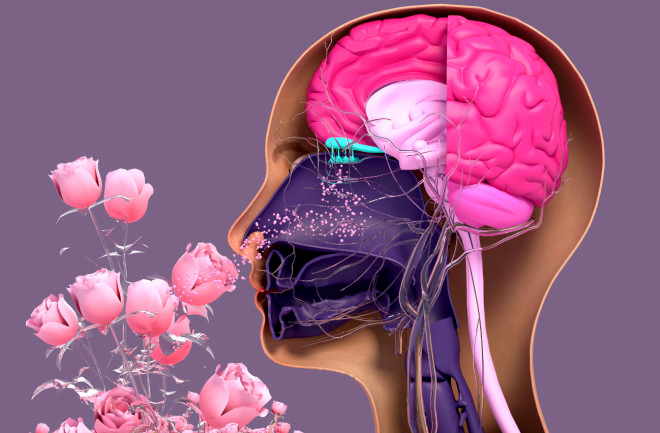
Smell seems so readily available because it is an ability we are born with. Yet it is also mysterious: among the human senses, the mechanism of smell has long been one of the hardest puzzles to solve.
How does the olfactory system distinguish countless kinds of odor molecules? How does the brain process different olfactory information? What secrets does our distinctive sense of smell hold?
Richard Axel and Linda Buck, the American scientists awarded the 2004 Nobel Prize in Physiology or Medicine, found a key to this world through their pioneering work and helped reveal the remarkable workings of the human olfactory system.

Smell: A Difficult Puzzle
Before Buck and Axel carried out their work:
•Odor scientists were aware that tiny changes in the molecules detected by our sense of smell could cause big changes in our brains’ interpretation of a smell.
•George Wald, among others, discovered that only three types of light receptor allow us to distinguish between a very large number of colors. The situation with odors was unknown.
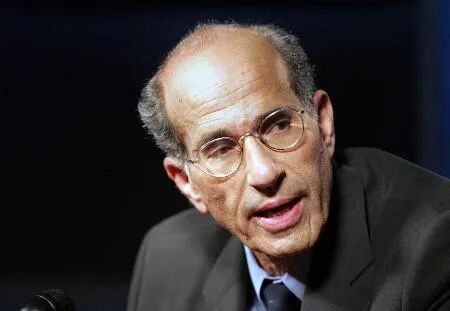
“Until Axel and Buck’s studies, the sense of smell was a mystery.” — professor Sten Grillner

Decoding the Science of Smell
Buck and Axel wanted to discover:
•How our brains tell the difference between thousands of different odors, from banana muffins to rotten cabbage. Did it work like color, with a small number of receptors interacting with a large number of different odor molecules? Or did a large number of receptors each identify a small number of different odor molecules?
•How our bodies translate odors into information carried by nerve cells to our brains.
Buck and Axel discovered:
•Humans have about 350 different odor receptor types – these receptors are found on nerve cells in the upper part of the nose.
•Each olfactory sensory neuron in the upper part of the nose normally expresses only one type of odor receptor.
•Each odor receptor is highly specialized and can detect only a small number of different odor molecules.
•Each type of odor receptor is a different protein molecule.
•Each odor receptor (protein molecule) changes when an odor molecule attaches to it, sending an electrical signal via nerve cells to the brain.
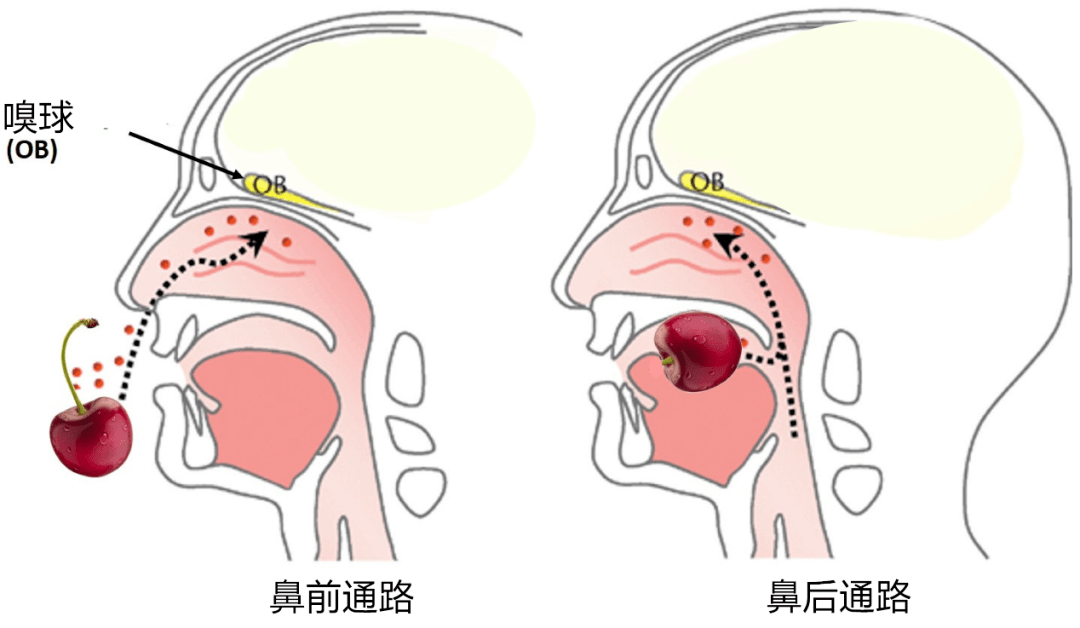
•Receptor cells send signals directly into the brain’s olfactory bulb – the part of the brain responsible for our sense of smell.
•In mice, there is a large gene family, with about 1,000 genes, that controls production of specialized protein odor receptors.
Buck later discovered that:
A single smell recognized by our brains, for example apple pie, is generally made up of many different odor molecules. These individual molecules are recognized by different odor receptors.
Our brains recognize apple pie using messages sent by combinations of receptors, like specific sets of numbers form the combination to unlock a safe.
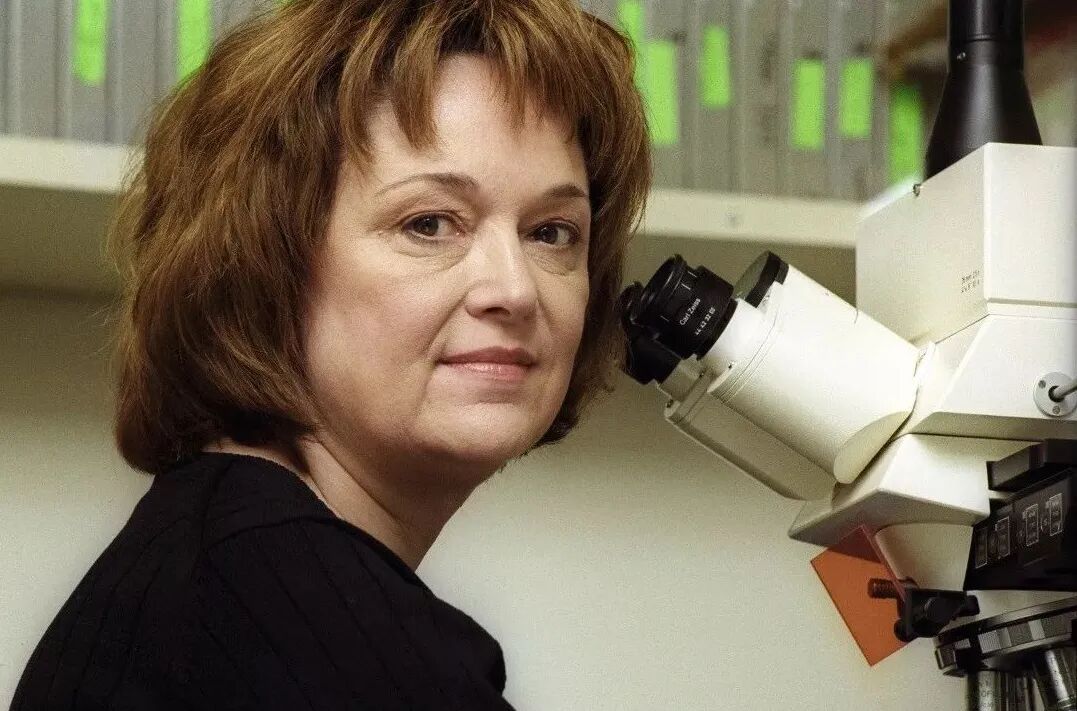
From High School to a Ph.D.: Fifteen Years of Persistence
Linda Brown Buck was born on January 29, 1947 in Seattle, Washington, USA. Her father was an electrical engineer, her mother a homemaker: Buck was the second of their three daughters.
Educated at Seattle’s Roosevelt High School, a teacher recorded in the yearbook that Linda could become a “great biologist one day.”
“You might have thought I was a strange kid for the things I did. I buried my hamster after it died, then dug it up a while later to see what it looked like. I was always curious.” — Linda Buck

Buck graduated from Roosevelt High School in 1965, age 18, and spent the next 10 years intermittently at the University of Washington in Seattle, graduating in 1975, age 28, with a Bachelor’s degree in Psychology and Microbiology.
Regarding how long it took to get her first degree, Buck commented:“I wasn’t sure what I wanted to do. I was filled with angst; I wanted to do something to help other people, but I didn’t want to do an M.D. Then I discovered immunology and I never looked back.”

Buck spent the next few years working with Professor Ellen Vitetta at the University of Texas Southwestern Medical Center at Dallas, resulting in the award of a Ph.D. in Immunology in 1980.
Buck spent two years carrying out postdoctoral research at Columbia University, New York, and in 1982 joined Dr. Richard Axel’s research group at Columbia. In 1984, she became an associate in Axel’s laboratory.

A Long and Difficult Road to Recognition
In 1985, Buck read a paper from the eminent neuroscientist Solomon Snyder and his group about an odor-detecting protein. The article fired her enthusiasm for unraveling the puzzle of how we smell things.
In 1988, she began looking for genes that encode receptors for odor molecules. The paper she and Axel wrote in 1991 that led to the Nobel Prize was the culmination of working for three years with absolute dedication for 12-15 hours a day on the project. The paper was entitled A novel multigene family may encode odorant receptors: a molecular basis for odor recognition.
“I was never close to giving up. I was very optimistic. If one approach failed, I thought of another one. I just kept moving forward… The most important thing that I tell young scientists starting out is to pick a problem to work on that fascinates them. Then they will love what they’re doing, and they’ll be able to meet the challenges without getting discouraged.” — Linda Buck

“Linda Buck devised a creative approach that indeed identified the genes encoding the receptors that recognize the vast array of odorants in the environment.” — Richard Axel
In 1991 she became an assistant professor at Harvard Medical School, Boston.
In 2001, Buck became a full professor at Harvard. In 2002, she returned to her hometown of Seattle to the Fred Hutchinson Cancer Research Center.
“I was grateful that Richard [Axel] was tolerant of my high-risk endeavors. He was an unusual mentor in that he gave people in his lab extensive independence in charting their own course once they had established themselves.”

Linda Buck won the 2004 Nobel Prize in Physiology or Medicine with her colleague Richard Axel for discovering the details of how our sense of smell works. She completed her degree and graduate studies later in life than most, taking time to find an endeavor that truly inspired her.

Linda Buck spent decades working to unravel one of the most difficult mysteries of the human senses.
It took her fifteen years after high school to complete her undergraduate and doctoral studies. About six years passed between her initial interest in olfaction and the publication of the receptor-gene work with Richard Axel; the gene search itself ran from 1988 to 1991. Over the following decade and more, she and Axel clarified how the olfactory system works, from the molecular level to the organization of cells.
Through decades of persistence and effort, Linda Buck shows us that scientific research calls for enthusiasm and, even more, perseverance. Time does not let down those who keep working hard!
Original article link:
https://www.famousscientists.org/linda-buck/
Source: Famous Scientists
Some material in this article comes from online sources. Please contact us for removal if it infringes your rights.
Editorial note
Editorial note: 'Every cell in the nose' has been restricted to olfactory sensory neurons, and the source's approximate counts of 1,000 mouse and 350 human receptors are distinguished. Buck's institutional CV dates the beginning of her Harvard assistant professorship to 1991. The manuscript's fifteen-year span runs from high-school graduation in 1965 to her Ph.D. in 1980; the six-year span concerns the initial interest in olfaction through publication, rather than the gene search alone.
Supporting references
Buck laboratory: odor detection and coding
Fred Hutch: 2004 Nobel Prize announcement
Sources and editorial history
Restored from a complete historical article exported from the PhDSciNet Official Account.
Editorial revision: Editorial note: 'Every cell in the nose' has been restricted to olfactory sensory neurons, and the source's approximate counts of 1,000 mouse and 350 human receptors are distinguished. Buck's institutional CV dates the beginning of her Harvard assistant professorship to 1991. The manuscript's fifteen-year span runs from high-school graduation in 1965 to her Ph.D. in 1980; the six-year span concerns the initial interest in olfaction through publication, rather than the gene search alone.