Historical compilation: This article preserves the scientific biography in the original manuscript. The English material is credited to Famous Scientists. No named author or translator could be verified from the export, and the original publication date remains unverified.
In December 2021, the University of Sydney reported on Phoenix99, a bionic-eye device developed in collaboration with the University of New South Wales.
The system connects wirelessly. A miniature camera captures images and sends signals to a communication module, which decodes them into electrical pulse patterns and passes them to a stimulation module at the retina. Signals then travel along the optic nerve to the brain.
The bionic-eye device was designed with the aim of restoring a form of vision for people with severe visual impairment and blindness caused by degenerative diseases such as retinitis pigmentosa. The 2021 report concerned tests in a sheep model and preparation for human trials; it did not establish widespread clinical use or restored sight in patients.
In 1963, the Australian neurophysiologist Sir John Eccles received that year's Nobel Prize in Physiology or Medicine for discoveries concerning the ionic mechanisms of excitation and inhibition in nerve-cell membranes. Decades later, bionic-eye technology, informed by understanding of neural signaling, might help more people with blindness regain a form of sight!
This is the exploration and continuation of science for the benefit of human society!
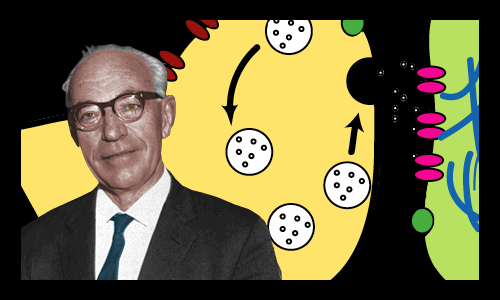
A Brilliant Researcher with Many Honors
John Carew Eccles was born on January 27, 1903 in the city of Melbourne, Victoria, Australia. His father was William James Eccles and his mother was Mary Carew. Both were teachers. John was homeschooled to age 12, as were his two sisters.
He attended Warrnambool High School and Melbourne High School. He won a scholarship to study Medicine at the University of Melbourne, where he enrolled at age 17. An enthusiastic athlete, he broke the Australian Universities’ pole vaulting record.
Eccles graduated from Melbourne with first class honors in 1925, age 22.
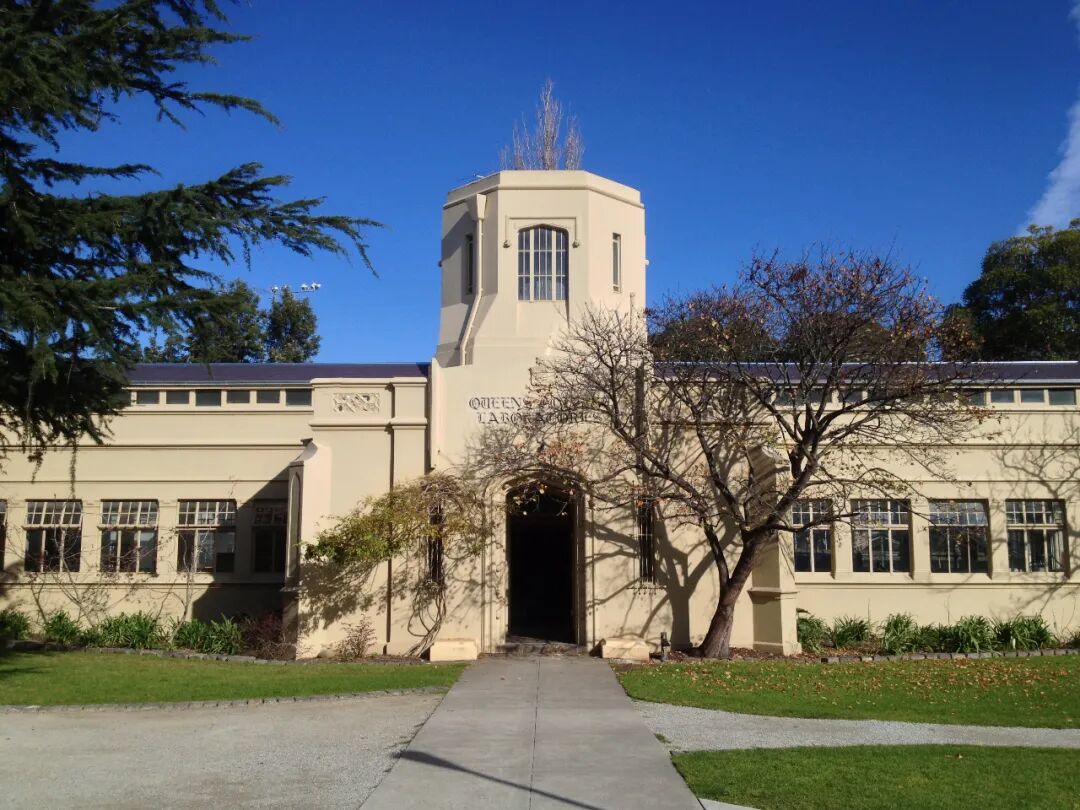
A Rhodes Scholarship took him to the University of Oxford, where he was awarded a PhD in 1929. His research work was supervised by Charles Scott Sherrington, whose work on neurons earned him the 1932 Nobel Prize in Physiology or Medicine. Sherrington coined the term synapse to describe the gap between neurons, and he was a powerful influence on Eccles’s future work. Despite an age gap of 46 years the two became close friends.
After the award of his PhD, Eccles continued research work at Oxford for a further eight years, then returned to Australia.
·1937: Director of Pathology at the Sydney Hospital, Australia.
·1944: Professor of Physiology at the University of Otago, New Zealand.
·1952: Professor of Physiology at the Australian National University, Canberra. He described this time as his scientific golden years: he completed his Nobel prize winning research and published over 400 papers.
·1966: Member of the Institute for Biomedical Research, Chicago, USA
·1968: Distinguished Professor of Physiology and Biophysics at the State University of New York, Buffalo, USA
·1975: Retired.

A Breakthrough in the Understanding of Neurons
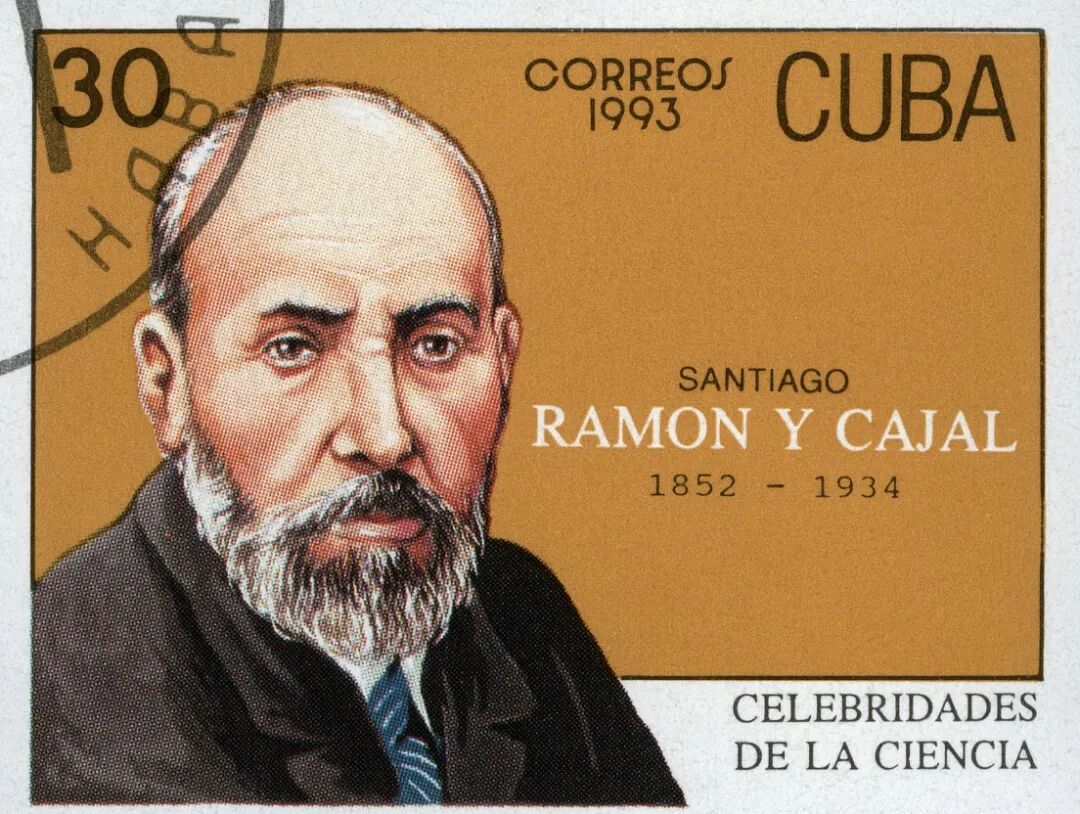
Santiago Ramán y Cajal won the 1906 Nobel Prize in Physiology or Medicine for proving that neurons (nerve cells) are individual, separate cells.
The gap between individual neurons was later called the synapse.
In the years following Cajal’s discovery fierce debates broke out among scientists about how signals cross the synapse from neuron to neuron.Some scientists said messages were carried by electricity, while others claimed the process was chemical.
John Eccles:
·Supported the theory of electrical transmission.
·Inserted tiny glass micro-electrodes into cats’ spinal neurons, allowing him to measure electrical activity within individual neurons.
·Stimulated neurons in the spinal cord, precisely controlling the stimulation.
·Discovered the electrical theory he supported was wrong, but he was not disappointed.
·Eccles later found that chemical synaptic transmission can produce excitation or inhibition by changing postsynaptic membrane permeability to ions, including sodium, potassium, and chloride. The two mechanisms should not both be reduced simply to sodium and potassium ions.
John Eccles was a neurophysiologist. He was awarded the 1963 Nobel Prize in Physiology or Medicine for showing how messages pass between nerve cells in mammals, including humans.
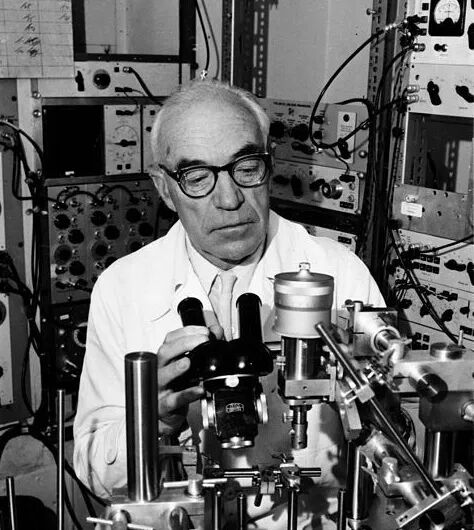
A Thinker Who Never Stopped Thinking
During his time in New Zealand, Eccles enjoyed exchanging ideas with the philosopher of science, Karl Popper. Eccles claimed his future work was strongly influenced by Popper’s view that scientific progress is maximized when scientists put forward big, bold, challenging theories with sufficient content to be falsifiable.
Eccles was a Christian and occasionally a practicing Roman Catholic. During his career, Eccles published 19 books (12 as sole author) and more than 500 scientific papers.
Sir John Carew Eccles died, age 94, in the hospital in Locarno, Switzerland on May 2, 1997.
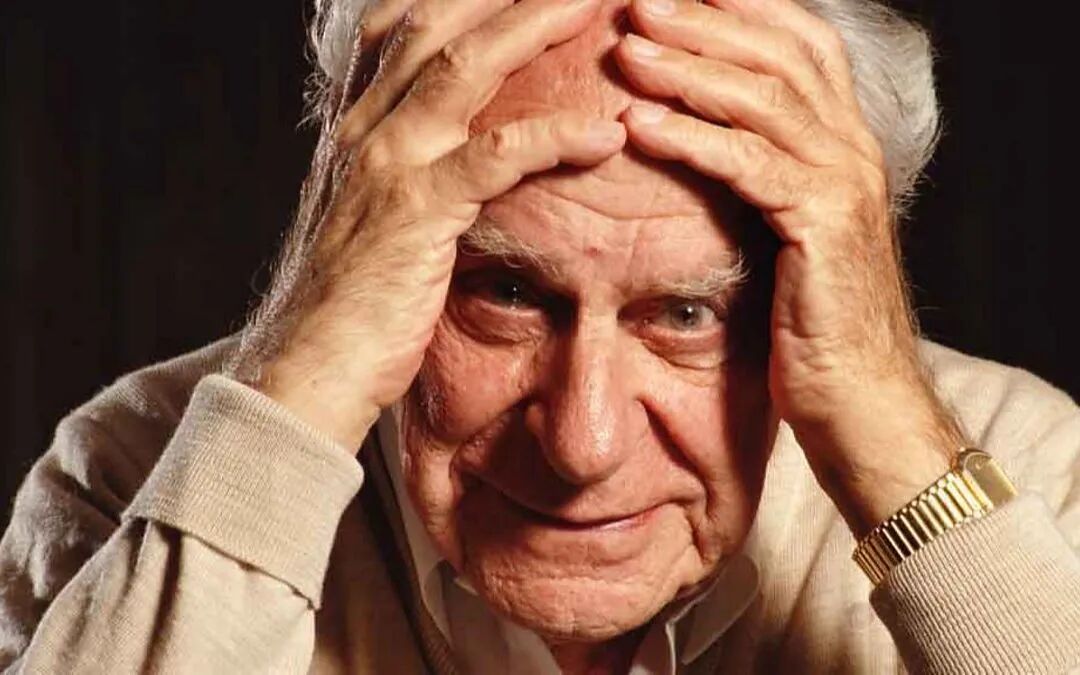
In 1906, Santiago Ramón y Cajal received the Nobel Prize for his work on the structure of the nervous system; his earlier research had supported the view that neurons are separate, distinct cells.
In 1963, John Eccles received the Nobel Prize for discoveries concerning the ionic mechanisms of excitation and inhibition in nerve-cell membranes.
In 2021, bionic-eye research based on the mechanisms of neural signaling offered a possibility for restoring a form of sight. The Phoenix99 report then concerned preclinical testing, rather than demonstrated restoration of vision in many patients.
The light of science shines along humanity's journey forward!
Original article link:
https://www.famousscientists.org/john-eccles/
Source: Famous Scientists
Some material in this article comes from online sources. Please contact us for removal if it infringes your rights.
Editorial note
Editorial note: The 2021 Phoenix99 report concerned safety and stability tests in a sheep model, with researchers seeking to advance toward human trials. It did not establish widespread use or clinically proven restoration of blindness. The manuscript's argument linking neural-signaling research to bionic devices is retained without making one basic discovery the device's direct origin. Postsynaptic inhibition involves ions including chloride, not only sodium and potassium. Electrical synapses also occur in normal nervous systems, so the historical debate does not establish only one mode of transmission for every synapse. Chinese mistranslations of first-class honors and spinal cord have been corrected; 1963 and 1906 are award years.
Supporting references
University of Sydney: Phoenix99 sheep-model study toward human trials (2021)
Eccles's original Nobel lecture: ionic mechanisms
Eccles's autobiographical account: chemical and electrical synapses
Sources and editorial history
Restored from a complete historical article exported from the PhDSciNet Official Account.
Editorial revision: Editorial note: The 2021 Phoenix99 report concerned safety and stability tests in a sheep model, with researchers seeking to advance toward human trials. It did not establish widespread use or clinically proven restoration of blindness. The manuscript's argument linking neural-signaling research to bionic devices is retained without making one basic discovery the device's direct origin. Postsynaptic inhibition involves ions including chloride, not only sodium and potassium. Electrical synapses also occur in normal nervous systems, so the historical debate does not establish only one mode of transmission for every synapse. Chinese mistranslations of first-class honors and spinal cord have been corrected; 1963 and 1906 are award years.