Historical compilation: This article preserves the scientific biography in the original manuscript. The English material is credited to Famous Scientists. No named author or translator could be verified from the export, and the original publication date remains unverified.
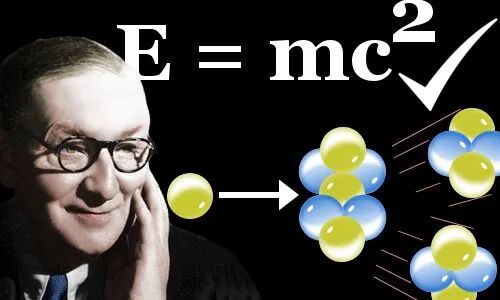
In 1905, Albert Einstein, founder of special relativity, proposed the famous mass–energy equation E=mc² (when m denotes rest mass, the energy of a body at rest is mc²; rest mass itself should not be understood as increasing with speed).
Twenty-seven years later, an experiment led by British physicist John Cockcroft in 1932 demonstrated the conversion between mass and energy, providing strong evidence for the mass–energy equation.
John Cockcroft and physicist Ernest Walton built an accelerator called the Cockcroft–Walton generator. They used a high voltage to accelerate protons and fire them at a lithium target, testing whether particle disintegration could convert mass into energy. The results confirmed their idea, provided the first compelling evidence for the mass–energy equation, and opened the door to nuclear energy.
In 1951, John Cockcroft was awarded that year's Nobel Prize in Physics for releasing immense atomic energy through induced nuclear reactions and pioneering the development of atomic energy!
A Decorated Soldier and Scientist
John Douglas Cockcroft was born on May 27, 1897 in the market town of Todmorden, Yorkshire, England, UK. His father, John Arthur Cockcroft, owned and ran a cotton mill. His mother was Annie Maude Fielden. John was the eldest of their five sons.
From an early age, John Jr. was fascinated by the water wheels and steam engines that powered the local cotton mills.
From ages 4-11 he attended the Walsden Church of England School, followed by two years at Todmorden Elementary School, five years at Todmorden Secondary School, where he finished in June 1914, age 17, with a scholarship to the Victoria University of Manchester.
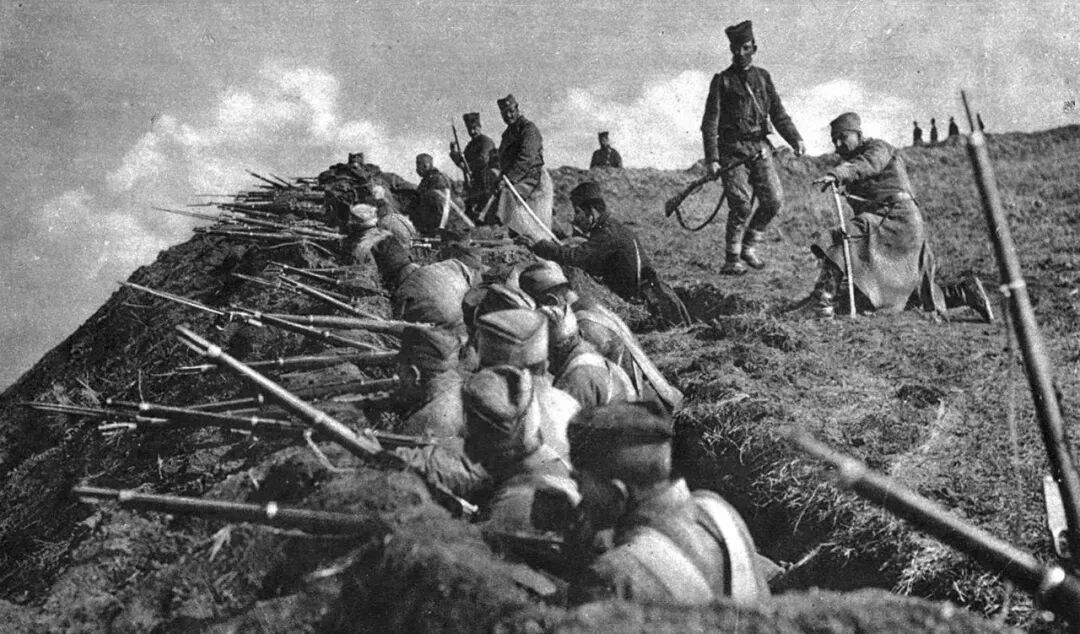
In November 1915, Cockcroft, age 18, volunteered to serve in the British Army. He became a signaler in the 92nd Field Artillery Brigade, taking part in the Battle of Passchendaele between July and November 1917, in which British Empire casualties (killed or wounded) amounted to almost 250,000. He was mentioned twice in officers’ dispatches from the front for gallant or meritorious action in the face of the enemy.
In 1918, Cockcroft began officer training. In October 1918, he was commissioned as an artillery lieutenant. The war ended a month later and he left the army in January 1919.
Cockcroft returned to Manchester to study Electrical Engineering at Manchester Municipal College of Technology, graduating with a first-class Bachelor’s degree in June 1920, age 23.
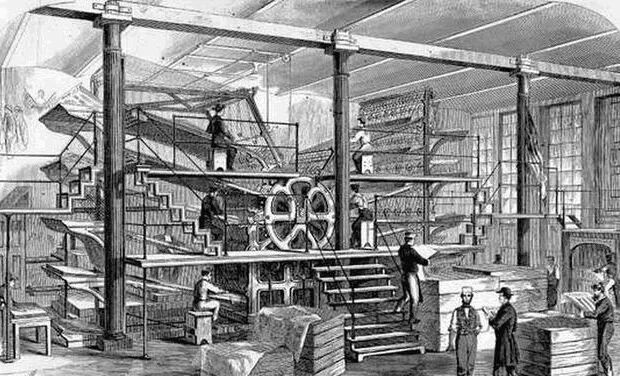
During his degree course, Cockcroft impressed Miles Walker, Professor of Electrical Engineering. Walker recommended Cockcroft to the Metropolitan-Vickers Company as a college apprentice. Metropolitan-Vickers paid Cockcroft to do research work with Miles Walker, carrying out harmonic analysis of voltage and current waves at commercial power frequencies. Cockcroft and Walker published the research, and it earned Cockcroft a Master’s degree in Technology.
Walker thought Cockcroft could go far, and suggested he should study at the University of Cambridge for its Mathematical Tripos. Cockcroft won a scholarship and he was also financially assisted by an aunt and by Walker. In 1924, age 27, Cockcroft graduated as a Bachelor of Arts ‘wrangler’ with first class honors.
Walker now recommended Cockcroft as a PhD student to Ernest Rutherford, who had moved to Cambridge to head its famous Cavendish Laboratory. In 1928, age 31, Cockcroft was awarded a PhD.
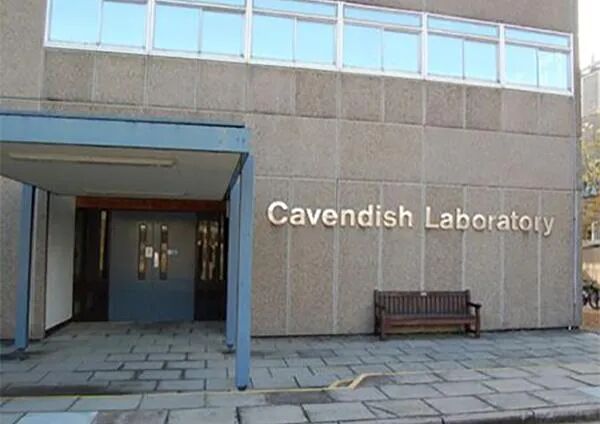
Pioneering Experiments and Striking Results
Cockcroft continued as a research worker at the Cavendish. He took inspiration from a 1928 paper by the Russian physicist George Gamow.
Gamow said that quantum tunneling explained why in 1919 Rutherford had been able to disintegrate nitrogen atoms with alpha particles whose energy was only a few million electron volts. (In 1919, Rutherford had achieved the first ever deliberate transformation of one element into another, converting nitrogen atoms into oxygen atoms by bombarding nitrogen with alpha particles emitted by radioactive elements.)
This nuclear reaction is written: 14N + α → 17O + 1H

However, using alpha particles to transmute elements only worked in a few specific instances. Based on quantum tunneling, Cockcroft calculated protons at only 300,000 volts would penetrate and disintegrate the nuclei of light elements such as lithium. In 1929, he built a discharge tube to accelerate protons, but failed to disintegrate any nuclei.
Another postdoctoral fellow at the Cavendish, working on similar lines to Cockcroft, was Ernest Walton, who had been attempting to crash electrons and heavy positive ions into light nuclei. Rutherford encouraged the pair to work together and gave them £1,000 to build a particle accelerator.
The two scientists made a perfect team and put together an accelerator that looked home-made. (It was, including scavenged bicycle parts, glass tubes, food tins, and modeling clay). But it worked. The electrical transformer they built took low-voltage AC electricity and converted it to high voltage DC electricity – the maximum was about 700,000 volts, which was more than enough to accelerate protons to the necessary velocities.
With this equipment, on the morning of April 14, 1932, Walton performed the first artificial nuclear disintegration in history, crashing protons at 400,000 volts into a thin sheet of lithium metal, splitting lithium atoms into fast moving helium nuclei (alpha particles).

“To my delight, I saw tiny flashes of light looking just like the scintillations produced by a-particles which I had read about in books but which I had never previously seen. After making some simple tests to ensure that I was not imagining things, I phoned Cockcroft.”—Ernest Walton
Cockcroft & Walton carried out further experiments, smashing protons, deuterons, and alpha particles into carbon, nitrogen, and oxygen atoms, producing radioactive isotopes such as carbon-11 and nitrogen-13.
Cockcroft & Walton were awarded the 1951 Nobel Prize in Physics for “their pioneer work on the transmutation of atomic nuclei by artificially accelerated atomic particles.”
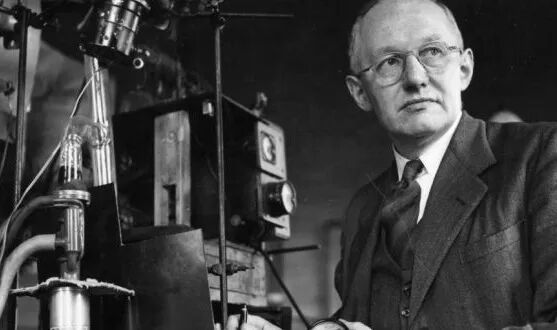
When the Atom Was Successfully Opened
Cockcroft’s 1932 atom smashing experiments were his greatest achievement in research.
·John Cockcroft & Ernest Walton built an electrical transformer to convert low-voltage AC electricity into high voltage DC electricity.
·They used the high voltage to power the first ‘high energy’ particle accelerator in history.
·The particle accelerator produced protons moving at very high speeds.
·The protons smashed into lithium atoms, like high velocity bullets smashing into small rocks.
·The protons penetrated lithium nuclei, causing them to split into helium nuclei – the first time a nuclear transformation had ever been achieved using artificially produced particles.
·The large amounts of energy released by this nuclear reaction provided proof of Einstein’s famous claim that mass and energy are equivalent, related by the equation E = mc².
·Cockcroft & Walton were awarded the 1951 Nobel Prize for “their pioneer work on the transmutation of atomic nuclei by artificially accelerated atomic particles.”
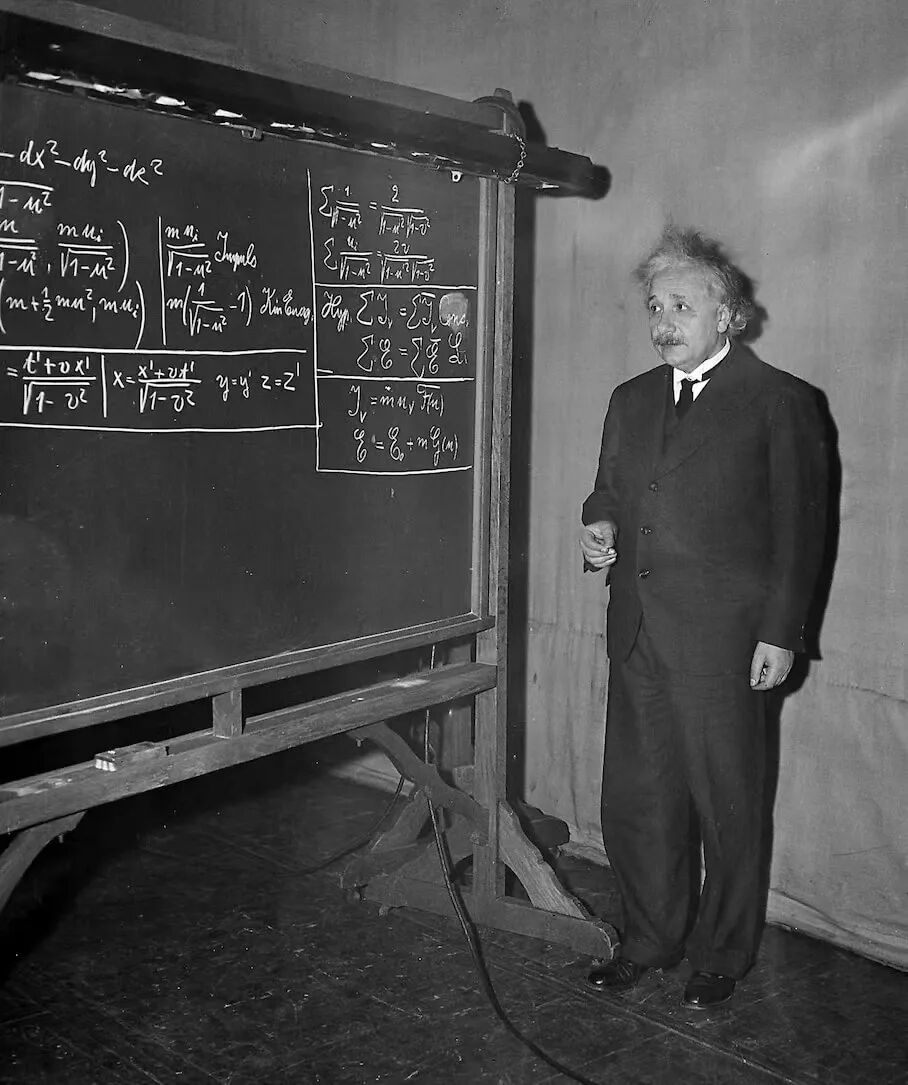
Cockcroft was knighted in 1948, age 51, becoming Sir John Cockcroft.
·1938: Hughes Medal
·1944: Commander of the Order of the British Empire
·1948: Knight Bachelor
·1951: Nobel Prize in Physics
·1954: Royal Medal
·1955: Faraday Medal
·1957: Order of Merit
·1961: Austria – Wilhelm Exner Medal
·1963: Knight Commander of the Order of the Bath
·1947: United States – Medal of Freedom with golden palms
·1950: France – Chevalier de la Legion d’Honneur
·1955: Portugal – Knight Commander of the Military Order of Christ
·1958: Spain – Grand Cross of the Order of Alfonso X
Sir John Cockcroft died, age 70, at home in Churchill College, Cambridge, from a heart attack on September 18, 1967.
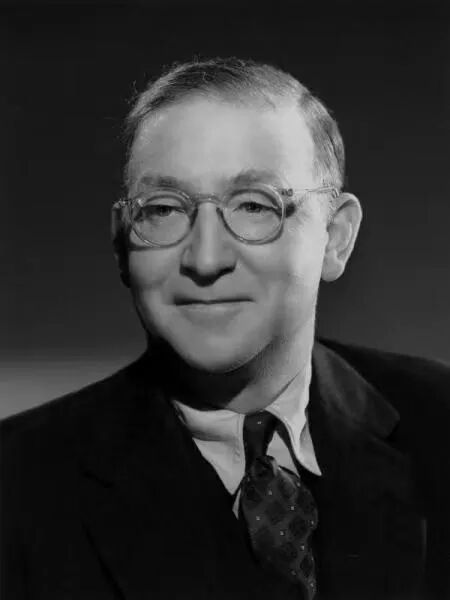
In early-twentieth-century Britain, people already had grand and remarkable ideas about the future use of atomic energy.
In 1914, British writer Herbert George Wells described atomic energy in The World Set Free as a source so powerful that a person could carry enough in their hand to light a city for a year or drive one of our giant ocean liners across the Atlantic!
In the 1930s, British politician Winston Churchill was also fascinated by nuclear energy: 'High authorities tell us that new sources of power will certainly be discovered, far more important than any we yet know!'
In 1932, British physicist John Cockcroft opened a door to nuclear energy through experiment. Through the work of successive generations, a dream of the past eventually became today's marvel!
Original source:
https://www.famousscientists.org/john-cockcroft/
Source: Famous Scientists
Some material in this article comes from the internet. Please contact us for removal if it infringes your rights.
Editorial note
Editorial note: The mass–energy equation now explicitly uses the rest-mass convention, avoiding confusion with the older term 'relativistic mass'. Churchill was not yet Britain's prime minister in the 1930s, so the incorrect contemporaneous office has been changed to politician. The experimental narrative and original captions are preserved.
Supporting references
Max Planck Einstein Online: Mass and Energy
UK Government: Churchill's Terms of Office
Sources and editorial history
Restored from a complete historical article exported from the PhDSciNet Official Account.
Editorial revision: Editorial note: The mass–energy equation now explicitly uses the rest-mass convention, avoiding confusion with the older term 'relativistic mass'. Churchill was not yet Britain's prime minister in the 1930s, so the incorrect contemporaneous office has been changed to politician. The experimental narrative and original captions are preserved.