Historical compilation: This article preserves the scientific biography in the original manuscript. The English material is credited to Famous Scientists. No named author or translator could be verified from the export, and the original publication date remains unverified.
In the early twentieth century, many exceptionally talented scientists emerged. Through discussion and collaboration, humanity's understanding of physics grew clearer and more complete. At the same time, the outbreak of the First World War and the smoke of war temporarily obscured that brilliant constellation.
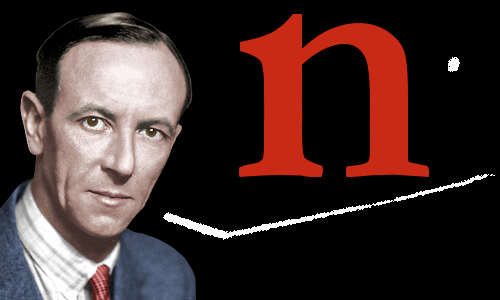
British physicist James Chadwick was one of the war's victims. When the First World War broke out, Britain and Germany became enemies. Chadwick, who was visiting Berlin, was unfortunately interned in a prisoner-of-war camp. Even in danger, the young physicist could not stop thinking about physics. With help from the German Academy of Sciences, he established his own laboratory in the camp and continued researching nuclear physics.
The brutality of war could not stop his determination to do research, and James Chadwick finally received the recognition he deserved. In 1935, he was awarded that year's Nobel Prize in Physics for his discovery of the neutron!
The Difficult Path of Research in Wartime
James Chadwick was born in the small town of Bollington, England, UK on October 20, 1891.
His parents were Joseph, a railway storekeeper, and Anne, a domestic servant. When he was 11, James won entry to the prestigious Manchester Grammar School. Unfortunately, his parents were too poor to afford the modest school fees. Instead, James Chadwick was educated at Manchester’s Central Grammar School for Boys. His favorite subjects were mathematics and physics. Aged 16, he won a scholarship to the Victoria University of Manchester.
He had intended studying mathematics, but was interviewed by a physicist who assumed he wanted to study physics. Chadwick was too shy to contradict him, so he ended up enrolling as a physics major!
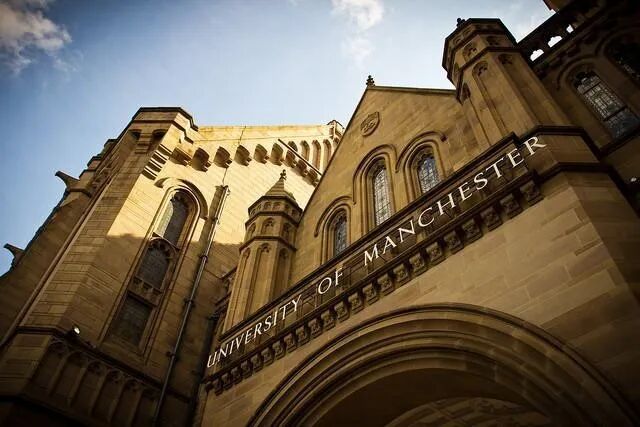
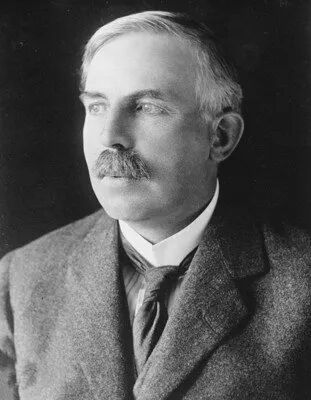
Chadwick started university in 1908, aged 17. By the time he was 19, he was working on a research project in Ernest Rutherford’s laboratory. Rutherford had won the Nobel Prize for Chemistry in the year Chadwick started university. The prize was awarded for Rutherford’s investigations of the disintegration of the elements and the chemistry of radioactive substances.
Chadwick carried out his project successfully and graduated with first class honors in physics in 1911. It had been a tough three years financially – he always went without lunch, because he had so little money. After graduating, Chadwick continued to work in Rutherford’s laboratory until, aged 21, he was awarded a master’s degree in physics in 1912.
A scholarship win took him to Berlin, Germany to work in Hans Geiger’s laboratory. Like Rutherford, Geiger’s field was radioactivity – he invented the Geiger Counter to detect radiation levels.
Unfortunately for Chadwick, World War 1 began in 1914 when he was still in Berlin. He was interned in a camp on the west of Berlin until the war ended in 1918.
Aged 28, Chadwick rejoined Ernest Rutherford in 1919 to begin working for his Ph.D. Rutherford was now in charge of Cambridge University’s prestigious Cavendish Laboratory, whose first professor had been James Clerk Maxwell.
Chadwick was awarded his Ph.D. in 1921 for a thesis concerning atomic numbers and nuclear forces.
A Major Discovery in Nuclear Physics: The Neutron
In 1923, aged 32, Chadwick became Rutherford’s Assistant Director of Research in the Cavendish Laboratory where he continued to study the atomic nucleus.
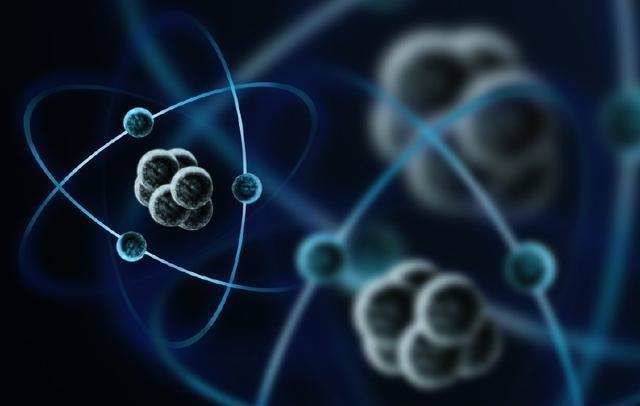
In those days, most researchers believed there were electrons within the nucleus as well as outside it. For example, the nucleus of a carbon atom was thought to contain 12 protons and 6 electrons, giving it an electric charge of +6. Orbiting the nucleus were supposed to be another 6 electrons causing the atom’s overall electric charge to be 0.
Rutherford, Chadwick, and some others believed in the possibility that particles with no charge could be in the nucleus.
In his spare time, through the 1920s, Chadwick made a variety of attempts in the laboratory to find these neutral particles, but without success. He was, however, increasingly convinced in the existence of a neutral particle – the neutron. He couldn’t, however, get the evidence he needed to prove its existence.
Then, at the beginning of 1932, Chadwick learned of work that Frederic and Irene Joliot-Curie had just done in Paris. The Joliot-Curies believed they had managed to eject protons from a sample of wax using gamma rays. This did not make sense to Chadwick, who thought gamma rays were not powerful enough to do this. However, the evidence that protons had been hit with sufficient energy to eject them was convincing.
The gamma ray source had been the radioactive element polonium. Chadwick drew the conclusion that the protons had actually been hit by the particle he was looking for: the neutron.
Feverishly, he began working in the Cavendish laboratory. Using polonium as a source of (what he believed were) neutrons, he bombarded wax. Protons were released by the wax and Chadwick made measurements of the protons’ behavior.
The protons behaved in exactly the manner they ought to if they had been hit by electrically neutral particles with a mass similar to the proton. Chadwick had discovered the neutron.
Within two weeks he had written to the prestigious science journal Nature to announce the Possible Existence of a Neutron. Chadwick did not think he had discovered a new elementary particle. He believed the neutron was a complex particle consisting of a proton and an electron.
In 1935, James Chadwick received the Nobel Prize in Physics for his discovery of the neutron.

The Creation and Use of the Atomic Bomb
The discovery of the neutron dramatically changed the course of science, because neutrons could be collided with atomic nuclei. Some of the neutrons would imbed in a nucleus, increasing its mass. Natural Beta decay (the emission of an electron from an atom’s nucleus) would then convert the neutron into a proton. Since an element is defined by the number of protons it has (hydrogen has 1, helium 2, lithium 3, beryllium 4, boron 5, carbon 6, nitrogen 7, oxygen 8, etc, etc) this enabled scientists to make new, heavier elements in the laboratory.
It also meant neutrons could be utilized to split heavy atoms in a process known as atomic fission, producing a large amount of energy which could be used in atomic bombs or nuclear power plants.
In 1935, before his Nobel Prize was awarded, Chadwick was offered the Lyon Jones Chair of Physics at the University of Liverpool, which he accepted. He started his new job. In Liverpool he started a nuclear physics group. The group needed a cyclotron/particle-accelerator/atom smasher, but his new university could not afford one. Chadwick part-funded it using some of his Nobel Prize money.
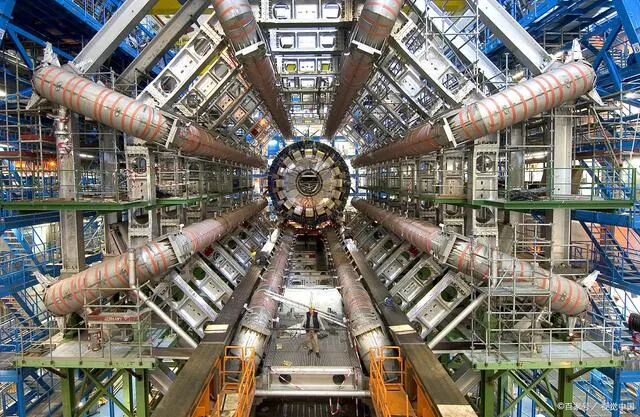
In 1939, the first year of World War 2, Chadwick was asked by the British Government about building an atomic bomb. He said it was possible, but would not be easy.
Preliminary research began in a number of universities. Working conditions in Chadwick’s laboratory were arduous. The neighborhood in Liverpool was frequently attacked in air-raids by the German Air Force. Despite the bombing, by spring 1941, Chadwick’s research group had discovered that the critical mass of uranium-235 for a nuclear detonation was about 8 kilograms.
Chadwick wrote a summary report in summer 1941 of all the atomic bomb work carried out in British universities. In the USA, President Roosevelt read the report in the fall of 1941, and the USA started to pour millions of dollars into its own atomic bomb research.
In late 1943, Chadwick traveled to the USA to see the Manhattan Project’s facilities. He was one of only three men in the world to enjoy access to all of America’s research, data, and production plants for the bomb: the other two were American Major General Leslie Groves, the Manhattan Project’s Director, and Groves’ second in command, Major General Thomas Francis Farrell.
Early in 1944, Chadwick, his wife, and children, moved to Los Alamos, the main research center for the Manhattan Project.
Chadwick was present when the US and UK governments agreed that the bomb could be used against Japan. He then attended the Trinity nuclear test on July 16, 1945, when the world’s first atomic bomb was detonated.
In 1945, the British Government knighted him for his wartime contribution. The U.S. Government awarded him the Medal of Merit in 1946.
James Chadwick died peacefully, at the age of 82, on July 24, 1974.
Remarkably, before the neutron was successfully discovered, several scientists had detected traces of it but missed the discovery.
In 1932, Irène Joliot-Curie and Frédéric Joliot investigated the penetrating radiation produced by beryllium and found that it could eject fast protons from paraffin and other hydrogen-containing materials. They interpreted the radiation as gamma rays at the time. The experiment provided a key clue to the discovery of the neutron.
In 1930, German physicist Walther Bothe found that radiation produced by bombarding beryllium with alpha particles was a new form of high-energy radiation with great penetrating power. This result directly helped bring about the neutron's discovery!
Two years later, the neutron was discovered! James Chadwick, emerging from the turmoil of war, resolved a difficulty that theoretical physicists had encountered in atomic research, achieved a major breakthrough in atomic physics, and helped humanity enter a new era of using atomic energy!
Original source:
https://www.famousscientists.org/james-chadwick/
Source: Famous Scientists
Some material in this article comes from the internet. Please contact us for removal if it infringes your rights.
Editorial note
Editorial note: The date and content of the closing account of the Joliot-Curie experiment have been minimally corrected using Chadwick's original 1932 report. The key evidence was the ejection of fast protons from hydrogen-containing material by beryllium radiation, rather than the repulsion of alpha particles by heavy nuclei described in the manuscript. The research experiences and other original captions are preserved.
Supporting references
Chadwick 1932: Possible Existence of a Neutron
Sources and editorial history
Restored from a complete historical article exported from the PhDSciNet Official Account.
Editorial revision: Editorial note: The date and content of the closing account of the Joliot-Curie experiment have been minimally corrected using Chadwick's original 1932 report. The key evidence was the ejection of fast protons from hydrogen-containing material by beryllium radiation, rather than the repulsion of alpha particles by heavy nuclei described in the manuscript. The research experiences and other original captions are preserved.