
Historical compilation: This article preserves the scientific biography in the original manuscript. The English material is credited to Famous Scientists. No named author or translator could be verified from the export, and the original publication date remains unverified.
In ancient Greece, the philosopher Democritus held that everything in the universe was made of indivisible atoms.
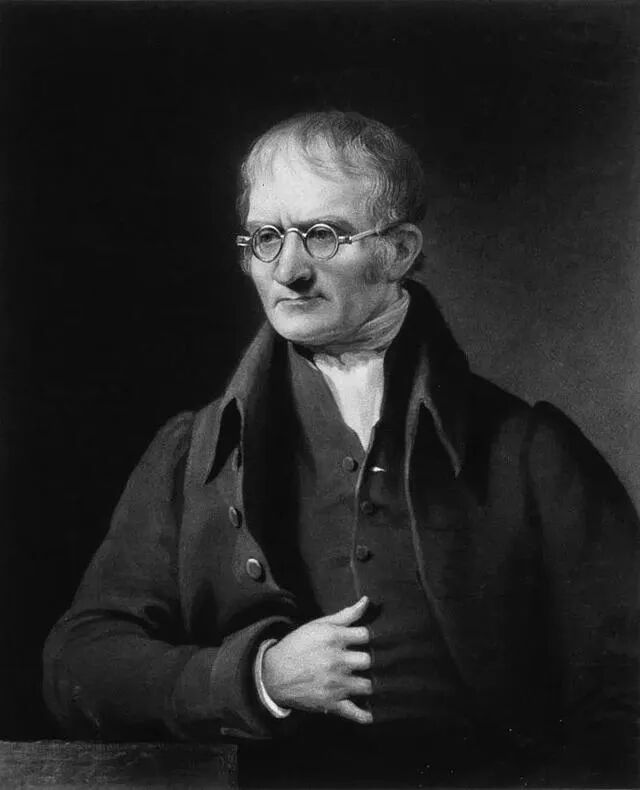
In the late eighteenth century, Antoine Lavoisier, often called the father of modern chemistry, helped establish the modern concept of a chemical element. In the early nineteenth century, the British scientist John Dalton proposed his atomic theory: in that historical theory, atoms were the smallest units of matter, separate and indivisible.
Although atomic nuclei generally remain unchanged during ordinary chemical reactions, tireless scientific explorers eventually opened the door to the atomic world through physics!
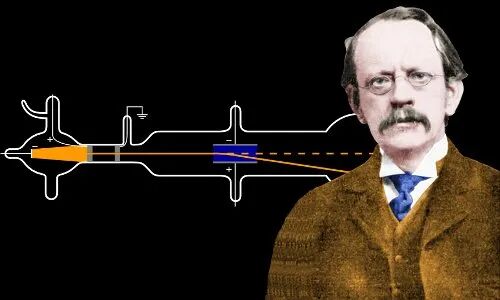
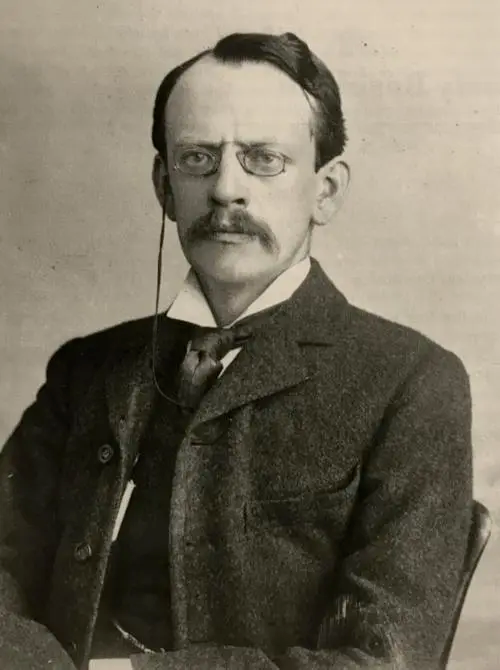
Joseph John Thomson, one of the first to open the door to elementary-particle physics, overturned the belief that atoms could not be divided.
In 1906, Joseph John Thomson received that year's Nobel Prize in Physics for his theoretical and experimental investigations of the conduction of electricity by gases. Through his work, a new scientific era was beginning!
A Gifted Mathematician Whose Path Was Shaped by Circumstances
Joseph John Thomson was born on December 18, 1856 in Manchester, England, UK. His father ran a specialist bookshop that had been in his family for three generations. His mother came from a family that owned a cotton company.
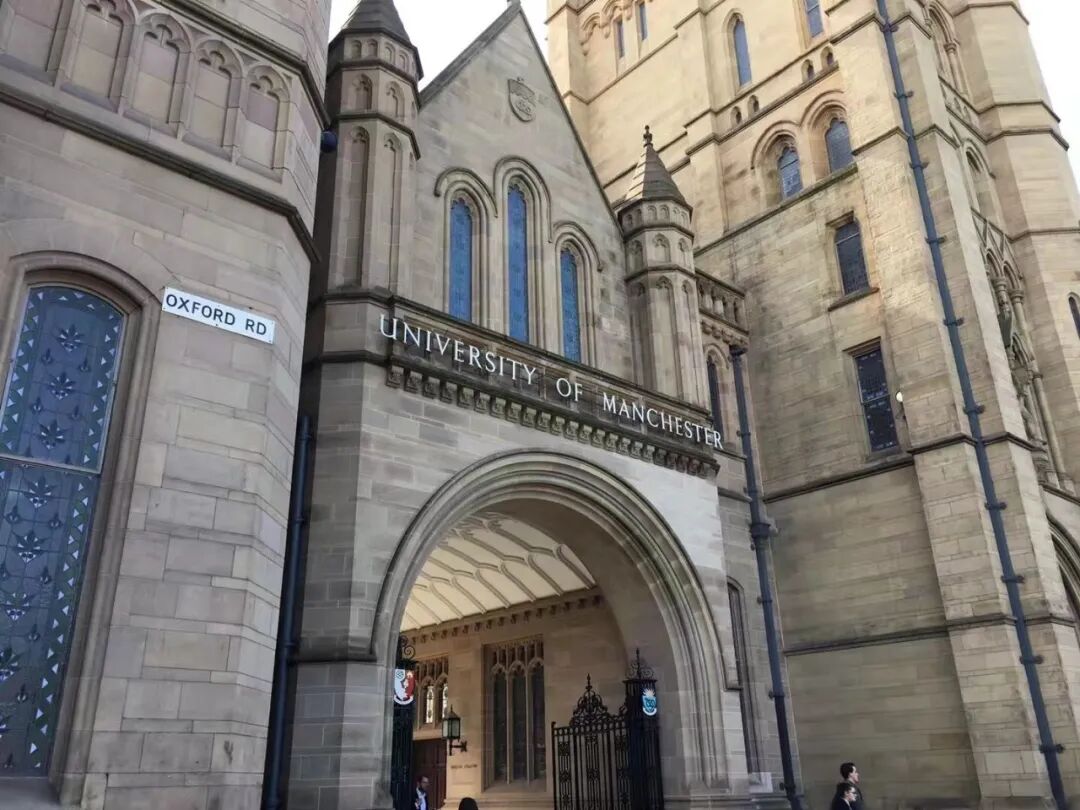
Even as a young boy, Joey was deeply interested in science. At age 14 he became a student at Owens College, the University of Manchester, where he studied mathematics, physics, and engineering.
A shy boy, his parents hoped he would become an apprentice engineer with a locomotive company. These hopes were dashed with the death of his father when J. J. was 16. The fees for engineering apprenticeships were high, and his mother could not afford them.
This misfortune ultimately benefited science because J. J. needed to find funding to continue his education. In 1876, age 19, he won that funding, not in engineering, but in mathematics at the University of Cambridge. Four years later he graduated with high honors.
Thomson continued studying at Cambridge and in 1882 he won the Adam’s Prize, one of the university’s most sought after mathematics awards. In 1883, he earned a master’s degree in mathematics.
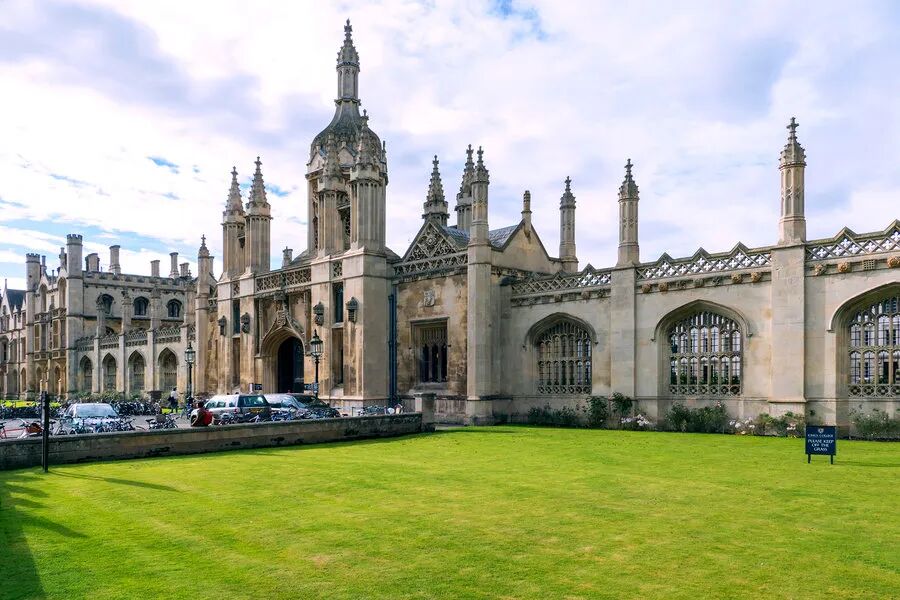
When Thomson began working as a research student nobody had a clear picture of how atoms might look. Thomson decided he would visualize them as a smoke ring and see where the mathematics describing such a picture took him. This work, for which he was awarded both the Adam’s Prize and his master’s degree, had the title A Treatise on the Motion of Vortex Rings. Although the title and beginning chapters might suggest applied mathematics was the major theme, the headings of the final sections are revealing Thomson was pushing his powerful mathematical mind towards a deeper understanding of matter.
·Pressure of a gas. Boyle’s Law
·Thermal effusion
·Sketch of a chemical theory
·Theory of quantivalence
·Valency of the various chemical elements
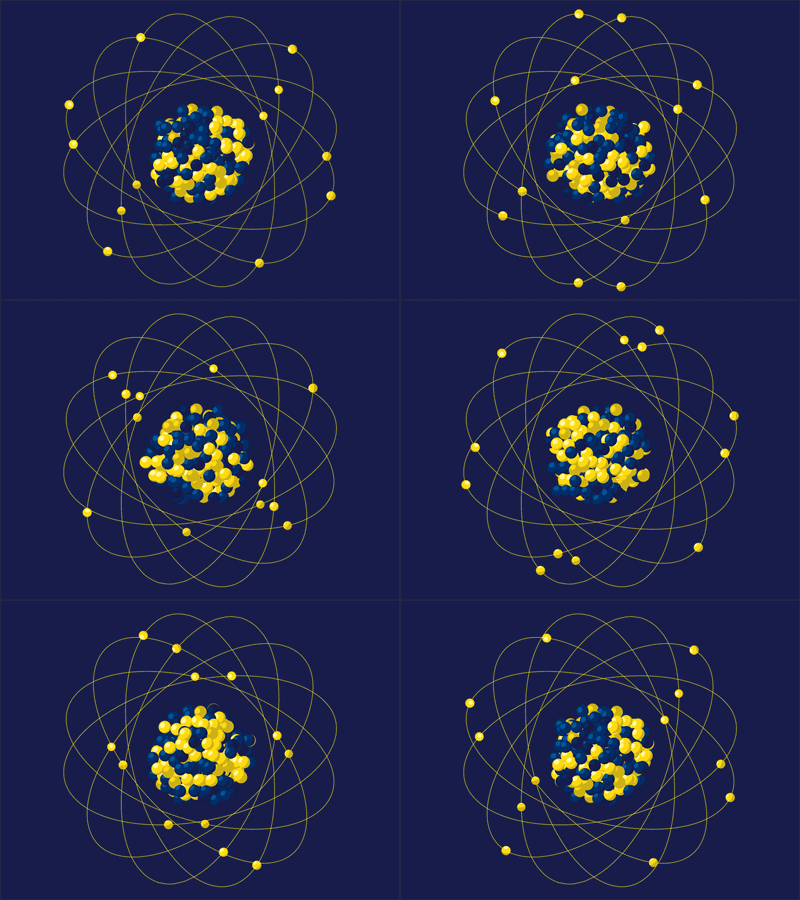
Discovering the Electron: Experiments with Cathode-Ray Tubes
2,300 years earlier, in Ancient Greece, Democritus had used his intellect to deduce the existence of atoms.
In 1808, John Dalton had resurrected Democritus’s idea with his atomic theory.
In 1834, Michael Faraday coined the word ion to describe charged particles which were attracted to positively or negatively charged electrodes. So, in Thomson’s time, it was already known that atoms are associated in some way with electric charges, and that atoms could exist in ionic forms, carrying positive or negative charges. For example, table salt is made of ionized sodium and chlorine atoms.
Na+: A sodium ion with a single positive charge
Cl-: A chloride ion with a single negative charge
In 1891, George Johnstone Stoney coined the word electron to represent the fundamental unit of electric charge. He did not, however, propose that the electron existed as a particle in its own right. He believed that it represented the smallest unit of charge an ionized atom could have.
Atoms were still regarded as indivisible.
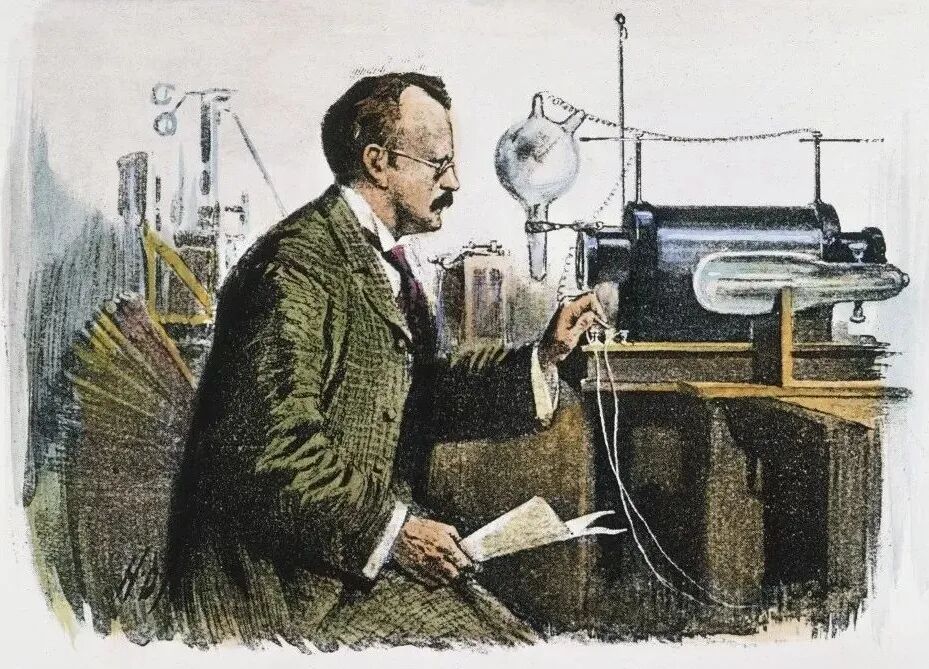
In 1897, age 40, Thomson carried out a now famous experiment with a cathode ray tube:
When Thomson allowed his cathode rays to travel through air rather than the usual vacuum he was surprised at how far they could travel before they were stopped. This suggested to him that the particles within the cathode rays were many times smaller than scientists had estimated atoms to be.
So, cathode ray particles were smaller than atoms! What about their mass? Did they have a mass typical of, say, a hydrogen atom? – the smallest particle then known.
To estimate the mass of a cathode ray particle and discover whether its charge was positive or negative, Thomson deflected cathode rays with electric and magnetic fields to see the direction they were deflected in and how far they were pulled off course. He knew the size of the deflection would tell him about the particle’s mass and the direction of the deflection would tell him the charge the particles carried. He also estimated mass by measuring the amount of heat the particles generated when they hit a target.
Thomson used a cloud chamber to establish that a cathode ray particle carries the same amount of charge (i.e. one unit) as a hydrogen ion.
From these experiments he drew three revolutionary conclusions:
·Cathode ray particles are negatively charged.
·Cathode ray particles are at least a thousand times lighter than a hydrogen atom.
·Whatever source was used to generate them, all cathode ray particles are of identical mass and identical charge.
J. J. Thomson’s experiments proved the existence of a new fundamental particle, much smaller than the atom: the electron. The world would never be the same again.
Thomson was awarded the 1906 Nobel Prize in Physics for his discovery.
The Birth of Mass Spectrometry and the Discovery of Isotopes
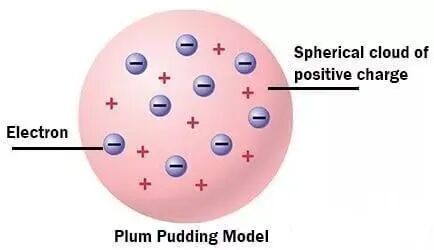
Based on his results, Thomson produced his famous (but incorrect) plum pudding model of the atom. He pictured the atom as a uniformly positively charged ‘pudding’ within which the plums (electrons) orbited.
In discovering the electron, Thomson also moved towards the invention of an immensely important new tool for chemical analysis – the mass spectrometer.
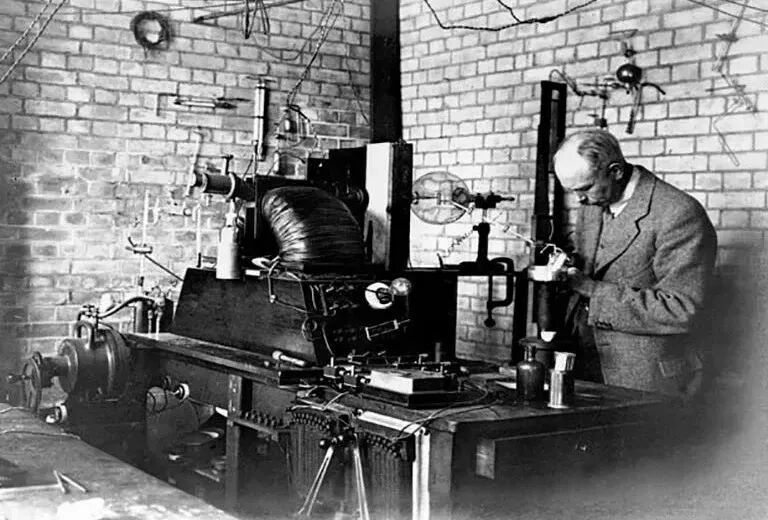
At its simplest, a mass spectrometer resembles a cathode ray tube, but its beam of charged particles is made up of positive ions rather than electrons. These ions are deflected from a straight line path by electric/magnetic fields. The amount of deflection depends on the ion’s mass (low masses are deflected more) and charge (high charges are deflected more).
By ionizing materials and putting them through a mass spectrometer, the chemical elements present in the material can be deduced by how far their ions are deflected.
In 1907, Thomson established using a variety of methods that every atom of hydrogen has only one electron.
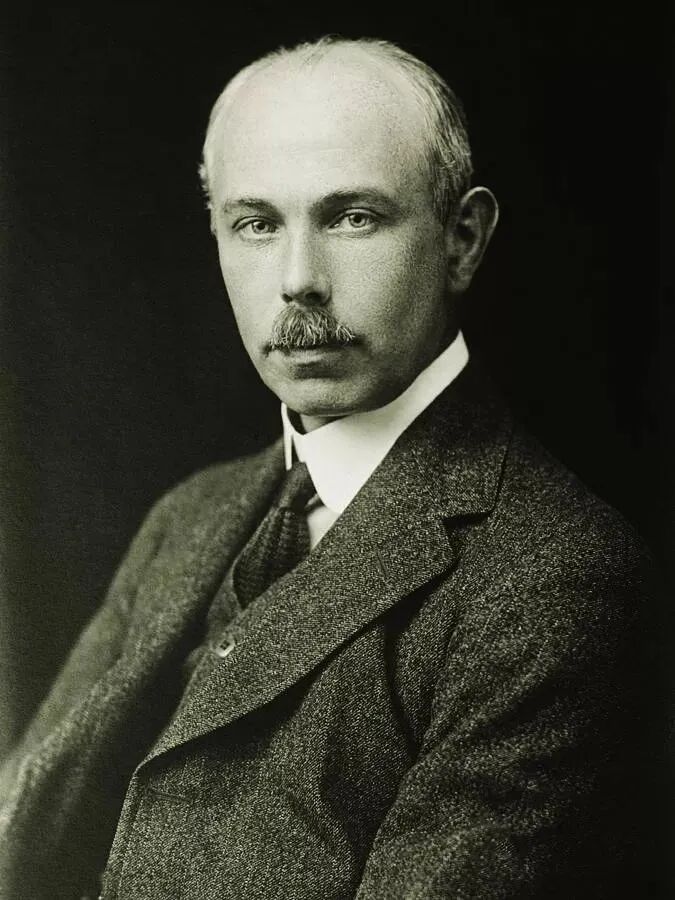
In 1912 Thomson discovered that stable elements could exist as isotopes. Thomson made this discovery when his research student Francis Aston fired ionized neon through a magnetic and electric field – i.e. he used a mass spectrometer – and observed two distinct deflections. Thomson concluded that neon exists in two forms whose masses are different – i.e. isotopes.
Aston went on to win the 1922 Nobel Prize in Chemistry for continuing this work, discovering isotopes in many non-radioactive elements by means of his mass spectrograph, and enunciating the whole-number rule. This was a historical approximate rule, not a claim that every isotope mass is exactly an integer multiple of a hydrogen atom's mass.
Passing the Torch in Physics
Humble and modest, with a quiet sense of humor, are probably the best words to summarize Thomson’s personality.
Despite his modesty, at age 27 he became Cavendish Professor of Experimental Physics at Cambridge – a role first held by James Clerk Maxwell. In his role as Cavendish Professor, he would often sit doing calculations in the very chair Maxwell himself had once occupied.
In addition to making remarkable discoveries himself, Thomson paved the way to greatness for a significant number of other scientists. A remarkable number of Thomson’s research workers went on to win Nobel Prizes, including Charles T. R. Wilson, Charles Barkla, Ernest Rutherford, Francis Aston, Owen Richardson, William Henry Bragg, William Lawrence Bragg, and Max Born.
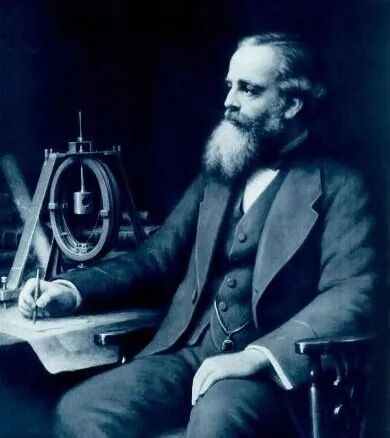
In 1890, age 33, Thomson married Rose Elizabeth Paget, a young physicist working in his laboratory. She was the daughter of a Cambridge medical professor. The couple had one son, George, and one daughter, Joan.
31 years after Thomson was awarded the Nobel Prize his son George won it. George’s 1937 prize was also for work with electrons, which he proved can behave like waves.
“It is a fascinating fact that father and son have given the most striking evidence for the apparently contradictory properties of the electron: the father proving its character as a particle, the son its character as a wave… Thomson was extremely proud of his son’s success and tried to assimilate the new results into his old convictions.”—Max Born,Nobel Prize in Physics 1954
Thomson was knighted in 1908, becoming Sir J. J. Thomson.
J. J. Thomson died at age 83, on August 30, 1940. His ashes were buried in the Nave of Westminster Abbey, joining other science greats.
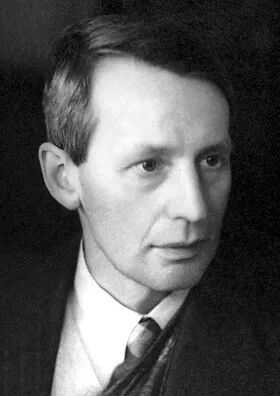
Joseph John Thomson, this remarkable talent in physics, used his extraordinary ability and perseverance to open the door to particle physics and let us glimpse the microscopic world within the atom!
Challenging an accepted explanation is not easy. The official motivation for Thomson's 1906 Nobel Prize did not even mention the electron explicitly, although countless later experiments showed that the belief in indivisible atoms could be overturned!
Once the atom was opened up, a new scientific era may already have arrived!
Original article link:
https://www.famousscientists.org/j-j-thomson/
Source: Famous Scientists
Some material in this article comes from online sources. Please contact us for removal if it infringes your rights.
Editorial note
Editorial note: Lavoisier belongs to the eighteenth century; the chronology has been corrected and his concept of elements distinguished from Dalton's atomic theory. Quantivalence is rendered as a theory of valence, not quantization. Aston's whole-number rule does not mean that all isotope masses are exactly integer multiples of a hydrogen atom's mass; the relevant paragraph has been minimally clarified using the Nobel motivation and his original lecture. Early atomic models remain historical theories.
Supporting references
ACS: Lavoisier and the chemical revolution
The 1922 Nobel Prize in Chemistry motivation
Aston's original Nobel lecture
Sources and editorial history
Restored from a complete historical article exported from the PhDSciNet Official Account.
Editorial revision: Editorial note: Lavoisier belongs to the eighteenth century; the chronology has been corrected and his concept of elements distinguished from Dalton's atomic theory. Quantivalence is rendered as a theory of valence, not quantization. Aston's whole-number rule does not mean that all isotope masses are exactly integer multiples of a hydrogen atom's mass; the relevant paragraph has been minimally clarified using the Nobel motivation and his original lecture. Early atomic models remain historical theories.