
Historical compilation: This article preserves the scientific biography in the original manuscript. The English material is credited to Famous Scientists. No named author or translator could be verified from the export, and the original publication date remains unverified.
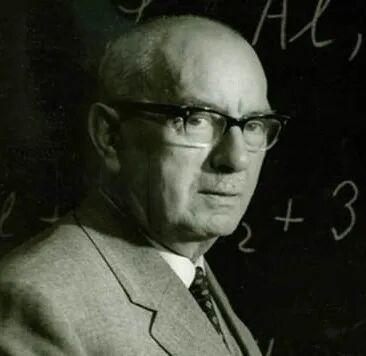
In 1933, at the University of Freiburg in Germany, Italian chemist Giulio Natta met Hermann Staudinger, the German founder of polymer chemistry.
Although most chemists at the time did not accept the existence of macromolecules, Giulio Natta became deeply interested in them. He decided to use X-ray and electron diffraction to investigate their atomic structures.
In 1952, German chemist Karl Ziegler's work on catalysts gave Giulio Natta a new idea. Using an improved catalyst, Natta produced polypropylene with a high degree of polymerization and a highly regular structure.
This research established the theoretical basis for stereospecific polymerization, greatly reduced the cost of producing polymer materials, and improved manufacturing processes, making an outstanding contribution to the modern chemical industry.
For their discoveries in polymer chemistry and technology, Giulio Natta and Karl Ziegler jointly received the 1963 Nobel Prize in Chemistry!
The Pursuit of a Childhood Dream
Giulio Natta was born on February 26, 1903 in the coastal city of Imperia, northern Italy, close to the French border.
His father was Francesco Maria, a magistrate. His mother was Elena Crespi, who dedicated herself to her son’s education – he could read at age three.
When Giulio was still an infant, his father’s job required the family to move to the city of Genoa.
From the time of his childhood, Giulio Natta wanted to be a scientist. He graduated from Christopher Columbus High School in 1919, age 16.
In 1921, age 18, he graduated from a two-year preparatory course in Mathematics at the University of Genoa.
Next he moved to the city of Milan, to the city’s Polytechnic, to study for a doctorate in Chemical Engineering. He obtained this in 1924, age 21. Impressed by his work, Professor Giuseppe Bruni, director of the Polytechnic’s Institute of Chemistry, appointed Natta as his research assistant.

In Bruni’s research group Natta learned X-ray crystallography. Pioneered by Lawrence Bragg and his father in 1912, X-ray crystallography used the diffraction of X-rays as a means of ‘seeing’ the positions of atoms in solids and hence determining atomic structures.
In 1925, age 22, Natta began giving lectures in Analytical Chemistry at the Milan Polytechnic.
In 1929, he began also lecturing in Physical Chemistry at the University of Milan.
In 1933, age 30, he was appointed Professor of Chemistry at the University of Pavia.
In 1935, he was appointed Professor of Physical Chemistry at the University of Rome.
In 1937, he was appointed Chair of Industrial Chemistry at the Turin Polytechnic.
In 1938, he was appointed Chair of Industrial Chemistry at the Milan Polytechnic, where he remained until he retired in 1973. This was a controversial appointment because the previous chair, Mario Giacomo Levi, was fired as a result of anti-Jewish laws passed under Italy’s Fascist dictator Benito Mussolini.
Two Life-Changing Encounters
In 1933, Natta traveled to Freiburg, Germany to discuss X-ray and electron diffraction methods with Dr. H. Seeman. There he met Hermann Staudinger, the founder of polymer and macromolecular chemistry – Staudinger would be awarded the 1953 Nobel Prize in Chemistry for his work.
The concept of giant molecules captured Natta’s imagination. Although many scientists refused to believe they existed, Natta decided he would investigate their atomic structures using X-ray and electron diffraction.
Natta worked as a consultant to the Italian chemical company Montecatini. As a result of this, in 1952, he was excited to learn about a discovery made by the German chemist Karl Ziegler. Ziegler had found that he could produce high molecular weight polyethylene at low pressures using a mixed catalyst consisting of TiCl4 and Al(C2H5)2Cl.
Montecatini bought the commercial rights to Ziegler’s catalyst in Italy and Natta was given full access to Ziegler’s research work.
Ziegler and Natta became good friends, but later fell out because of disagreements over patents. In a meeting, without revealing that he had already successfully made polypropylene (see below), Natta induced Ziegler to say that he had not succeeded in doing this. Natta revealed nothing, because he wanted to patent the process and was worried that by telling Ziegler of his success he would endanger the prospects of creating a watertight patent.
Natta began his own experiments and produced the world’s first isotactic polypropylene using a catalyst consisting of crystalline α-TiCl3 mixed with Al(C2H5)3.
Breakthrough Research on Catalysts and Polymers
The spatial arrangement – i.e. the stereochemistry – of polymer chains is crucial in determining the physical properties of a polymer. Highly crystalline polymers tend to form rigid plastics while those with little crystallinity form more flexible materials.
When Natta explained his work to his wife Rosita, who was an expert in languages, she used Greek roots to coin the words we now use to describe the stereochemistry of polymer chains:
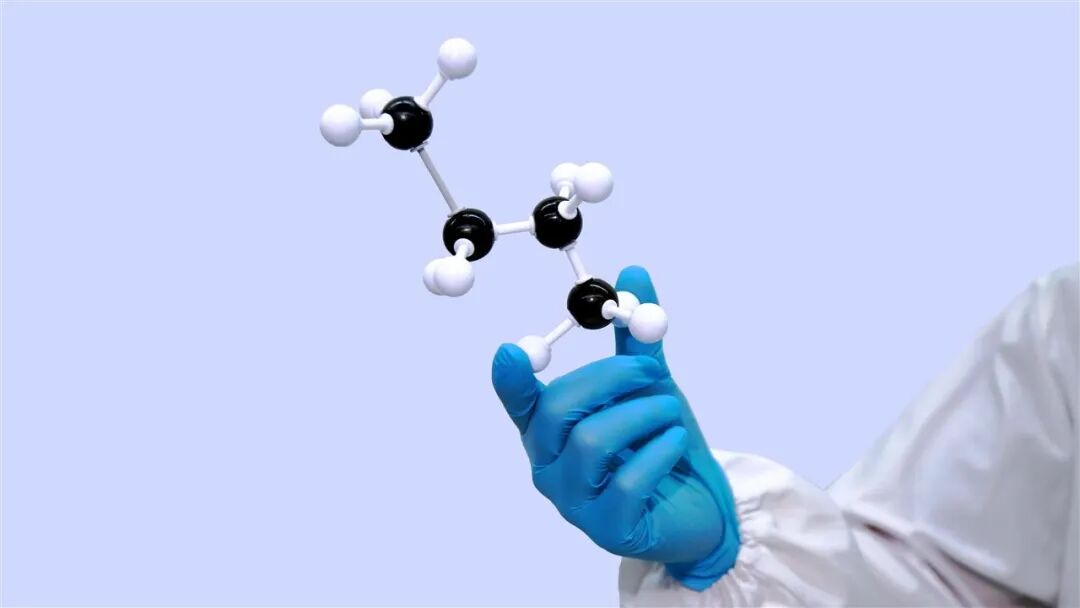
Isotactic: This is a stereoregular polymer – all the substituents are located on the same side of the polymer chain:

Syndiotactic: This is a stereoregular polymer – the substituents are located at regular alternate positions on opposite sides of the polymer chain:

Atactic: This is not a stereoregular polymer – the substituents are placed randomly along the chain:

In March 1954, Natta established that the chain in isotactic polypropylene is arranged as a single helix. The helix was becoming a noticeably common feature in macromolecules: in 1951, Linus Pauling and colleagues established the alpha-helix structure in proteins; and in 1953, work by Francis Crick, Rosalind Franklin, James Watson, and Maurice Wilkins established that DNA is a double helix.
The polymerization catalyst mixtures used by Ziegler and Natta became known as Ziegler-Natta catalysts.
After making isotactic polypropylene Natta deployed 100 research workers on a program with three objectives:
·Producing new plastics.
·Producing new fibers.
·Producing new rubbers.

Natta and his teams produced a range of new stereoregular polymers from starting materials such as 1-butene, butadiene, styrene, and 4-methyl-1-pentene. In all cases, they were able to determine the dimensions of the crystalline unit cell and to precisely determine the structure and spatial arrangement of the polymer chains.
In 1963, Natta and Ziegler were awarded the Nobel Prize in Chemistry for:“their discoveries in the field of the chemistry and technology of high polymers.”
In 1969, Natta was awarded the Lomonosov Gold Medal, the USSR Academy of Sciences’ highest award, for:outstanding achievements in the chemistry of polymers.
Giulio Natta died, age 76, on May 2, 1979 in Bergamo, Italy.
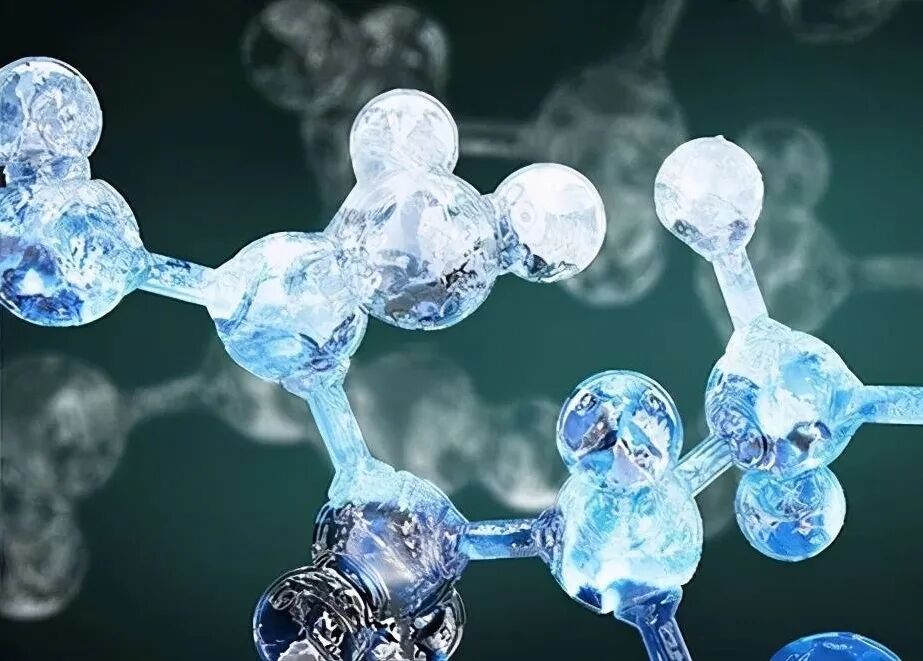
In the 1950s, the emergence of Ziegler–Natta catalysts gave the polyolefin industry a powerful impetus for rapid development.
Driven by the huge polyolefin industry, synthetic fibers, resins, and plastic products could be manufactured on a large scale. They entered households everywhere and gradually became indispensable parts of everyday life.
Decades later, the appearance of biodegradable synthetic polymers offers a new opportunity to address the increasingly serious environmental pollution caused by the widespread use of materials such as polyethylene and polypropylene!
Science and technology are changing the world, and human wisdom is guiding that change in the right direction!
Original source:
https://www.famousscientists.org/giulio-natta/
Source: Famous Scientists
Some material in this article comes from the internet. Please contact us for removal if it infringes your rights.
Editorial note
Editorial note: Syndiotactic in the text and Figure 7 has been corrected to 'syndiotactic polymer'; the original Chinese translation 'conjugated polymer' does not correspond to that term. The original English descriptions of isotactic, syndiotactic, and atactic structures and their image sources remain preserved in the recovery record.
Supporting references
Sources and editorial history
Restored from a complete historical article exported from the PhDSciNet Official Account.
Editorial revision: Editorial note: Syndiotactic in the text and Figure 7 has been corrected to 'syndiotactic polymer'; the original Chinese translation 'conjugated polymer' does not correspond to that term. The original English descriptions of isotactic, syndiotactic, and atactic structures and their image sources remain preserved in the recovery record.