
Historical compilation: This article preserves the scientific biography in the original manuscript. The English material is credited to Famous Scientists. No named author or translator could be verified from the export, and the original publication date remains unverified.
If your eyes feel dry, irritated, frequently tired, or your vision is blurred, a doctor should determine the cause. Whether vitamin A supplementation is needed should likewise be based on an examination and whether a deficiency is present.
How does vitamin A, often called a guardian of vision, affect your eyesight? How did scientists discover its remarkable role?
More than a thousand years ago, during China's Tang dynasty, Sun Simiao recorded in Essential Prescriptions Worth a Thousand Pieces of Gold that animal liver, rich in vitamin A, could treat night blindness. In 1913, four American scientists found that cod-liver oil, rich in vitamin A, could treat xerophthalmia. In the 1930s, George Wald, working on visual pigments, found vitamin A in the retina. Wald continued to investigate the retina, explaining the mechanisms of vision and the importance of vitamin A for protecting eyesight!
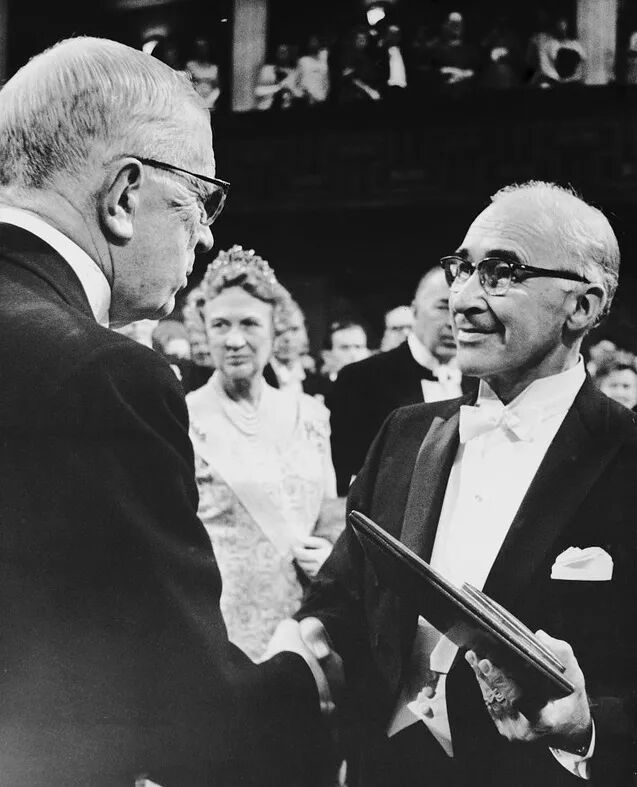
In 1967, George Wald was awarded that year's Nobel Prize in Physiology or Medicine for discovering the physiological and chemical processes of vision in the eye!
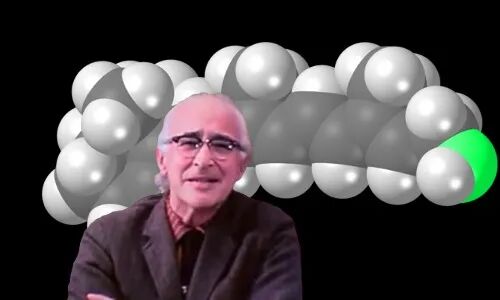
From Law to Medicine: An Explorer Searching for Direction
George David Wald was born on November 18, 1906 in New York City, USA.
His father, Isaac Wald, was a tailor who came to America from Poland. His mother, Ernestine Rosenmann, was born in Germany. Both were Jewish.
From an early age, George’s mind was conspicuously strong, but his sporting ability was weak – he always regretted this, but could not change it.
With the help of his young friend and neighbor Freddy Fisher, George began doing basic electrical experiments. In 1919, age 12, George built a simple radio receiver. He was proud when all the local kids came to his home to listen to the World Series on his homemade radio.

George was educated in public schools in Brooklyn. The school was for students who intended to become tradesmen, such as mechanics, carpenters, plumbers, electricians, etc. George decided he would like to become an electrical engineer, until he learned that electrical engineers were deskbound most of the time.
He graduated, age 15, in 1922.
Although George’s parents were not very well off, they did what they could to help their children improve their lot. Perhaps, they thought, he could become a brilliant attorney. The result was that George enrolled as a pre-law student at Washington Square College of New York University.
For the first time in his life, the working-class kid from Brooklyn was introduced to the classic works of Shakespeare, the remarkable art of Rembrandt, and the magnificent music of Bach, Beethoven, and Mozart.
The college’s intellectual atmosphere inspired Wald, but his law course did not, so he switched to pre-medical studies. He found medicine was decidedly more interesting than law, but continued to be uncertain about his future.

In Sinclair Lewis’s 1925 novel Arrowsmith, Wald read the story of a young Midwestern man who goes through medical school and becomes a successful physician.
This struck a chord with Wald. In 1927, he graduated with a B.A. in Zoology and enrolled as a graduate student at New York’s Columbia University, where he became a research assistant to the eminent physiologist Selig Hecht.
Hecht was particularly interested in light’s interaction with light-sensitive living cells. Wald studied the vision of the fruit fly Drosophila and dark adaptation in the human eye.
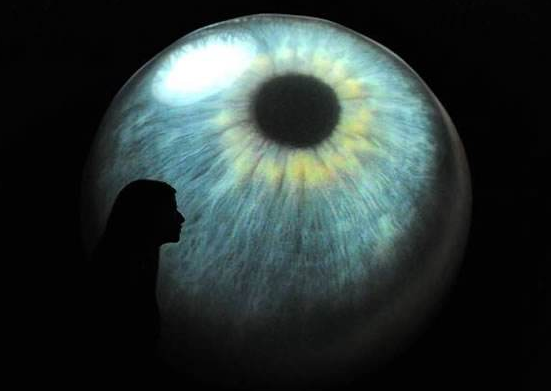
How Vitamin A Affects Vision
Wald was rather obsessed with the question of how vision worked at the molecular level.
To answer his question, in 1932, age 26, he traveled to Berlin, Germany to work in Otto Warburg’s laboratory. Warburg specialized in studying biologically active molecules. A year earlier he had received the Nobel Prize in Physiology or Medicine for discovering the respiratory enzyme and how it acts.
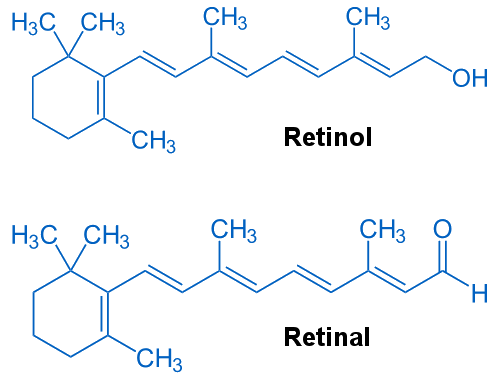
It was in Warburg’s laboratory that Wald made his first big discovery. Using spectroscopy he discovered that the retina contains vitamin A (sometimes called retinol).
Wald knew that vitamin A deficiency was linked to poor night vision, so he was excited about his discovery. Moreover he discovered a new chemical closely related to vitamin A that also takes part in vision. This chemical is now called retinal.
In January 1933, Adolf Hitler became Germany’s leader. Wald left Germany in the summer of that year and spent some months working at the University of Chicago.
From his experiments in Germany and Chicago, he deduced that the visual process is based on a chemical cycle involving three chemicals: rhodopsin, which consists of vitamin A bound to a protein; retinal; and retinol (vitamin A). The cycle is triggered by photons of light.
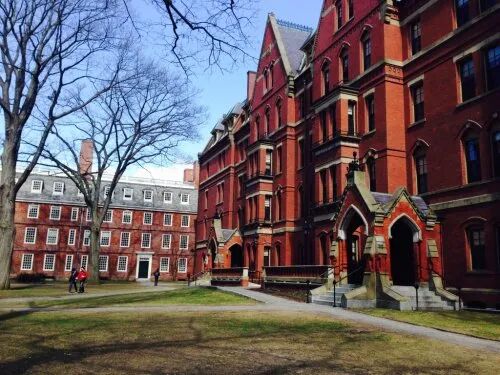
In 1934, Wald started work at Harvard University in Cambridge, Massachusetts, where he worked for the next 43 years. He began as a biochemistry tutor and became a full professor in 1948, age 41.
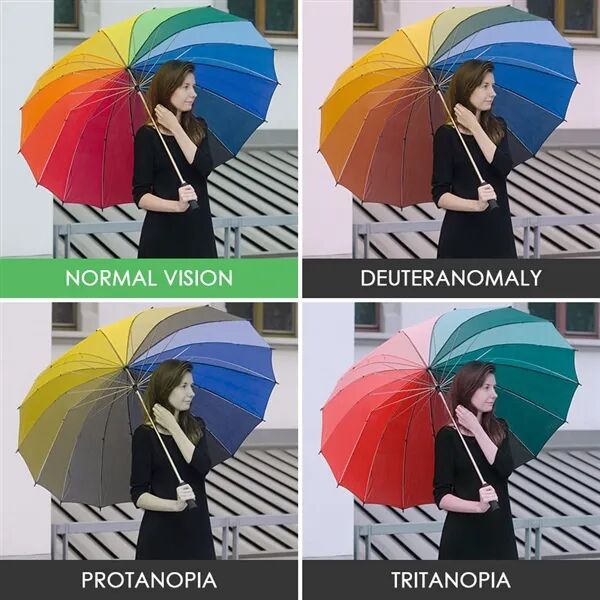
In the late 1950s and early 1960s Wald discovered how the chemistry of color vision works.
He found that color vision requires three pigments called iodopsins, all based on protein molecules bound to retinal. These pigments are erythrolabe, chlorolabe, and cyanolabe.
Moreover, he proved that single color blindness is caused by the absence of one of these three pigments. Blindness to red is caused by the absence of erythrolabe, blindness to green means chlorolabe is absent, and blindness to blue, which is very rare, means cyanolabe is absent.
A Lifetime Devoted to Vision Research
Wald was awarded the 1967 Nobel Prize in Physiology or Medicine for his discoveries. During his career, Wald received many other prestigious prizes, including:
·1939: The Eli Lilly Award in Biological Chemistry
·1953: The Lasker Award from the American Public Health Association
·1955: the Proctor Medal from the Association of Research in Ophthalmology
·1959: The Rumford Medal from the American Academy of Arts and Sciences
·1969: The Max Berg Award for improving the quality of human life
Wald’s early brilliance as a communicator led his parents to suggest he should become an attorney. In fact, his skills made him an inspiring and highly acclaimed teacher. In May 1966, Time Magazine featured him as one of America’s 10 greatest college teachers.
His introduction to biology course The Nature of Living Things became a legend at Harvard. Delivered by a renowned Nobel Prize winner, it was taken by many beginning students as their only science course. Wald’s enthusiasm and eloquence converted more than a few arts students to become biology majors.
Wald officially retired from Harvard in 1977, age 70. He continued to be active in scientific writing and in political advocacy.
George Wald died age 90 of natural causes on April 12, 1997 in Cambridge, Massachusetts.
George Wald came from a working-class family in Brooklyn and was the first in his family to attend university. He moved from law to medicine, and uncertainty about the future did not diminish his thirst for knowledge or his desire to explore.
From isolating vitamin A in the retina to explaining the mechanisms of vision, from New York University to Harvard, and from a novice researcher to a distinguished scientist, George Wald maintained his curiosity and dedication, helping solve one problem after another in vision research.
After retiring, George Wald devoted more energy to social activism. He called for an end to the arms race and the Cold War, hoping to secure a better world for children. A lover of peace, he threw himself into the currents of his era!
George Wald's life was full of adventure, uncertainty, and commitment. When you are willing to pursue a dream wholeheartedly, do not stop striving—for success belongs to the courageous!
Original source:
https://www.famousscientists.org/george-wald/
Source: Famous Scientists
Some material in this article comes from the internet. Please contact us for removal if it infringes your rights.
Editorial note
Editorial note: Wald investigated the role of vitamin A in vision; he was not the first discoverer of vitamin A itself, so the title has been corrected accordingly. Eye discomfort alone does not establish vitamin A deficiency, and supplementation should be determined by a doctor following assessment. Excess preformed vitamin A can also be harmful. The historical narrative and original captions are preserved.
Supporting references
Sources and editorial history
Restored from a complete historical article exported from the PhDSciNet Official Account.
Editorial revision: Editorial note: Wald investigated the role of vitamin A in vision; he was not the first discoverer of vitamin A itself, so the title has been corrected accordingly. Eye discomfort alone does not establish vitamin A deficiency, and supplementation should be determined by a doctor following assessment. Excess preformed vitamin A can also be harmful. The historical narrative and original captions are preserved.