Historical compilation: This article preserves the scientific biography in the original manuscript. The English material is credited to Famous Scientists. No named author or translator could be verified from the export, and the original publication date remains unverified.
Is Light a Particle or a Wave? This question fueled a debate in physics for hundreds of years.
Isaac Newton believed that light consisted of particles. The British physicist Robert Hooke, who lived in the same period, took a very different view. Hooke regarded light as a wave propagating in all directions; in his historical account, it was unaffected by gravity and slowed on entering a denser medium. This differed from Newton's conclusions.
In 1905, Albert Einstein proposed his explanation of the photoelectric effect, describing a beam of light as discrete quanta—now called photons—rather than only a continuous wave. His account was imaginative and compelling, yet it met strong resistance from the physics community.
In 1923, the American physicist Arthur Compton found a new phenomenon in experiments on X-ray scattering: the Compton effect. The wave–particle duality of light then rapidly gained broad acceptance.
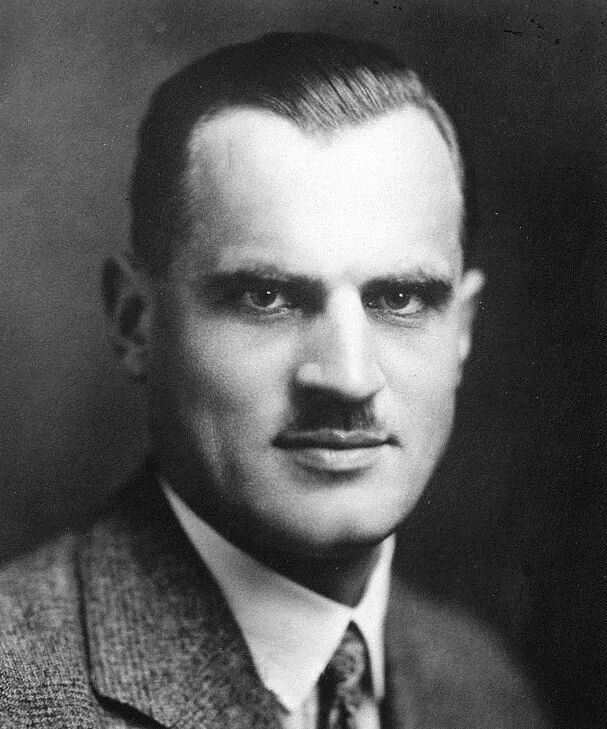
In 1927, Arthur Compton was awarded that year's Nobel Prize in Physics for discovering the Compton effect, which demonstrated the particle properties of electromagnetic radiation.
The Early Growth of a Remarkable Scientific Talent
Arthur Compton was born in the town of Wooster, Ohio, USA, on September 10, 1892.
His father, Elias Compton, was a philosophy lecturer and minister of the Presbyterian Church who became dean of the University of Wooster. His mother, Otelia Augspurger, was a former school teacher who served on the board of managers of children’s homes.
Arthur was their fourth child. His older sister Mary, whose school grades were higher than any of her brothers, became a missionary in India. His two older brothers Karl and Wilson enjoyed illustrious careers – Karl as a physicist and president of the Massachusetts Institute of Technology, and Wilson as a businessman, and president of Washington State University.
From age 14, Arthur attended Wooster Preparatory School. His well-educated parents raised him in a house full of books and he soon developed a keen interest in science – especially astronomy and powered flight.
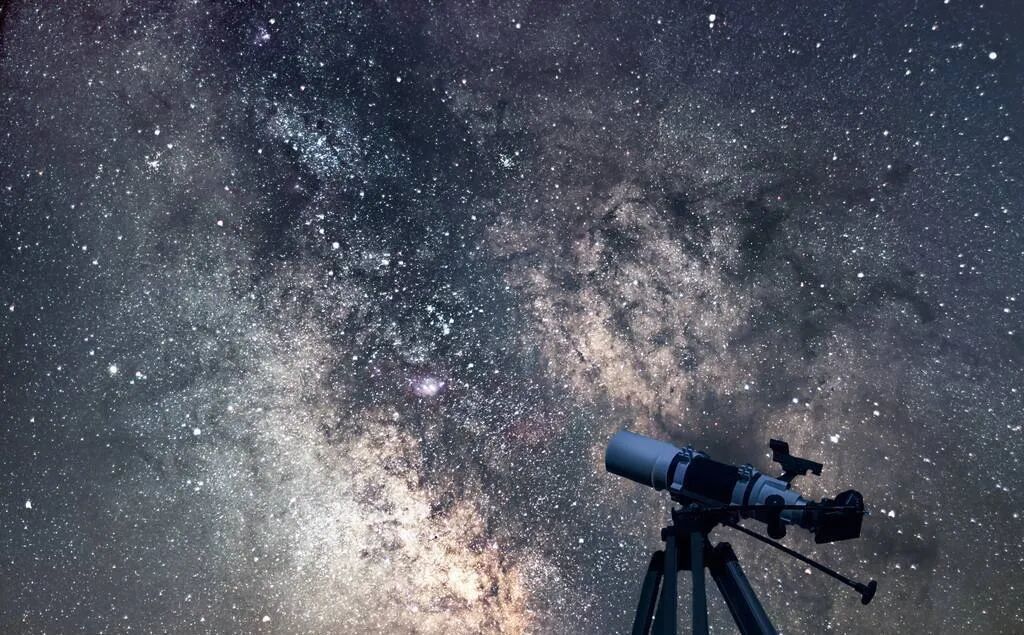
At age 12, Arthur read an astronomy book and was hooked. His first telescope was not very powerful. At age 17, in 1910, Arthur pointed his homemade camera at Halley’s Comet and took a photograph of it. He treasured the photograph for the rest of his life.
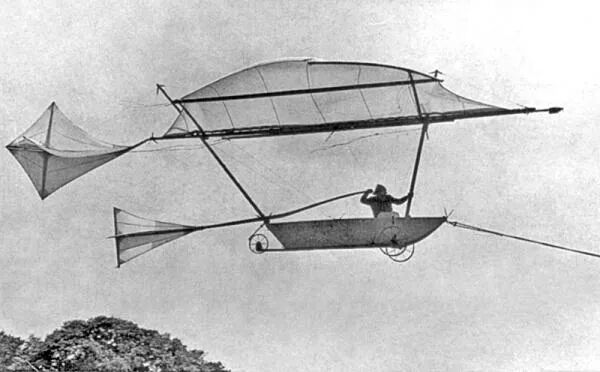
In 1907, age 15, Arthur became interested in the Wright Brothers’ powered flights that had taken place in 1903-05. He became so fascinated that he began designing and building model aircraft as large as himself from wooden frames covered with paper.
His building materials were pinewood, cloth, and piano wire. The total cost was less than $35, financed by doing chores for neighbors. He flew his glider successfully in spring 1909, age 16, and learned a great deal about aviation.
Arthur Compton enrolled for a Bachelor of Science degree at the University of Wooster (then known as the College of Wooster) and majored in Physics. He found himself drawn to experimental work rather than theory.
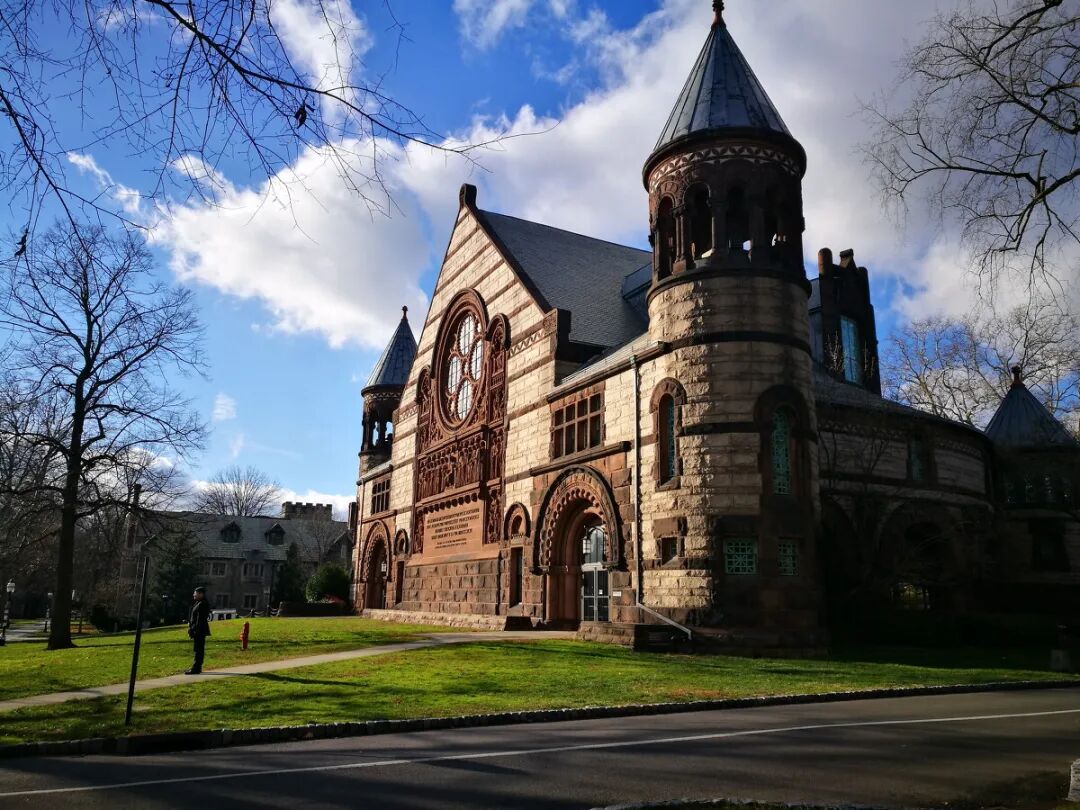
In 1913, Compton left home for Princeton University, New Jersey, with the intention of doing graduate work in engineering. However, he spent his first year doing a Master’s Degree in Physics and decided to become a physicist.
In 1914, he began working for a Ph.D. in Physics at Princeton. He graduated in 1916 with a thesis entitled: The intensity of X-ray reflection, and the distribution of the electrons in atoms. He then worked for a year as an instructor at the University of Minnesota, and two years in engineering for Westinghouse. At Westinghouse, he recognized his true vocation was pure science rather than commercial research.
A Centuries-Long Debate About Light
In 1919, Compton won a prestigious scholarship that allowed him to travel overseas to do postdoctoral research at the University of Cambridge’s famous Cavendish Laboratory. There he studied the scattering and absorption of gamma rays and became friends with the discoverer of the electron, J. J. Thomson, and the discoverer of the proton and the atomic nucleus, Ernest Rutherford, both of whom he admired greatly.
In 1920, age 28, Compton returned to the USA, to be Head of Physics at Washington University in St. Louis, Missouri. Compton was tasked with building the tiny department into a top-class entity.
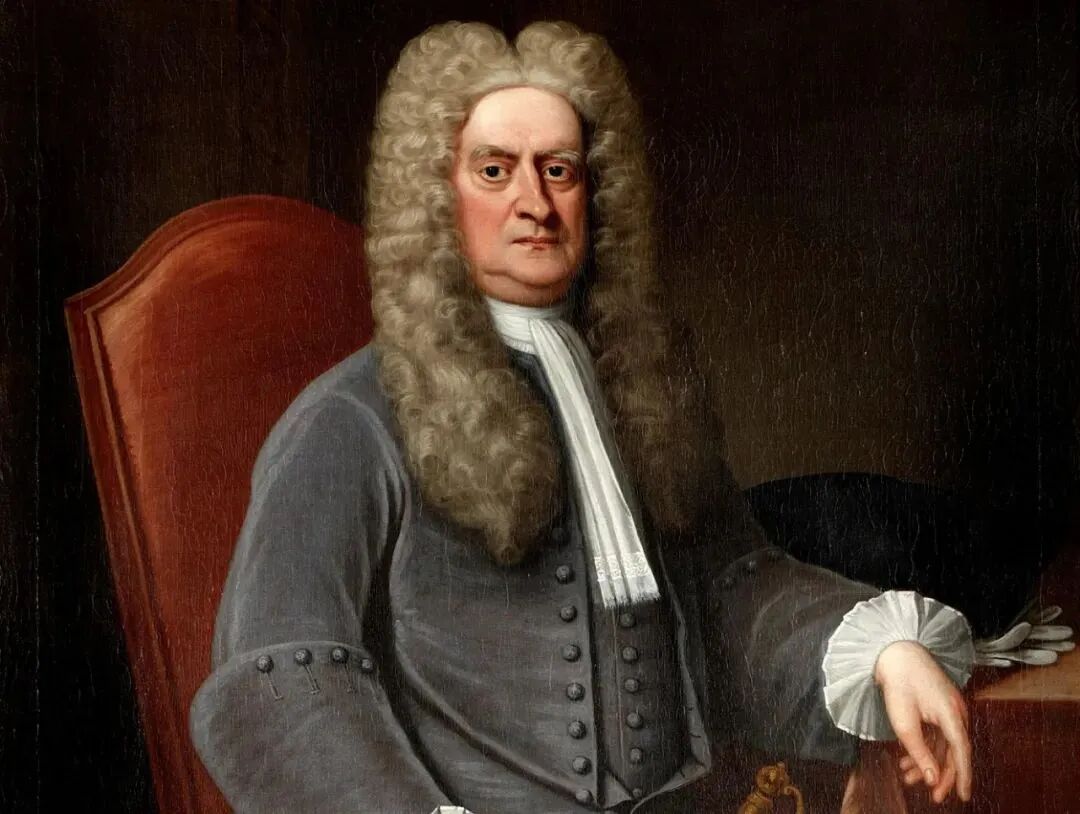
In fact, Compton did much more than this. He played a major role in answering a question whose inconsistent answers had plagued scientists for centuries: is light a particle or a wave? Two brilliant 17th century scientists had taken opposing positions – Isaac Newton, who said light behaved like a particle, and Christian Huygens, who said light behaved like a wave.
In the 19th century, the question seemed to have been settled. James Clerk Maxwell‘s famous equations established that light was a wave, and moreover, indicated that visible light was a small part of a larger electromagnetic spectrum.
Maxwell’s work represented the zenith of classical physics. However, by the end of the 19th century, classical physics was in trouble. It could not, for example, predict the colors of light emitted by hot metal.
Hot metal glows, emitting electromagnetic radiation whose color depends on the temperature.
To address the radiation emitted by hot matter, Max Planck introduced energy quanta: for a given frequency f, energy is exchanged in units of hf, where h is Planck's constant. The dimensions of h itself are those of action, not energy.
Planck's idea changed physics forever. For a radiation mode of given frequency f, a photon's energy is hf, and energy exchange is counted in corresponding quanta; this does not mean that light of every frequency must have the same set of allowed energies. This was the beginning of the twentieth-century quantum revolution that changed physics dramatically and permanently.
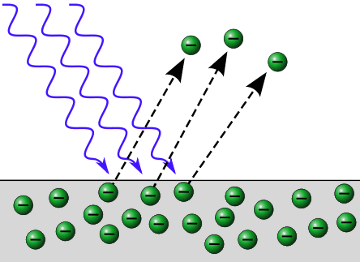
In 1905, Albert Einstein explained something called the photoelectric effect – the fact that shining ultraviolet light on metal causes the metal to eject some of its electrons.
Einstein said the effect could be explained if light behaved like a particle and if particles of light carried an amount of energy given by the light’s frequency multiplied by Planck’s constant.
If you think about it, this seems weird. In the same breath, Einstein is saying light has a frequency, which means it’s a wave, but he’s also saying it behaves like a particle. Today we call this particle of light a photon – the word was proposed by Gilbert N. Lewis in 1926 and later adopted by Compton and other physicists.
Eventually this “is light a wave or a particle?” weirdness became an intrinsic part of quantum theory. In fact, light can be either; its behavior depends on circumstances. Sometimes light’s wave-like character takes center stage and its particle-like character bows out, while at other times the roles reverse.
However, Einstein’s 1905 proposal that light could behave like a particle was rejected by most scientists. Then, in 1923, Arthur Compton published results showing that Einstein had been right all along.
The Discovery of the Compton Effect
Compton was working with very high energy light in the form of X-rays, observing how X-rays interacted with electrons. He was not trying to show Einstein was right. His purpose was to investigate how electrons are distributed in atoms, using principles similar to those used by Lawrence Bragg, who showed how the positions of atoms in solids could be deduced using X-rays.
In 1922, Compton observed that X-rays were modified by interacting with electrons. Following interaction, X-rays had lower frequencies and longer wavelengths, meaning they had lost energy.
When he examined the paths and energies of X-rays that had interacted with electrons, the only interpretation that made sense was that the X-rays and electrons had behaved like two colliding particles, very approximately like two pool balls colliding. Compton established that a single X-ray does not interact with several electrons. A single X-ray interacts with a single electron.
“Thus I was led to the now familiar hypothesis of an X-ray particle colliding with an electron and bouncing from it with reduced energy, the lost energy appearing as the recoil energy of the electron.” —Arthur Compton
Compton called these particles of light photons.
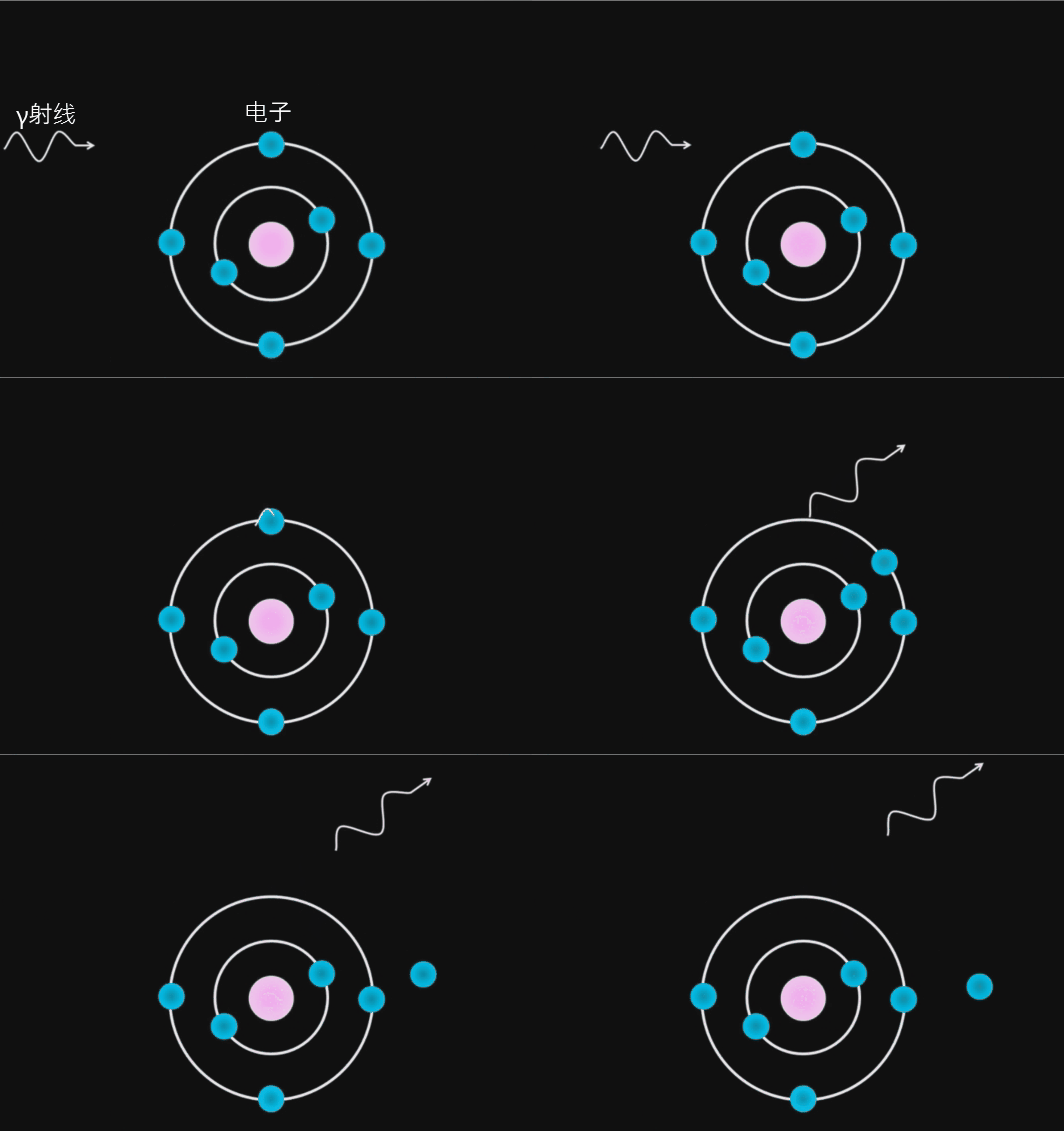
Compton’s experiment provided decisive proof that Einstein’s explanation of the photoelectric effect was correct – light could behave like a particle.
Compton described his work in April 1923 to the American Physical Society, unleashing a storm of disbelief and controversy.
Many physicists simply refused to believe that light’s frequency and wavelength and therefore energy were modified by interaction with electrons. Compton described their objections:“When you find in experiments that the wavelength is actually changed you can see that there must be something wrong with the wave theory… It may be fair to say that these were the first experiments to give physicists in the United States a conviction of the fundamental validity of the quantum theory.”
Compton published his work in the Physical Review in May 1923. In technical terms, he established that X-rays can behave as particles with momentum given by the equation first proposed by Einstein:
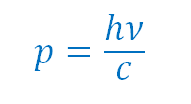
where p is momentum, h is the Planck constant, ν is the frequency of the light, and c is the speed of light.
In 1924, Louis de Broglie proposed that all matter has wave-like properties.
In 1927, Clinton Davisson and J. J. Thomson’s son George Paget Thomson proved that electrons can behave like waves.
And so wave-particle duality was born.
Arthur Compton was awarded the 1927 Nobel Prize in Physics for his discovery of the Compton Effect. De Broglie was awarded the prize in 1929, and Clinton Davisson & George Paget Thomson in 1937.
Today we know that in the quantum world of photons and electrons, whether something behaves as a wave or a particle depends on its environment.
A Man of Conviction and Achievement
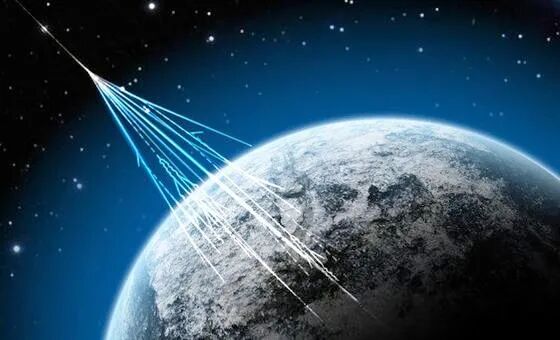
In 1912, Victor Hess carried out a series of experiments to investigate the source of mysterious radiation that had been detected by others such as Theodor Wulf and Domenicio Panini. The results of his experiments caused Hess to conclude:“A radiation of very great penetrating power enters our atmosphere from above.”
In the 1930s, scientists were still arguing about what cosmic rays actually were. There were two opposing schools of thought:
·Cosmic rays are electrically charged particles
·Cosmic rays are uncharged electromagnetic radiation, like X-rays but with much higher energy
From the University of Chicago, where he had been appointed to a professorship in 1923, Compton organized expeditions to various locations on Earth to observe cosmic rays. With his family, he traveled 40,000 miles making observations as far apart as northern Canada and Australia and visiting Europe, India, and New Zealand.
The teams discovered that the highest numbers of cosmic rays were observed at locations far from the earth’s magnetic equator. This proved that cosmic rays are largely made up of charged particles.
In 1932, Compton’s graduate student Luis Alvarez built an array of Geiger counters to study cosmic rays.
In 1933, Alvarez and Compton published a paper in the Physical Review concluding that cosmic rays are positively charged particles. Their unqualified conclusion was too simple: cosmic rays are predominantly positively charged particles, but not exclusively so.
Nazi Germany’s invasion of Poland in 1939 plunged many European countries into a state of war. In 1940, America had not yet entered that war, but talk of war was in the air.
Compton played a key role in the development of the first nuclear weapons.
British scientists told their American colleagues they believed an atomic bomb could be built in about three years. Early in 1941, Compton was appointed to lead a team of American scientists investigating whether this was realistic. Compton sought advice and worked with people such as Ernest Lawrence, Harold Urey, and Enrico Fermi. In October 1941, scientists drawn together by Compton to a meeting in Schenectady, New York, concluded that an atomic bomb was feasible within three and a half years.
In December 1941, Compton became head of the Plutonium Project, whose aim was to build a nuclear weapon based on the chemical element plutonium. This meant Compton was given responsibility for building the world’s first nuclear reactor, needed to produce plutonium.
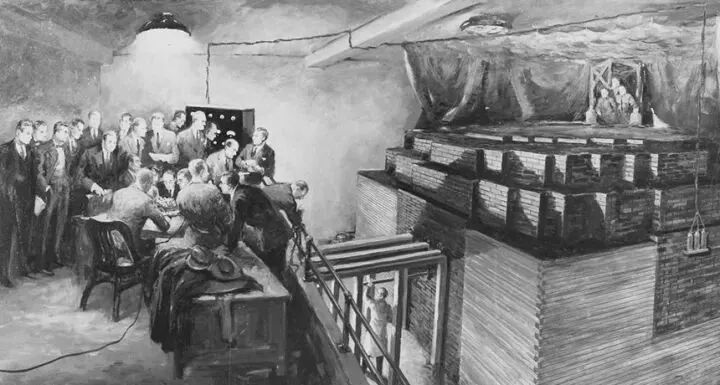
On December 2, 1942, the world’s first self-sustaining nuclear chain reaction took place under the direction of Enrico Fermi in a squash court under the stands of Stagg Field, a University of Chicago football field.
Compton was awarded the Medal of Merit for his wartime work.
'Religion draws sharp boundaries between people, but science has no such divisions: everyone bows before the temple of truth. The scientific spirit transcends national and religious boundaries, and is therefore a powerful force for promoting world peace.' — Arthur Compton
In that flourishing era of physics, Arthur Compton's experimental discovery of the Compton effect brought widespread scientific acceptance of the wave–particle duality of light. In the manuscript's telling, the 'battle of the century,' stretching across hundreds of years, had come to an end.
This exceptionally gifted man from an academic family lived up to both his family's tradition and the opportunities of his remarkable era. He was a focused, rigorous scholar and a teacher whose students carried his influence far and wide. Through talent and effort, he left an indelible mark on a legendary time!
Original article link:
https://www.famousscientists.org/arthur-compton/
Source: Famous Scientists
Some material in this article comes from online sources. Please contact us for removal if it infringes your rights.
Editorial note
Editorial note: The manuscript described light energy as multiples of the bare Planck constant h, which has the wrong dimensions; this has been corrected to quanta hf for a given frequency f. The attribution of 'photon' has been corrected using Lewis's 1926 paper. Cosmic rays are predominantly positively charged particles, but not exclusively so. The original English qualified the early conclusion as an error; this omitted qualification has been restored and its scope clarified in Chinese. Early debates and scientists' quotations retain their historical context.
Supporting references
NIST: the Planck relation and SI units
Lewis 1926: The Conservation of Photons
Sources and editorial history
Restored from a complete historical article exported from the PhDSciNet Official Account.
Editorial revision: Editorial note: The manuscript described light energy as multiples of the bare Planck constant h, which has the wrong dimensions; this has been corrected to quanta hf for a given frequency f. The attribution of 'photon' has been corrected using Lewis's 1926 paper. Cosmic rays are predominantly positively charged particles, but not exclusively so. The original English qualified the early conclusion as an error; this omitted qualification has been restored and its scope clarified in Chinese. Early debates and scientists' quotations retain their historical context.