Historical compilation: This article preserves the scientific biography in the original manuscript. The English material is credited to Famous Scientists. No named author or translator could be verified from the export, and the original publication date remains unverified.
'One sometimes finds what one is not looking for!'—Alexander Fleming
In the early twentieth century, scarlet fever, suppurative throat infections, syphilis, gonorrhea, and various forms of tuberculosis and pneumonia were regarded as incurable diseases that seriously threatened human health. Illness struck mercilessly like the Grim Reaper's scythe, yet hope of survival also arrived quietly through chance!
In 1928, returning from a holiday, bacteriologist Alexander Fleming unexpectedly found a mold with antibacterial activity—Penicillium—in an unwashed culture dish. No bacteria were growing around it! At that moment, Fleming probably did not realize that, by lifting the lid, he had opened a new chapter in the history of medicine.
In 1928, Alexander Fleming discovered penicillin. In 1939, pathologist Howard Florey and biochemist Ernst Chain began extracting and purifying the active substance from penicillin cultures. By 1945, annual penicillin production had reached 646.9 billion units, saving thousands of wounded soldiers and patients!
In 1945, Alexander Fleming, Howard Florey, and Ernst Chain shared that year's Nobel Prize in Physiology or Medicine!
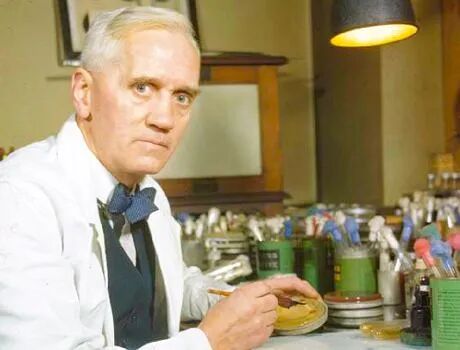
Dreaming On Despite Poverty
Alexander Fleming was born on August 6, 1881 at his parents’ farm located near the small town of Darvel, in Scotland, UK. His father’s health was fragile; he died when Alexander was just seven years old.
Alexander’s earliest schooling, between the ages of five and eight, was at a tiny moorland school where 12 pupils of all ages were taught in a single classroom.
Alexander arrived in London early in 1895, age 13. Alexander lived in the home of his elder brother, Tom, who was a doctor of medicine.
Alexander attended the Polytechnic School, where he studied business and commerce. He started in a class appropriate to his age, but his teachers soon realized he needed more challenging work. He was moved into a class with boys two years older than him and finished school at the age of 16.

In 1901, at the age of 20, he inherited some money from his uncle, John Fleming. He decided to use the money to go to medical school; he wanted to become a doctor like his successful brother Tom.
First, he needed suitable qualifications to enable him to enroll at medical school. This did not present any great difficulties; he passed his exams with the highest marks of any student in the United Kingdom.
In 1903, age 22, Alexander enrolled at London’s St Mary’s Hospital Medical School, graduating with distinction three years later as Bachelor of Medicine, Bachelor of Surgery.
Rather than follow in Tom’s footsteps, Alexander was persuaded by Almroth Wright, an authority in immunology, to become a researcher in his bacteriology group at St Mary’s Hospital Medical School. While carrying out this research Fleming graduated, in 1908, with a degree in bacteriology and the Gold Medal. St Mary’s Hospital Medical School then promoted him to the role of bacteriology lecturer.
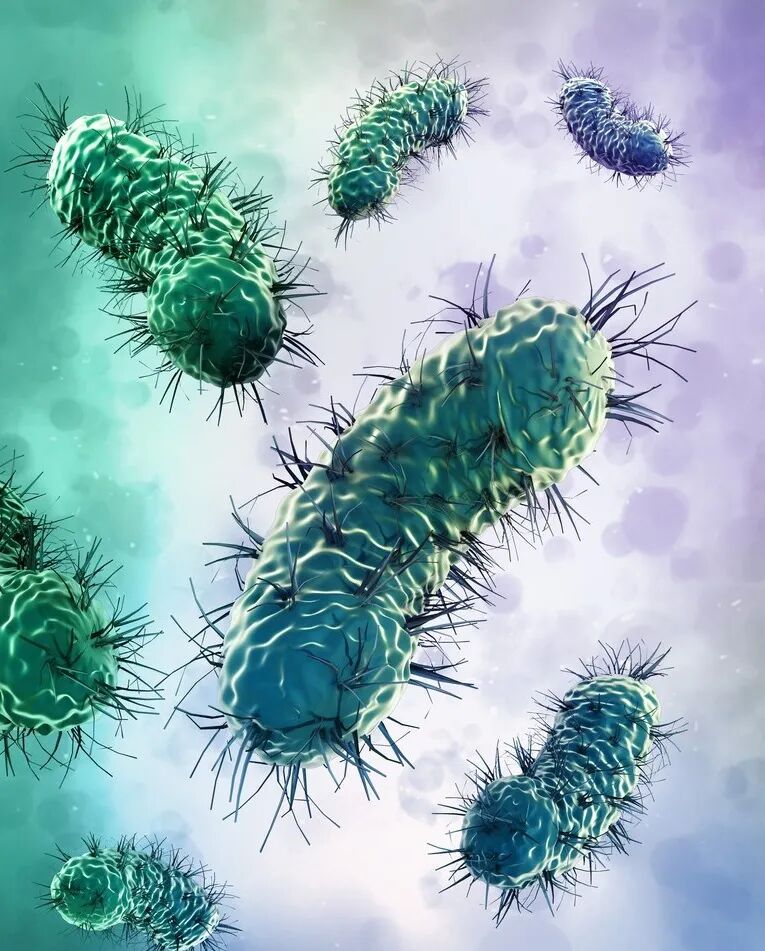
Bacteria: A Major Cause of Deadly Diseases
In 1914 World War 1 broke out and Fleming, age 33, joined the army, becoming a captain in the Royal Army Medical Corps working in field hospitals in France.
There, in a series of brilliant experiments, he established that antiseptic agents used to treat wounds and prevent infection were actually killing more soldiers than the infections were!
The antiseptics, such as carbolic acid, boric acid and hydrogen peroxide, were failing to kill bacteria deep in wounds; worse, they were in fact lowering the soldier’s natural resistance to infection because they were killing white blood cells. Fleming demonstrated that antiseptic agents were only useful in treating superficial wounds, but were harmful when applied to deep wounds.
Almroth Wright believed that a saline solution – salt water – should be used to clean deep wounds, because this did not interfere with the body’s own defenses and in fact attracted white cells.
Wright and Fleming published their results, but most army doctors refused to change their ways, resulting in many preventable deaths.

In 1919 Fleming returned to research at St Mary’s Hospital Medical School in London. His wartime experience had firmly established his view that antibacterial agents should be used only if they worked with the body’s natural defenses rather than against them; in particular, agents must not harm white blood cells.
His first discovery of such an agent came in 1922, when he was 41 years old. Fleming had taken secretions from inside the nose of a patient suffering from a head cold. He cultured the secretions to grow any bacteria that happened to be present. In the secretions, he discovered a new bacterium he called Micrococcus lysodeikticus, now called M luteus.
A few days later, Fleming was examining these bacteria. He himself was now suffering from a head cold, and a drop of mucus fell from his nose on to the bacteria. The bacteria in the area where the drop fell were almost instantly destroyed. Always on the lookout for natural bacteria killers, this observation excited Fleming enormously. He tested the effect of other fluids from the body, such as blood serum, saliva, and tears, on these bacteria and found that bacteria would not grow where a drop of one of these fluids was placed.
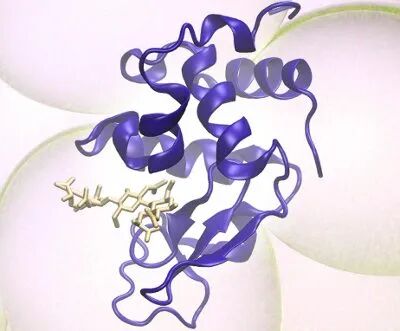
Fleming discovered the common factor in the fluids was an enzyme. He named his newly discovered enzyme lysozyme. The presence of lysozyme in our bodies prevents some potentially pathogenic microbes from causing us harm. It gives us natural immunity to a number of diseases. It is naturally present in large concentrations in egg-whites, offering protection to chicks against infection.
Today, lysozyme is used as a food and wine preservative. It is also used in medicines, particularly in Asia, where it is used in treatments for head colds, athlete’s foot, and throat infections.
The Discovery of a Remarkable Mold
In the month of August 1928, Fleming did something very important. He enjoyed a long vacation with his wife and young son.
On Monday, September 3, he returned to his laboratory and saw a pile of Petri dishes he had left on his bench. The dishes contained colonies of Staphylococcus bacteria. While he was away, one of his assistants had left a window open and the dishes had become contaminated by different microbes.
Annoyed, Fleming looked through the dishes and found something remarkable had taken place in one of them. A fungus was growing and the bacterial colonies around it had been killed. Farther from the fungus, the bacteria looked normal. Excited by his observation, Fleming showed the dish to an assistant, who remarked on how similar this seemed to Fleming’s famous discovery of lysozyme.
Hoping he had discovered a better natural antibiotic than lysozyme, Fleming now devoted himself to growing more of the fungus. He identified that it belonged to the Penicillium genus and that it produced a bacteria-killing liquid. On March 7, 1929 he formally named the antibiotic penicillin.
Fleming published his results, showing that penicillin killed many different species of bacteria, including those responsible for scarlet fever, pneumonia, meningitis, and diphtheria. Furthermore, penicillin was non-toxic and it did not attack white blood cells.
Unfortunately, the scientific world was largely underwhelmed, ignoring his discovery.

Fleming faced a number of problems:
·it was difficult to isolate penicillin from the fungus producing it
·he could not find a way of producing penicillin in high concentrations
·penicillin seemed to be slow acting
·clinical tests of penicillin as a surface antiseptic showed it was not especially effective
·Fleming’s boss, Almroth Wright, had a generalized dislike of chemists and refused to allow them in his laboratory. The presence of a skilled chemist would have been a huge benefit in terms of isolating, purifying, and concentrating penicillin.
Regardless of these issues, Fleming continued with some work on penicillin in the 1930s, but never made the breakthrough he needed to produce it in large, concentrated quantities. Others, however, did.
In the early 1940s a team of scientists led by pathologist Howard Florey and biochemist Ernst Boris Chain at the University of Oxford transformed penicillin into the medicine we know today.
In 1945 Alexander Fleming shared the Nobel Prize in Medicine or Physiology with Florey and Chain. The award was made:“for the discovery of penicillin and its curative effect in various infectious diseases.”
Fleming was always fulsome in his praise for Florey, Chain, and their team, and he downplayed his own role in penicillin’s story. Despite his modesty, he became a worldwide hero. Millions of people owed their lives to the antibiotic he had discovered.
In 1944 Fleming was knighted and became Sir Alexander Fleming.
On March 11, 1955 Alexander Fleming died age 73 in London of a heart attack.
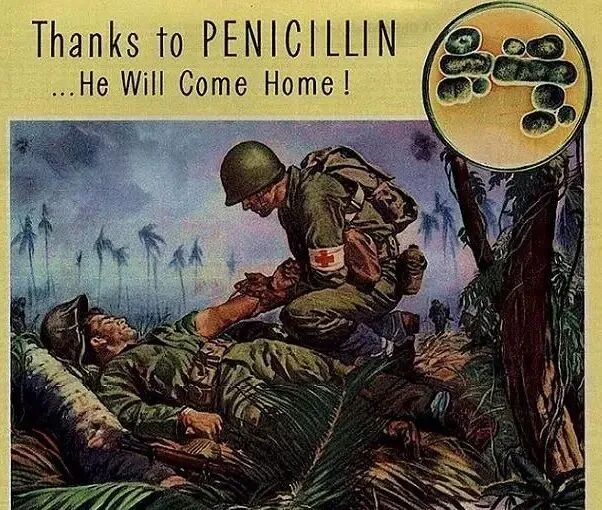
The first half of the twentieth century was hardly the best of times. The First and Second World Wars broke out in succession, and countless lives were tragically lost.
Even amid war, scientists never stopped exploring, and a dawn of hope for life appeared. Outside the laboratory, central London was hot and noisy. Inside, Alexander Fleming opened a culture dish and witnessed the great discovery of penicillin!
The discovery and widespread use of penicillin opened a new path for scientists: using antibiotics to kill deadly bacteria in the human body. A golden age of chemotherapy had arrived!
Under London's bright sun, through that small culture dish, we saw hope for life!
Original source:
https://www.famousscientists.org/alexander-fleming/
Source: Famous Scientists
Some material in this article comes from the internet. Please contact us for removal if it infringes your rights.
Editorial note
Editorial note: Penicillium is the mold producing the antibacterial substance, while penicillin is the named active substance. The introduction's conflation of the two has been corrected. The remaining discovery narrative and original captions are preserved; the historical account of the drug is not current prescribing advice.
Supporting references
Nobel: Fleming Questions and Answers and the Discovery Process
Sources and editorial history
Restored from a complete historical article exported from the PhDSciNet Official Account.
Editorial revision: Editorial note: Penicillium is the mold producing the antibacterial substance, while penicillin is the named active substance. The introduction's conflation of the two has been corrected. The remaining discovery narrative and original captions are preserved; the historical account of the drug is not current prescribing advice.