Historical compilation: This article preserves the scientific biography in the original manuscript. The English material is credited to Famous Scientists. No named author or translator could be verified from the export, and the original publication date remains unverified.
In 1964, the International Centre for Theoretical Physics was established in Trieste, Italy, to help physicists from developing countries. In 1983, the Third World Academy of Sciences was founded, committed to strengthening contact and collaboration among scientists in the developing world, expanding their influence, and promoting scientific development. The influence of physics began taking root in developing countries!
Few people know that, during that difficult journey, a physicist born in the developing world persevered through obstacles so that physics could shine amid poverty and conflict. Let us remember his name: Abdus Salam.
In 1979, Abdus Salam was awarded that year's Nobel Prize in Physics for his contributions to the unified theory of weak and electromagnetic interactions between elementary particles, including the prediction of weak neutral currents!
A Nobel Laureate Growing Up Amid Conflict
Mohammad Abdus Salam was born on January 29, 1926 in Santokdas, Punjab, British India (now Pakistan). His father was Chaudhry Muhammad Hussain, an education official.
Abdus attended school in the town of Jhang. From an early age he showed enormous talent in mathematics and science. He also developed a lifelong love of poetry in English, Persian, and Punjabi.
At age 14, he amazed the people of Jhang when he achieved the highest marks ever seen in Punjab University’s entrance examination. Nearly the whole town turned out to celebrate his achievement. He graduated with a Master’s degree in Mathematics in 1946, age 20.
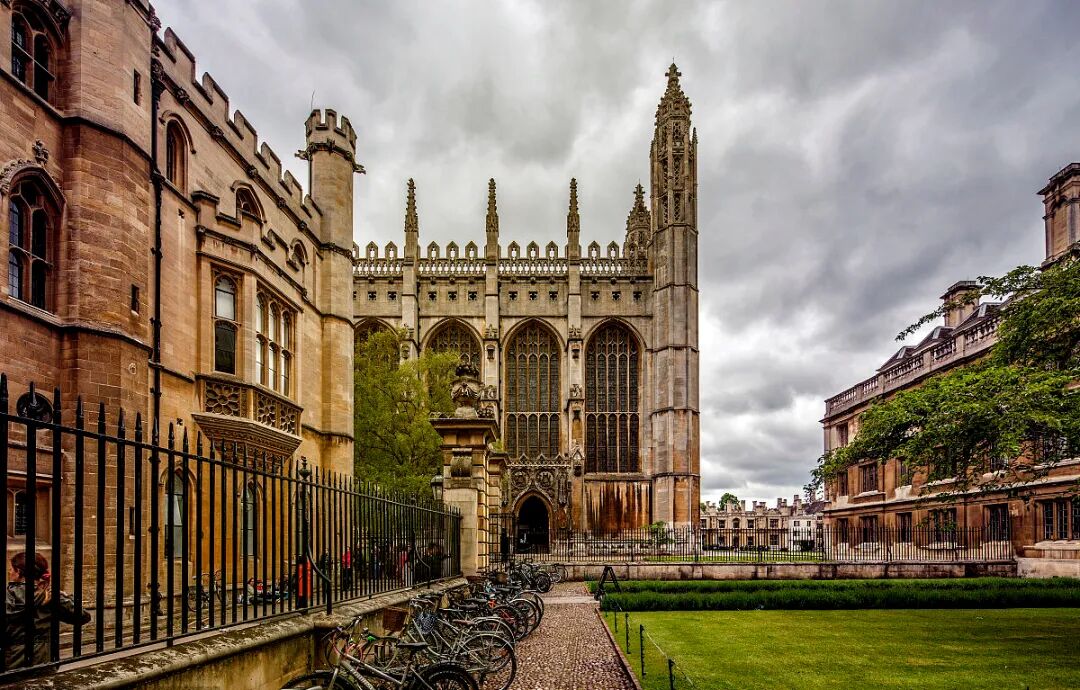
Salam was awarded a three year scholarship to study for a Bachelor’s degree at St. John’s College, Cambridge, UK. After two years he graduated with first class honors in Mathematics. A year later, he graduated with first class honors in Physics.
Salam stayed at Cambridge for graduate studies. In 1950, a year after starting his PhD, he was awarded the university’s Smith’s Prize for the most outstanding pre-doctoral contribution to physics at the university.
Salam completed his PhD thesis in 1951: Developments in quantum theory of fields. This was a rather brilliant work: in addition to making his name as a physicist, it resulted in him winning a share of the highly prestigious Adams Prize for mathematical sciences in 1956. To be eligible for the prize, candidates had to be under forty years of age and living in the UK. Previous winners included James Clerk Maxwell, J. J. Thomson, and Subrahmanyan Chandrasekhar.
In 1951, age 25, Salam returned to the city of Lahore, in now independent Pakistan, to teach Mathematics at Government College. He was filled with hope that he could inspire a new generation of young people to become scientists and modernize society. The following year, he was appointed Head of Mathematics at Punjab University.
In 1953, Lahore suffered riots in which a very large number of Ahmadis were murdered. Ahmadis consider themselves to be Muslim, but are seen as heretics by many other Muslims. Salam, who was an Ahmadi, decided to leave Pakistan and return to Cambridge.
Salam spent four years as a lecturer at Cambridge until, in 1957, age 31, he was appointed Professor of Theoretical Physics at Imperial College, London.
In 1959, he was elected a Fellow of the Royal Society.

The Discovery of the W and Z Bosons
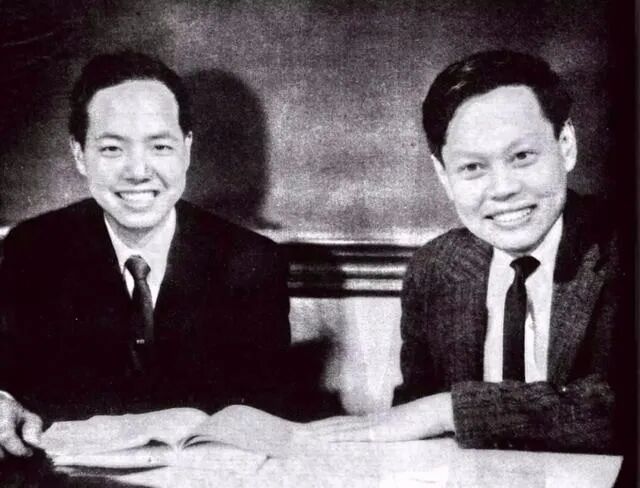
At a physics conference in Seattle in 1956, Salam became very excited listening to Chen-Ning Yang describe parity violation – Yang and his colleague Tsung-Dao Lee would be awarded the 1957 Nobel Prize in Physics for this work.
Yang described how parity, a property physicists believed was always conserved – like energy, momentum, and electric charge – need not be conserved in weak nuclear interactions, such as beta decay.
The implication was that Nature could tell the difference between left and right. Why, Salam wondered, was left-right symmetry violated in weak interactions, but conserved in electromagnetic interactions?
He convinced himself, correctly, that the answer lay in a gauge theory – the first of which had been Maxwell’s formulation of electrodynamics.
Salam worked on the problem with his PhD student Ronald Shaw and, in 196l-62, Steven Weinberg spent a year with Salam at Imperial College.
The scientists produced a theory saying that while the electromagnetic force was transmitted by massless photons, there must exist particles with mass involved in a unified force – the electroweak force. They theorized the existence of W and Z bosons. W and Z bosons, are the particles with mass that take part in beta decay of an atomic nucleus.
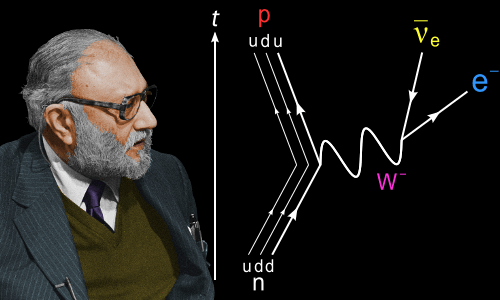
The net outcome of beta decay is that a neutron turns into a beta particle (a high energy electron), a proton, and an electron antineutrino.
The W boson is an intermediate particle in beta decay. The neutron first decays into a W boson. In the case of beta decay, the W boson is negatively charged, written W¯. It hangs around for an incredibly short amount of time: 3 ×10-25 seconds, before decaying into a proton, beta particle, and antineutrino. Z bosons carry no electric charge, but carry momentum.
The fact that the force carriers of the electroweak force – the W and Z bosons – have mass while photons have no mass was a major problem, because in an SU(2) gauge theory (particle physics jargon for the gauge framework Salam and others were working within) bosons must have no mass.
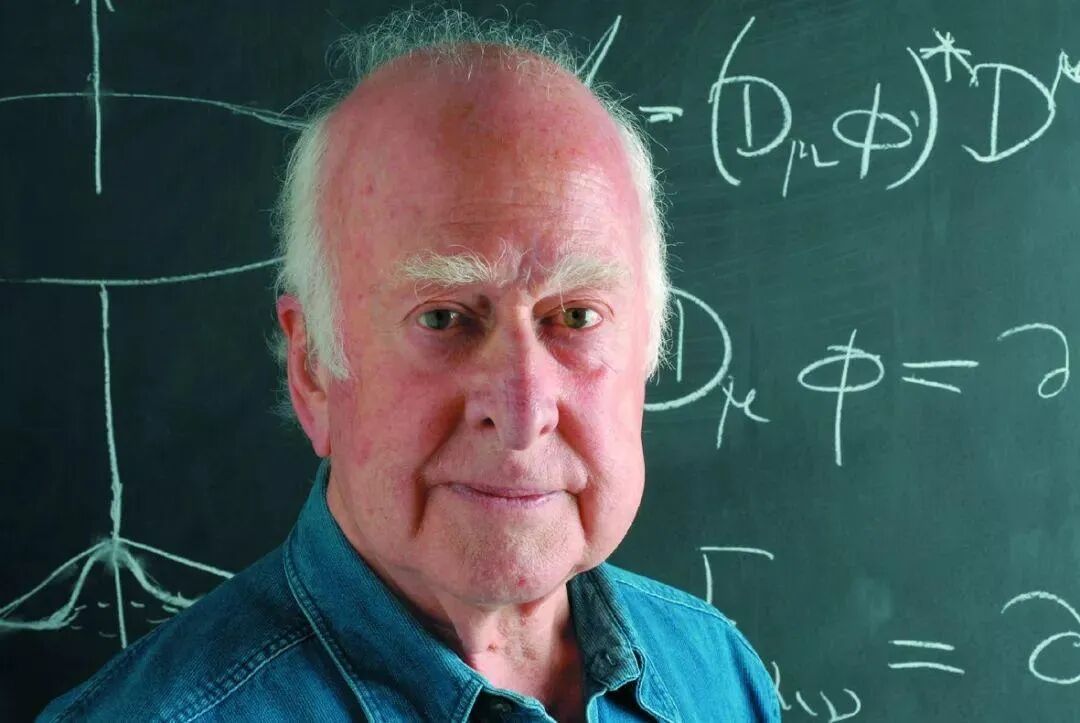
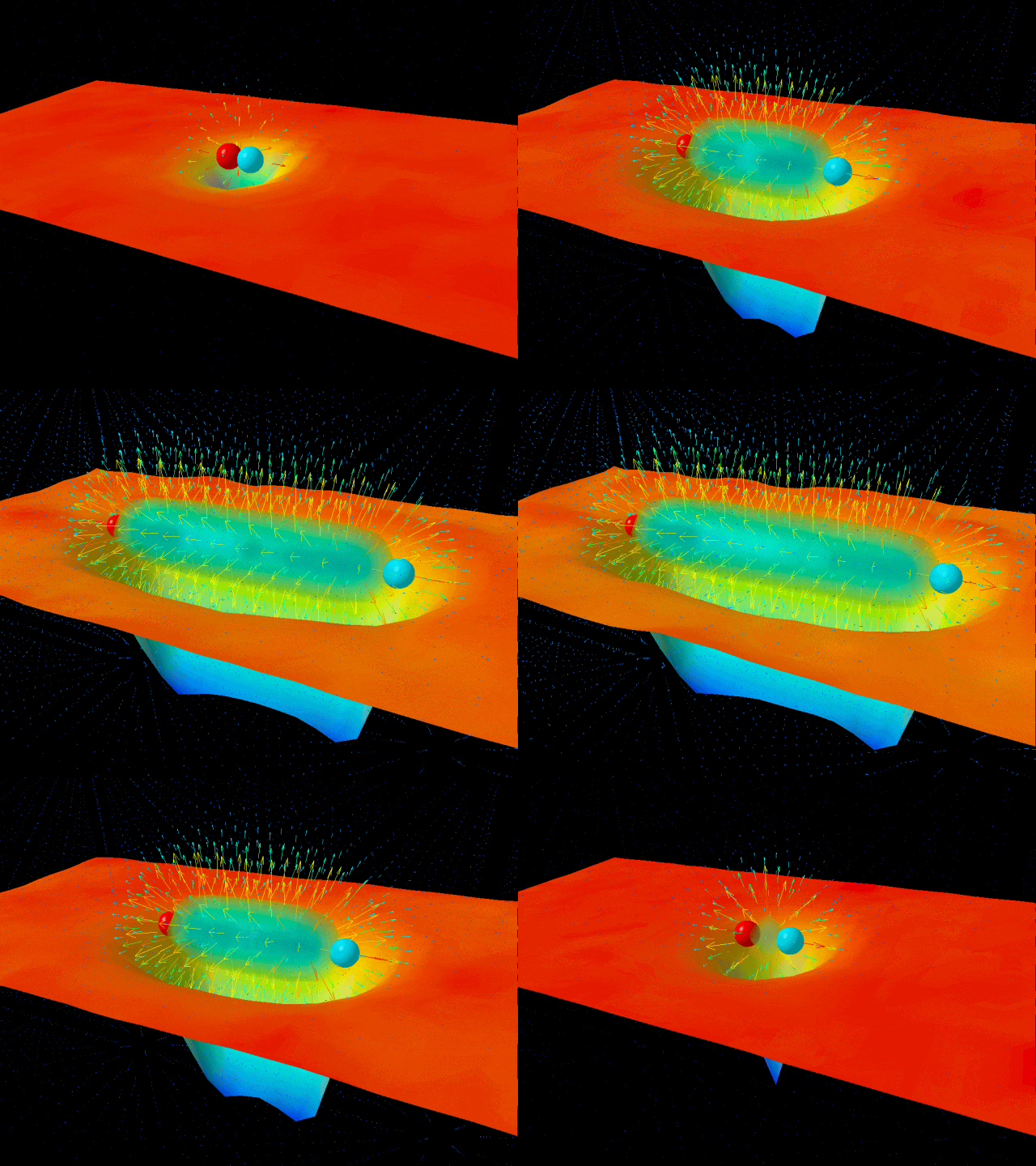
Peter Higgs solved the problem of bosons with masses in 1964 with the Higgs mechanism, predicting the Higgs boson. (Higgs was awarded the 2013 Nobel Prize in Physics for his work.)
Z boson interactions, were observed at CERN in 1973. W bosons were observed in 1983.
Taken together, the SU(2) gauge theory of the weak interaction, plus the electromagnetic interaction, plus the Higgs mechanism produces the Glashow-Weinberg-Salam model, finalized in 1968. The model successfully unified the electromagnetic and weak forces into the electroweak force.
Glashow, Salam, and Weinberg shared the 1979 Nobel Prize in Physics: “for their contributions to the theory of the unified weak and electromagnetic interaction between elementary particles, including, inter alia, the prediction of the weak neutral current”.
A Champion of Scientific Progress in the Developing World
Salam’s best known contributions to science include:
·two-component neutrino theory and the prediction of the inevitable parity violation in weak interactions
·gauge unification of weak and electromagnetic interactions-the unified force is known as the “electroweak” force, named by Salam
·predicted existence of weak neutral currents and W particles and Z particles before their experimental discovery
·symmetry properties of elementary particles and unity symmetry
·renormalization of meson theories
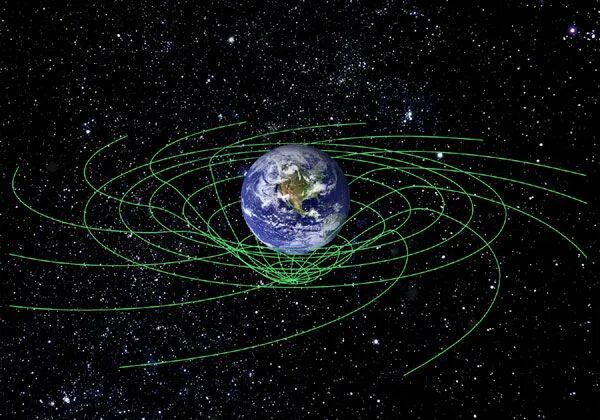
·gravity theory and its role in particle physics including two tensor theory of gravity and strong interaction physics
·supersymmetry theory including formulation of superspace and formalism of superfields
During the early 1960s, Salam played significant roles in establishing the Pakistan Atomic Energy Commission (PAEC) and Pakistan’s Space and Upper Atmosphere Research Commission (SUPARCO).
Salam was passionate about promoting science in developing countries. He recalled there had once been a golden age of Islamic science, when for hundreds of years Islamic scientists had led the world. He urged Muslims to regain the spirit of free enquiry that existed in those times.
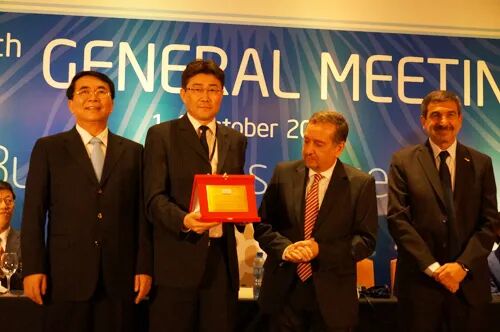
Salam was the founder of the Third World Academy of Sciences (TWAS) and the International Centre for Theoretical Physics (ICTP).
In the mid-1980s, Salam began suffering from a degenerative neurological disorder. Eventually he was confined to a wheelchair. He retired from his chair at Imperial College in 1994, age 68.
Abdus Salam died peacefully, age 70, at home in Oxford on November 21, 1996. He was buried four days later in the Ahmadi city of Rabwah, Pakistan.
A devout Muslim used his intelligence to leave an impoverished land, then returned after completing his education, driven by the ideals and convictions he held.
Abdus Salam was a great physicist. Along with Glashow, Weinberg, and other scientists, he made key contributions to electroweak theory, in which the Higgs mechanism gives mass to the W and Z bosons. The theory unifies the weak and electromagnetic interactions and provided a theoretical basis for finding those bosons. It is not equivalent to an achieved grand unification that also includes the strong interaction.
He was also a devoted believer who committed his life to scientific development in developing countries. Abdus Salam, Pakistan's 'father of science', persistently promoted physics and scientific development, trained young Pakistani physicists, and contributed to his country's progress.
What dedication and conviction could break through the shadows of conflict and poverty and allow the light of science to shine throughout his homeland!
Original source:
https://www.famousscientists.org/mohammad-abdus-salam/
Source: Famous Scientists
Some material in this article comes from the internet. Please contact us for removal if it infringes your rights.
Editorial note
Editorial note: The Higgs terminology is standardized, and established electroweak theory is distinguished from the broader theoretical pursuit of grand unification. The shared theoretical contributions of Glashow, Weinberg, and Salam are distinguished from the later experimental discovery of the W and Z. The remaining personal history and original captions are preserved.
Supporting references
CERN: Electroweak Theory and the W and Z Discoveries
Sources and editorial history
Restored from a complete historical article exported from the PhDSciNet Official Account.
Editorial revision: Editorial note: The Higgs terminology is standardized, and established electroweak theory is distinguished from the broader theoretical pursuit of grand unification. The shared theoretical contributions of Glashow, Weinberg, and Salam are distinguished from the later experimental discovery of the W and Z. The remaining personal history and original captions are preserved.