
Historical compilation: This article preserves the scientific biography in the original manuscript. The English material is credited to Famous Scientists. No named author or translator could be verified from the export, and the original publication date remains unverified.
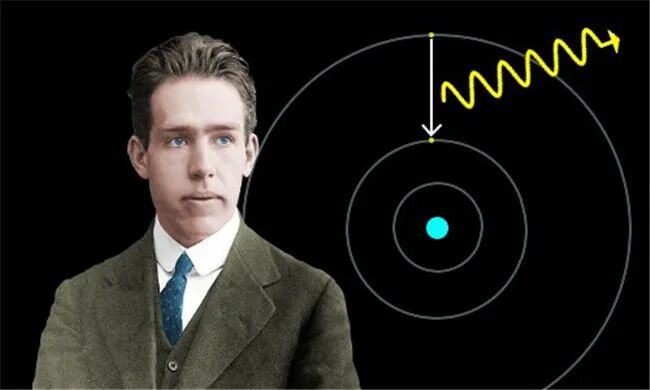
In 1913, Niels Bohr built on Rutherford's atomic model and proposed quantized orbits for electrons outside the nucleus. His historical model addressed the problem of atomic stability and described a persuasive account of atomic structure, particularly for hydrogen-like systems.
In the late 1930s, Niels Bohr and John Archibald Wheeler developed an account of nuclear fission using the liquid-drop model, which pictured a nucleus as a drop of incompressible liquid.
In 1949, however, the shell model developed by Maria Goeppert Mayer and J. Hans D. Jensen posed a major challenge to the liquid-drop picture.
In fact, the shell and liquid-drop models each had advantages and limitations, and physicists were keen to uncover the remarkable structure of the nucleus. Nuclear-structure theory was eventually carried forward and developed through the work of Niels Bohr's son, Aage Bohr.
In 1975, Aage Bohr received that year's Nobel Prize in Physics for discovering the connection between collective and particle motion in atomic nuclei and developing nuclear-structure theory on that basis.
A Father and Son in a Scientific Family
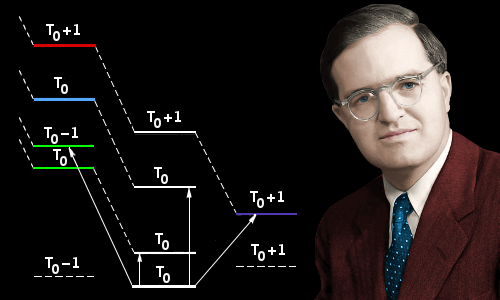
Aage Niels Bohr was born in Denmark’s capital city, Copenhagen, on June 19, 1922.
In the same year as Aage was born, his father, Niels Bohr, was awarded the Nobel Prize in Physics for his explanation of the structure of atoms and the radiation emitted by them.
Aage’s mother, Margrethe Nørlund, gave birth to six children – all boys; Aage was the fourth. Margrethe was well educated; she assisted Niels Bohr with his paperwork and discussed his scientific research with him in detail.
Aage Bohr’s education was both conventional and, from a scientific point of view, extraordinarily privileged. Like many other students of high school age in Copenhagen, he attended grammar school – the Sortedam Gymnasium. Unlike other students, he also enjoyed conversations with some of the world’s most outstanding physicists, including his father, of course.
In later life Aage recalled some of the giants of science who had worked in Copenhagen with his father; he met them so regularly that they became his ‘uncles’ – including Uncle Werner Heisenberg (Nobel Prize in Physics 1932) and Uncle Wolfgang Pauli (Nobel Prize in Physics 1945).
In April 1940, when Aage was 17, Denmark was invaded by the armed forces of Nazi Germany.
This was a worrying time for the Bohr family. Aage’s mother and father were both baptized Christians, but Aage’s grandmother (Niels Bohr’s mother) was Jewish, and this connection meant there could be trouble from the Nazis.
At first, however, there were no problems and, aged 18, Aage enrolled at Copenhagen University intending to obtain a degree in physics.
In September 1943, the Nazis decided to deport Denmark’s Jews to concentration camps.
The Bohr family fled in fishing boats across the short stretch of water separating Denmark from Sweden. Sweden was officially neutral and had not been invaded by the Nazis. Nearly all of Denmark’s 7000 Jews fled over the sea to Sweden in 1943.
In October 1943, one week apart, Niels and Aage Bohr flew from Sweden over Nazi-occupied Norway to the United Kingdom. Once safely in the UK, father and son began working in the atomic bomb project headed by James Chadwick.
In 1944 father and son became involved in the Manhattan Project, spending significant amounts of time in the United States as well as London.
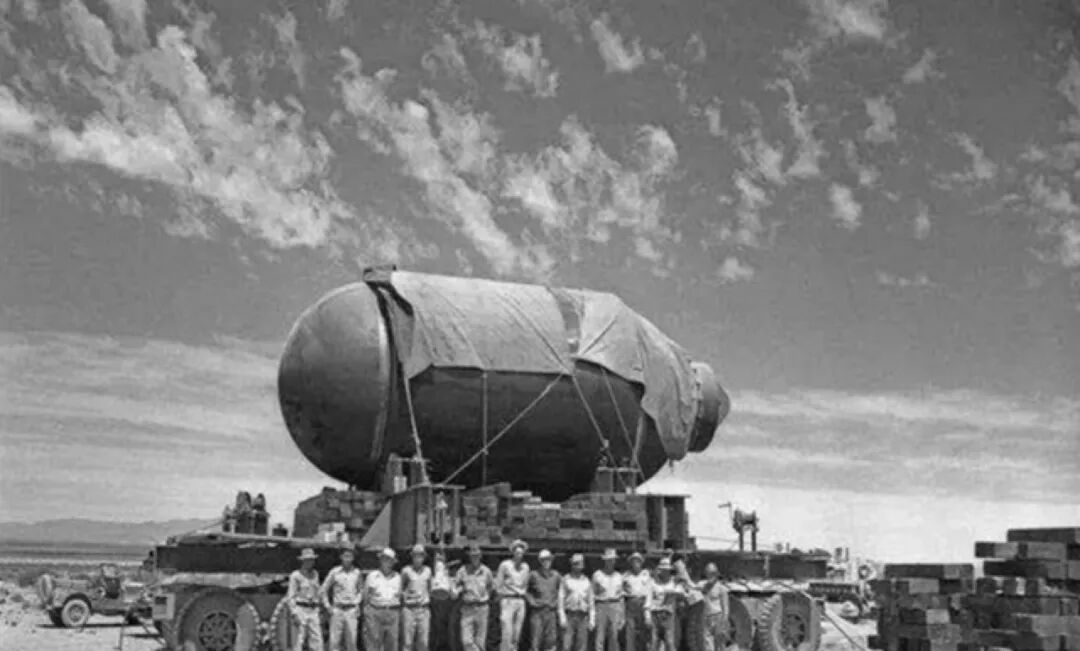
When the war ended, the Bohr family reunited in Copenhagen in August 1945.
In 1946 Aage Bohr completed his masters degree in physics. He then carried out research work at the University of Copenhagen’s Institute for Theoretical Physics. (This is now the Niels Bohr Institute.)
In 1948 he moved to the Institute for Advanced Study in Princeton, USA, where he tried to model the behavior of the atomic nucleus in a magnetic field, spending considerable amounts of time working at Columbia University.
He was awarded a Ph.D. degree in 1954. Aage Bohr becoming director of the Niels Bohr Institute in 1962. He resigned as director in 1967 to dedicate his time to research work and retired in 1981.

The Liquid-Drop Model and the Shell Model
Like his father, Aage Bohr was intrigued by the structure of the atom. The atomic nucleus in particular; that tiny, densely packed, positively charged mass at the heart of every atom interested him intensely.
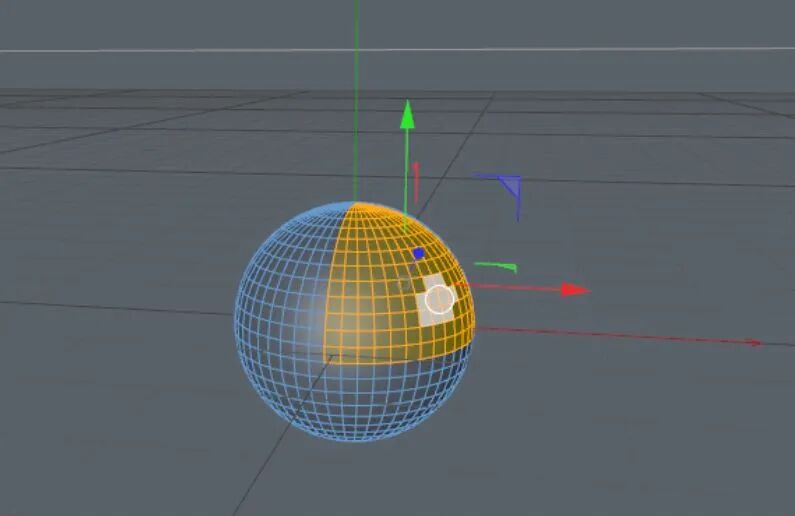
One idea, which had been developed most fully by Niels Bohr and John Archibald Wheeler in the late 1930s, was the liquid-drop model. The liquid-drop model pictured the nucleus as a rotating drop of incompressible liquid held together by surface tension.
The drop of liquid could be deformed from its basic spherical shape and a large drop of liquid could fall apart to form two new drops. Similarly a large atomic nucleus, like uranium, could fall apart to form two new atomic nuclei – this is nuclear fission, the energy source behind both the uranium atom bomb and the uranium power plant.
The liquid drop model had its greatest successes in explaining the properties of heavy nuclei, such as uranium.
By 1950, however, the liquid drop model was in danger of being pushed aside by the newer shell model of the nucleus.

Much like electrons are said to occupy shells of different energy outside the nucleus, the shell model of the nucleus says protons and neutrons occupy distinct energy shells inside the nucleus.
By 1950, most physicists had decided the shell model looked more promising than the liquid-drop model.
In particular, the shell model explained why atomic nuclei with so-called magic numbers of protons or neutrons considered separately are particularly stable. This is similar to the concept taught in high school chemistry, where atoms with complete electron shells, for example, 2 or 8 electrons in their outermost shells are particularly stable, leading to the unreactive behavior of the noble gases.
For atomic nuclei, the traditional shell-model magic numbers 2, 8, 20, 28, 50, 82, and 126 refer to proton or neutron numbers separately, not their sum. Shell closure generally provides additional stability, with details depending on nuclear structure.
The shell model was particularly good at explaining the properties of lighter nuclei and magic-number nuclei, but was less successful with heavy nuclei such as uranium.
“Today, it is difficult to fully imagine the great impact of the evidence for nuclear shell structure on the physicists brought up with the concepts of the liquid-drop.”—Aage Bohr
Carrying Forward and Developing Nuclear Theory
In fact, the liquid-drop model and the shell model both had advantages and disadvantages.
In 1949, James Rainwater, a Columbia University physicist, decided to combine the best aspects of the liquid-drop and shell models into a single unified model of the nucleus. Rainwater shared an office at Columbia with Bohr and explained his ideas to him. Bohr was captivated, seeing the potential of Rainwater’s ideas to explain the behavior and structure of the atomic nucleus.
Bohr returned to Copenhagen, determined to pursue the unified model further. There he worked with Ben Mottelson, who had completed his Ph.D. at Harvard University.
In 1953 they published a 173-page report describing their unified model. Crucially, predictions they made about how nuclei would behave were verified in experiments.

At first Bohr had trouble convincing his father that the liquid-drop model should be dropped – after all, Niels Bohr was one of the liquid-drop model’s main architects – but eventually he won his father over.
The unified model – often called the collective model – is sometimes likened to a swarm of bees, where each bee is a neutron or proton and the swarm is the nucleus. The swarm acts as a single entity, even though each bee within it is moving around independently with its own, individual energy.
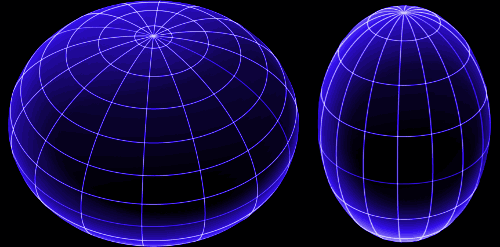
Each neutron or proton has its own orbital energy within the nucleus. These orbits can sometimes deform the nucleus so that it is no longer truly spherical. For example, the nucleus of heavier atoms can become an oblate spheroid (discus shaped) or prolate spheroid (football shaped).
Of course, we need to remember that atomic nuclei have a diameter of between 1.7×10⁻¹⁵ m for hydrogen and about 15×10⁻¹⁵ m for uranium.
The fact that Bohr and others were able to mathematically model such incredibly small objects, produce fine structural detail, and predict their behavior in agreement with experimental data is remarkable.
In 1975, Aage Bohr, Ben Mottelson, and James Rainwater shared the Nobel Prize in Physics for their model of the nucleus. In the words of the award committee, the prize was:“for the discovery of the connection between collective motion and particle motion in atomic nuclei and the development of the theory of the structure of the atomic nucleus based on this connection.”
Despite the huge strides taken by the trio of physicists, even today, the structural details of atomic nuclei have still not been fully resolved.
“The constant questioning of our values and achievements is a challenge without which neither science nor society can remain healthy.”—Aage Bohr
From Rutherford's atomic model to the liquid-drop model, and from the shell model to the unified model, theories of nuclear structure have evolved repeatedly. Challenged and refined time after time, they let us glimpse the remarkable world of quantum physics.
Perhaps our scientific understanding of nuclear structure remains partial and incomplete. But through the efforts and exploration of generation after generation of physicists, we will continue to uncover its secrets.
Behind the inheritance and improvement of nuclear-structure theory lie both continuity and new exploration in scientific research!
Original article link:
https://www.famousscientists.org/aage-bohr/
Source: Famous Scientists
Some material in this article comes from online sources. Please contact us for removal if it infringes your rights.
Editorial note
Editorial note: The manuscript's 1930 account of neutron-induced reactions predates the discovery of the neutron. The liquid-drop/fission work is placed in the late 1930s using Bohr and Wheeler's 1939 paper, distinguishing development and application from first invention. Magic numbers apply to proton or neutron numbers separately, not their sum; this has been corrected in both languages with all listed traditional numbers preserved. Bohr orbits and the liquid-drop, shell, and collective models each have limits of applicability. Lost negative-exponent typography in the nuclear diameters has been repaired.
Supporting references
Bohr and Wheeler 1939: The Mechanism of Nuclear Fission
DOE: proton and neutron magic numbers and shells
Sources and editorial history
Restored from a complete historical article exported from the PhDSciNet Official Account.
Editorial revision: Editorial note: The manuscript's 1930 account of neutron-induced reactions predates the discovery of the neutron. The liquid-drop/fission work is placed in the late 1930s using Bohr and Wheeler's 1939 paper, distinguishing development and application from first invention. Magic numbers apply to proton or neutron numbers separately, not their sum; this has been corrected in both languages with all listed traditional numbers preserved. Bohr orbits and the liquid-drop, shell, and collective models each have limits of applicability. Lost negative-exponent typography in the nuclear diameters has been repaired.