

US$220 billion: paying for your dreams
What does US$220 billion mean?
The original uses ten trucks, twenty 60-square-metre rooms, fifteen Brazil World Cups and sixty-two South Africa World Cups as colourful comparisons for US$220 billion. It supplies no verifiable basis for these cash-volume or event-cost conversions.
Temperature-controlled stadiums, AI refereeing, facial recognition and connected footballs: Qatar, the lavish World Cup host, offers an immersive experience of technology in football.

When central air conditioning enters a football stadium
How cold were the Qatar World Cup stadiums?
The original mentions cold symptoms among some Spanish and Brazilian players and fans and staff wearing sweaters or coats because venues felt cold. Colds are caused by pathogens; these reports alone do not establish air conditioning as their cause.
Qatar has a tropical desert climate, and even winter temperatures from November to February can reach 29°C. The wealthy host worked hard to reduce the weather’s impact on athletes, although some found the cooling rather too effective.

01: Thoughtful stadium design: art plus practicality
The original attributes reduced direct sunlight and more shade to an east-west layout of most venues. This specific orientation claim was not confirmed stadium by stadium in the official materials checked.
Second, most venues use light-coloured surfaces to limit solar heating. Education City Stadium resembles a sparkling diamond: its diamond-patterned façade reflects light, while its pitch sits slightly below ground level to help control temperatures.
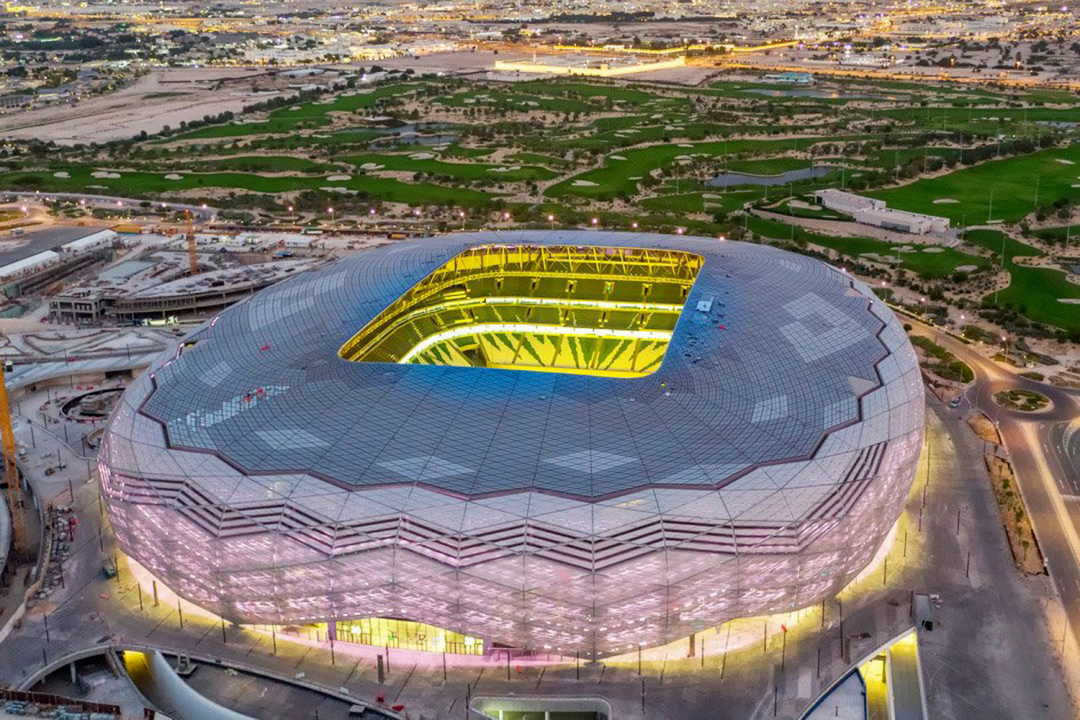
Designers also incorporated cooling considerations into stadium roofs and façades.
Lusail, the main World Cup stadium, has a double-layer façade. More than 4,200 triangular aluminium units form the outer bowl-shaped curve, while insulating glass forms the inner layer. Triangular openings shade and filter light entering interior halls to improve comfort in the open-air venue.
Al Janoub Stadium uses a retractable roof of pleated polytetrafluoroethylene panels and cables to help control temperatures. Its vaulted form also guides warm airflow around the stadium and above the roof opening.
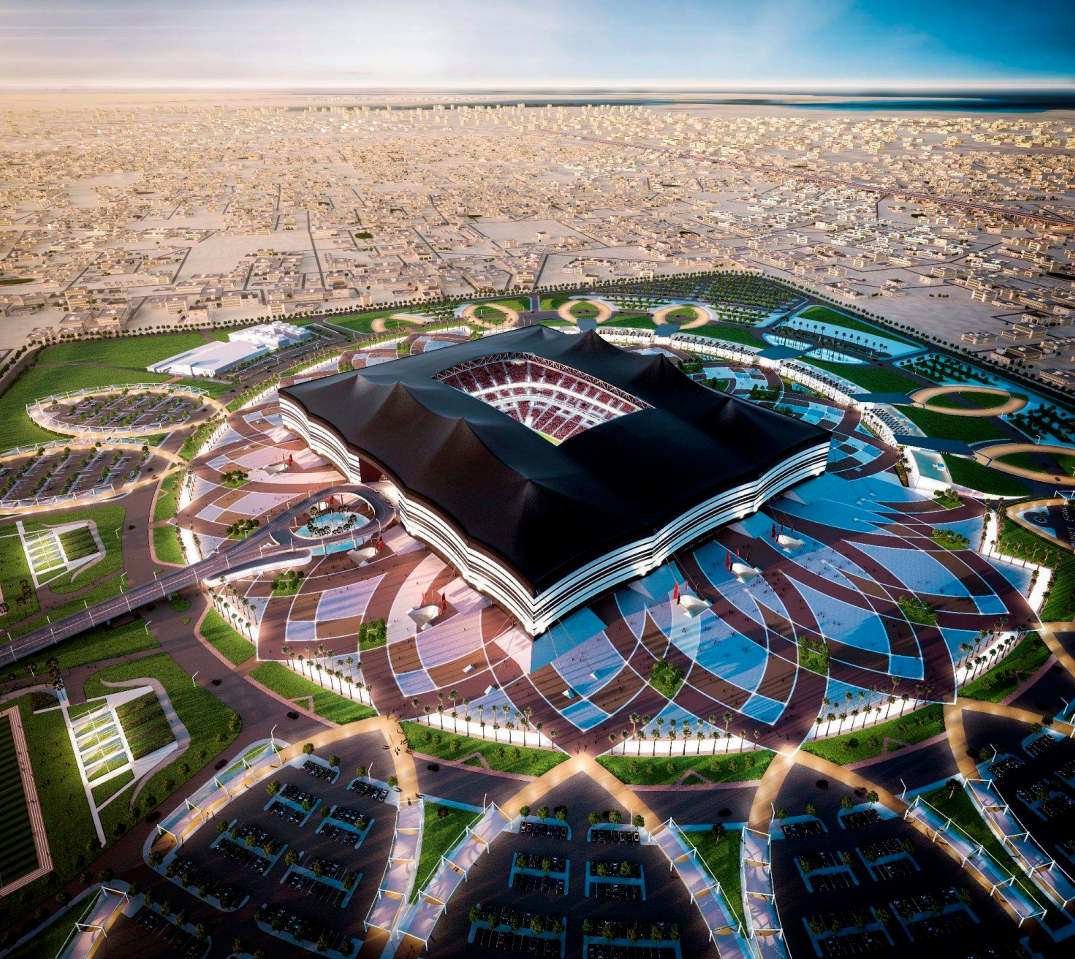
Al Bayt, described in the article as Qatar’s second five-star-certified stadium, takes its form from traditional Arab tents. Innovative PTFE-woven glass-fibre membranes create its flowing exterior, combining art and technology.
02: Chinese brands on the World Cup stage
Exterior design reduces direct sun, while cooling systems inside help explain why some players and spectators felt chilly.
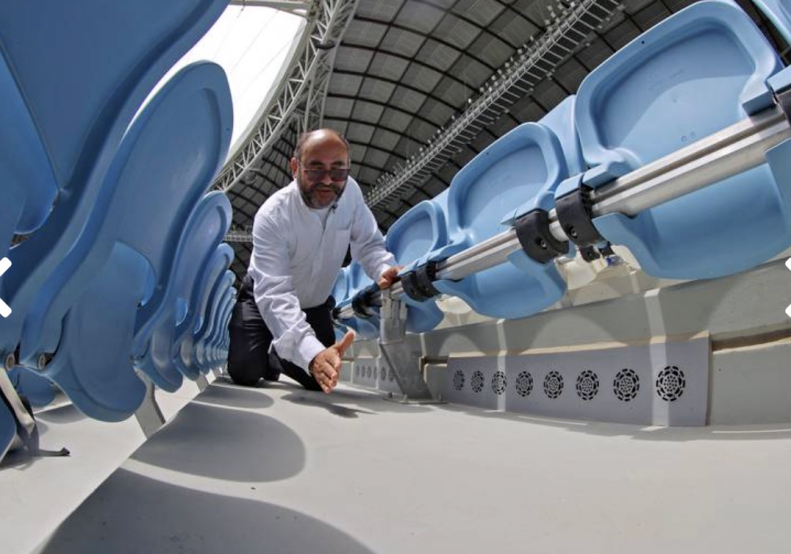
Hundreds of ventilation outlets sit beneath spectator seats like small shower nozzles. They release gentle but concentrated streams of cool air around ankle height, allowing it to circulate.
Larger nozzles line the pitch. Measuring tens of centimetres in diameter, they deliver stronger airflow to players and staff, helping active players lose heat.
Combining small and large nozzles enables targeted cooling where people are, creating a shallow layer of cool air close to the ground.
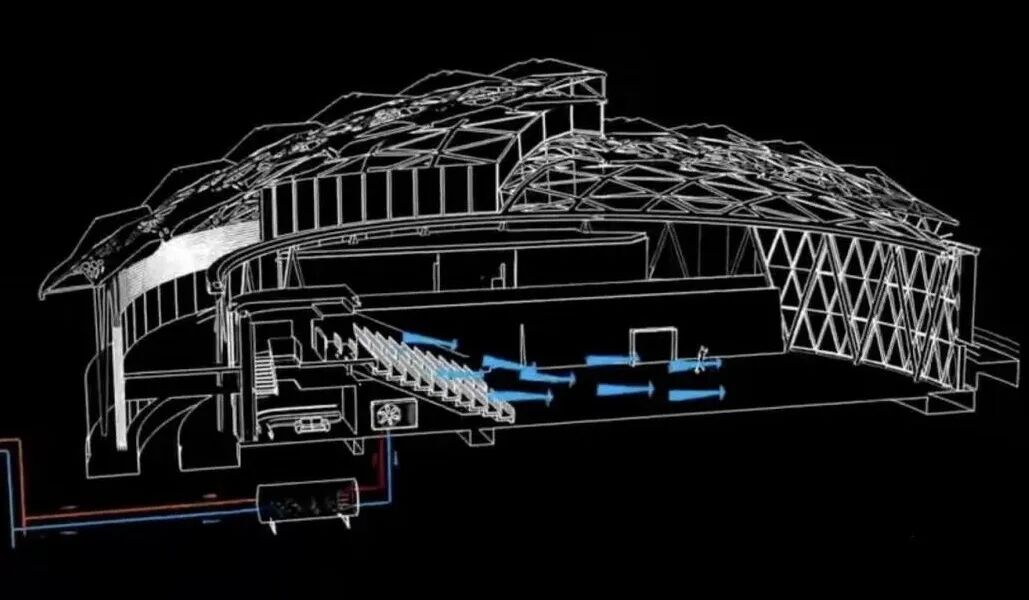
Official descriptions explain that cooled air enters through stand grilles and pitch-side nozzles, targeting occupied areas. Air is recirculated, filtered and cooled again, and organisers described solar-energy arrangements. The original’s blanket claim that all venues avoided Freon and used absorption chillers is not supported by those materials.
The circulation system also filters air delivered near spectators and returned for recirculation. Performance depends on filter media and system design; this does not establish protection against coronavirus or infection.
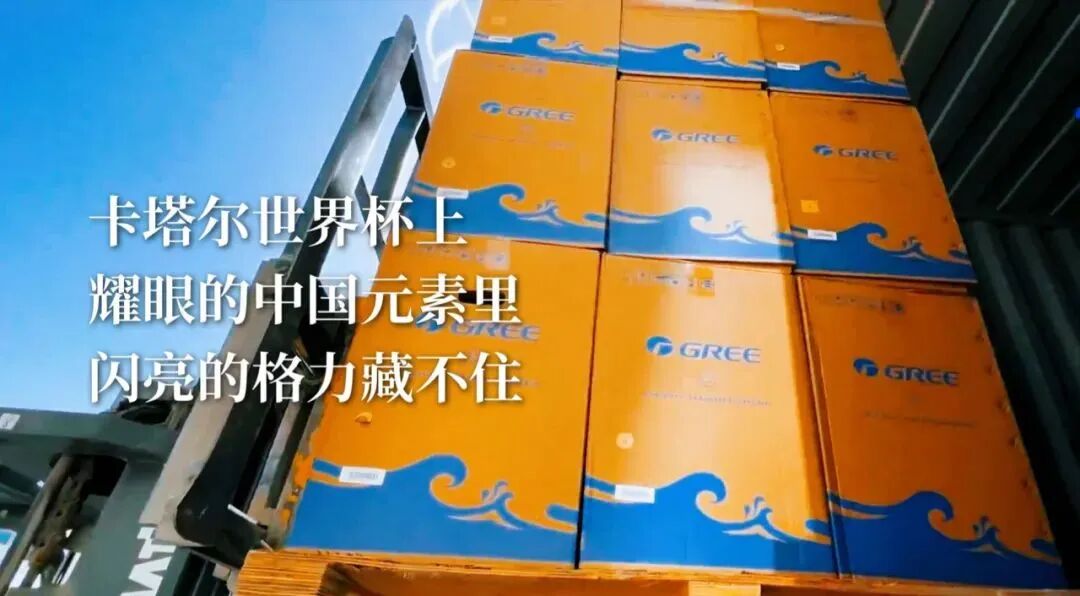
One welcome feature of this World Cup was the prominent contribution of Chinese manufacturing.
According to the original article, Stadium 974 used Gree multi-split units, packaged units, fan coils and U-Match equipment to cool equipment rooms and lounges. Education City used multi-split units with ducted indoor units, while Al Thumama’s Gree cooling system kept interior temperatures near 18°C during matches.
As a cooling-equipment supplier for the first World Cup in the Arab region, Chinese manufacturing faced the Middle East’s extreme climate and demonstrated its capabilities.
AI facial recognition: are you angry?
AI facial recognition can find lost children in a crowd and identify people who are smoking.
AI was everywhere at this World Cup. The original article reports 22,000 cameras and facial-recognition systems across eight stadiums. Operators in a central control room could adjust temperatures, check crowd flows and estimate attendance.
If a fan approached the wrong gate, scanning the ticket could trigger an alert at the command centre. Security staff could redirect them to prevent congestion or crowd numbers exceeding planned capacity.
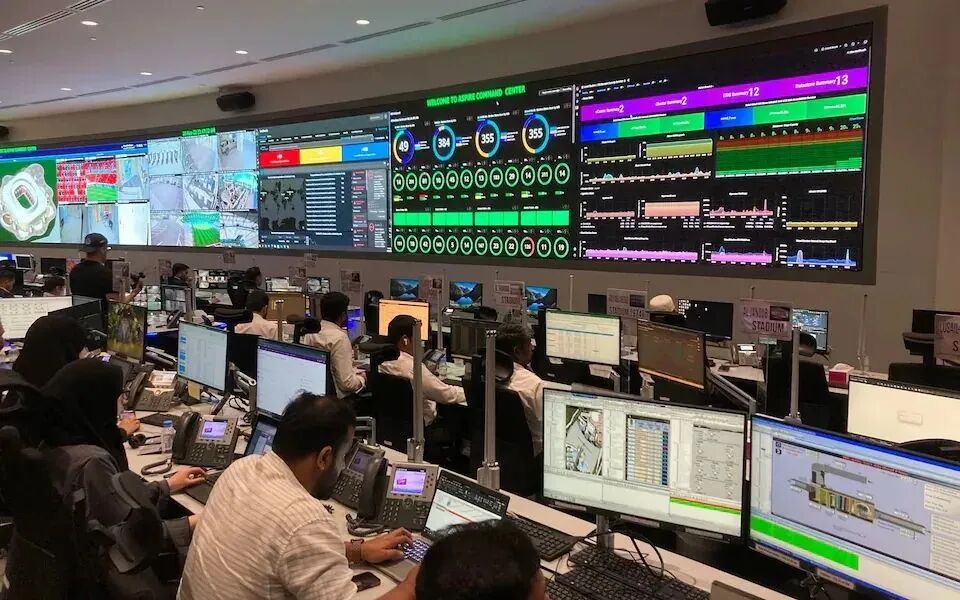
AI also assisted security outside stadiums, as well as order within them.
Researchers at Qatar University developed a drone-monitoring system to count pedestrians on city streets. Data and footage could be sent to a control centre to monitor stadium and street access, transport and maintenance.
The future of football includes a chip
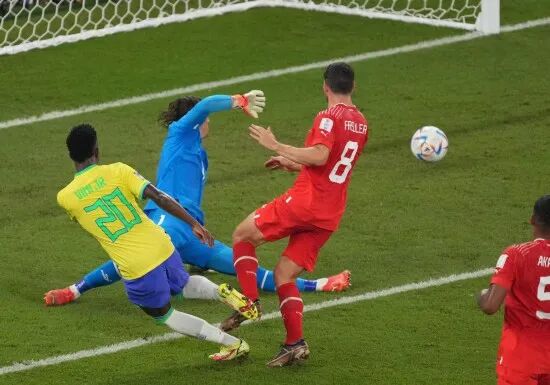
Whether Cristiano Ronaldo touched the ball became a group-stage talking point. In Portugal’s match against Uruguay on 29 November, disagreement about the first goal’s scorer turned a tiny, hard-to-see difference into a major controversy.
After the game, adidas, the official match-ball manufacturer, said high-precision sensor data showed that Ronaldo had not touched the ball.
A disputed goal? A connected football helps clarify it.
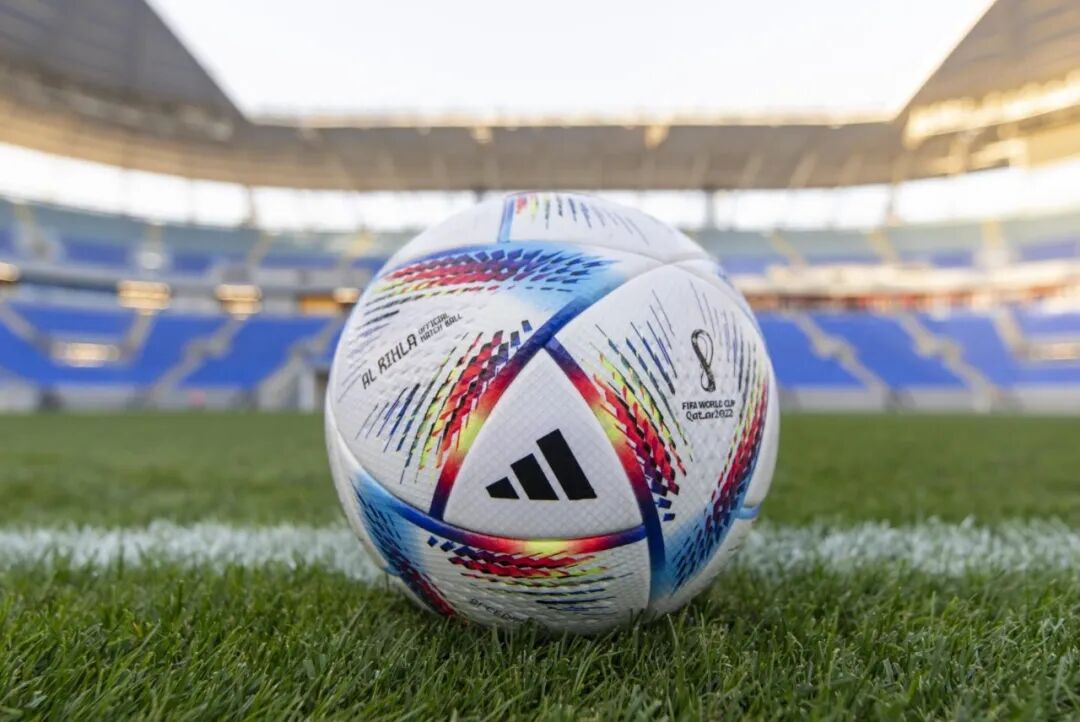

The Qatar match ball was named Al Rihla, Arabic for “the journey”. adidas described faster flight, linking its surface and core design to speed, accuracy and stability. Its official explanation did not attribute this to lower weight or promise a higher scoring rate.
Al Rihla’s surface comprises twenty SPEEDSHELL panels with triangular and curved shapes, designed to improve aerodynamics and flight stability.
Besides surface textures, Al Rihla features CTR-CORE, a core structure intended to improve accuracy, consistency and retention of shape and air pressure. It is distinct from the connected-ball sensor system that transmits match data.

Connected-ball technology uses an inertial measurement unit to record ball-motion information. In a contact sport, keeping the sensor stable and identifying the moment of contact accurately are important design requirements. CTR-CORE itself should not be described as a gyroscope chip.
To keep the sensor stable, a suspension structure holds it in a housing at the ball’s centre, maintaining the ball’s balance.
The connected-ball suspension holds a 500 Hz IMU at the ball’s centre. It sends ball data to the video operation room 500 times each second, helping identify the kick point and supporting video officials together with player-position data.
Hard to judge by eye? SAOT can help
Offside can determine whether a goal counts. Tiny visual differences and limited replay angles have long caused disputes.
Less than three minutes into Qatar’s opening match against Ecuador, an Ecuador goal was disallowed for offside after VAR review, becoming the first World Cup goal disallowed with semi-automated offside technology.
Semi-Automated Offside Technology, or SAOT, was a prominent innovation at this tournament.


SAOT analyses positional data to reconstruct player positions when the ball is played. When an offside situation is detected, it alerts the VAR team and displays the kick point and offside line. Video officials manually check the alert before informing the referee, who makes the decision.
At Qatar 2022, SAOT combined the ball’s 500 Hz sensor with twelve dedicated cameras beneath stadium roofs. Cameras tracked up to twenty-nine points per player fifty times a second; combined ball and player data supported analysis of the kick point and offside positions.

SAOT aims to improve the accuracy and efficiency of offside decisions and help fans understand them. The original’s specific claim of a reduction from seventy to twenty-five seconds was not confirmed in the official materials checked and is not presented as a verified result.
The article also argues that technology can reduce the referee’s personal discretion: human mistakes, by players and officials, have always formed part of football. Whether frequent SAOT intervention affects the flow and entertainment of matches remains a question for experience.
Digital stadiums: connecting online and offline experiences
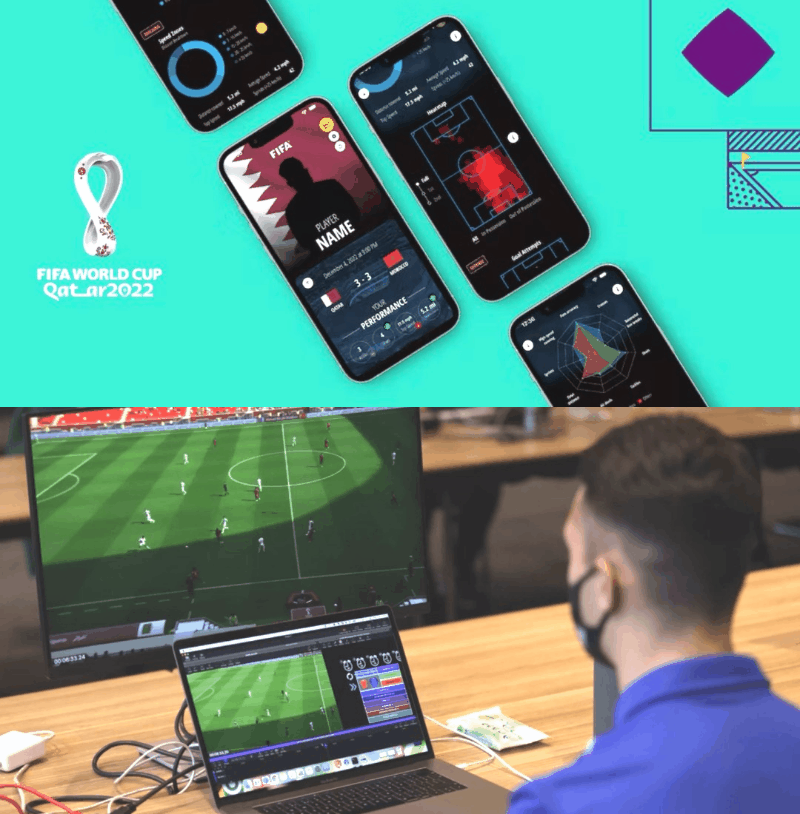
Developed in line with the FIFA president’s 2020–2023 vision for using technology to improve football, the FIFA Player App was introduced at the Qatar World Cup.
After each match, it gives players individual performance analysis and access to photographs and clips that can be shared on social platforms.
The app provides enhanced football-event metrics, such as receiving offers and line-breaking passes; physical metrics from multiple tracking cameras, including distance and speed on positional heat maps; and enhanced football-intelligence metrics integrating event and tracking data. A positional heat map is not thermal imagery, and analysis does not mean automatically prescribing tactics for the next match.
Digital stadiums served spectators as well as players.
To support fans’ connectivity, the original article describes ElPalm shelters around venues with solar panels and wind-energy facilities, providing shade, USB charging and Wi-Fi.
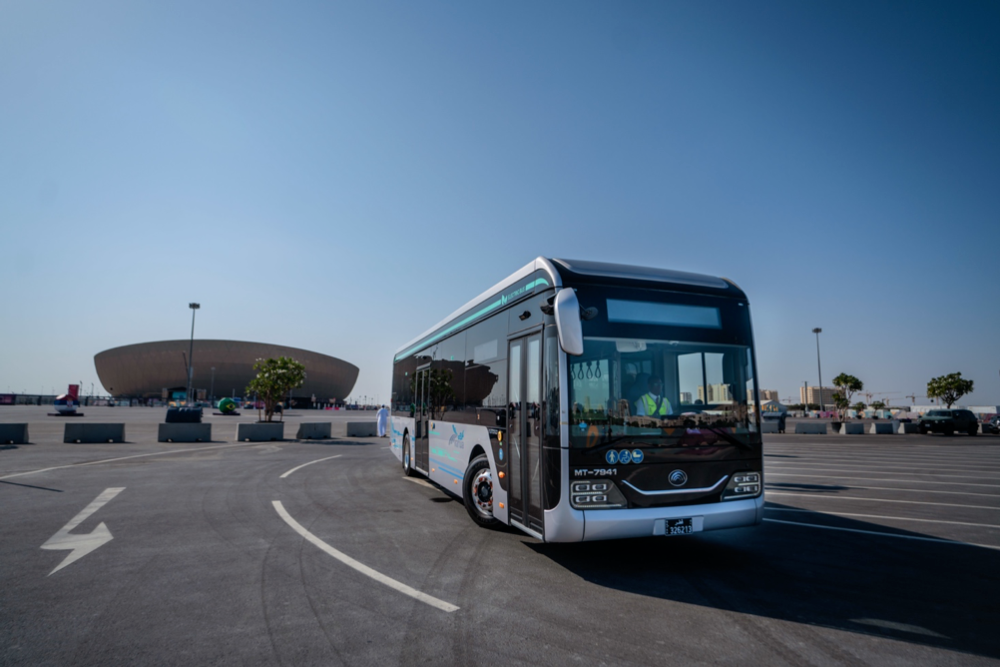
Tailored apps also offered transport information about taxis, parking, metro services and venue entrances, helping fans navigate inside venues and travel to and from matches.
An accessible World Cup: inclusive participation
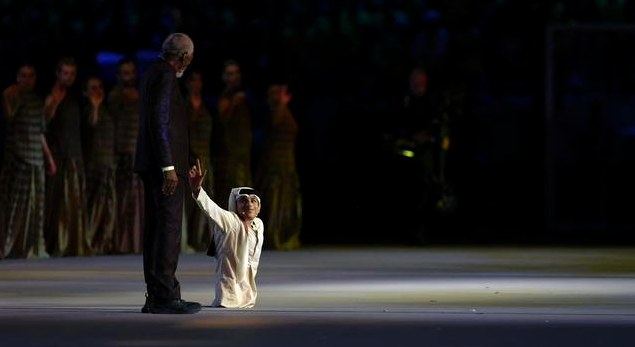
At the opening ceremony, a young man with a physical disability appeared to enthusiastic applause and moved confidently using his hands. As one of Qatar’s World Cup ambassadors, his appearance represented a commitment to inclusion and accessibility.
FIFA president Gianni Infantino described Qatar 2022 as the most accessible World Cup. Technology helped more people with disabilities participate in this global event.
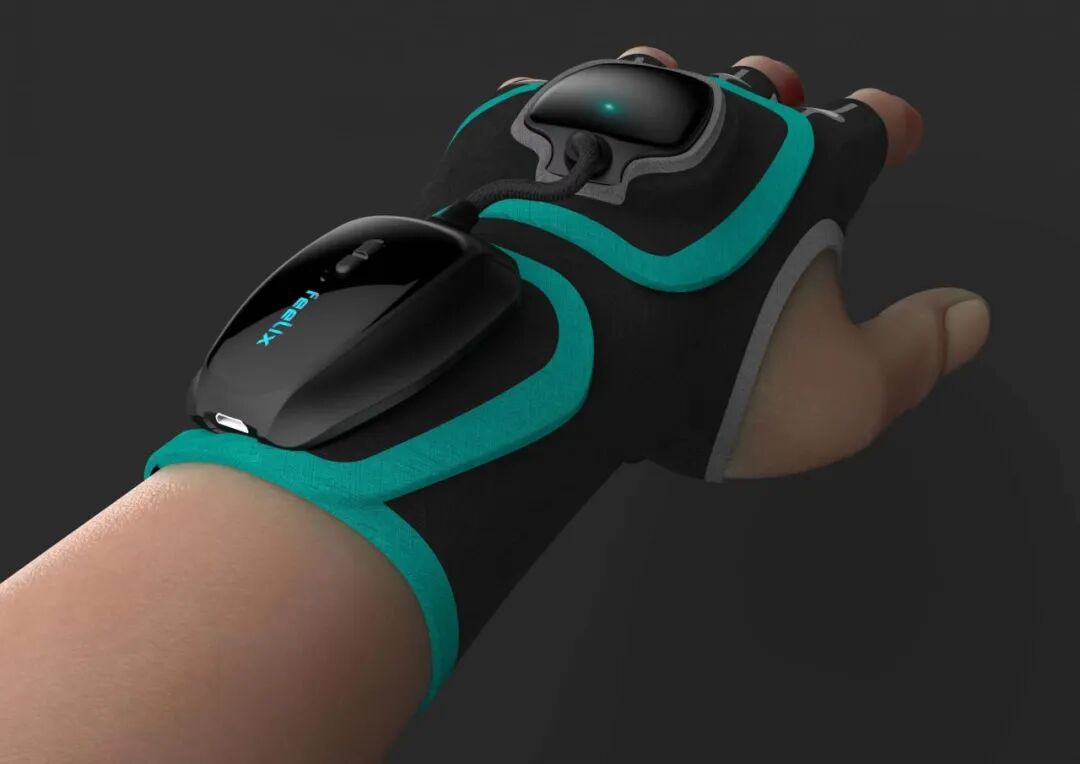
Bonocle, described as a Braille entertainment platform, was used at the tournament. It helps blind users access digital content through conversion to tactile information, supporting engagement with matches and travel in Doha.
Bonocle and Feelix Palm are separate assistive technologies, both described by organisers as supporting blind fans. Feelix Palm conveys tactile information to the palm using electrical pulses; it should not be treated as the same device supplied by Bonocle. The original’s 3-by-3 grid specification was not confirmed in the official material checked.
Audio descriptive commentary also helped blind and partially sighted fans experience the match. Trained commentators described play, the wider stadium experience and atmosphere. Fans could download an app and enter a match code to listen throughout the stadium.
As the FIFA president put it, football’s cultural value and influence can bring the world together. Host investment and technology were intended to make the tournament fairer, more united and more inclusive.
Cooling and security systems supported comfort and safety; connected balls and SAOT assisted more consistent decisions; connected stadiums and apps helped more people experience matches accessibly.
Although the lavish host team had already ended its tournament run, Qatar offered the world a major sporting spectacle.
The “magic” of spending had not failed: it brought a distinctive mix of technology and human experience to the World Cup stage.
Some material in this article was sourced online; please contact us regarding any infringement.
Migration review: this article preserves reporting and commentary from the 2022 World Cup. Official materials informed corrections to ball-core and sensor functions, offside tracking, positional heat maps and assistive devices. Unverified cost comparisons, cooling-related illness and virus-protection claims are not treated as established facts. Venue and supplier details remain original reporting and were not independently verified one by one.
Technical review source: FIFA semi-automated offside technology
Technical review source: adidas Al Rihla announcement
Technical review source: FIFA Player App
Technical review source: FIFA stadium cooling
Accessibility source: FIFA Qatar 2022 accessibility services
Sources and editorial history
Restored from a complete historical article exported from the PhDSciNet Official Account.
Editorial revision: Migration review: this article preserves reporting and commentary from the 2022 World Cup. Official materials informed corrections to ball-core and sensor functions, offside tracking, positional heat maps and assistive devices. Unverified cost comparisons, cooling-related illness and virus-protection claims are not treated as established facts. Venue and supplier details remain original reporting and were not independently verified one by one.