English translation of the original Chinese article. Publication dates and the extent of recovered text are preserved. Figures retain their original labels. Read the Chinese original.

When enzymes are mentioned, people may first think of biologically active substances with catalytic functions, such as proteins and nucleic acids. In 1926, biochemist Dr. James B. Sumner first successfully crystallized urease and proposed that it was a protein molecule [1]. Thereafter, proteins were regarded as the material basis of all enzymes until catalytically active RNA, or ribozymes, was discovered in the 1980s [2]. These natural enzymes, composed of biologically active substances, occur at low levels in organisms and are difficult to obtain in large quantities, making them expensive. Natural enzymes also have poor stability; changes in pH or temperature can cause protein enzymes to lose their activity. To overcome these limitations, research and development of stable artificial enzyme mimics that can be synthesized at low cost have attracted growing attention. Nanozymes are one important class.
The Discovery of Nanozymes
As nanoscience developed rapidly, some inorganic nanomaterials were found to have enzyme-like catalytic activity. These materials can catalyze reactions involving substrates of natural enzymes and have similar catalytic mechanisms, leading to their definition as nanozymes [3]. In 1997, a fullerene derivative was found to have superoxide dismutase-like activity, becoming one early example of research on nanomaterials with enzyme-like activity [4]. To date, more than 50 types of inorganic nanomaterials have been found to possess various catalytic activities. Examples include cerium dioxide nanoparticles and ferromagnetic nanoparticles with peroxidase activity, gold nanoparticles with oxidase activity, and cadmium sulfide and cadmium selenide nanoparticles with nitrate reductase activity [5].
The Properties and Catalytic Functions of Nanozymes
One notable feature of nanozymes is that they combine catalytic activity with the tunable physicochemical properties of nanomaterials. Their specific catalytic activity must still be compared for each material, substrate, and reaction condition. Nanotechnology also enables researchers to regulate enzyme-like activity by controlling size and modifying surfaces. The discovery of nanozymes has revealed another facet of some inorganic nanomaterials: biologically relevant catalytic activity (see Figure 1).
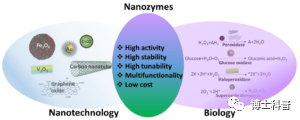
Figure 1: The properties and catalytic functions of nanozymes.
The Wide-Ranging Applications of Nanozymes
The emergence of nanozymes has not only changed our understanding of enzymes but also offered broad potential applications. First, nanozymes have provided new methods for tumor diagnosis. For example, coupling magnetic nanoparticles with antibodies allows specific recognition of tumor cells. Free radicals generated through catalysis by small quantities of magnetic nanoparticles can also kill cancer cells [6]. Recently, researchers immobilized glucose oxidase on the surface of magnetite nanozymes with peroxidase activity, using a catalytic color reaction to detect glucose levels [7]. This method is simple, rapid, and reliable. Enzyme-linked immunoassays developed using nanozymes can also substantially improve detection sensitivity. Nanozymes are widely studied as drug carriers for exploring targeted treatment of disease [8]. In the near future, nanozymes will make further contributions to human health, renewable energy, environmental protection, and other areas.
References:
[1] Sumner, J. B. The isolation and crystallization of the enzyme urease preliminary paper. J. Biol. Chem. 1962, 69(2): 435-441.
[2] Cate, J. H., et al. Crystal structure of a group I ribozyme domain: principles of RNA packing. Science 1996, 273 (5282): 1678-1685.
[3] Wei, H.; Wang, E. Nanomaterials with enzyme-like characteristics (nanozymes): next-generation artificial enzymes. Chem. Soc. Rev. 2013, 42(14): 6060-6093.
[4] Dugan, L., et al. Carboxyfullerenes as neuroprotective agents. Proc. Natl. Acad. Sci. U.S.A. 1997, 94(17): 9434-9439.
[5] Gao, L.; Yan. X. Nanozymes: an emerging field bridging nanotechnology and biology. Sci. China. Life Sci. 2016, 59(40): 400.
[6] Fan, K., et al. Magnetoferritin nanoparticles for targeting and visualizing tumour tissues. Nat. Nanotechnol. 2012, 7(7): 459-464.
[7] Jiang X., et al. Peroxidase-like activity of apoferritin paired gold clusters for glucose detection. Biosens. Bioelectron. 2015, 15(64):165-70.
[8] Ambrosi, A., et al. Enhanced gold nanoparticle based ELISA for a breast cancer biomarker. Anal. Chem. 2009, 82(3): 1151-1156.
Additional References
- James Sumner’s original Nobel lecture: The chemical nature of enzymes
- Thomas Cech’s own explanation of catalytic RNA and ribozymes
The text was recovered from the matching article retained in the WeChat account, with the original website’s publication record retained. The old WeChat promotional layout has been removed. Available original illustrations have been restored.
Editorial revision note: Recovery revision dated 2026-10-10: Corrected the first enzyme crystallized, catalytic RNA ribozymes, and the name superoxide dismutase. Avoided generalizations about universally superior catalytic activity and routine clinical use; other research perspectives from 2017 are retained.


