
Historical interview: The following preserves the research experiences and personal views expressed in the original manuscript.
Historical discussion note: The following preserves the interviewees' personal feelings about animal research and ethics. Appropriate approval is needed before research, and a paper's declaration does not replace it. Alternatives must be assessed for the question, and personal experiences do not remove animal-welfare or human-participant responsibilities.
The PhDSciNet Interview Series
Science and Ethics: Respect the Boundaries
In 1966, the United States enacted the Animal Welfare Act, originally focused on certain laboratory animals. Animal welfare and ethics gained wider attention. Its coverage has limits, and it is not the only framework for animal research. Animals have contributed greatly to understanding life and developing health care, while appropriate alternatives and welfare improvements should continue to be pursued.
The ethical principles behind scientific progress deserve respect.
Open Heart: Biophysics, tumor research, and biological imaging. Mainly uses mice.
Broad Outlook: Biochemistry and tumor research. Mainly uses immunodeficient laboratory mice.
Perspective: Chemistry.
#1 Recognizing a contribution is not the same as feeling the same pain
The first lesson in animal research: How do you handle the emotional difficulty?
Open Heart: I have not generally had a psychological barrier. The exception was seeing a staff member dissect internal organs for the first time. I had no prior experience, and the visual impact was strong.
Later, I mentally treated the mouse as part of the experimental equipment, without focusing on its life in an emotional way. Of course, it is not actually equipment. During the work, we still try to care for the mice, follow the required procedures and welfare principles. But that mental separation was how I managed the emotional aspect.
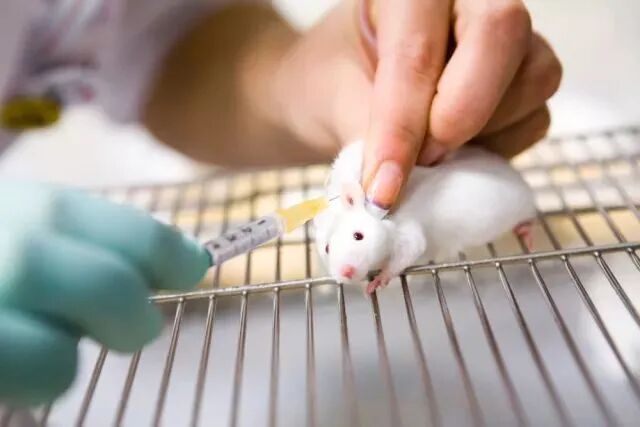
Broad Outlook: I have seen a distressing outcome of improper technique: an injection injured internal organs and an animal died from bleeding. Another animal then chewed the remains, which was upsetting to see the next day. Such behavior can occur, but mice should not simply be classified as carnivores to explain it. The important point is the harm caused by improper handling and the need for monitoring and timely care.
Even without such an incident, I do not generally anthropomorphize the animals or feel their pain directly. I follow the rules and treat them as contributing to research for humans, seeking to minimize their suffering. Strong emotional identification is difficult for me; respect is more central.
Animal-welfare protests: Respect different views
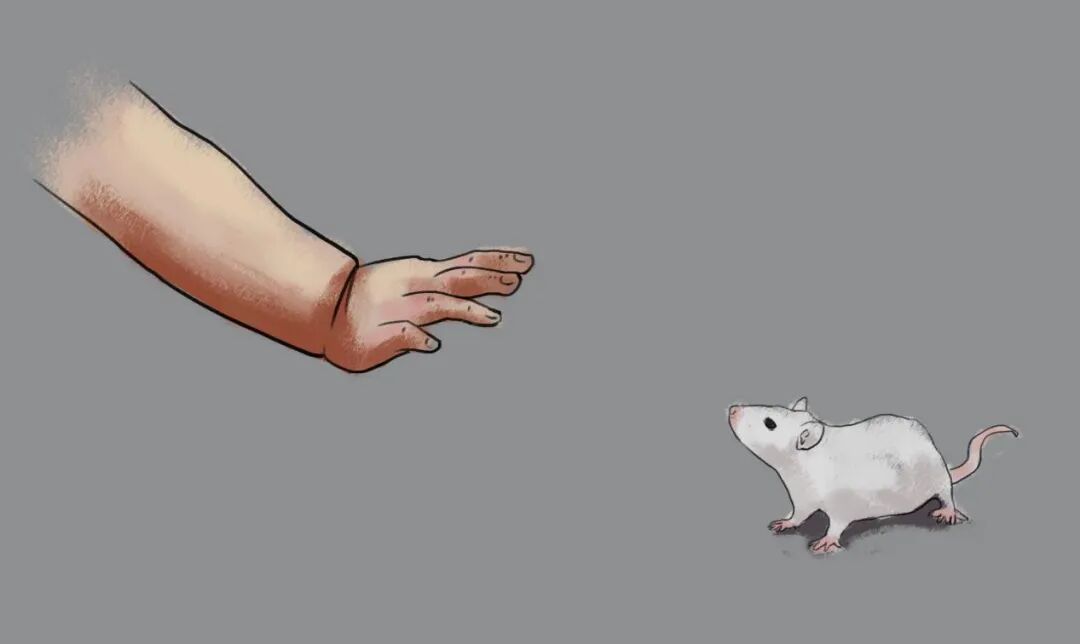
Open Heart: We work at an animal-research center. Once, an email said an animal-welfare organization had arranged a protest the next day and advised us to avoid entering or leaving the building where possible. I did not see people gathering with signs myself, but such events evidently happen, and organizations may protest at universities periodically.
Do protesters benefit from animal research? I think people generally have benefited from it. Their protests still have a positive role in reminding scientists that at least some members of the public care deeply about animal welfare. It does not necessarily mean abandoning every animal study, but it prompts further improvement in methods and standards so that the work is more ethical.

Broad Outlook: I think both sides need not accuse one another. People are doing the work or activities they believe in. Some friends or students in our lab clearly say they do not want to do animal experiments or cannot tolerate them. Yet they do not resent us for doing the work. Mutual respect is enough; hostile language is unnecessary.
Protesters may have stronger empathy or believe the work should not be done. As a researcher, I see animal studies as one way to investigate questions before exposing people to research risks, with potential social benefits. We therefore try to respect one another's positions.

#2 Challenges in replacing animal research
Ethical review: Follow approved procedures and principles
Open Heart: In my experience, papers include a statement describing the institution's animal-research rules. Such a statement is not a substitute for approval before the work begins. Reports should identify the relevant ethics committee and, where applicable, license or protocol numbers; editors or regulators may request supporting material.

Broad Outlook: Our experience was similar, but institutional and journal requirements are not necessarily identical. Compliance and appropriate prior approval matter, not merely adding a general statement that the methods followed university rules.
Institutions or animal-welfare committees review the research, and authors must accurately report the relevant approval and responsibilities. A brief declaration at submission alone does not demonstrate that all requirements were met.
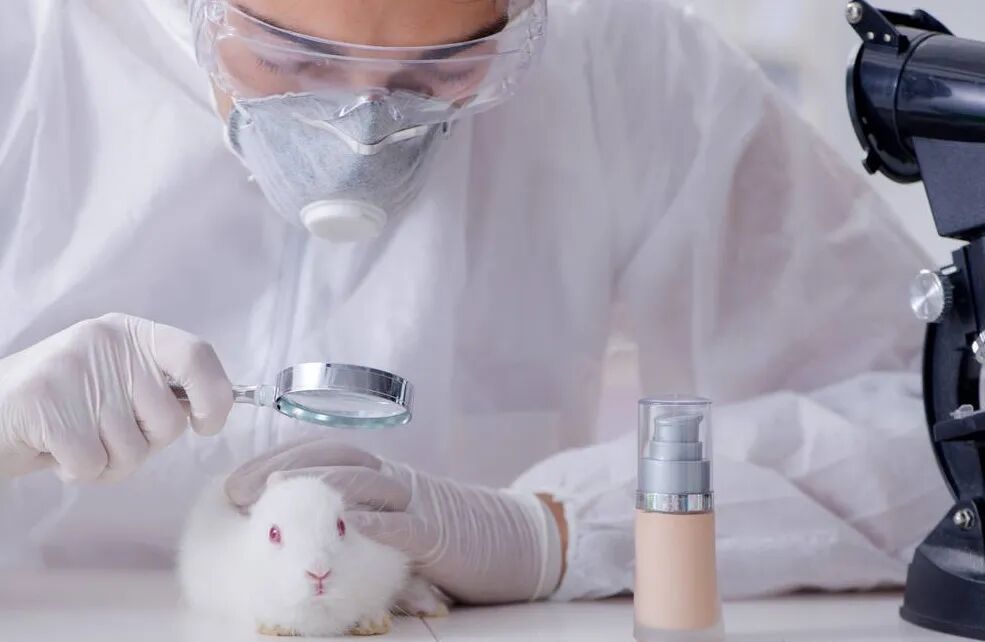
Perspective: Our human-participant research required approval too. I worked on a flexible electrode patch—for example, having people exercise while measuring sound-related indicators. Those experiments could begin only after ethical review approved them.
Animal models remain important, while alternatives develop
Broad Outlook: Can animal experiments eventually be replaced? Some approaches seem promising, such as 3D-printed organ-like structures. I do not know whether a whole system could eventually be reproduced; that still appears difficult.
Our aim in animal research is useful information for human health. I worry that replacing a whole-animal model with something such as a printed organ could lose important information about interactions across the body. For some questions, current technology still struggles to reproduce those features. This does not mean alternatives are ineffective for every question.

Broad Outlook: I understand why replacement can be difficult. I heard that a Shanghai research center erected a memorial to laboratory animals in 2013. Even with that recognition, finding alternatives for complex whole-body questions remains challenging. Animals are already a model for human biology; another model may not reproduce the body's complexity. That is my reason for thinking some studies still need animals.
Many drugs that work in animals do not work in humans, so the transition already has substantial failure. I therefore doubt that every animal experiment could simply be replaced at once. That is my view, not proof that no individual study can use an alternative.

#3 Ethics guides science rather than simply confining it
Open Heart: My personal view is that, without considering ethics, some areas of physiology, medicine, and health research might advance quickly. But there are reasons we cannot accept, and we must not work that way. Some things matter more than speed: human feelings, ethics, and whether actions are right. It should be a process of thinking as we move forward.
Sometimes an event makes us consider questions we had not previously confronted: is it ethical, humane, or acceptable? Reflection can improve methods and standards. I see science and ethics as developing together. This does not mean research should proceed first and seek ethical approval only after harm occurs; appropriate review is needed beforehand.

Broad Outlook: Heritable genome editing in children involves not only technical and social questions but ethical ones too. If an edited child later has children, some changes may be inherited. What might those changes mean for descendants? Risks cannot be assumed to accumulate in a fixed way, but possible intergenerational consequences need careful assessment.
We do not fully understand every function of a gene. Important roles may be known while other effects remain uncertain. Such interventions could therefore have substantial consequences for individuals and society.
Even aside from ethics, I think genetic research must proceed carefully rather than all at once.

The philosopher Albert Schweitzer said: Ethics is rooted in human compassion. It becomes truly complete only when that compassion embraces animals as well as humanity.
Progress in ethics is also progress in civilization. With gratitude and responsibility, science can help illuminate humanity's long journey.
Contributors: Open Heart (胸怀), Broad Outlook (格局), Perspective (境界)
Editor: Calorie (卡路里)
Audio editor: Honey Peach Oolong (蜜桃乌龙)
Interviewer: Fantuan (饭团)
Recording: Honey Peach Oolong (蜜桃乌龙)
This article reflects the author's personal views, not those of this website. The original manuscript credits images to the internet and requests contact for removal if they infringe rights.
Restoration revision, 2026-10-10: The full discussion and credits are retained. Corrections address claims that a declaration alone replaces approval evidence, that no replacement is possible, and that genome editing is not an ethical issue. The Animal Welfare Act's scope is qualified and the incorrect classification of mice as carnivores removed. Originals and differences remain private.
Supplementary references
- USDA APHIS: Animal Welfare Act and Regulatory Resources
- ARRIVE: Ethical Statements and Prior Approval in Animal Research
- NC3Rs: Replacement, Reduction, and Refinement
- WHO: Human Genome Editing and Ethical Governance
Sources and editorial history
Restored from a complete historical article exported from the PhDSciNet Official Account.
Editorial revision: Restoration revision, 2026-10-10: The full discussion and credits are retained. Corrections address claims that a declaration alone replaces approval evidence, that no replacement is possible, and that genome editing is not an ethical issue. The Animal Welfare Act's scope is qualified and the incorrect classification of mice as carnivores removed. Originals and differences remain private.