
Historical interview: the following preserves the research experiences and personal views expressed in the original manuscript.
“Friend, have you ever considered whether you would trade four or five miserable years for a CNS paper?”
Choosing a supervisor
Why does someone become a supervisor?
Dadldida: It must be because of their academic achievements that the university hires them; it cannot hire someone merely because they have good morals and character. During their postdoc, my supervisor opened up a field and was very impressive, publishing excellent papers. In North America in particular, greater weight is placed on the independence of a researcher’s work, which is why they obtained a faculty position.
Lao Suannai: Whether we are talking about academics or graduate students, people basically look at quantitative indicators such as papers, impact factors, and background. When a university hires someone as a supervisor, it must judge that their earlier publication record as a researcher is strong enough. But whether they can pass on their research experience, insights, and approaches to problem-solving to students—and what their character is like—is difficult to assess with any evaluation standard over a short period.
Generally, however, universities will not dismiss an academic because they are not very good at supervising students or do not get along with students well. Even if they later discover that the academic has a poor reputation among students, there will not be many measures taken. The attitude is basically to keep the peace.

Are a supervisor’s academic achievements enough to support you through your degree?
Lao Suannai: Probably not. Some academics may be very capable individually but are not good at passing that ability on. They can do experiments, but may not be very strong at applying for grants or obtaining funding, and their ideas may not be particularly flexible, so funding is limited. Without funding and equipment to support the work, it is also difficult to complete a degree on your own without a supervisor’s guidance.
Looking only at the supervisor’s previous research output is certainly useful, but it cannot be the entire criterion. You need to consider the whole picture. Ideally, find students working for the supervisor and learn about the resources currently available and whether they can support you through a normal graduation. You should also consider whether you can sustain the working relationship and complete your studies within that relationship.

Would you trade four or five miserable years for first authorship on a CNS paper?
Chloe: This question would basically get a “yes” in almost every field, because the return is so high. How many PhD students end up with a paper in one of those flagship journals after four or five years of doctoral study? Of course they would be willing to make that trade.
Dadldida: There is another way to answer this question: what if four or five miserable years do not get you a Science paper? You may not get one. At the time, my supervisor promised us that if we worked very hard with them, they would guarantee us a Science paper. Since they had published in Science themselves, we thought they really had the resources and ability to do it. After all that hard work, we found that the paper was submitted to Science initially, rejected five or six times, seven or eight times, or more than ten times, and eventually went to a category-three journal. It was not just me who had this miserable experience. An earlier student was also enticed with the promise of Science, but after rejections ended up in “European Chemistry”. My experience was similar.
If four or five miserable years really could get me a CNS paper, I would be willing. But more often, those four or five miserable years may only get you a paper in a category-three journal.
I think I should share something about choosing a supervisor. Some academics may have worked with a very influential leader in their field during their postdoc and published many excellent papers, including Science and JACS. But do not focus on those. I think you should pay more attention to the level of their work after they became an independent principal investigator.
It is after they become an independent PI that you can assess their real academic background and ability. They may have changed direction themselves. If their ability at that point is not enough to support the new direction, their papers may become much weaker. I would not look too far back; I would look at their work from the last two or three years.

Lao Suannai: If you are mentally strong enough, and those four or five miserable years leave no lasting scars, it really is worthwhile. Whether or not you continue in research afterward, you have at least achieved that result. At least while you are a student, that makes you a winner.
If you continue doing research, it can be useful for some time. But if five miserable years leave negative effects that will affect your life for a long time afterward, I do not think it is worth it.
When weighing achievement against personal character, I put the latter first. Learn how to live a normal, healthy life before pursuing those external achievements.

Put yourself first, or your supervisor?
If you had a choice, would you choose this supervisor again?
Chloe: I think 99.99% of people would basically say that they should love themselves first, because a supervisor would not normally be placed on the same level as oneself. A supervisor is not a parent or a relative.
If you ask what my supervisor provided me with, the first word that comes to mind is “nothing.” They gave me nothing. But after thinking about it, I felt that was a little unfair, because they at least gave me one thing: complete freedom to fend for myself. Another thing is that they did not block my graduation, which is actually crucial. If I could choose again, I would definitely not do another PhD with the supervisor I had then.

Lao Suannai: Honestly, I do not think they gave me very much. Whether it was academic guidance or the example and advice an older person might offer when dealing with someone in their twenties, I do not feel I received much—at least not much that was positive.
As for recommending the supervisor to friends or classmates, my attitude has always been neither to recommend nor to reject them. I simply describe my own experiences and what I saw within the group as factually as possible, then let the other person judge. There really were advantages and disadvantages to working with my supervisor, and people should make their own decision.
Dadldida: Whether to put myself or my supervisor first was actually more complicated for me. At the beginning, I put my supervisor first and obeyed whatever they said, because I strongly accepted the master–apprentice relationship and believed I should love my mentor first. Later, when I became very angry, I put myself first, because I could no longer bear all the negativity and felt deeply hurt. Eventually, after becoming more diplomatic, I understood that people should certainly love themselves first. But when dealing with an unreasonable superior, you have to appear to put them first. If you show them sufficient respect and they are doing well, you can do well too. There is no way around it; they are in the position of authority.
My supervisor gave me a very strong belief in academic work, and I am very grateful for the development of my research abilities. If I went back to the start of my PhD, I would still choose this supervisor, because what I learned will be useful for a lifetime. I also think the growth in my ability to handle relationships with superiors will be necessary in future work. But I would not recommend this supervisor to other students, because it was simply too painful. Few people can persist. Many visiting students quit halfway through—for example, leaving after six or eight months of a planned one-year visit. The process was painful, and I would not recommend that others go through that pain with me.
What do you do after friction develops with your supervisor?
Chloe: With my supervisor leaving me to my own devices, I needed to set a relatively clear research goal for myself. The first step was to find out the graduation requirements and make sure I met them. The simplest example is that, when I first joined the group, I did not even know the graduation requirements, and my supervisor did not tell me. I had to ask different people how many credits I needed and so on. My situation was unusual because I had transferred midway through my studies from France: some courses were waived and others were compulsory. My supervisor knew nothing about these matters. I had to ask the administrator and senior students in my program. From then on I gradually realized that a supervisor might not take responsibility for you, but you must take responsibility for yourself.

Dadldida: In the short term, you do need to do things to improve your mood, such as playing sports or having a meal with classmates. When the weather was good, we would travel together.
When friction persists for a long time, you need to be conscious of your graduation requirements. In China, graduation requires a sufficient body of work and enough experiments. But my supervisor did not let me do experiments; they liked me to think instead. So I needed to meet the graduation requirements when they were not paying attention. That really was important. The greatest pressure during a PhD is how to graduate successfully. When a supervisor’s approach does not enable us to graduate, we need to find our own ways to meet the requirements.
If we meet the graduation requirements first, we feel a little more at ease. We no longer need to bear both the pressure of getting along with the supervisor and the worry about graduating at the same time.

Lao Suannai: I think one approach is to redirect your attention, and another is to manage what emotions come in and go out. To redirect my attention, I would refuse to communicate with my supervisor for the moment and go out to play sports or have dinner with friends. I would first step away from the negative environment, do something that made me happy, and let out the negative emotions. Bringing in things that help me feel positive is a relatively effective way to regulate and heal myself.
Another important point, from my own experience, is not to get trapped in emotions directed at the supervisor personally. At the beginning I imagined the supervisor–student relationship too idealistically. My beliefs were badly shaken later, and when that picture was destroyed, I felt very disappointed. I suggest that people keep their expectations of that relationship modest at first and remain rational.
Also, try to avoid fear of the supervisor or a desire to please them. Understand that this person simply plays an important role at this stage of your life. Their assessment of you is only their personal assessment; it does not define who you really are. Stay grounded and confident. Try not to let one person’s judgment destroy your entire outlook. At worst, I could withdraw from their program and study somewhere else.
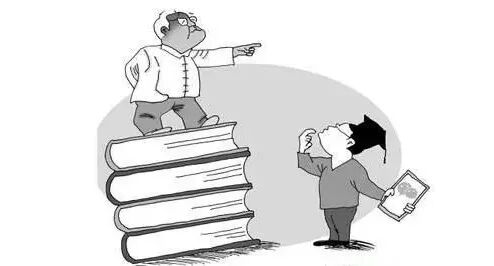
If you cannot choose to leave, how do you adjust?
Chloe: If you do not have the option of leaving, you must be careful before joining. If you have already unfortunately fallen into that trap, start thinking through the escape routes available to you. You may have only two options. The first is to confront the supervisor all the way, but within the current system in China, the risk is very high. Even if reporting the issue to a superior makes your supervisor realize that they have been pushing too hard, your working relationship afterward may become very unpleasant.
The second approach is to change your career goals. Basically, there is no particularly good option. Unless you are writing a wish-fulfillment story, I really cannot think of a way to turn that defeat into victory.
In my own experience, I really did graduate without my supervisor’s guidance. But the key reason was not that I was particularly good at breaking new ground myself. It was that, while offering no guidance, they also relaxed the graduation standard. If your supervisor gives you no support and, at the end, you also have a very picky committee, it becomes extremely difficult—almost impossible.
Lao Suannai: If you cannot choose to leave, you can only try to limit the damage as quickly as possible. First, concentrate on how to graduate as soon as possible, get out of the situation quickly, and block out the negative effects as early as you can.
Honestly, I more or less handled the papers needed for graduation myself. My supervisor only did some language editing. If the aim is simply to graduate, publishing papers is not especially difficult. Publishing a few in lower-impact-factor journals and putting them together can be enough to graduate.
Dadldida: If the conflict with your supervisor cannot be reconciled, stop focusing on your relationship with them and focus on the graduation requirements.
For graduation in China, there are really two hurdles: whether you have enough papers and whether the thesis contains enough work. If you do not aim too high with the papers, I think meeting the graduation standard is acceptable. Some supervisors make things difficult on purpose: they deliberately refuse to edit students’ papers or let students submit them. That is also very common. My supervisor did hold me back at the time, delaying my graduation by six months, and there really was nothing I could do.
How to choose a supervisor carefully
Chloe: First, ask around a lot: keep asking questions, take notes, and consult more experienced students. Second, once you have the information, summarize it yourself. Look carefully at the supervisor’s personal website and CV. If there is an interview, make good use of it and have an in-depth conversation. Try to speak with the students currently in the lab, ask about their experiences, and consider what the supervisor’s character is like.
Another thing you must ask about is money. Do not be embarrassed; money is also a very important factor. This is not only about the monthly living allowance, but mainly about how much project funding the supervisor has. Some projects may be funded for a very short period, not even long enough to support you through graduation, which would be a serious problem. In academia, money is really the most crucial factor: without it, no research can be carried out.
Then consider the quality of the project and its academic value. People who have just completed a bachelor’s or master’s degree may not be able to judge it, so keep asking around. Information such as funding can be checked online. Ask reliable people to help you assess it. In short, plan before acting, and keep asking questions.

Dadldida: First, the person should think through what kind of supervisor they need. Someone who has just finished a master’s degree and wants to do a PhD may need a relatively young supervisor who can guide them closely and show them how research works. Someone looking for a postdoc may instead consider funding, character, and academic standing. It also matters whether the research is in an emerging field. Ask students and the department; I think that is very important, because students usually describe fairly objective things. If the students’ feedback is all particularly positive, the supervisor is probably genuinely good.
Lao Suannai: Know yourself and the other person. Knowing yourself means being clear about what you hope to gain by working with this supervisor and about your own plans: do you want to pursue research, or simply obtain a degree? Look for a supervisor who is a relatively good match for what you want.
I once met someone who came to our lab in person to speak with us, look at the actual environment and equipment, and learn the specifics of the group. That is the best approach. Put in the effort and do not be afraid of the trouble.

To those who are suffering unfair treatment from a supervisor: I hope you can get out of that painful situation soon.
Participants: Chloe, Dadldida, Lao Suannai
Text editors: Fantuan, Calorie
Audio editor: Honey Peach Oolong
Interviewers: Fantuan, Calorie
Recording: Honey Peach Oolong
Sources and editorial history
Restored from a complete interview manuscript retained by the PhDSciNet Official Account. The original publication date remains unverified.