Historical interview: the following preserves the research experiences and personal views expressed in the original manuscript.
How efficient are you?
How efficient are you? How well do you concentrate at work?
Calorie: I think I am fairly efficient. My working hours are not especially long compared with those of the people around me, but I can concentrate reasonably well. I absolutely cannot listen to music while working. I saw people in our group listening to music as they worked, and at first I tried to copy them. I thought I would listen to music too, but it did not work: my experiments failed far too often, so I gave up. I need to concentrate very closely on experiments to work much more efficiently. My work requires a continuous train of thought: I have to keep thinking about the previous question and the next one as I experiment. I think actively avoiding distractions is part of why my concentration and efficiency are reasonably good.
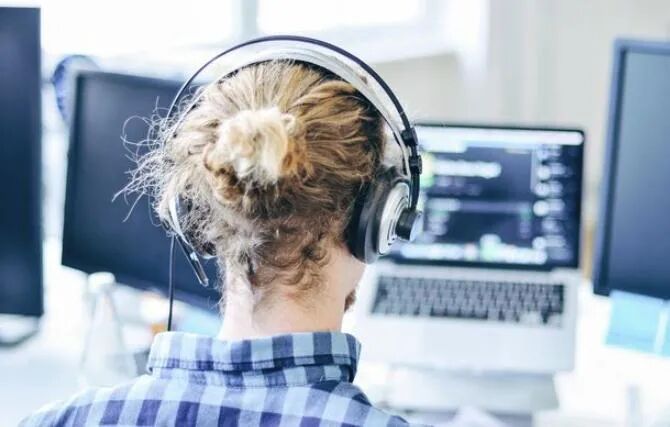
Eureka: I think my efficiency is generally rather low. One reason is that I am easily distracted. I cannot listen to music, and I also cannot work well when someone is talking loudly. I am quite particular, too: if the work does not interest me, I am not efficient. Some meetings are very boring. Some research or papers do not interest me, but I still have to participate. At those times I am very inefficient: I write a page, then browse a website; I write for a while, then browse again. Occasionally an experiment really interests me, and then I work more efficiently. Overall, I feel that I am inefficient about 80% of the time.
[A small suggestion: actively avoid distractions to improve efficiency.]
Fengzi Ge: I think my efficiency is fairly average. I actually like listening to music while working. Most people probably have their own playlists in their music apps. I feel I can more or less ignore the content of the music while listening, yet still find it enjoyable. Even so, my efficiency is not particularly high. The main reason is that, while working, I sometimes need to think about what to do next. As I think, I feel that the task in front of me has not been done perfectly either, and I may hesitate. Once I hesitate, my hands slow down.
Another example is reading the literature. For me, reading papers means looking for new ideas, and that can be quite painful: there are many leads, and drawing out a new point is difficult. I do not feel particularly efficient at that. Sometimes I am in the habit of listening to something, almost like white noise, which seems to screen out my surroundings and may help me concentrate. In practice, though, synthesizing the work can still be very slow.
How does your efficiency change as a deadline approaches?
Eureka: I probably have a mild tendency to procrastinate. I do have work that runs close to a deadline, but I generally do not get so busy immediately before it that I feel mentally overwhelmed. I usually leave some buffer time. If I have to give a presentation at a group meeting, I start making the slides several days in advance. But I may not be especially meticulous when making them: I will not spend ages investigating a tiny detail that is holding me up. My approach is to leave that part blank if I get stuck and move on to the next part.
[A small suggestion: to fight procrastination, focus on the important things and let minor details go; do not let details derail your progress.]
For a group meeting presentation, I can probably finish making the slides in a day. Preparing the material beforehand takes more time, including the experiments and the things I need to think through. But those are things I prepare during my everyday work.
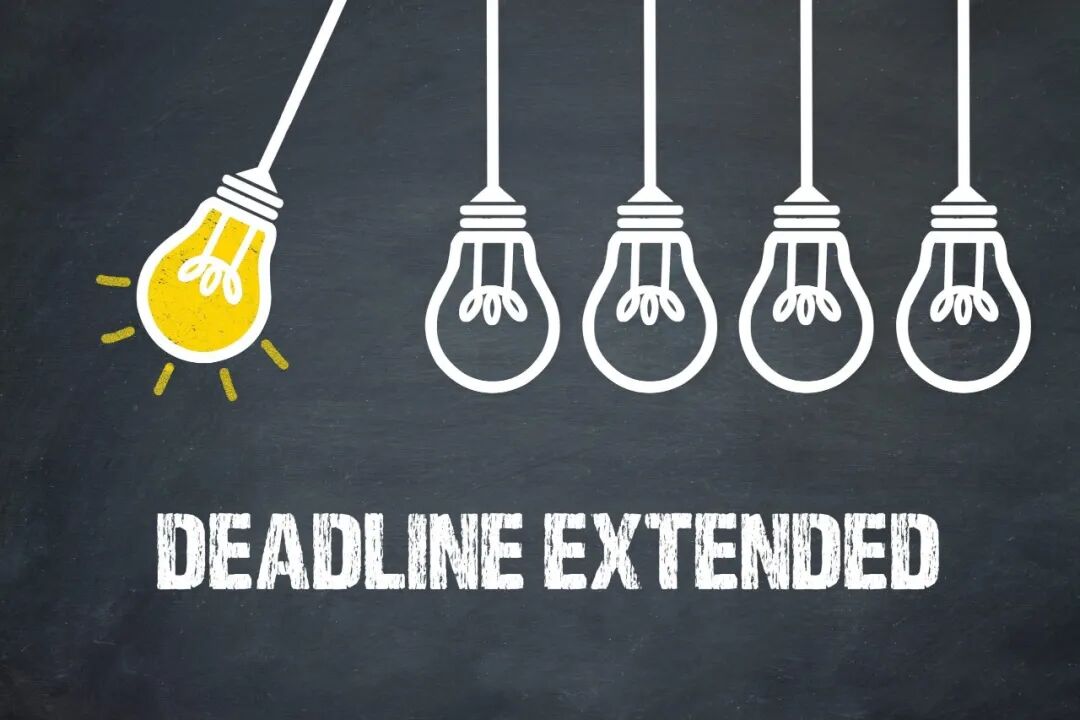
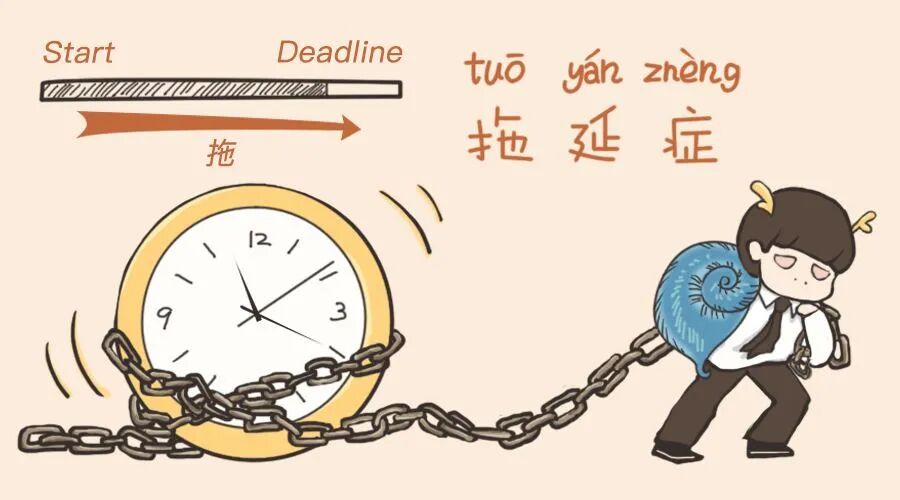
Fengzi Ge: My procrastination is fairly serious. I basically wait until a deadline is approaching before I start preparing my own material. I often make a good plan but still wait until the end to begin. I really am busy most of the time: I feel that my working hours are long, and while I am in the lab I am almost constantly doing experiments. The workload is heavy, and by the time I get home I am already quite tired.
Our group meetings are generally on Mondays. I usually do not start making the slides until Sunday or Saturday. Procrastination seems unavoidable.
[A small suggestion: to fight procrastination, lower your expectations of yourself a little and avoid being overly idealistic.]
Plans and changes
Do changes really always overtake plans?
Calorie: When it comes to planning my time, I think it depends on the task. I rely very heavily on my calendar. If something is happening, I record it there, especially a specific commitment such as an appointment or a meeting. I will forget it if I do not write it down, so I have to record it. I usually plan by the week because I meet my supervisor once a week, report the previous week’s results, and plan the work ahead.
I think my procrastination at work is manageable; I do not put it off that much, because work is not a single, specific event like a group meeting. I can generally carry out my plan. For example, if there is something I want to finish today and a question I want to answer, I do my best to finish it.
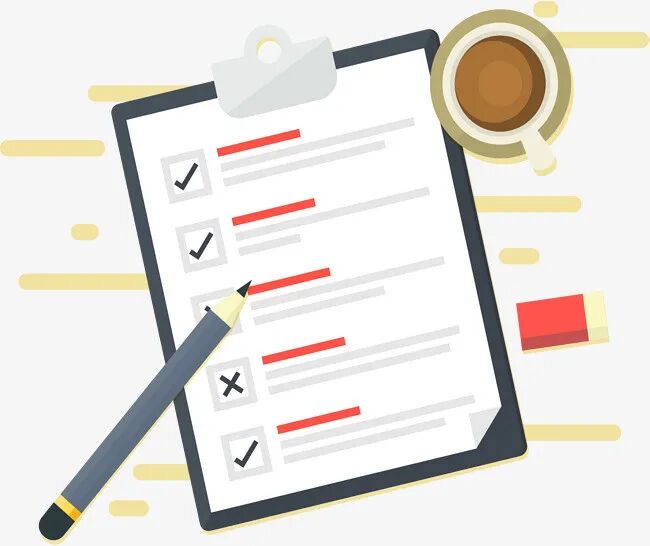
Eureka: I really do not have a time plan. I have an excellent roommate who graduated from a university in China. In their bedroom they have very detailed research plans and personal fitness plans—everything. Their personal development plans cover anything from a day to a week or a year, all written on the wall with marks that they regularly revise. I greatly admire people like that. But I do not have a time plan. What feels a little sad is that I do not seem to have the opportunity to arrange my own time.
Much of my time is now filled with meetings and research work. Sometimes that research work is already fixed: I do not have to worry about how to do the experiment, because every step has been decided. I just finish one step and move to the next, with very little scope for changes in between. My life has been organized very clearly for me. I simply attend all the meetings on the schedule one by one. If there is no meeting, I am supposed to go and do the experiment together with others. There is always work to do, and it never ends. I do not really have to worry about designing my own research plan; almost everything has been arranged, and I just do it.
Fantuan: So it is more like working in a company? Someone else has already arranged all your tasks and how they should progress. You just follow the process, and your time is already fully booked—is that right?
Eureka: Yes. Besides doing my own postdoctoral research, I also obtained a grant. We have regular meetings, often many in a week, and a lot of tasks become fixed by those meetings. I have to have something to present and meet their needs, which also means making slides or doing other work. Much of my time is consumed that way, leaving little freedom to arrange anything else.
Fengzi Ge: For those of us doing biological experiments, the procedures can be very long. Cell experiments and animal experiments, for example, may take a long time. We also usually divide our time among several projects. In practice, that means your working day is occupied by experiments.
We basically think through which experiments we need to do during the coming week. Because the procedures are fairly fixed, it is generally enough to arrange the next week’s experiments once a week. We still have to think every day about the order of the experiments and so on, because we have to find a way to finish them and use the time as sensibly as possible to fit in more work. So you could say that we plan once a week, but in fact we also plan every day, mainly by allocating time. We do not necessarily specify exactly what to do each day or even each week. We roughly know which question we need to answer next and which experiments to design, and we work accordingly.
I actually think that, for people doing biology, choosing the direction to pursue is what deserves more planning time. Once we have decided on the direction, the experiments that follow more or less arise from it. There is therefore little need to be excessively demanding about planning every practical task.
Changes to the plan: an unexpected new task or a request for help—what do you do?
Calorie: It depends on the specific situation. For example, my supervisor might suddenly ask me to write a review or summarize something we discussed earlier. I have had that happen. If it is an urgent request like that, I put the experiment aside and finish the more urgent task.
Or someone might ask me to take a look at their experiment. If it will not take much time, I will help. But if it will take longer—for example, two hours to do something for them—and it does not seem particularly urgent, I will not rush to do it.
Fantuan: Suppose you are adjusting an instrument and someone suddenly asks you for help. Would you put your own work down to help, or ask them to wait?
Calorie: If it will not take much time, I will put down what I am doing and help.

Eureka: This question almost feels like you are teasing me, because in the lab I am the one asking for help. Hardly anyone comes to me; I go to others. Halfway through an experiment I discover that something is wrong and quickly turn around to ask, “Friends, how do I do this?” I am generally waiting for other people to reply, so I rarely get asked for help.
When I was in other labs, I also judged requests by their urgency. First, my supervisor almost never asked me to do something in the middle of a task; I rarely received that kind of special attention. If other people saw that I was doing a surgical experiment, they would generally stop asking. I have rarely met anyone who insisted. Usually they just ask a question that needs a yes-or-no answer, or ask me to fetch something. I do not think that takes much time. I listen to them and say what they should do. If necessary, I say, “Wait until I have finished here and I will take a look.” That is basically how we handle it. I therefore do not think it is a very big issue, and I am not often disturbed.
Fantuan: Can you immediately step out of one state and then enter a highly focused one?
Eureka: Our work is not like that of theoretical researchers who are completely absorbed. We do experiments while joking around. Many people wear headphones and sway or move about as they work. So there is no need to feel guilty about interrupting someone, and no need to get angry when you are interrupted. I think everyone understands that.
Fengzi Ge: As I said, cell experiments are done in a clean workspace. When other people see you doing an experiment, they usually will not deliberately ask very complicated questions. They may ask you to fetch something, ask whether you have a particular item, or something similar. That is extremely common, and it takes very little time—perhaps a minute. We are very willing to help. Unless someone insists that you immediately do an experiment for them, which would be very unusual; essentially no one does that. As for a supervisor asking for you, ours seems quite good to students, so they generally do not deliberately get students to do things for them. Most often they ask a question or mention a task, while also saying that it is not urgent and giving you some buffer time. Interruptions may occur, but they do not really affect my work efficiency.
Daily routines and time management
Does your daily routine affect your time management?
Fengzi Ge: Yes. Sleep is really important for improving my efficiency. I am also someone who likes sleeping. On ordinary working days I do not have much choice, so on Sundays I more or less feel as though I sleep all day: I go to bed early and may get up at two or three in the afternoon. Giving myself a day to rest also helps improve my efficiency during the next week.
I feel that sleep is a process of restoring my energy. After sleeping, I can put the previous day’s failures behind me, take stock, and think about how to move forward the next day. I think that is really important.
I would also like to add that taking a shower is especially useful for me. After a shower I feel very comfortable, and work that I did not want to do earlier may suddenly seem appealing again. There are many ways to help yourself escape a temporary sense of disappointment. It may take some people longer and others less time; that varies by person. For me, showers and sleep are probably the two most useful things. They help me return to a frame of mind in which I am willing to work and tackle whatever went wrong during the failed attempt.
Calorie: It definitely has an effect. Sleep is particularly important to me. If I have slept enough, I feel happier whatever I do.
But I am seriously inclined to go to bed late and get up late. I once tried going to bed early and getting up early for a week, and I felt that my time management was excellent that week. The obvious reason was that I had more daytime hours. Experiments I would originally have scheduled for the afternoon were finished before lunch, and I could do additional work in the afternoon. The day felt particularly full, as though I had gained a lot, and I felt very happy.
I therefore think sleep, daily routines, and time management are very closely related. I am still encouraging myself to go to bed and get up early. It remains difficult, but I think it is a good habit.
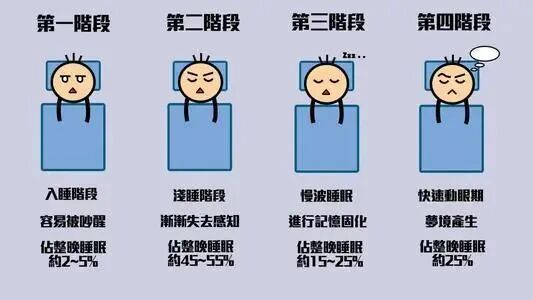
Eureka: For me, “going to bed late” usually means four in the morning. But I cannot sleep for very long now; often I have to be awake by eight or nine.
It is painful: you go to bed very late, but when you wake up, you do so naturally, which is really annoying. I get up and start having meetings. When the meetings finish, it is an awkward time, perhaps around ten. Do I sleep or not? My experiment is scheduled for the afternoon, but the meeting has ended at ten, right? I find that I cannot get back to sleep at ten, and then I struggle painfully through until one or two in the afternoon.
At the same time, I think managing emotions really is important. I am the kind of person who will not let a commitment slip. My approach is to make sure that I do a task properly, especially when helping someone else or advancing something on behalf of a team. I will definitely get it into good shape.
But that may subconsciously increase my emotional pressure. For example, I know I have a meeting at nine the next morning and want to give a good presentation, yet I still cannot go to bed early and may stay up until three or four. I will definitely not miss the meeting: I get up half an hour beforehand, open the slides, and go through them repeatedly. I will not let the task slip, but the emotional pressure on me may grow. I feel that I cannot control that subconscious process. It has not caused a major problem so far, but I think emotional pressure does affect work.
[A small suggestion: feeling hopeless about an experiment? If a hotpot meal does not help, get a good night’s sleep!]
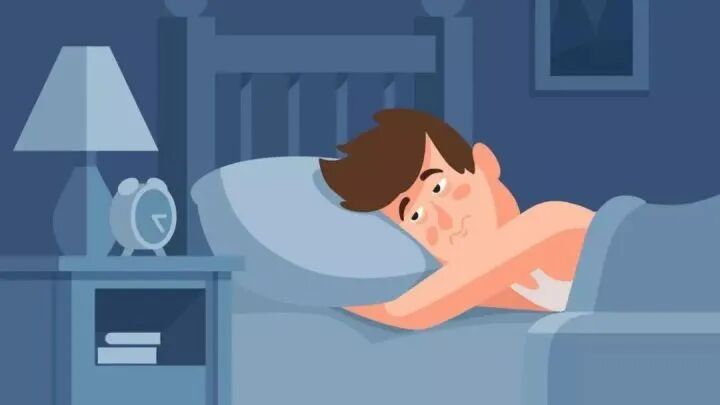
If you stay up very late, are you busy working, or simply unwilling to go to sleep?
Eureka: It is about half and half. Sometimes I am busy working—for example, doing this interview tonight, although I would not call that work. Sometimes there really are meetings with people in China because of the time difference, or I need to stay late with people here. That happens quite often.
Suppose I finish the work at eleven. I think, “I have finished—surely I should take a break first. Going straight to sleep would be a little unfair to myself, right?” So I play for a while. While I am playing, I get past the point when I feel sleepy. What should I do if I am no longer sleepy? If I cannot sleep, I do not want to waste time, so I work a little more. Then I end up staying up very late. That is what happens to me.
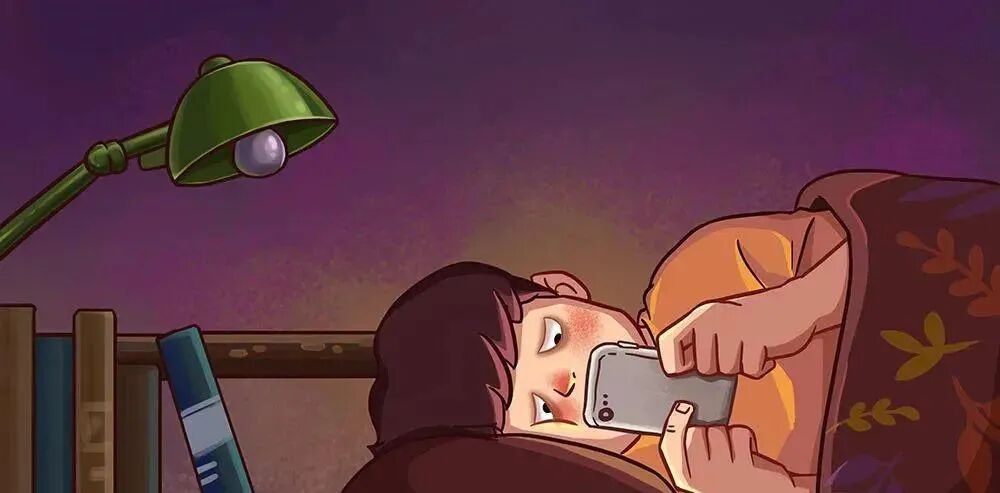
Calorie: I strongly agree. After finishing work, I need some time for myself to help me shift from working to sleeping. I really need that time. When my routine is very poor, I go to bed at two or three. Working until ten at night may feel completely normal to me, but after midnight I start wondering whether I should consider resting. After another half hour or hour, I get ready to wash and go to bed, and then I look at my phone for a while. That time on my phone before bed is particularly useful to me: it helps me move from work mode to sleep mode. I need some time that belongs to me before bed. I cannot abruptly go straight from working to sleeping; I need a buffer.
[Me time matters!]
Emotions and time management
What is the relationship between managing emotions and working efficiently?
Eureka: Emotions certainly affect efficiency a great deal. If you are in a bad mood, you will not do anything well.
To improve efficiency, perhaps we should follow the very simple, direct reward mechanisms built into mobile games or browser games: how do they attract users to keep playing and grinding away? That could be useful in our studies or if we become teachers later. Many people may not realize why some games appear boring yet retain users so well: their reward mechanisms are very well designed.
If you apply that little trick to research—for example, making a small discovery today and another tomorrow—you become especially willing to continue, and I think it feels hopeful. If the initial roadmap is laid out for you as it is in an online game, and you copy that into academic work—what I can achieve in six months, what paper I might have in a year, and what position I might reach after two years—you will increasingly want to do it and enjoy it. I think this could be one option for improving efficiency, including managing a team.
[Doing research is like playing a game: draw your own research roadmap and design rewards so that the more you work at research, the happier it becomes!]

Calorie: Emotions strongly affect the results of my work. Talking about emotions also relates to the confidence I have in an experiment. When I am in a bad mood, I have no positive expectations of the result and feel that it will not work; usually, in the end, it indeed does not. But when I am in a good mood, I arrive thinking, “This is what I will do today,” and the eventual results are often fairly good.
So I think emotions provide positive motivation and a sense of confidence for an experiment. That helps the results, and of course it helps our time management too: we can get better results in less time.
[Build positive expectations to improve the chances of success.]

Fengzi Ge: When I realize that I am in a very bad mood and working very inefficiently, I may give up on some experiments for the moment and choose to rest instead. First, my efficiency is very low in that situation, and my thoughts wander as I work. For me, it is better to rest: go home and cook, eat something tasty, take a shower, and have a sleep. That feels great, right?
Another thing is to prepare yourself mentally. Sometimes you are in a terrible mood because many things you try are not working. For at least the next two or three days, you may feel lost and wonder what to do. At that point you need to give yourself some mental encouragement and tell yourself which direction may still have promise. Giving yourself a clear goal can make you more motivated and help you recover quickly from that defeated state of mind. I like to tell myself, “This approach is bound to work.” Then my mood improves. I also spend a little time on my phone or play a small game. That more or less helps my emotions recover, after which I can do things efficiently again.
People who can comfort themselves or adjust their own emotions are actually at an advantage. Both PhD and postdoctoral work involve pressure, and the pressure is enormous when the work will not produce results. People who can regulate their mindset or get themselves back into a good state may find it easier to keep moving along this path.
[Comfort yourself appropriately and imagine success to help yourself move out of a defeated emotional state.]
PhD students are already a group who work extremely hard but are not easily noticed. Since you have to bear the pressure yourself, remember to keep your spirits up and encourage yourself. If that still does not work, get a good night’s sleep!
Participants: Calorie, Eureka, Fengzi Ge
Text editors: Fantuan, Calorie
Audio editor: Honey Peach Oolong
Interviewers: Fantuan, Calorie
Recording: Honey Peach Oolong
Sources and editorial history
Restored from a complete interview manuscript retained by the PhDSciNet Official Account. The original publication date remains unverified.