
Historical interview: The following preserves the research experiences and personal views expressed in the original manuscript.
Historical discussion note: The 2022 context and the interviewees' differing views are preserved, with institutional combinations identifying a third party removed. Discussion of childbirth, leave, and admissions should not be read as reproductive screening, compelled private disclosure, or a universal medical timetable. Rights and applicable rules deserve respect.
The PhDSciNet Interview Series
Many Paths, Different Views Along the Way
Some study tirelessly for admission; some accept an offer but choose another dream; some take leave for love. Different choices should not imply different human worth.
Does everyone who works hard not deserve respect? Walk a path you can live with. The destination need not be the only measure—the journey has its own scenery.
#1 Declining an offer: Is accepting but not enrolling becoming common?
Background in the original interview: On September 19, 2022, a notice from China University of Political Science and Law concerning 32 graduate students who gave up their admission places prompted debate. The discussion concerned more than one instance of admission without enrollment.
Open Heart: If this were just an individual case, I would see it as a personal choice rather than waste of educational resources. Every year, some people do not register or enroll for various reasons.
Only when such behavior seems to become a broader pattern over several years do we ask what is happening.
I think one possible solution would be to shorten education at each stage. Why must primary school last six years—could it be four? Could junior and senior secondary school each be two years before the entrance exam? Then three years for a bachelor's, two for a master's, and four for a PhD. Graduates would still be very young.

Perspective: Most people around me who choose not to do a master's or PhD make that choice themselves. A high-school classmate had a clear goal: work immediately after their bachelor's. They now earn a million a year.

Broad Outlook: Whether to study is your own decision. Would you simply stop because your family told you to? A master's may take only one or two years, and families often see it as useful for work. I think family resistance is more likely to arise over a PhD.
There may be fewer obstacles to deciding whether to do a master's. I feel expansion in graduate enrollment has weakened the value of bachelor's degrees and perhaps master's degrees too. Some employers require a master's, making progression after a bachelor's seem automatic. In a sense, it also lengthens the wait for employment and eases immediate pressure on the job market.
Perhaps we could learn from universities abroad, which often require an offer to be accepted or declined by a particular date.
That creates one selection stage. Some will decline, and some who accept still will not arrive. The university can plan a range of enrollment numbers and allow for changes. Such situations will happen, and institutions can respect applicants' choices. To me, this is an ordinary social occurrence, not something that should be escalated into accusations of disrupting teaching or wasting resources.

#2 Childbirth and education: How should they be considered?
Background in the original interview: Online debate concerned a female graduate student who took leave during her first year to marry and have a child. Identifying combinations of institutions and family details have been removed in this restoration; the discussion focuses on choices and institutional support.
Open Heart: First, what is wrong with a female graduate student marrying a hairdresser? Choosing a partner is her right, and others have no standing to condemn it.
Second, I do not agree that her not attending creates a bad influence. Society has many excellent scientists and entrepreneurs. If commenters ignore those examples but insist on being influenced by one student who leaves, they are far too easily influenced.
Third, on educational resources: I do not think responsibility should be placed on the student. We should ask what the institution, the country, or education itself can do to achieve equality. That matters more. We should respect a woman's wish to have a child at the time she chooses.

Finally, returning to a less-developed hometown does not necessarily mean being irresponsible towards a future child's education. She can be confident in her own ability to influence the next generation. If education in a remote place were automatically inadequate, would everyone have to keep moving upwards—to a major city after a PhD or a prestigious degree so their children get the very best? That would create endless competition. Returning home can be good.
After receiving a good education, returning to one's hometown can be a worthwhile choice. Think about what you can contribute locally, not just your own child or next generation.

Broad Outlook: Whom someone marries is their own choice. Some commenters claimed that returning home and marrying after graduation would lower the next generation's prospects because of educational resources. But a child's qualities depend not only on education: character, personality, emotional awareness, and other factors matter too. A highly educated person is not automatically a good person.
People may react as though a student received a wonderful opportunity and then wasted it. But everyone has the right to make their own choice.
Many children from small towns also reach graduate schools in large cities through their own effort. Does education in a smaller place necessarily mean worse education? I think that view is narrow. Why not read more and develop one's own outlook?

Defend rights, and seek mutual understanding and respect
Open Heart: I know a senior student who became pregnant in her third PhD year and returned to China on leave for nearly a year. Her supervisor was unhappy, repeatedly asking when she would return and saying the project might have problems and that she might not be able to continue if she stayed away.
She had another child before graduating. That leave was only a month, and she was still doing experiments the day before the birth. So I am unsure why the student in the news needed a full year of leave. I wonder about the length. I feel a leave of ordinary maternity-leave length might not have prompted so much debate. This is the speaker's comparison of experiences, not a medical recommendation about when pregnant people should work or return.
Figure 7: The original illustration listed maternity-leave lengths in some provinces; historical information, not a substitute for applicable current rules
Broad Outlook: It is complicated. Whether this is an isolated case and whether it affects supervisors' willingness to admit women are separate questions. If an undergraduate left to have a child, people might simply call it a personal choice. Graduate places are fewer, so each may seem more precious.
Each supervisor also has a limited number of students. When one leaves, the group loses a person, which is why people discuss educational resources. That produces a perceived conflict between reproductive choice and use of scarce places.
I think supervisors and students need to make choices together. If the supervisor has few objections and the school is flexible, it need not become a major problem. There needs to be understanding on both sides.
We once had a female research assistant who left during pregnancy. She provided research support, and some experiments could not continue without her, so it affected the lab. From the woman's perspective, however, her reproductive rights must be respected.

#3 Equality is a difficult road
Magnifying opposition can magnify conflict
Broad Outlook: I feel conflict between women and men may be less severe in China than in South Korea, where, from what I have heard, it can become very sharp.
Greater awareness among women and efforts to defend their rights are positive. But some expressions become extreme, and when amplified online they can make all feminists appear extreme.
Sometimes I read statements and feel their authors want to become queens rather than obtain equal rights. Such statements may attract followers who feel similarly. Most people may not feel an urgent conflict, even where they have real needs. Do we actually encounter those especially extreme views often in everyday life?
Provocative statements attract attention and are what we see, somewhat like survivorship bias. I do not think everyday antagonism is necessarily as severe as it appears; it can be magnified online.

Open Heart: I think men need to accept that the coming period may include some overcorrection in gender relations. Men have dominated for so long. Seeking a more balanced relationship now is normal, and we can allow room for some extreme reactions and overcorrection.
The issue also involves overlap between the ages of higher education and childbirth. A single person's case does not require everyone's judgment, but a clear conflict affecting groups of people is worth discussing: what could reduce it?

Address institutional gaps rather than leave more people with regrets
Open Heart: Students are free to choose how many children to have during master's or doctoral study. After respecting that freedom, how can we address disruptions in the lab? It should not be the woman's burden alone. Our ultimate goal is equality between female and male students. What support can fill the gap?
If a woman chooses childbirth at this stage, perhaps the lab could receive support or administrative units could provide additional funding. Those measures could reduce supervisors' doubts about admitting women. They seem more useful than blaming the student.
From a supervisor's practical perspective, could other arrangements compensate for delays or losses during a student's leave? That might help reduce prejudice when choosing between male and female applicants.
Communication should focus on available leave, support, and work arrangements. It should not require applicants to disclose private marriage or reproductive plans, or turn those plans into a condition that excludes them from admission. Students can voluntarily discuss the support they need at an appropriate time.
Schools should also have clear rules about leave duration and arrangements for coursework and laboratory work during absence.

Broad Outlook: I see two possible approaches. Could the university support the supervisor—for instance, with another admission place the following year if a student takes leave—to reduce the lab's disruption? Could leave arrangements also be discussed with mutual understanding? I understand the student's wish to have a child, while asking that the lab's needs be considered too. The institution should help make the situation less confrontational.
If a person has an important role in the lab, minimizing disruption during their absence matters.
Ultimately, institutional change is needed. Pregnancy is important and deserves protection. We should recognize every woman's reproductive rights. In a populous country, individuals do not always receive enough attention; pregnant people deserve more support.
Whether such events affect admissions cannot be inferred from one case, and applicants should not be excluded because of sex or reproductive plans. Planning pregnancy involves individual circumstances; there is no universal medical deadline based on whether someone is at master's or PhD level. This discussion should not replace personal medical advice.
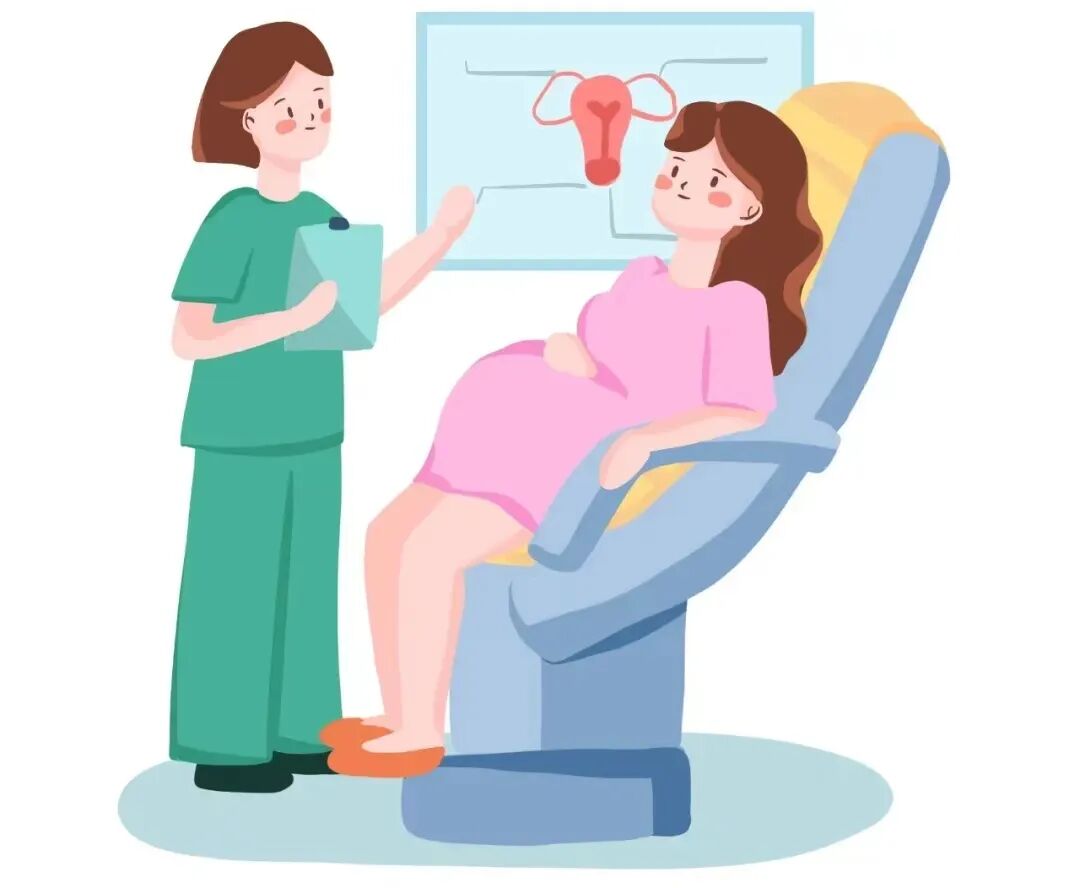
Condemnation is easy; respect is difficult. Moral pressure is effective; fixing institutions is harder. When public debate turns us into judges, when will we recognize the institutional questions behind unused admission places and the hidden discrimination behind criticism of pregnancy leave?
How individual choices can be respected within fair institutional arrangements is the question that needs attention.
Contributors: Open Heart (胸怀), Broad Outlook (格局), Perspective (境界)
Editor: Fantuan (饭团)
Audio editor: Honey Peach Oolong (蜜桃乌龙)
Interviewer: Fantuan (饭团)
Recording: Honey Peach Oolong (蜜桃乌龙)
This article reflects the author's personal views, not those of this website. The original manuscript credits images to the internet and requests contact for removal if they infringe rights.
Restoration revision, 2026-10-10: The full discussion, personal experiences, and credits are retained, with combinations of institutions that could identify a third party removed. Minimal replacements address reproductive questioning in admissions and a blanket childbirth timetable. Pregnancy-work experiences are not medical recommendations. The old provincial leave chart is not embedded; its historical caption remains. Original passages and image references are preserved privately.
Supplementary references
- PRC Law on the Protection of Women's Rights and Interests (2022 Revision): Rights and Reproductive Information in Employment
- NHS: Planning Pregnancy with Individual Health Considerations
Sources and editorial history
Restored from a complete historical article exported from the PhDSciNet Official Account.
Editorial revision: Restoration revision, 2026-10-10: The full discussion, personal experiences, and credits are retained, with combinations of institutions that could identify a third party removed. Minimal replacements address reproductive questioning in admissions and a blanket childbirth timetable. Pregnancy-work experiences are not medical recommendations. The old provincial leave chart is not embedded; its historical caption remains. Original passages and image references are preserved privately.