
Historical interview: The following preserves the research experiences and personal views expressed in the original manuscript.
Historical discussion note: The following presents the interviewees' views on occupational value and income differences. Examples involving pay, rankings, populations, and industries are not current statistics or independent verification of a particular person's conduct. Research funding is not the researcher's personal income.
The PhDSciNet Interview Series
A Little Red Flower for Everyone Working Hard
The original interview contrasted a reported eight-million-yuan State Preeminent Science and Technology Award in 2021 with reports of an actor's average daily pay of 2.08 million yuan. These are figures invoked in a historical debate, not newly verified statistics about current awards or a particular person's income.
From the expression small-town exam expert to the statement scientists and actors are equal, a commentary in China Newsweek brought equality between professions back into public debate. Are appearance and acting ability scarce resources worth tens of millions? From the perspective of social contributions, are actors' and scientists' incomes distributed fairly?
What do researchers at the center of this debate think?
#1 Expensive appearance versus inexpensive talent?
Professions should not be ranked by human worth
Escape the Pit: I am fairly comfortable with the argument. In principle, I do not think China Newsweek's commentary was wrong: leading scientists are scarce, but so are leading actors.
Why are people unhappy with the story? My guess is that they see actors whose performances are poor and whose productions are disappointing, while reports say those actors receive enormous fees. That feels unfair.
Then people think of researchers working diligently, like patient oxen, while receiving modest pay. I appreciate people thinking about researchers in that way, but I do not think the comparison is quite fair: it compares poor actors with good scientists.
The scientific community also contains both poor and excellent scientists. Some work diligently throughout their lives for little income. Others receive reputation and pay disproportionate to their work—for example, people who exploit their master's and PhD students, produce impressive-looking but empty or false papers, or use cheap subordinate labor to obtain reimbursements.
Such conduct also deserves criticism. We cannot simply compare poor actors with good scientists; we need to recognize differences within the scientific community too.

Phone Out of Power: I do not see a problem with the title saying actors and scientists are equal. If we phrased it as everyone is equal, or no profession is inherently superior, people might not criticize it. The title itself seems fine.
What is wrong with actors? I think they do valuable work. During the pandemic, I remember feeling low while stuck at home, with pressure from job hunting and other matters. Watching variety shows helped me emotionally. I felt that actors contributed a great deal to society.
I do not think we should compare entire professions so simply. We should look within each profession: there are better and worse performers in every field. I think comparing whole occupational groups directly is unreasonable.
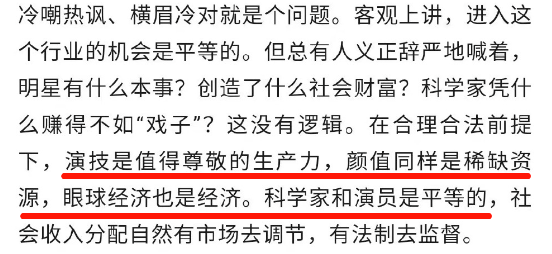
Soy-Sauce Tomato: I suspect much of the dissatisfaction comes from a perception that many actors enter the industry without systematic training and that entry barriers are low. People wonder why four, eight, or ten years of study earn less than someone who finished high school or had even less formal education. They may feel the industry is poorly managed too, intensifying that sense of unfairness. That is my guess about the reaction.
Did I feel that way when I saw the news? Of course I did. Ten years of sunk costs brought me a low salary, while someone else's one production—or even one day's work—might exceed my ten years of earnings.
Everyone has their own view. I agree that directly comparing industries is not quite fair, but as an ordinary reader I still feel uncomfortable. Perhaps that also reflects my own outlook.
Figure 3: Actor-income reporting referenced by the interview; not independently verified here
Ranking professions by income is neither fair nor reasonable
Escape the Pit: Industries differ in how readily they turn work into income. Actors' value is visible: people can see appearance, hear singing, or judge acting. They may think that receiving a large sum is justified. Science, by contrast, can be a rather self-contained profession. Most people cannot easily tell who is a leading scientist.
Only a limited number of other scientists may be able to judge who is outstanding and who is ordinary. In many fields, work cannot be turned into income quickly. That can mean modest income and recognition during someone's life, with greater recognition only afterwards.
Consider some distant examples. Van Gogh struggled financially while alive, while his paintings later gained extraordinary recognition. The Tang poet Du Fu also experienced hardship during his lifetime, although later generations came to hold his work in very high regard. This illustrates the contrast between immediate income and later reputation. The original reference to the Complete Tang Poems as a collection from Du Fu's lifetime was incorrect: it was compiled during the Qing dynasty.
In that sense, science can resemble art or poetry. Your ability and eventual reputation may not be obvious to contemporaries, so a low income can be understandable to me.

Phone Out of Power: I do not think occupations should be ranked as higher or lower and then given different economic returns on that basis. I do not support that idea.

Friday: This reminds me of a conversation a few days ago with a Chinese Canadian. They said professions in Canada are not ranked by worth and gave an example: a professor from a top-five university in China came to Canada and became a certified residential gas inspector rather than continuing as a professor. They also described highly educated people becoming plumbers or taking other jobs and doing very well, sometimes earning more than ordinary professors. One figure they mentioned was as high as 100,000 Canadian dollars a month. These were figures in a conversation, not verified typical wages.
They argued that Chinese immigrants and international students need not all pursue advanced degrees or prestigious-looking jobs. Any job can contribute to society, with pay reflecting that contribution in their view. They cited hypothetical or anecdotal earnings of 200,000 a year for both a plumber and a professor as an illustration of relative material equality. These figures are not verified general income levels.

Soy-Sauce Tomato: The money scientists actually take home may indeed be less than celebrities receive. We should acknowledge that.
But scientists can manage large project budgets: perhaps hundreds of thousands for a smaller project, or tens or hundreds of millions with substantial standing and resources. To take a sensitive example, launching a rocket may cost hundreds of millions at once. It depends on how you consider the comparison: a researcher may handle large sums. I believe successful researchers can lead projects with very substantial funding.

#2 Your effort shines
The road to the top is never free of obstacles
Phone Out of Power: We discuss researchers' social standing and citation counts, but a leading actor may also have high standing and give us a great deal. They may make us laugh, inspire us, or help us grow and reflect through a fine performance. Those are valuable contributions. The arts have great works and great actors too, so I see no problem.
I think becoming a leading actor may involve experiences similar to becoming a leading scientist. People may assume actors earn easily, but many cannot find acting work and have modest incomes, just like ordinary researchers. Does science not depend on luck as well?
Your background, whether you choose a good supervisor, and whether your field happens to be recruiting when you apply all involve luck. That is similar to acting and other professions.

Friday: I think the reporting sometimes resembles the horse-race strategy of Tian Ji: comparing someone's best horse with another person's weakest. That creates a mismatch. In any field, reaching the top ten percent would already be very good, and perhaps ease worries about income.
Reaching the top five percent or one percent is more exceptional still. The actors discussed may be in that top five or one percent. The research community is also large. If, purely as an example, there were tens of millions of researchers, one percent would be in the hundreds of thousands, not the millions. The original population estimate itself has not been verified here.
Comparing such a large group directly with a few actors creates another mismatch. In my view, people at the very top of research can also have high incomes.
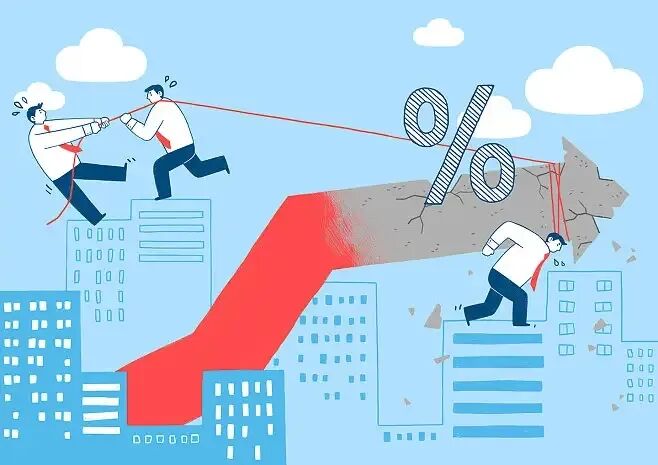
Everyone making an effort can shine
Escape the Pit: I think the strategic importance of a scientist working on lithography equipment is different from an actor's value, and the two are difficult to compare directly.
Scientists may provide material foundations, while actors provide cultural and emotional experiences. Many works of art affect us in ways that are hard to measure in money. Entertainment happens to be a popular industry with substantial funding, making it easier to attach striking prices to a performance.
If we compare the United States, an annual base salary of two or three hundred thousand U.S. dollars for a Harvard professor would seem very good to me. Leading Hollywood actors may earn far more—perhaps one hundred or two hundred times as much in the examples I have in mind. This also looks unequal.
Each industry has its own pricing conventions, so comparisons across them are difficult.

Phone Out of Power: I still do not think professions have an inherent ranking. They serve different aspects of our lives. Lithography is impressive, but not everyone can work on it. Each occupation has a purpose: the scientist develops the technology, and the actor does the performance well.
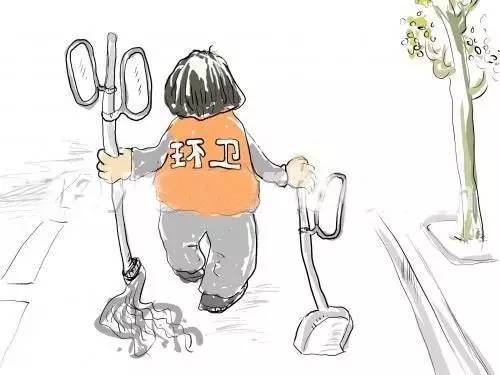
A street cleaner's purpose is to clean the street. Why should fulfilling that purpose be worth less as a person than fulfilling another? I cannot accept that idea. Science may look more advanced, but it is still your work. A government employee writes documents; a doctor treats people. I do not agree with ranking professions as noble or inferior. Does a cultural or emotional contribution not count?
Friday: Why do people think actors earn so much while scientists remain unknown? Part of it comes from the professions themselves. Acting needs visibility. Even tiny matters—someone's relationship or appearance fee—become news.
The public receives that information constantly because the industry needs publicity and posts things for people to see. Science is different. Researchers are generally quieter, and many spend long periods working without recognition.
A major discovery may receive little coverage unless it is something exceptionally large, such as launching a spacecraft. Even then, reporting often emphasizes the team's achievement rather than an individual hero. Scientists therefore seem low-key. People may prefer that image, although both groups contribute.
Actors need exposure by the nature of their work, but excessive or unnecessary exposure can annoy people. Scientists may appear diligent, patient, and dedicated to national progress. That contrast shapes impressions.

Huang Guoping, an engineering PhD graduate of the University of Chinese Academy of Sciences, wrote in his dissertation acknowledgments: I traveled a long road and endured many hardships to bring this doctoral dissertation before you. Twenty-two years of study brought storms, muddy paths, and many difficulties.
In a sense, everyone working hard in different professions is equal: success and brilliance are not simply handed to us. If your path requires picking flowers among thorns, keep going. May every ordinary person shine in their own field.
Contributors: Escape the Pit (跳出天坑), Phone Out of Power (手机没电), Friday (星期五), Soy-Sauce Tomato (酱油西红柿)
Editors: Fantuan (饭团), Calorie (卡路里)
Audio editor: Honey Peach Oolong (蜜桃乌龙)
Interviewer: Honey Peach Oolong (蜜桃乌龙)
Recording: Honey Peach Oolong (蜜桃乌龙)
This article reflects the author's personal views, not those of this website. The original manuscript credits images to the internet and requests contact for removal if they infringe rights.
Restoration revision, 2026-10-10: The full discussion and credits are retained, with income reporting and conversational figures attributed to the original. Corrections address the anachronistic reference to the Complete Tang Poems and the arithmetic of one percent of tens of millions. The original actor-income image remains private and is not embedded in the restored text.
Supplementary references
Sources and editorial history
Restored from a complete historical article exported from the PhDSciNet Official Account.
Editorial revision: Restoration revision, 2026-10-10: The full discussion and credits are retained, with income reporting and conversational figures attributed to the original. Corrections address the anachronistic reference to the Complete Tang Poems and the arithmetic of one percent of tens of millions. The original actor-income image remains private and is not embedded in the restored text.