Historical interview: The following preserves the research experiences and personal views expressed in the original manuscript.
The PhDSciNet Interview Series
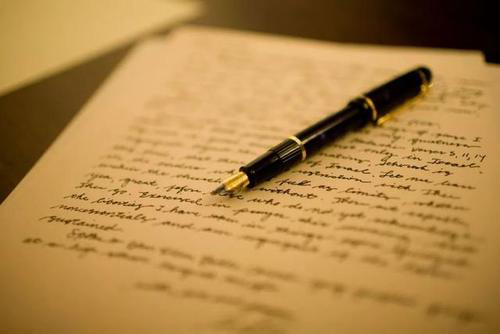
Papers as a PhD KPI: Tearing Your Hair Out over Writing
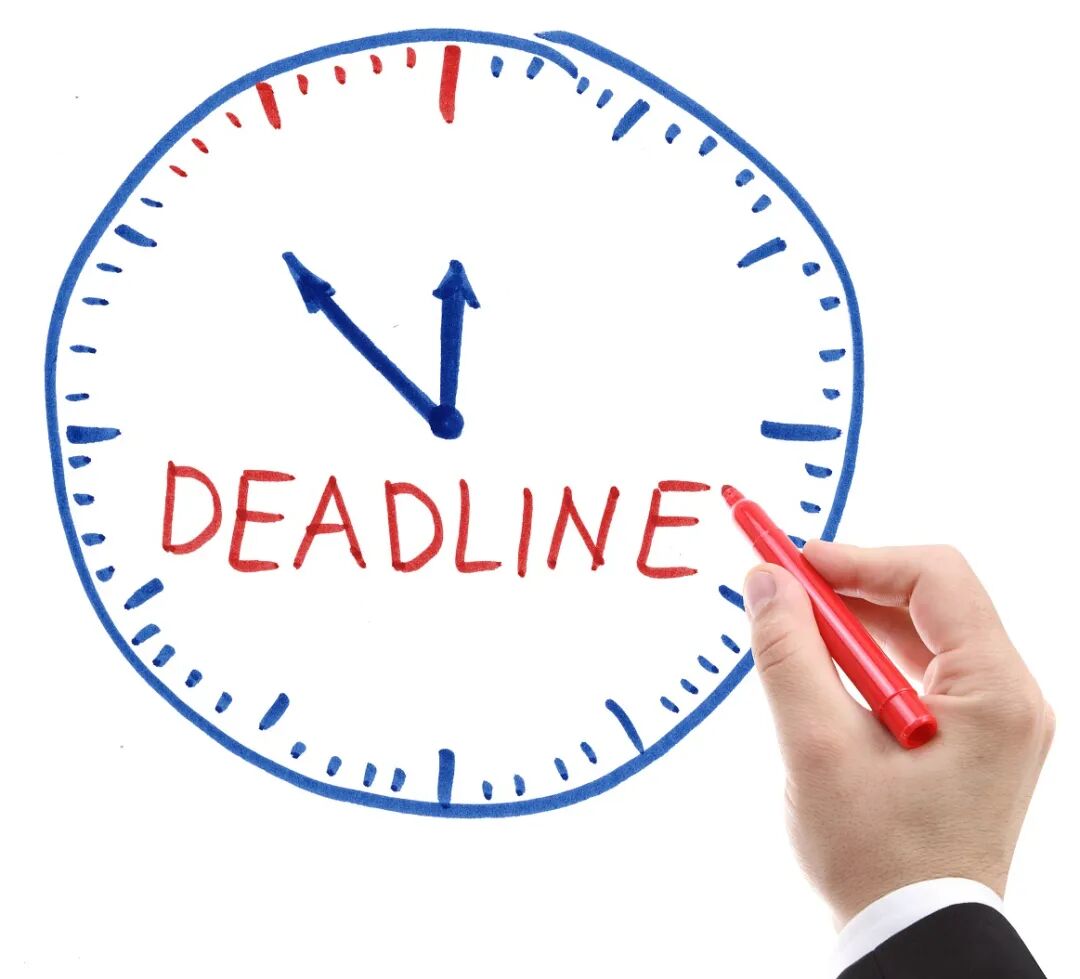
What is paper-deadline syndrome? Perhaps it means that until the deadline arrives, neither the author nor the supervisor knows whether the paper will be finished on time. After all, difficulties always seem to outnumber solutions. Thank you, papers, for making us lose our hair. Faced with this KPI, are you also scratching your head and putting it off whenever you can?
This time, we have invited three PhD researchers to share a few lessons from their writing experience.
01 A PhD KPI: Writing papers
Papers: A key metric for graduation and job applications
Friday: I mainly work on biomaterials for drug delivery and siRNA delivery. Most of my output is papers in SCI-indexed journals, and I may also attend conferences to exchange ideas. I graduated many years ago. At the time, some universities in China required at least one SCI paper with an impact factor above three for graduation, and requirements subsequently kept rising.
Char Siu Bun: My field is science and engineering. Here abroad, we generally do not have that sort of graduation requirement, and supervisors do not set the same paper requirements either. Much of what people discuss is the extremely demanding requirements back in China. We generally publish in English. Conferences are not graduation requirements: you do not have to attend a particular conference in order to graduate.
Primeval Forest: I am also in science and engineering and need to publish papers in English. The department has no explicit requirement, but during my interview my supervisor told me that they hoped I would publish three SCI papers before graduating.
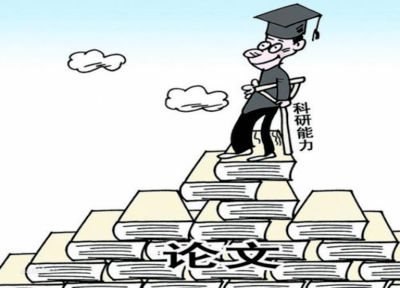
Memorable experiences of writing
Friday: So far, I have published more than ten papers as first or corresponding author. My first paper stands out: it took a very long time, perhaps a year and a half, with dozens of versions. Writing that first paper was genuinely painful. I did not know how to do it, my English was not very good, and my supervisor made extensive revisions. That is a particularly vivid memory. But because my supervisor revised it so extensively and so well, it was accepted at the first journal we submitted to.
I had actually been eager to start the first paper; I wanted to write it myself. But not knowing how made the process rather stumbling. When it was time, my supervisor said that the data were enough for a paper, so I began. I was very happy when it was published. It was the first paper I had written entirely from beginning to end, and it was accepted. That remains memorable.
Later, after becoming a faculty member myself, I began earlier. When starting a project, I would already have a rough framework and add things accumulated in everyday work. By the time the complete data had been collected, the paper was almost finished too.
There is a transition in this: from having no idea how to write to gradually learning how.
Char Siu Bun: One memorable paper progressed unusually quickly. I wrote it in two or three weeks, and my supervisor and I did about two rounds of revision over roughly a week and a half. We submitted it soon afterwards. After receiving feedback, we spent another two weeks doing additional experiments. This was during the pandemic, so the fact that everything went so smoothly and that I felt in control made it particularly memorable.
I do not put off writing. Once the experimental results are complete and we have a story to tell, I want to present it properly. Writing a paper from beginning to end takes me around seven days. My usual attitude is that I want to show the results of the work well. I am not enormously excited, but I am happy about it.
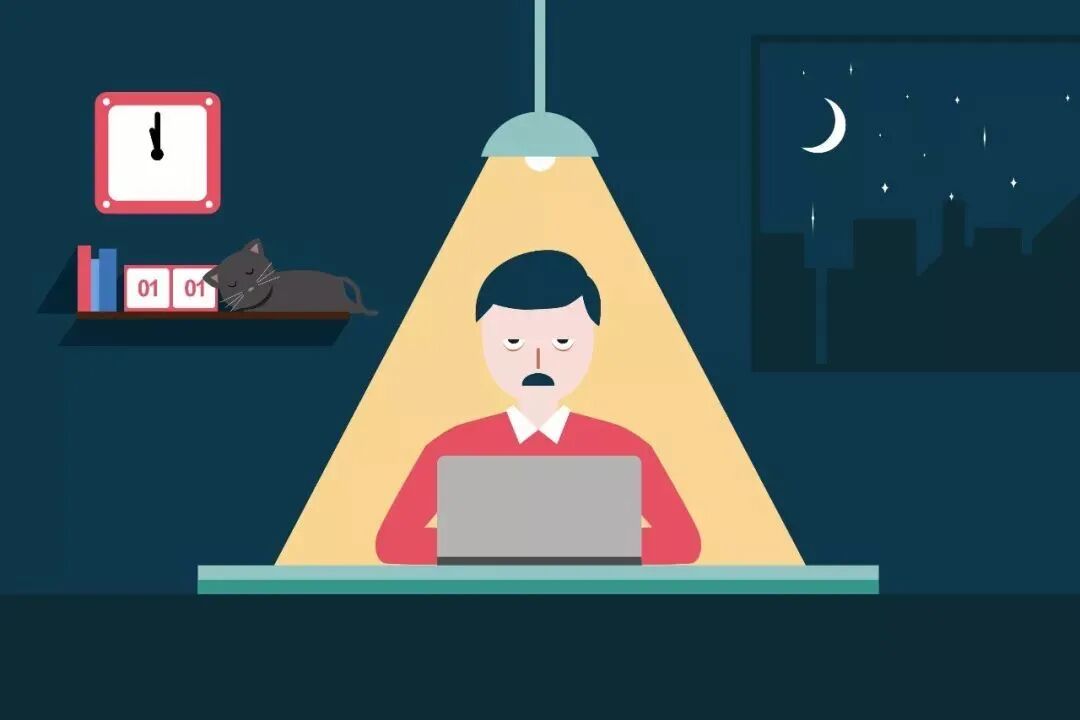
Primeval Forest: My most memorable experience was not a paper but my dissertation. It was a complete ordeal. At first, I really did not want to write and put it off until the system's deadline left me no choice. I would write from evening until the following morning, send it to my supervisor, get revisions back, work from the afternoon until the early hours, and send it again. We went back and forth like this every day for over a month. Fortunately, I finished, but the whole process was overwhelming.
02 The best time to begin
Choose when to start writing and avoid deadline syndrome
Friday: I now think you can start writing when you begin a project. Write whatever you can from the proposal stage. At that point you need to know why you are doing the work and understand the state of research in the field. You will certainly be reading papers, and the notes you make may become your future introduction. You can also start writing the experimental methods early.
For the results, I would recommend waiting until you have done the experiments and reached at least a reasonably reliable conclusion. Ideally, decide on the figures and tables before writing that part; otherwise, you will have to reorganize it afterwards.
These days, I add ideas whenever they occur to me. But to finish the paper properly, I need a reasonably uninterrupted period to work through it from beginning to end. That final stage feels more formal, almost ceremonial; the beginning and middle are more casual.
Char Siu Bun: I agree that you can start writing at the beginning of a project, but that applies when we have a very clear expectation of the results.
Most of my own projects are engineering projects. The outcomes and system performance are difficult to predict; sometimes the system may not work in the end at all. So most of the time, I wait until all the data have been collected before writing.
I also decide on the figures first. In imaging, the figures need to look very good because the visual presentation matters: both appearance and substance are important. We arrange the figures first, make the necessary comparisons, and check that the analysis looks sound before writing. I do not prepare much else in advance; near the end, my supervisor and I choose a journal together.
Primeval Forest: My sequence is quite different. We choose the journal at the end, then adjust the formatting.
I usually start only when my supervisor has pushed me hard enough. I am a serious procrastinator, and I need to feel that the experimental data are complete enough to convince my supervisor. Once I think no major experimental work remains, I stop everything else and focus on writing. I may not even go to the lab, instead working entirely from home.

Writing in the right order can make the process more organized and effective
Friday: I like to begin with Materials and Methods. It feels the simplest and easiest to write. Then I write part of the Introduction as an initial draft, followed by Results and Discussion.
I write the Abstract and Conclusion last. I keep improving the Introduction throughout. After writing everything else, I go back and reconsider it carefully because it is very important.
I write quite quickly now. If the field is very familiar, I can probably finish most of a paper in a week. I add references as I go, whenever the relevant part needs them.
Char Siu Bun: I first finish all the figures, then write in sequence from Introduction to Results to Discussion. I also return to the Abstract at the end to revise it carefully. I am not quite as fast: a substantial paper sometimes takes a month, while a smaller one takes two or three weeks.
I add references as I write too. We may revise the references when discussing the paper with my supervisor at the end, but I do not leave all of them until then. I do know people who write the entire paper following their own thinking and add the references afterwards.
Primeval Forest: A paper takes me anywhere from one to three months, or even half a year. I have not written many, so I am less practiced. I generally start with the Introduction because it gives me a clearer understanding of the story's logic and the points the paper highlights. Writing the Results around those points then becomes more organized, and I know where to focus.
I also add references as I go. My supervisor prefers to revise the whole paper first and add references in one pass at the end, but I cannot do that. My brain cannot keep track of so much.
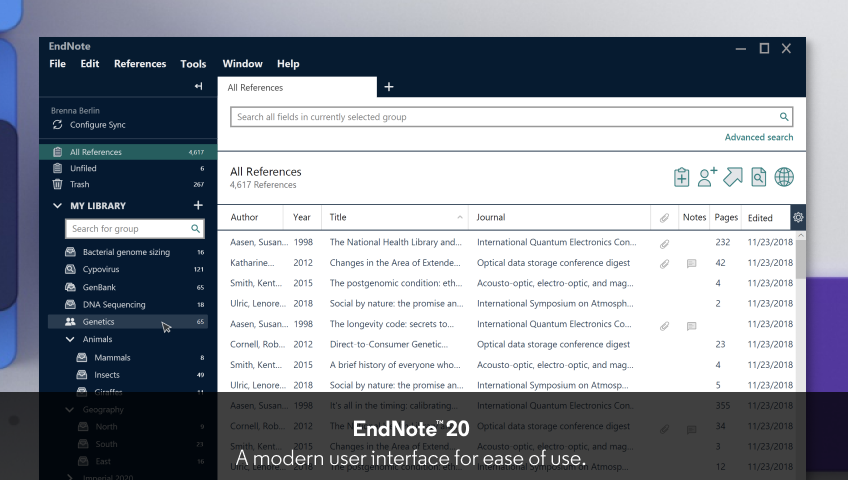
Software that gives your paper a boost! No advertising—just experience
Friday: Papers often contain grammatical mistakes or small punctuation errors. I recommend Grammarly. I use it for an initial pass to catch obvious problems, such as singular versus plural, tense, and punctuation. I find it useful.
There are also many graphics programs now. I have seen people use 3ds Max for 3D images, and the schematic illustrations they make are beautiful. Another program is Prism. Photoshop is also widely used, and several Adobe programs are very good.

Char Siu Bun: Prism is excellent; I use it too. It offers many layouts, is simple to operate, and produces attractive figures. It can also do statistics and generate a report. I use Mendeley for references—an all-time favorite.
Primeval Forest: I generally use Excel and PowerPoint, and sometimes Photoshop for schematics. For references I use EndNote.
How do you get into a writing flow?
Friday: My habit is to write continuously: before experiments, during experiments, and then, once all the figures are ready, the draft is already in its best state so far. At that point I concentrate fully for a week, making writing the main task. That is an efficient method for me.
During that final week, I focus completely and do not deal with too many other things, because they can distract me. It is a review of the whole process. Most of the material has already been added during everyday work; it just has not been connected. The final week ties all that material together, and it is my most productive stage.
Char Siu Bun: Our group's current style is generally to finish all the experiments before writing. Projects do not usually overlap: when you are writing, you do not start a new project. Everyone writes full-time, although miscellaneous tasks in the lab are unavoidable.
It depends on the field, though. I have heard about a senior student in materials whose group publishes very quickly. They keep one paper under review, another being written, and a third at the experimental stage, always handling three papers at once. That can work well too.
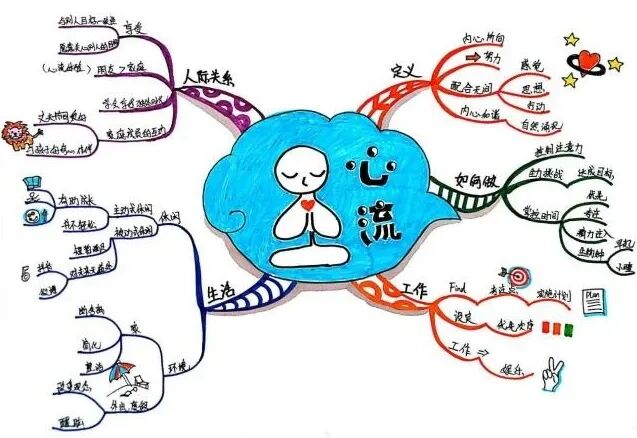
03 What if your writing reaches a bottleneck?
When you get stuck, collective thinking matters
Friday: When you cannot continue, discuss it with someone. If you are unsure how to write a section, meet with the other collaborators on the project and see what they suggest. They may have good ideas. You can also look at the most relevant papers in your references to see how others have written similar material. Usually, there are published examples to learn from.
Char Siu Bun: If writing reveals that the data are incomplete, we can sit down with collaborators and discuss them. For example, after imaging a biological sample, we may not understand its biological significance clearly. We then talk to the biologists to hear their insights: do we need more experiments, or is there another perspective?

What if you cannot explain the mechanism?
Primeval Forest: In materials synthesis, for example, we may need to explain why our material behaves differently. My experience is to discuss this repeatedly with my supervisor. By then, much of the Results has been written; what remains is an explanation of why the material is distinctive.
After the first discussion, I look up literature and do additional characterization, then discuss it again. The cycle may repeat three or four times. I write once I have understood it myself. This can take quite a while—sometimes two or three months.
Friday: If you really cannot write, first ask whether there is actually something to write about, and second whether your experiments support the conclusion. If the experiments are insufficient, either do more or simplify the proposed mechanism with reference to the literature.
Explaining the mechanism may be the paper's main contribution, and this part can be tricky. Sometimes no experiment can fully verify your explanation. A proposed mechanism cannot always be tested in its entirety; part may be your own hypothesis or a conclusion drawn from earlier proposals. That makes this section difficult to write.
I have encountered this before. A paper was rejected after one submission because the mechanism was not clear enough. It was not simply that I could not write it; we had not done enough experiments to resolve the mechanism, so reviewers raised questions. After discussion, we cited relevant work, considered other proposed mechanisms, and added some new material to address the problem. It was accepted after resubmission.
Char Siu Bun: Our field may be different. In biological imaging, we do not begin writing a mechanism while the paper's overall structure is still unclear. The presentation is comparatively straightforward: we perform comparison experiments that let us see visually whether image quality has improved.
The harder part sometimes concerns the biology: what exactly are we observing? But we should already have discussed that thoroughly with the biology students or collaborating group before writing the paper.

Is writing a paper difficult? It can feel harder than climbing to the sky. But have you read the literature, used helpful software, and learned to discuss ideas with others? Once you find suitable methods, techniques, and your own rhythm, writing need no longer be an insurmountable obstacle in your research.
We wish all our research friends successful publications and swift progress!
Contributors: Friday (星期五), Char Siu Bun (叉烧包), Primeval Forest (原始森林)
Text editor: Fantuan (饭团)
Audio editor: Honey Peach Oolong (蜜桃乌龙)
Interviewers: Fantuan (饭团), Calorie (卡路里)
Recording: Honey Peach Oolong (蜜桃乌龙)
This article reflects the author's personal views, not those of this website. The original manuscript credits images to the internet and requests contact for removal if they infringe rights.
Sources and editorial history
Restored from a complete historical article exported from the PhDSciNet Official Account.