
Historical interview: The following preserves the research experiences and personal views expressed in the original manuscript.
PhDSciNet Interview Series
My Research Is “Exploring Mountains and Rivers”
A geologist's working life can look enviable: blue seas in the morning, distant landscapes by evening, renowned mountains and rivers, extraordinary sights. It also brings sun and wind, meals and sleep outdoors, and long journeys on foot. What kind of love for the subject lets them embrace these challenges and head for mountains and seas despite the hardship?
Presenter's background: a fifth-year geology PhD student in Canada at the time of the account.
#1 Geological fieldwork: just sightseeing?
From Newfoundland to Madagascar: fieldwork depends on luck
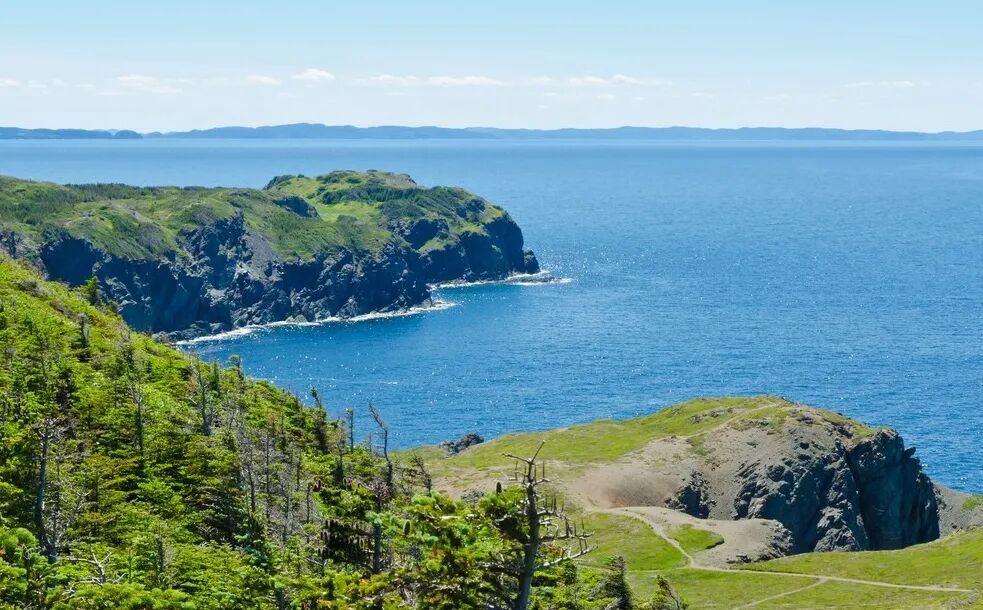
One particularly memorable field trip was to Newfoundland. In Canada, the eastern and central regions have excellent geological exposures in part because Quaternary glaciation scraped away loose surface sediments, rather like a strong wind blowing away sand to reveal the rock beneath. You can clearly see evidence of major geological activity hundreds of millions of years ago, including overturned strata, in rock cross-sections. Where we went in Newfoundland, mantle rocks that had been uplifted were exposed at the surface. That kind of geology was tremendously exciting and inspiring to me.
The trip stood out because it was May, when everyone expected good weather and excellent exposures. But Newfoundland had a blizzard. After finally reaching an area with interesting geology, we found that snow covered all the rocks. It was also extremely cold. We had to walk down to the coast, where the wind was strong, and ultimately saw nothing. Situations like that happen often: exposure to wind and sun is unavoidable in geological fieldwork.
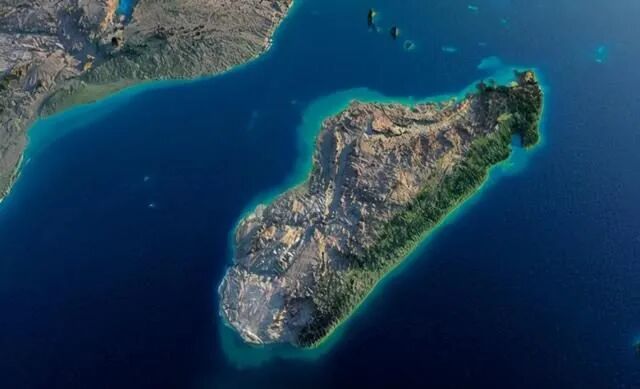
Another trip was to Madagascar. It is a fascinating island east of Africa. It was once joined to the Indian landmass, but when they separated, India moved toward Eurasia and Madagascar was left behind.
Rocks in southern Madagascar can also be correlated with those in Antarctica. The island is rather like a piece left between the two. We expected excellent geology, but the area had tropical-rainforest conditions, and by the time we arrived it looked completely different from what earlier geologists had seen. In just two or three years, dense vegetation had grown over the fresh rock exposures. We had to enter the forest to find the rocks they had observed.
In the field, we try to save time because vehicles, accommodation, and meals all cost money each day. We hope to gather sufficient evidence in as short a period as possible.
I am fortunate that my work is what I love
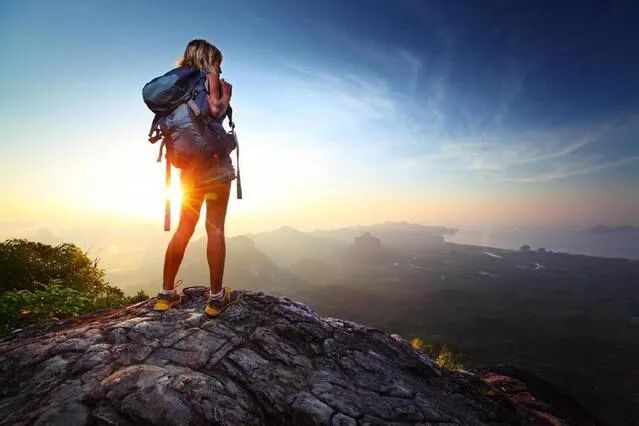
Even if I were not a geologist, I would still enjoy climbing mountains and hiking. Geology lets me do that while completing my work. I also love traveling, and seeing magnificent mountains and rivers is exhilarating. Most people who love geology feel similarly: they enjoy embracing nature.
During a PhD, though, you can become anxious about your research. Even in beautiful surroundings, you may still be thinking about it and connecting everything you see to your project, leaving little mental space to enjoy the landscape.
When attending meetings, however, seeing other people's research can feel like listening to explanations in a natural-history museum. They describe what happened, why it looks that way, where the evidence comes from, and which questions it answers. It feels like a class in the field, which creates a very different state of mind.
#2 Learning geology: nature is the best textbook
Discovering geology by chance, entering nature, and learning through practice
I chose this subject partly by chance. In high school, I had encountered relatively few disciplines and had no channel for finding out what this field actually involved. I simply heard a fancy name and wanted to study it.
My dream in high school was architecture. But when my exam score arrived, I needed to choose a decent subject at a decent university. I selected something that sounded impressive and interested me.
After various turns, I ended up in geology. At first, classes did not spark my interest; I was simply trying to be a good student. But after going abroad, I was taken into the field for classes, and that made a strong impression. In introductory hydrogeology, for example, we wore waterproof waders and large boots and stepped into streams. Shallow water reached our ankles; deeper water came up to our hips. I was no longer just solving a problem that supplied water levels and pressures and asked me to calculate something. I had genuinely measured those data outside. I could use them to determine what I wanted to know, such as the stream's discharge. That was fascinating.
In an introductory Quaternary-geology course, our teacher specialized in glaciers. Canada preserves excellent evidence of glacial processes, so he took us into the field and excavated a section to show its sediments. Someone else might see only a pile of soil, but he would point out that the stones were aligned in the same direction and were mostly triangular, then explain why.
The teacher's enthusiasm for the subject was infectious. That felt different from sitting in a classroom listening to slides and explanations.
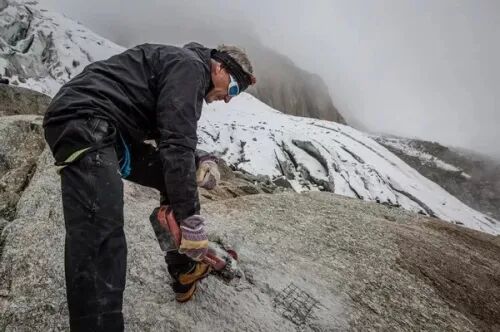
Calorie: One distinctive feature of geology is its strong experiential quality. Interest and enthusiasm are easily awakened, and there are many stories and experiences beyond geological knowledge itself.
Geological education should enter nature, rather than stay in textbooks
We are not simply learning a technical skill that takes us directly into a job after graduation. We study a natural science. Fields such as biology, marine biology, Earth science, meteorites, and astronomy require strong interest to stimulate the desire to learn.
If teachers invest more effort in course formats and content that stimulate students' thinking, that can help them develop a critical approach to scientific questions and continually renew their interest. With rote instruction, I may know the facts without experiencing how interesting they are.
Courses abroad assigned substantial outside reading, presentations, and projects, including practical classes involving experience and exploration. The whole design made you interested and kept you wanting to learn new things.
Those experiences, knowledge, and skills have benefited me enormously during my PhD. They fostered a love of geology that keeps me working, independent of reputation or a requirement to publish. That love encourages me to ask different or novel questions, rather than repeat familiar topics everyone is discussing in papers. I have my own perspective and agency in addressing research problems.
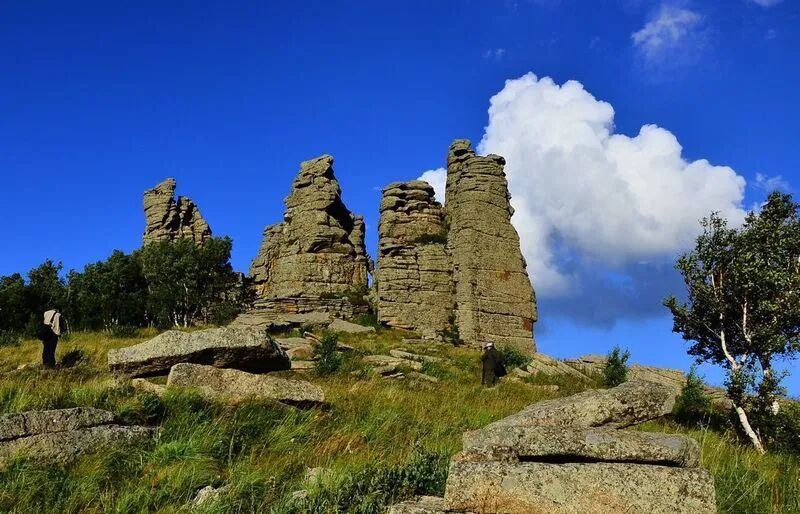
#3 Working in geology: powered by our love for it
Career paths in geology
Career directions in fundamental geology are generally fairly established. We can work at geological surveys or institutions comparable to institutes of geoscience and geophysics in China, or at research-oriented universities. There, you can continue learning and studying the questions you want to pursue. That is the academic route.
In industry, your specific specialization can lead to mineral, oil, gas, or gemstone exploration. Mining companies need teams of geologists with different expertise, including fundamental geology, metamorphic geology, sedimentology, and tectonics.
A third route is science communication, such as teaching or working in museums, popular-science magazines, and related content.
A less common route between research and industry is consulting. Mining companies without their own geological teams can turn to consultancies staffed by experienced geologists with different specializations. These firms generally assist industry while also solving research problems.
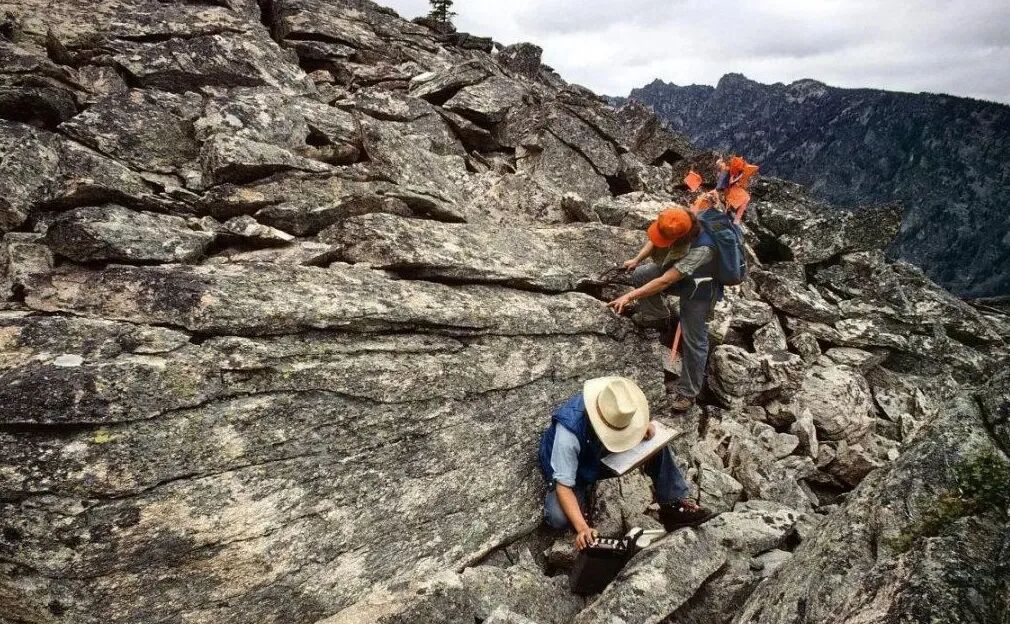
Future career preferences: different research themes and working environments
My own work currently concerns the Permian, island arcs, volcanism, and tectonics. If I continue in research, I would like an area that is somewhat different but still overlaps a little, such as marine geology. I hope to experience a different research life and different themes.
In Canadian industry, we might be sent into the Arctic Circle, or wherever the minerals, oil, or gas being sought are located. Work is generally rotational, such as two weeks on and two weeks off, or three weeks on and three weeks off. During a shift, you eat and live together with others, but afterward you have substantial personal time to organize your thoughts and pursue interests. It is a different kind of work–life balance that I would like to experience.
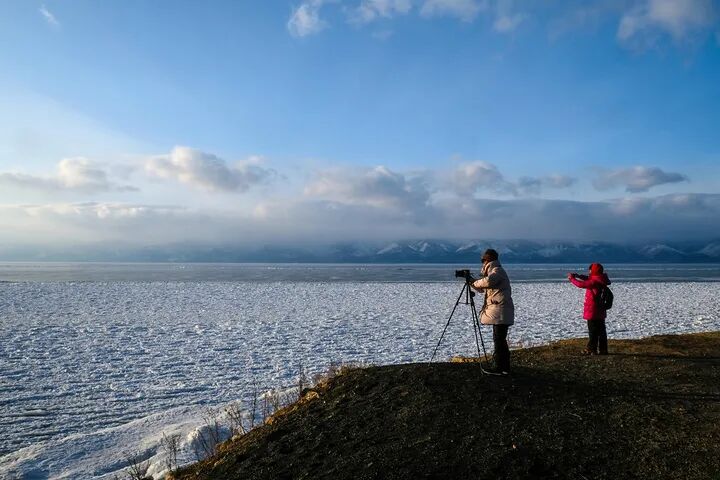
Love for the subject takes me further
Geology is a large, fundamental discipline, so I would encourage high-school students to explore actively which parts of basic geology interest them. While learning the foundations, consider which of its many directions you want to pursue or try. Talk to senior students and teachers in the areas you are drawn to, and learn what their work involves: does it match your interests, and is it what you hope to study or do later? When choosing a research project, do not limit yourself to directions you already know. Giving yourself more possibilities can bring different perspectives and greater depth.
Choosing a supervisor and team can matter more than choosing a university, because they shape your working environment and academic interests. Maintaining those interests keeps your enthusiasm alive, while continually stimulating your potential helps you develop.
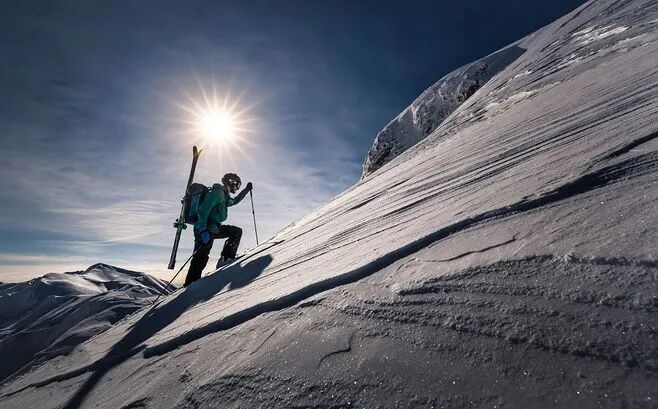
We persist because we love it. Walking through mountains and rivers far from human settlements, we are never alone: a wondrous universe, vast landscapes, and long stretches of time surround us. Geologists are on their way!
Science presenter: Tiannanxing (天南星)
Editors: Fantuan and Honey Peach Oolong
Audio editor: Honey Peach Oolong
Interviewer: Calorie
Audio recording: Honey Peach Oolong
This article represents the author's personal views, not those of this website. Images in the original manuscript were sourced from the internet; please contact the publisher for removal if they infringe copyright.
Sources and editorial history
Restored from a complete historical article exported from the PhDSciNet Official Account.