Historical interview: the following preserves the research experiences and personal views expressed in the original manuscript.
Jobs were shrinking and cases rising; efficiency fell while anxiety and uncertainty grew. These were difficulties many international students faced. When the pandemic disrupted routines and intensified job competition, how did they keep moving and find a way through?
Difficult challenges brought by the pandemic
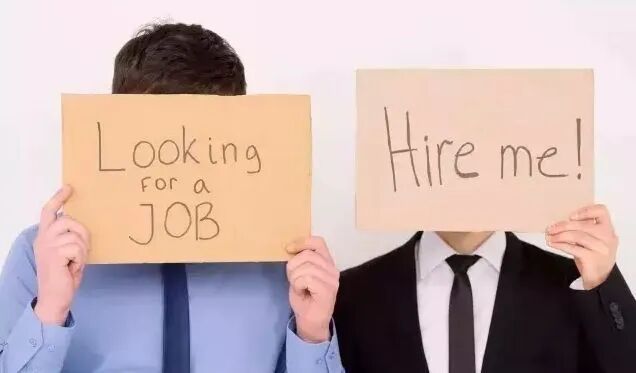
A more competitive job market
Light Through Curtains: the pandemic significantly affected job searches, especially faculty positions. The severe US outbreak led more people to return to China for academic jobs, intensifying competition.
It now feels that faculty requirements in the United States are lower than in China, where publication expectations are high. There are many applicants, so thresholds rise; it is not necessarily that employers deliberately insist on a particular type of person. I think the pandemic strongly influenced requirements in both countries.
Soy Sauce Dried Radish: when job hunting last year, I clearly saw few Canadian openings. Large companies, including manufacturers, were laying people off rather than hiring. Competition felt intense in China and abroad. Returnee numbers seemed to peak in 2020 and remained very large last year.
But this resembles years with more or fewer entrance-exam candidates: sometimes many people compete at once. Objective conditions cannot be changed, so we must accept reality. It is unfortunate that some missed better positions or comparable pre-2020 salaries because of circumstances. I do not think it will last forever; perhaps this year or next will change.
It may also show international students that China has become very strong, which we must acknowledge. Their future may develop better there than abroad.
Light Through Curtains: North American openings in industry and academia were fewer during the pandemic. But in the US autumn 2021 hiring season, I saw many industry openings. Facebook, for example, needed many people after limited hiring in 2020 and early 2021, making up the missing positions. From what I know, this was a good time to find work in the United States.
Nick: it depends on the industry. CS and software already hire many people, including in China. Jobs in our field remain harder to find and may pay less under similar conditions. Software staff can immediately create value for a company, while our R&D has a long cycle; work funded now may take ten or twenty years to yield returns. That is normal, and those industries will pay better.
Soy Sauce Dried Radish: manufacturing may be contracting and becoming a middle- or late-maturity sector, less vigorous than software.

Economic decline and constrained research conditions
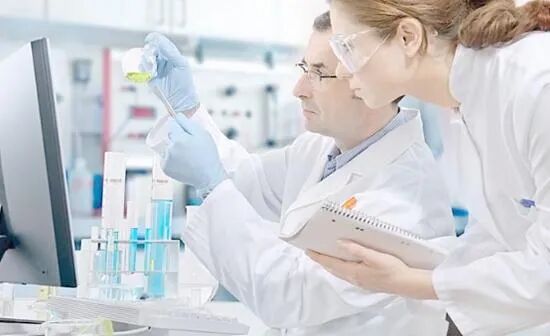
Nick: I initially wanted to remain at my university for the doctorate. I am not sure whether the pandemic was responsible. My supervisor said they could accept me, but I would need to wait for a new grant: existing funding supported four PhD students and all four places were filled. They asked whether I would wait, and I did not want to.
With the pandemic, waiting felt unproductive because experiments were impossible, so I applied here. Sending an English-language test result through the university took a week and was troublesome, but it was eventually resolved. Apart from taking longer, little else went wrong.
Soy Sauce Dried Radish: I feel supervisors found funding much harder after the pandemic. Conversations with students made it apparent that supervisors had run out of money.
Light Through Curtains: I did not feel that pressure from my supervisor, perhaps because earlier grants were substantial three- or five-year projects rather than ending after a year or two. So far, we have not felt much research-funding pressure.
Changes after beginning work at home
Blurred boundaries between work and life
Nick: it happened during a period when I had less work, so I was not very busy. I dislike working at home: home is for rest and work belongs in the office. With little work, doing a small amount at home was manageable.
I often worked two hours and spent the rest of the day on leisure. I like reading and frequently read on my own.
Light Through Curtains: initially I had some work and spent much time on a collaborative paper under review. Once urgent tasks ended, efficiency dropped. Without plans, I spent hours on my phone and videos. At the peak, phone screen time was perhaps seven or eight hours daily, with computer time on top.
For a period, I had no working rhythm because there were no firm requirements. We needed laboratories, but could not experiment. I felt lost and often could not say what I had done all day.
Soy Sauce Dried Radish: mine was different. Many projects from the previous three years were not yet papers. I took the first week off, then organized data, wrote manuscripts, and sent them to my supervisor each day. But my supervisor is human too and was also taking a break.
It was amusing to discover everyone taking it easy. Screen and video time was still much greater than under a normal routine, perhaps more than double. It felt empty, like suddenly relaxing after intense strain without knowing what to do.
Disrupted routines, anxiety, and overeating
Nick: my routine was chaotic. Waiting for an offer made me restless; I ate and slept poorly, lost considerable weight, and felt awful. I might sleep after eleven at night and wake at four, unable to sleep again.
I do not know why, perhaps restlessness while awaiting the offer and uncertainty about the situation here. Email contact was troublesome. My supervisor was in China, and time differences made communication inconvenient. My mood was poor and I could not sleep, so I forced myself to change and follow a better routine.
If I woke at four or five, I put on a mask and ran outside. In over two years in the United States I had never seen Boston at four in the morning, but then I did. I ran from darkness until daylight, with almost empty streets. The surroundings were lovely, and walking afterward felt refreshing.
Light Through Curtains: I instead overate for three or four months, with much longer aftereffects. Even after returning to the lab, irregular sleep and eating continued until late 2020 or early 2021.
Around Christmas 2020, I once woke when it was already dark and wondered how I could sleep so long. Meals were irregular and I overate. I bought many convenience foods, especially supermarket luosifen and Guilin rice noodles.
My weight did not change, but I felt very anxious and ate a lot, buying fruit and eating whenever I sat there.
Soy Sauce Dried Radish: in the first week at home I was visibly delighted. I remember buying over two hundred dollars of snacks, no vegetables or fruit, simply to celebrate working from home.
A month later, perhaps from June, things seemed wrong. I ate continuously from morning to night without knowing what I had done. Emptiness or anxiety from inactivity seemed to make me find something to do, and eating was simplest. I gained considerable weight, my mood was no longer happy, and work slowed greatly.

Nick: that sounds like my roommate. Before the pandemic we went swimming or to the gym three or four times weekly. After it closed, every supermarket trip meant seven or eight tubs of Häagen-Dazs, especially mango. He might eat them all in under a week. He gained perhaps twenty or thirty jin—roughly ten to fifteen kilograms. It was striking.
Light Through Curtains: it is understandable. At home, looking around, you see the bed or food, so sleep or eat. That was the situation.
A female roommate could not work in the bedroom because seeing the bed made her want to sleep. Moving her desk to the living room greatly improved efficiency.
Nick: eating was manageable for me, but with nowhere to go I bought a skipping rope and exercised in an open space beside our house every day, improving my mood.
Soy Sauce Dried Radish: several classmates shared our house. When efficiency fell, three of us put computers at a living-room table and treated the downstairs like a library. Nobody talked; we each worked. Efficiency was quite high. Creating a workplace for yourself matters.
When life returned to its course
Adjusting and returning to work
Nick: after some time in China, I resumed work because my supervisor was also there and arranged somewhere for experiments. My program had also begun.
I went daily to learn about our field, which I did not yet understand, while taking online classes. Around January 4 after New Year, I began at the experimental workplace my supervisor arranged and stayed for over half a year, roughly January to July. Alongside online classes I conducted some experiments and learned about the field.
I felt good then: get up, go to work, return in the evening, rest, and sleep. The regular routine suited me.
Studies remained my priority even while experimenting there. Each night I write several tasks for the next day in a notebook and plan what I can realistically do.
I follow that list the next day. Initially I planned too much, but after finding a suitable workload I completed it well and felt good.
Light Through Curtains: I stayed entirely home from early March until June 2020, without going to campus.
Around July or August I began returning because a paper needed additional data. Efficiency was high: most people stayed home and the lab was empty, with only me or a few others. It felt good, quiet, and productive.
Soy Sauce Dried Radish: similarly, after three or four months I returned for experiments when my supervisor obtained a project. The notification felt like being released into freedom. I was so happy, almost as if going to work meant winning a prize.

Challenges remained after returning
Light Through Curtains: initially I had a clear goal—collecting additional data—so efficiency was comparable with before the pandemic. After that task ended, it was lower.
Few people attended campus, perhaps only two or three daily in the lab. I felt relaxed and less urgency. Efficiency was moderate, but I was less anxious about work.
Soy Sauce Dried Radish: what overwhelmed me was how much my skills seemed to have deteriorated. Familiar operations that once took an hour felt awkward after months of slackness, as if my hands belonged to someone else and would not obey. I felt clumsy. It took perhaps a month to recover, almost like rehabilitation training, which was remarkable.
At the project’s start, progress was very slow. A day passed after little work, and efficiency improved only gradually. It taught us that abilities improve with use and deteriorate without it. I needed a long time to regain my routine.
Nick: for me it is mainly mindset. Once calm, I can adjust. Restlessness and impatience make everything harder. My supervisor in China observed me and said I seemed restless and needed more calm.
After thinking, I felt that was sensible. Work through one thing at a time; rushing does not help. Recognizing the need for calm was important and helped me return to that state quickly.
Stay composed and respond calmly
Nick: sometimes I do not feel anxious, yet signs suggest anxiety: poor eating, sleep, and early waking. I never think “I am very anxious lately,” but these things occur.
When that happens, I clear my mind. If I do not want to work, I do not; forcing it produces poor work. Personally, I need to work with my full energy and attention.
If I feel poor, I choose to recover rather than force the task. Working with resistance really does not go well; many experiences have shown that.
The pandemic disrupted life and could leave you lost and anxious. It also gave people an opportunity to reconsider themselves and learn to face difficulties with greater calm.
Nobody had it easy. May everyone carrying these burdens reach their hoped-for destination with health, safety, calm, and determination.
Contributors: Nick, Light Through Curtains, Soy Sauce Dried Radish
Text editor: Calorie
Audio editor: Honey Peach Oolong
Interview: Fantuan, Calorie
Audio recording: Honey Peach Oolong
This article expresses the author’s personal views and does not represent those of this website. Images were sourced online; please contact us regarding any infringement.
Sources and editorial history
Restored from a complete historical article exported from the PhDSciNet Official Account.