

Historical interview: the following preserves the research experiences and personal views expressed in the original manuscript.
On March 16, 2020, the first participant was vaccinated in the phase 1 mRNA-1273 trial advanced by Moderna and the US National Institutes of Health and bringing mRNA vaccines into public view. What exactly are mRNA COVID-19 vaccines, and what technical difficulties must their development solve?
This installment explores the emerging newcomer to vaccine technology: mRNA vaccines.
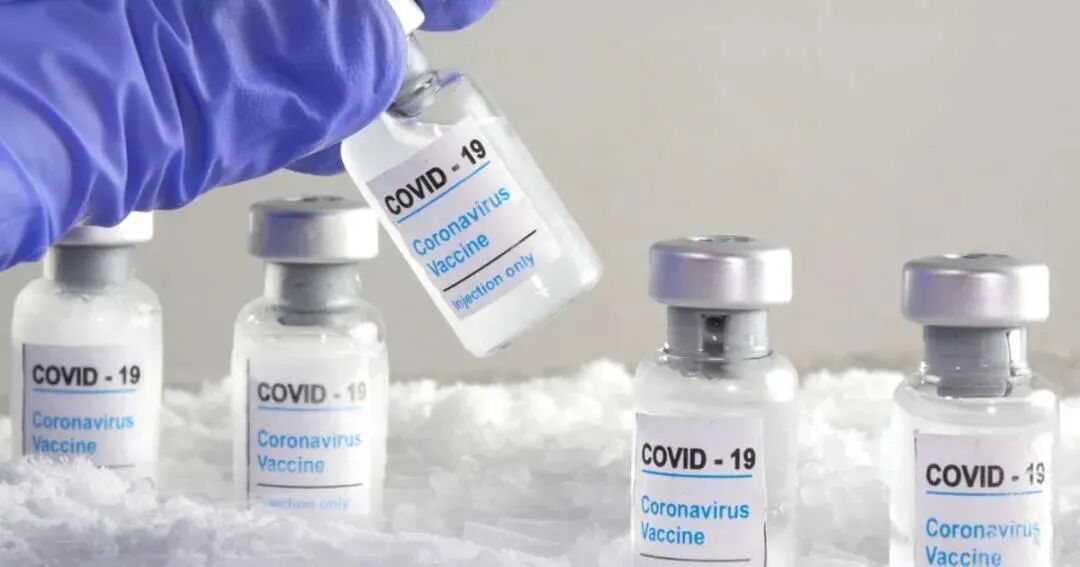
A new coronavirus-vaccine approach: mRNA
Can you introduce the history of these widely discussed mRNA vaccines? What technical challenges has development faced?
EM: their origins are very early if you examine the history. In the 1990s, mRNA expression was achieved in living organisms or cells: primary research already demonstrated expression in mice in vivo in 1990, so 1990 cannot simply be assigned to in vitro and 1991 to in vivo. Those early approaches lacked carriers. Many early papers were mainly limited to cancer research. Professors at Penn and in the University of California system largely worked on tumors without carriers, injecting mRNA directly into mouse skin or under it to see whether expression occurred.
The early problem was clear: RNA is unstable, so expression was very low. Pieter Cullis and other researchers advanced lipid-delivery systems over many years, including lipids for nucleic-acid delivery; Karikó and Weissman’s important 2005 advance concerned mRNA nucleoside modifications, a distinct contribution. Combined with mRNA, it formed a carrier and enabled delivery. BioNTech and Moderna were established afterward. Early approaches resembled other nucleic-acid delivery, such as siRNA, or small interfering RNA: a carrier was still needed.
Most people found that without a carrier, or with inefficient delivery, protein expression and immune activation fell below expectations. That was the main problem. LNP lipid materials gradually entered nucleic-acid applications. Moderna was founded in 2010 with an mRNA focus, so cannot be described as having always worked on siRNA, but after 2010 the manuscript discussed work associated with MIT researchers such as Robert Langer and Daniel Anderson, but supplied no funding-allocation evidence to establish that most company funding went to MIT. During that period many different cationic LNP systems and LNP-based delivery approaches appeared.
Many companies similar to Moderna emerged, including Arcturus Therapeutics, Ethris, and CureVac, using their own RNA and delivery approaches; they cannot all be described as first delivering miRNA and then moving to mRNA. BioNTech’s Katalin Karikó and Penn’s Drew Weissman made foundational contributions and were considered strong Nobel Prize candidates that year.
Historical development note: the manuscript’s description of “strong Nobel Prize candidates” reflects its original setting. Karikó and Weissman subsequently received the 2023 Nobel Prize in Physiology or Medicine.
Eureka: mRNA was discovered a long time ago. Biology’s central dogma describes transcription and translation from DNA to RNA to protein; anyone who attended secondary school has probably heard of it. As an important link in that process, mRNA drew early attention. Around 1978, in the late 1970s, people were already trying to transfect mouse or human cells with mRNA and induce protein expression in target cells in vitro.
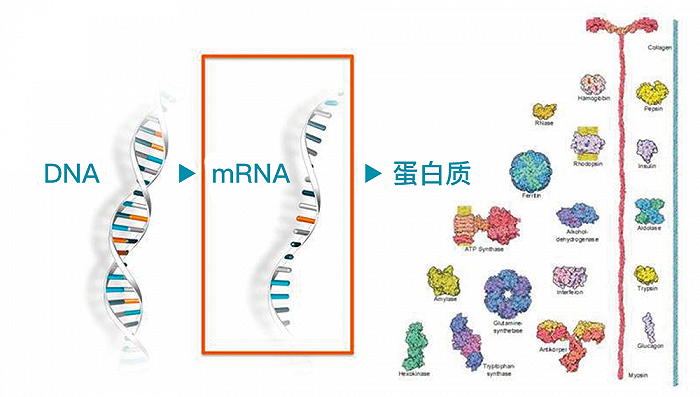
But preparing, delivering, and purifying expression-compatible mRNA in vitro still faced major limitations; it is too broad to say DNA or RNA could not be synthesized anywhere. Researchers therefore extracted mRNA directly from animal cells for experiments. Purification was limited and results understandably poor, with only occasional successful expression in cells in vitro.
By the mid-1980s, that changed. Two scientists, Krieg and Douglas Melton, used SP6 RNA polymerase and other materials to report active mRNA produced by in vitro transcription in 1984. The method remains a classical route used today.
Although they could synthesize mRNA for experiments, they did not yet realize it could be used in vaccines. In the late 1980s, Robert Malone, Philip Felgner, and Inder Verma published important RNA-transfection research in 1989: mixing mRNA with liposomes allowed cells to take it up and express protein. He realized one could actively deliver designed protein instructions into cells through liposomes, making mRNA a potential therapeutic approach.
He later delivered mRNA into frog embryos, another major episode in its history. But when others rushed to try the approach, it seemed unstable and expensive. Delivery-system limitations frequently caused experimental failures.
The 1989 study by Malone, Felgner, and Verma used liposomes containing a positively charged lipid, greatly improving mRNA–carrier association and stability, with milestone advances in delivery. By this stage, the beginnings of mRNA vaccines were present and commercial development began.
Another important technical milestone came from University of British Columbia professor Pieter Cullis, who substantially developed and improved lipid-nanoparticle (LNP) nucleic-acid delivery, including classical formulations and encapsulation technology. The continuing efforts of these scientists and entrepreneurs produced the mRNA vaccines now in widespread use.
Looking back, mRNA-vaccine development was a very long, winding journey, almost a heroic epic.
Astro Boy: a small additional story concerns the original disease target. In 2013, an mRNA rabies vaccine was studied in a human phase 1 trial; this should not be treated as the first human trial of every type of mRNA vaccine. Have you ever been bitten by a dog? I was once as a child, and afterward received perhaps five or six injections, probably an inactivated vaccine.
The early mRNA rabies trial discussed here was run by Germany’s CureVac, but its results were not particularly good, and the second did not begin until 2018.
Interestingly, when I checked its website, the second trial was not expected to produce results until 2023. It began clinical trials first, but the product had still not actually appeared at the time of the interview.
What principles underlie mRNA encapsulation and delivery?
EM: early conventional liposomes generally had one or two components, such as natural phospholipids, forming a typical nanoscale phospholipid bilayer. Many such formulations had already reached the market. But negatively charged siRNA or mRNA could not be efficiently encapsulated with those older one- or two-component systems.
Scientists therefore introduced cationic lipids, which are positively charged. Before the nanostructure forms, positive lipid material interacts with the negatively charged material to enable more efficient encapsulation.
An early problem was balancing efficacy and toxicity: positive charge could potentially damage cells. Ionizable lipids emerged perhaps in 2007–2008 or earlier. Charge depends on the lipid’s pKa and environmental pH; it may be lower near physiological pH and become more positive in acidic conditions, rather than every material switching at a fixed pH of 6. That can reduce toxicity while maintaining efficacy and make medicines feasible.
Early work focused on siRNA delivery. Companies and researchers such as Moderna and Pieter Cullis established the industry’s foundations, progressively optimized them, and ultimately produced marketed ionizable lipids such as MC3 and Moderna’s own “102.” Progress in ionizable lipids was progress in carriers.
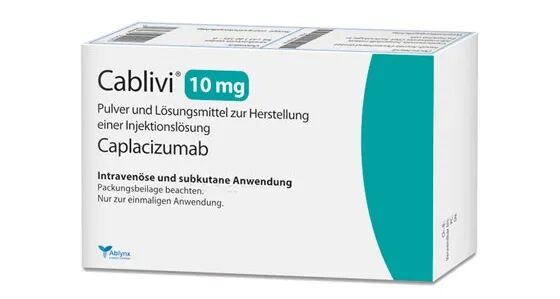
Astro Boy: the liposomal drug authorized in 1995 was DOXIL, or liposomal doxorubicin, not Cablivi. Cablivi’s caplacizumab is an antibody fragment, approved in the United States in 2019, rather than that liposomal formulation. The development of liposomal medicines, providing a useful template for mRNA vaccines. Scientists now investigate other encapsulation materials beyond liposomes to improve membrane penetration and biological safety.
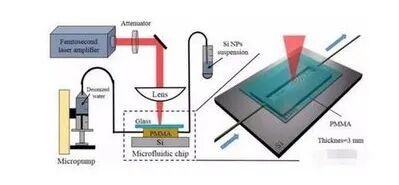
Microfluidics is also a major topic in carrier and encapsulation research. Precise control of the process could greatly improve manufacturing consistency. Liposomes self-assemble, and many factors are hard to control with conventional mixing. Moving to microfluidic mixing allows conditions to be controlled in a small environment, potentially improving stability and encapsulation, and controlling size.
Distinctive advantages of mRNA vaccines
Why are mRNA vaccines receiving so much recognition and scientific interest?
EM: simply put, they can move ahead quickly, and perhaps the mRNA era has arrived. Stability, initial construct design, in vitro transcription (IVT), and liposomal encapsulation all require corresponding manufacturing facilities. Laboratory experiments alone are not enough; industrial production must be coordinated.
Earlier vaccines, such as inactivated or attenuated ones, had development periods comparable with conventional new drugs under earlier standards: generally six to ten years.
With mRNA, once the genetic sequence encoding spike protein is available, corresponding mRNA can be designed; protein structure alone does not uniquely determine its nucleic-acid sequence, optimize it, and make an mRNA form that expresses spike protein. Different scientists are working on this, and in theory development can be very fast.
Compared with other routes, mRNA vaccines can be quicker and have advantages in scaling up. Doses are relatively small: BNT used 30 micrograms of mRNA and Moderna 100 micrograms. Those were early doses for particular products, not all ages or later formulations. Fifty liters alone, without concentration, purity, and losses, cannot establish enough material for two doses for two billion people. mRNA in vitro transcription does not require growing live virus; inactivation belongs to inactivated vaccines and should not be confused with live attenuated vaccines. mRNA therefore has distinctive natural advantages.
Eureka: the pandemic revealed a large advantage over conventional inactivated or attenuated vaccines: their mechanisms differ completely. Traditional inactivated vaccines first require isolation and purification of a virus strain, then very careful killing before delivery into the body.
Inactivated vaccines have had many historical problems. In the 1950s in the United States, the Cutter incident involved incompletely inactivated batches causing illness, paralysis, and deaths; this does not mean hundreds of thousands of children all developed severe disease or died. Such vaccines have therefore taught Western countries painful lessons.
mRNA vaccines differ by not delivering any actual viral component. They deliver instructions for part of the S-protein sequence as mRNA and induce cells to express the antigen, avoiding delivery of a whole virus, although comparative product safety still requires evidence. Their applicability is broad: in theory, mRNA can be investigated for different protein-related diseases, but research potential does not establish a treatment, and not all applications are vaccines, including Alzheimer’s, Parkinson’s, or insulin deficiency in diabetes. These directions require specific research and clinical validation, rather than a guarantee that mRNA solves every protein-related disease.
If you lack a protein, I deliver an mRNA instruction to make it. If a protein is overexpressed, other nucleic-acid or regulatory strategies can be investigated, but gene silencing is not simply an ordinary mRNA vaccine. The approach is thus very general and attracts great interest. Countries and drug companies have opened mRNA programs for cancers, cardiovascular conditions, and rare diseases, developing clinical pipelines. Manufacturing standards are strict, but easier than for inactivated viruses. Historical US vaccine problems included incomplete inactivation and purification issues. in vitro transcription does not require growing live virus, but template preparation, purification, encapsulation, and quality control remain stringent; it is not ordinary chemical manufacturing.
Avoiding live-virus production is a feature, not a guarantee of safety for every product, Choices of platforms also reflect specific evidence, supply, and policy rather than a single reason.
Astro Boy: in one sentence, a nucleic-acid vaccine hands instructions for a particular viral protein to the immune system, letting it respond and, through the central dogma, trigger antibody production. That is distinctive compared with other approaches.
I have no definite judgment of its overall advantages and disadvantages. There are many good aspects and some less good ones; that is a balanced perspective.
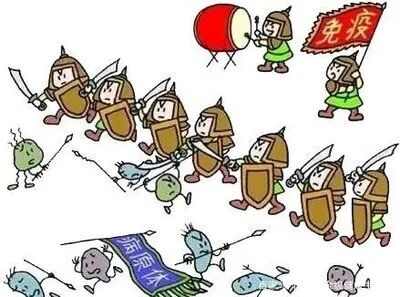
Why have mRNA COVID-19 vaccines progressed so well when HIV vaccines have seen so little progress despite years of work?
Eureka: coronavirus and HIV differ greatly. Differences involve antigens, variation, and infection mechanisms; vaccine difficulty cannot simply be explained by coronavirus being “weak” and HIV “strong”.
Why are HIV vaccines harder? Both coronavirus spike and HIV envelope proteins have antibody targets on the viral surface; HIV targets are not all deep inside the virus. The HIV envelope’s glycan shield, structural changes, and high diversity can impede antibody recognition, making broadly effective protection harder to induce.
HIV is also a retrovirus. When replicating in the body, it can reverse-transcribe its RNA into viral DNA and integrate that DNA into the infected cell’s genome. Viral variation does not arise simply because it has “merged” with human DNA. This is very hard to control and potentially frightening: HIV in patient A and patient B can differ through their own mutations. Treatment effectiveness involves factors such as resistance; these differences do not establish that standard antiviral treatment cannot work across patients. Neutralizing antibodies designed through traditional approaches may therefore stop working for a particular patient over time.
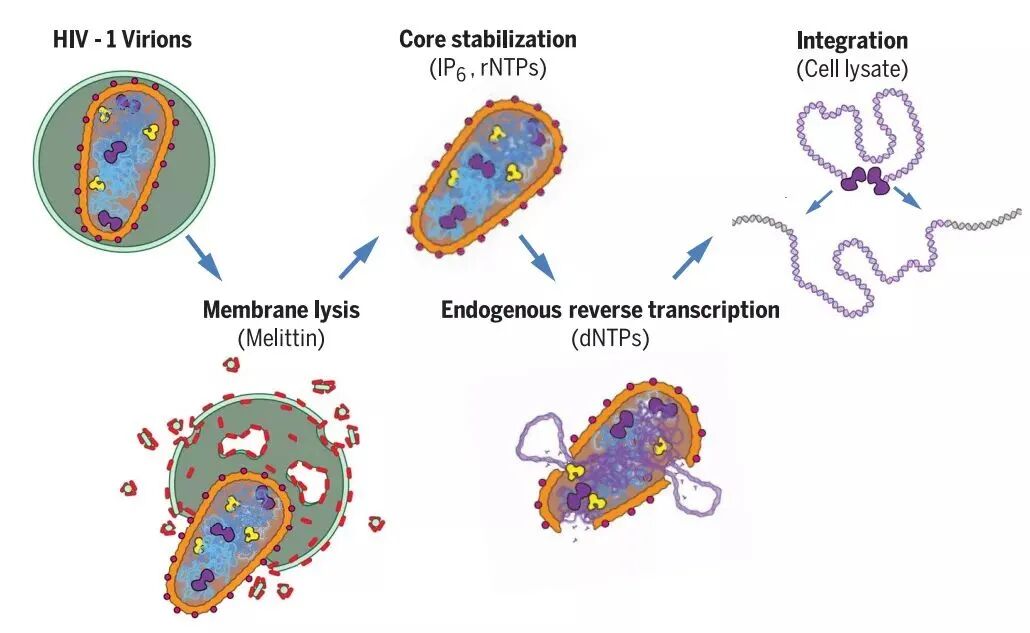
HIV also actively attacks human T cells, reducing immunity. An already virulent virus weakens the immune system further, making sufficient antibody production and recognition more difficult.
Coronavirus and HIV interact differently with immunity and cannot be reduced to being naive, weak, or strong. Many people recover from COVID-19 and develop immune responses, but that does not guarantee prevention of another infection or exclude severe and long-term consequences. HIV can damage immunity and vary, and is generally not cleared spontaneously. Antiviral treatment can control it effectively, but is not a cure. Antibody responses and treatment experiences cannot simply be transferred between people; these are challenges for vaccine and treatment research.
One more point: although we do not yet have a very good solution for HIV, valuable technological knowledge has accumulated. Optimistically, a revolutionary breakthrough linking those technologies could unleash rapid advances and solve problems that have remained stuck for years. That could help other difficult viruses too. We still need to wait, but personally I remain fairly optimistic.
The first large-scale global rollout of mRNA COVID-19 vaccines succeeded, signaling the rise of a new technology, expanding the vaccine toolkit and eligible populations, and strengthening humanity’s confidence in overcoming the pandemic.
Contributors: EM, Eureka, Astro Boy
Text editors: Calorie, Eureka
Audio editor: Honey Peach Oolong
Interview: Fantuan, Calorie
Audio recording: Honey Peach Oolong
This article expresses the author’s personal views and does not represent those of this website. Images were sourced online; please contact us regarding any infringement.
Additional sources checked
US National Institutes of Health: Early mRNA-1273 trial
Primary research: Nucleic-acid expression in mice (1990)
Primary research: SP6 in-vitro mRNA transcription (1984)
Primary research: Cationic-liposome RNA transfection (1989)
University of British Columbia: Pieter Cullis’s delivery contributions
Nobel Prize official website: Medicine prize 2023
Primary research: Early human mRNA rabies trial
US Food and Drug Administration: DOXIL approval information
US Food and Drug Administration: Cablivi approval information
Health Canada: mRNA COVID-19 vaccine principles and quality standards
US Food and Drug Administration: Vaccine evidence and review
US Centers for Disease Control and Prevention: Historical vaccine-safety incidents
Primary research: The HIV envelope glycan shield
US National Institutes of Health: HIV life cycle and treatment
World Health Organization: COVID-19 vaccines and breakthrough infection
Primary research: Ionizable-lipid pKa and pH dependence
US Food and Drug Administration: Early Moderna manufacturing and quality review
Sources and editorial history
Restored from a complete historical article exported from the PhDSciNet Official Account.
Editorial revision: The historical interview and research outlook are retained. Necessary corrections cover the trial date, research contributions, RNA types, drug identity, production estimates, HIV, and vaccine safety. All original paragraphs and their full original translations remain in private records; research potential is not presented as established treatment.