
Historical interview: The following preserves the research experiences and personal views expressed in the original manuscript.
Anonymous account: Dadldida describes personal experiences below. The identities of unnamed supervisors, colleagues, or institutions should not be inferred from these descriptions. Terms such as “corporal punishment” and “PUA” retain their original narrative context and do not constitute a diagnosis or factual finding about another person by this restoration.
PhDSciNet Interview Series
Difficult Supervisors: Part3
Today, I want to talk about my overseas supervisor
My image of an ideal supervisor
• When I lack the ability, the supervisor would train me hands-on;
• Once I have developed my abilities, they would take a broader view and provide guidance through key insights;
• If they could also provide substantial academic resources and background, that would be close to perfect.

My overseas supervisor in reality
I need to consider different aspects of my overseas supervisor separately. Academically, I think he is excellent, with much that I can learn from, and I am grateful for his training. But in other respects, including personality and communication, I have serious complaints. Interacting with him placed me under a great deal of stress.
Why do I want to discuss this?
While being supervised abroad, I experienced a great deal of unfairness and even what I felt was abuse. But I think we should talk about it. Sharing today may help people who come afterward, and it is also a process of healing for ourselves. When we express a problem, we can become less afraid and face it more appropriately.
01 Experiences that shook my outlook
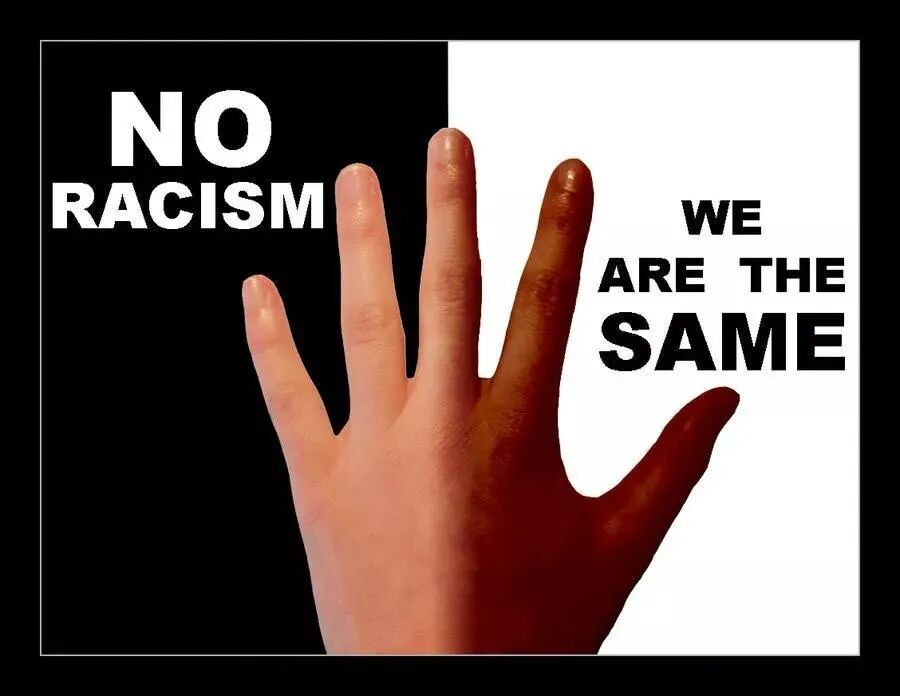
An immigrant supervisor's racial prejudices
My overseas supervisor is an immigrant. Immigrants often have one of two mindsets: some feel the place where they now live suits them better; others feel there were many problems where they originally lived. My supervisor belonged to the second group. I would not call it racial discrimination, but he certainly seemed to have a kind of racial inferiority complex. He often told me what was wrong with his original country. If I objected slightly, he would say that people from my country could not listen to criticism. That made me angry, and I felt it showed a lack of respect.
“Corporal punishment” after disagreements
For example, after a disagreement, he sometimes imposed what I described as punishment like that in primary school: making me write things that seemed entirely useless, such as how I washed a glass beaker.
A supervisor does not punish students as directly as a primary-school teacher might, saying, “I am punishing you so that you recognize your mistake.” University supervisors use more sophisticated tactics. He would not openly say it was punishment. Instead, he said it was important: writing about washing beakers would develop my writing ability. It seemed ridiculous.
Or perhaps we were preparing to submit to journal A, and he would tell me to put the paper into journal B's template as well, so that if A rejected it, we could submit directly to B. That sounds reasonable, but the paper had not been fully revised. After moving it into B's template, we would still need to keep revising it, so that template served no purpose. Yet he asked me to do these things after a disagreement. I felt it was clearly punishment, though he would not explicitly admit it.
Emotional changes and delayed papers
Another aspect I disliked was how emotional he was, unlike what I expected of a leader. I think a leader should stand by a decision and keep moving forward with it, correcting mistakes if necessary. They should not constantly change their mind, like a certain former president saying one thing today and another tomorrow.
For example, he might tell me to read the literature one day, then ask the next day why I was reading it. He had forgotten his own instruction.
Papers were worse: one paper took two years to write, with endless delays.
A supervisor's mind is hard to read—never admitting a mistake
For example, when writing a paper, we initially chose approach A. One day, he read something that gave him a new idea and told us to change to approach B. I agreed, thinking his idea might help bring out a stronger element of novelty.
A few days later, he realized that the paper he had read was not particularly good, or did not really connect with ours. But he would not say he was wrong or suggest returning to approach A. Instead, he called me into his office and asked, “Do you think A or B is better?” turning it into a question for me to answer.
If I had not understood what he was thinking and simply said B was still better, he became furious and criticized me relentlessly. He said I did not understand research deeply, that all the thinking in the paper came from him, that he had invested a great deal, and that I was merely repeating things. Then the issue would not end. If I instead said A was better and identified something that matched his own view, he would agree: “You have a point. I'll think about it again.”
With other supervisors, A means A and B means B. You can express which you prefer and discuss it. With my overseas supervisor, however, I constantly had to guess his thoughts, which left me feeling overwhelmed.
A common feature of poorly reviewed supervisors: strong pride and a need for control
From my observations, supervisors who attract many complaints or poor assessments often have two problems: excessive pride and a strong need to control others.
My supervisor was like that. I had to speak very carefully. If a sentence did not fit what he was thinking, or seemed to offend him, he would become furious and spend the next two or three hours bringing up students' past mistakes and criticizing them relentlessly. This was common. My longest conversation with him lasted five hours, of which only half an hour concerned research. The rest was him scolding me.
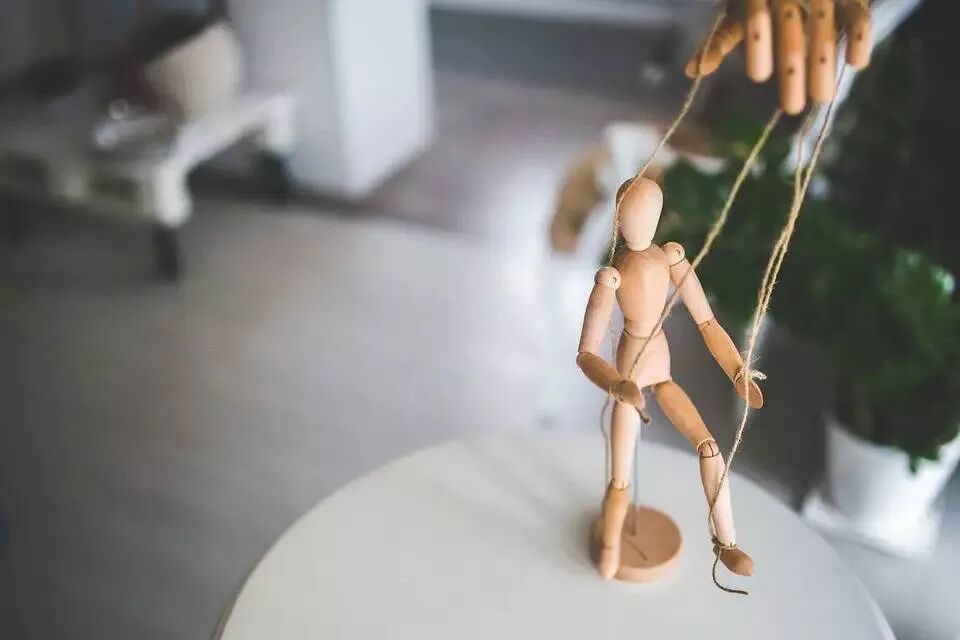
He also had a very strong need for control and would psychologically manipulate students—what we call “PUA.” Initially, I was genuinely grateful. He treated me like a blank sheet of paper, guided me carefully, and taught me what research involved.
Once I gained some ability, however, he treated me as a tool. We might discuss for two hours every morning what I would do that day, what I had done yesterday, and the tasks he would assign next. If he told me to think about or write a paper, and then saw me enter the laboratory, he would call me back into his office for another hour to ask why I had gone there. Whatever reason I offered, he was dissatisfied, because he believed I should do only the task he had assigned.
02 Similarities and differences among colleagues in the group
I was not the only one
Our supervisor's personality was like this, and no one escaped it. Women were generally scolded until they cried, and men sometimes came out of his office red-faced and angry. He liked to discuss things with the door open, so everyone in the office could hear his arguments with students.
Worse still, he would select one student at each stage as his main target for discussion. Initially, it was his first doctoral student, who graduated after four years. He then chose another student. After that student graduated, he had no students formally registered under him, only visiting students like me, so he chose me. Those of us receiving this special attention were brought into his office almost every day. There was always something new to discuss; if not, he talked about something else or revived old complaints. It was stressful.
The group's “survivors”
There were two kinds of survivors. One was visiting researchers with strong connections: their supervisors had influential relationships, so the teachers needed to preserve goodwill and opportunities for future collaboration and did not criticize them so relentlessly.
The other kind—and I only saw one such person—really performed very well. He had excellent interpersonal skills and academic abilities, frequently offering the supervisor good ideas. He was also highly skilled in communicating with him, rather than merely obeying everything. That kind of student could win the supervisor's favor. Although he was criticized sometimes too, he generally had a better experience than I did.
Changing myself—learning the art of communication?
I am not particularly skilled at navigating emotions and relationships. In fact, realizing that I was not good at speaking or managing hierarchical relationships was one reason I chose research: I thought respecting the research itself would be enough. Between a supervisor and student, I felt we should debate and discuss the science. Questions of deference or rhetorical tactics did not seem especially important.
After experiencing severe verbal abuse, however, I began learning from students around me, especially the one I mentioned. He was very good at handling relationships. I asked him for advice and watched what he did. There was little alternative: when you encounter a supervisor with unstable emotions and strong pride, you need to change yourself because you cannot change them, right?
For example, when the teacher made a correct point, you would praise them enthusiastically: “You're right! That's excellent! Why didn't I think of it?” That made him happy. When he was wrong, you tried to find something valid within the mistaken point. Perhaps the specific idea was incorrect, but you could consider whether his method of thinking might apply elsewhere. When you raised that, he could recognize his mistake without feeling that his dignity had been damaged, and would think you were good and had considered the question independently.
You had to work hard in both directions to show that the teacher was right. It was frustrating, but it was a communication method I learned from someone else.

How do you withstand being scolded—can you simply stay silent?
When a problem arose, the supervisor attacked me relentlessly. Initially, I was compliant: whatever he said, I stopped speaking. I thought, could I simply remain silent while he scolded me? But that did not work. Once I stopped speaking, he told me to speak: “Why aren't you saying anything? Are you refusing to listen to what I say?”
Later, I went from compliance to anger. If he said something, I responded, and we argued back and forth. Sometimes, that actually calmed him down, after which we could move the problem forward.
Afterward, seeing how some students handled relationships well, I also learned to be more tactful. When a problem arose, I considered whether taking an apologetic approach could resolve it. If it could, that was best, because it saved more time for research. If it still could not, I continued standing my ground. There was no alternative.
My previous senior colleague was praised by the supervisor for his good temper: however much he was scolded, he did not mind. The supervisor criticized me as disobedient because I answered back. I do not know whether enduring criticism silently was his standard for a good apprentice, but that certainly was not how I behaved.
After going through that stage, we have now reconciled without continuing to collaborate. I can recognize the good he gave me and understand the conflicts during our work together. I still respect him, but we should not keep working together.
Releasing negative feelings by supporting one another
I often complained about my supervisor with fellow students, but chose what to discuss.
Sometimes, when you mention a problem, another student seems unconcerned because they have not experienced it. There is no need to keep talking to them if they cannot empathize. But if someone in the same group has just been scolded and is complaining strongly, I join in. We share the same supervisor and the same difficulties. Talking through them also releases our negative feelings.
When I first joined the overseas supervisor's group, two senior colleagues had already been through many such battles. The three of us often played ball at lunchtime, ate together, and complained about the supervisor. I felt very happy doing that.
After both colleagues graduated, fewer people in the group could talk openly with me. My accumulated negative feelings became more painful, and I felt weighed down every day. When there is an opportunity to release difficult emotions, I think you should take it.

03 My questions
Are we boss and employee, or traditional master and apprentice?
A hierarchical working relationship is one between boss and employee: the boss pays, and the employee works. But we all know that the small amount a teacher pays during our studies is hardly comparable with the effort we put in.
Consider the traditional Chinese master–apprentice relationship, such as at Deyun Society. In that arrangement, the master initially trains and supports the student for three years, and the student then works without pay for two years to repay the master. But if that relationship arises, the master may show less respect: “You are my apprentice. I spent a great deal of time training you, so naturally you should work for me afterward.” They may therefore feel little need to show respect in everyday interactions. Similar dynamics can arise between father and son. During arguments, a father may become emotional and think, “I raised you for so many years, and now all you do is argue with me.” In such relationships, people may pay little attention to their language or emotions and say things that seem minor to them but are deeply hurtful to children, students, or apprentices. They may regret it afterward, but from a position of authority, they neither explain nor apologize.

Why was the supervisor so conflicted?
I think it was because he had a great deal of imagination, which was his greatest academic strength. But abundant imagination can also scatter your thinking: one idea today, another tomorrow. Many supervisors are like that, yet others with many ideas still focus on one direction. Mine did not. He kept saying, “Let's try this,” or “Make an effort.”
Sometimes that took the work further off course or added unnecessary complications. As a student learning to understand research, I also had to guess what he meant: did he genuinely want to try something to see whether it worked, or did he want me to stop him? When he was uncertain, he behaved strangely. Rather than stop himself, he needed a student to stop him. I did not know what he was thinking, so I do not know whether he felt uncomfortable, but I certainly did.
Dadldida concluded:
The relationship between student and supervisor really affects research. Research is objective, while dealing with a supervisor is subjective, yet the subjective relationship strongly influences the objective result. Fortunately, I still enjoy experiments, especially discovering a new phenomenon. Remembering what happened with the supervisor leaves me feeling bad, but in the end I still chose to continue in research.

Participant sharing this account: Dadldida
Editor: Honey Peach Oolong
Interviewers: Fantuan and Calorie
Audio recording: Honey Peach Oolong
Edited on 2026-10-10: Preserved Dadldida's complete anonymous account and personal views, while excluding the participant profile card. Judgments about other people's personality and motives remain the interviewee's historical interpretation, not independently verified conclusions of this restoration.
Sources and editorial history
Restored from a complete historical article exported from the PhDSciNet Official Account.
Editorial revision: Edited on 2026-10-10: Preserved Dadldida's complete anonymous account and personal views, while excluding the participant profile card. Judgments about other people's personality and motives remain the interviewee's historical interpretation, not independently verified conclusions of this restoration.