
English translation of the original Chinese article. Publication dates and the extent of recovered text are preserved. Figures retain their original labels. Read the Chinese original.
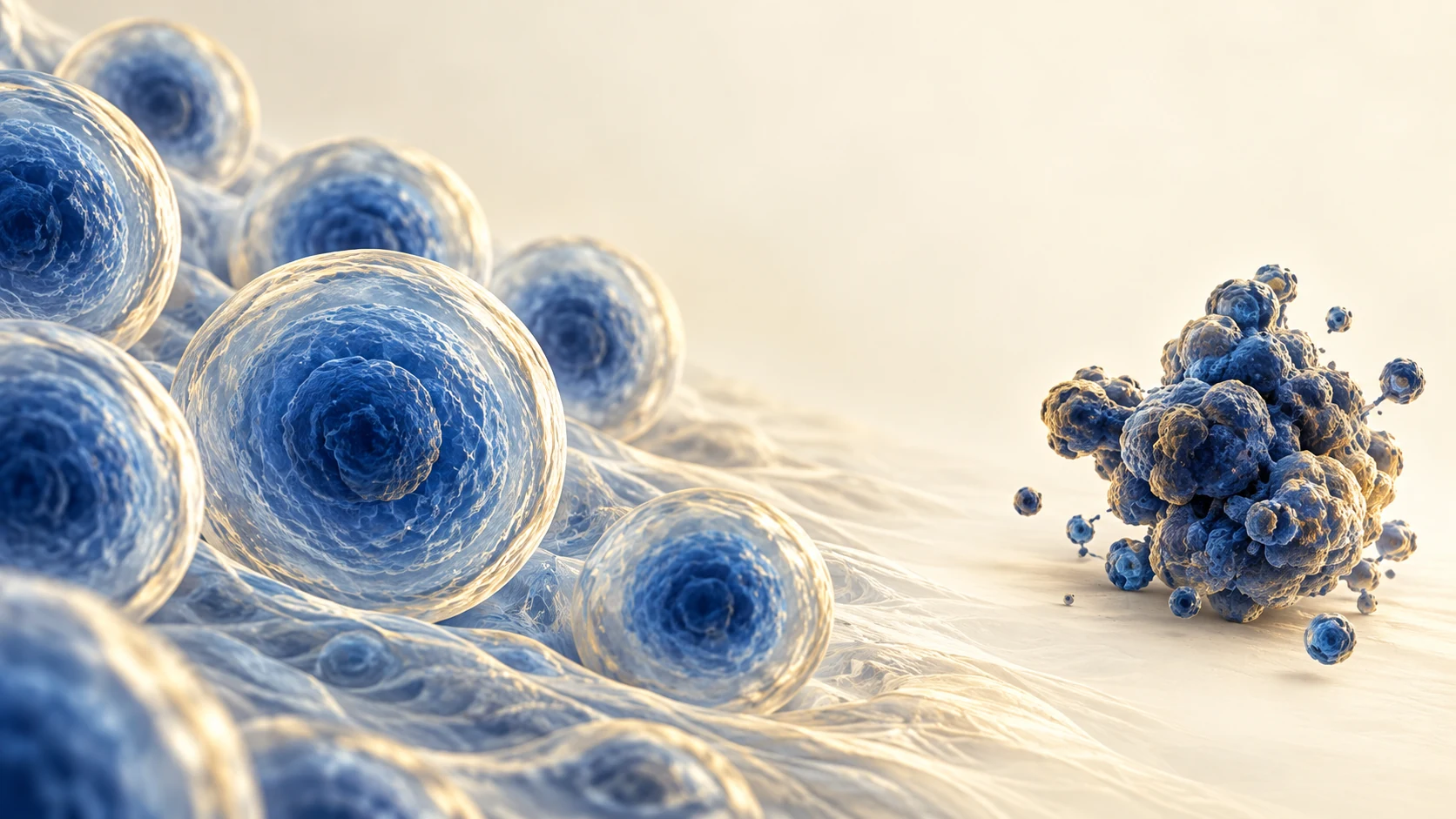
When people fear cancer, the first thing they think of is its high mortality rate. Another major reason is the feeling that cancer can strike anywhere and cannot be guarded against. Today, let us discuss this subject.
In this instalment, we begin with what cancer is. The US National Cancer Institute (NCI, part of the NIH) describes it as a large group of diseases in which abnormal cells multiply uncontrollably and can invade nearby tissues or spread to other parts of the body.
To understand this definition, we first need to introduce how human cells proliferate. An adult’s body consists of an enormous number of cells of many different types. It is no exaggeration to say that the human body’s complexity and precision exceed even our present understanding. Most astonishingly, all these different cells, with their varied functions, arise without exception from the division and multiplication of a single initial fertilized egg.
To make this more tangible, we can compare the human body to a society. Each person corresponds to a cell, except that this society is far larger than the world’s population. Starting with Adam and Eve and their descendants, early humanity slowly found its way and differentiated into different tribes, populations and races. More importantly, a division of labour emerged, beginning with a simple arrangement of men farming and women weaving, and eventually evolving into today’s complex range of occupations.
In the human body, the initial fertilized egg is the equivalent of Adam and Eve, and its proliferation closely resembles the development of human society. The first cells produced by division are almost identical. As development proceeds, however, cells acquire different characteristics and specialize in particular functions. This process of cellular specialization is called differentiation. As with human occupations, the final result is that each individual in the system is responsible for a specific job. An assembly-line-like structure greatly improves the efficiency of the whole system. Behind this highly ordered structure lies an intricate regulatory mechanism: cell proliferation and differentiation are jointly controlled by genetic information and numerous cellular signals. In other words, the human body has practised “family planning” from the very first fertilized egg.
In adults, many cells already perform specific functions. Tissue renewal and repair can depend on the proliferation of stem cells, progenitor cells and certain differentiated cells. Under normal circumstances, these processes are tightly regulated to replace cells that have aged and died or to repair damaged tissue.
We can now return to the definition of cancer.
First, abnormal cell proliferation is an important characteristic of cancer. Disruption of the normal regulation of growth, differentiation or survival allows abnormal cells to accumulate. Different cancers involve different cell origins and changes; they cannot simply be divided into two categories according to whether the original cells could divide. Leukaemia is one example: cells in blood-forming tissue undergo abnormal changes, increasing the number of abnormal blood cells and potentially interfering with normal blood formation.
A second characteristic is a tendency to spread. People often underestimate this feature, yet it is a major reason for cancer’s high mortality rate. One important characteristic of cancer is that abnormal cells can invade neighbouring tissue (local invasion) and may metastasize to other parts of the body. Local invasion and distant metastasis are related but distinct processes. Put simply, cancer cells are not restricted to their original location and can invade other tissues as they grow. Initially, this invasion is very slow. Once a lesion reaches blood vessels and lymphatic vessels, cancer cells can travel rapidly throughout the body via the circulatory system, potentially forming new lesions where conditions are suitable. Metastasis makes treatment more difficult, but available treatments and prognosis vary with the type of cancer, its extent and the individual’s condition. To use a simple analogy, if all extremists permanently remained within fixed countries, human society overall would still be safe even if the local situation were serious. If, however, they travelled around the world using various forms of transport, both their impact and the difficulty of controlling them would be on an entirely different scale.
With that in mind, let us look again at cancer. It is not a single disease but a collective name for a large group of diseases. Even among patients with the same kind of cancer, the cells that become cancerous may differ, as may the reasons for their transformation. The eventual treatment plans may also be very different.
So what exactly causes cancer? In the next instalment, we will discuss its causes.
Additional References
The body text has been restored from a preserved WeChat manuscript with the same title, retaining the original website’s publication record. The old WeChat promotional layout has been removed. Available original illustrations have been restored.
Editorial note: Restoration edited on 2026-10-10: Checked the definition of cancer and invasion/metastasis against NCI sources. Removed an unverified precise cell count, a two-part classification of cancer, and generalized statements about the prognosis of metastatic cancer. The original analogy of the division of labour in society and the author’s views have been retained.