
Historical interview: The following preserves the research experiences and personal views expressed in the original manuscript.
Historical discussion note: The following preserves different personal perspectives on disciplines, gender, and career choices. Ratios, pay, and job forecasts are not verified current statistics. Accounts of overwork or heavy lifting are not recommendations to accept dangerous conditions. Laboratory risks depend on the actual process, and career decisions depend on individual circumstances.
The PhDSciNet Interview Series
Deep Pits, Shallow Pits: How Deep Are Your Prejudices?
What makes you avoid biology, chemistry, environmental science, and materials? Endless online warning posts, or deeply rooted social prejudice?
Hard to find work, experiments that harm your health, round-the-clock labor, and fields that not even a master's or PhD can rescue—these are labels often attached to the so-called pit disciplines.
Behind these complaints, what needs to change: the opportunities in these fields, or the values society places on them?
#1 The pit label and deeply rooted prejudice
Prejudice one: High occupational risks and little financial prospect
Escape the Pit: Society has prejudices about occupations and industries. To be frank, many people think studying finance or law and becoming a white-collar worker in a Lujiazui office makes you superior. A laboratory technician may not seem as prestigious.
Escape the Pit: Let me imagine two Peking University graduates, A and B. A graduates in law and can work towards becoming a lawyer, putting that title on a business card, perhaps initially as an assistant or trainee. They wear a suit and visit impressive places. B graduates in biology and may find a job in a biotechnology company, perhaps as a technician or research assistant spending more time in the lab. My impression is that in 99% of such comparisons the lawyer earns more; this is a conversational impression, not a verified percentage.

One is doing demanding experiments while the other visits high-end social venues, meets clients, and wins business. Parents who judge by money may tell their children to study law rather than biology: look, even someone scoring 600 or 700 in the entrance exam ends up doing that sort of work, so do not choose that field.
In fact, the professions are not inherently higher or lower. It is sad that people habitually measure their worth with money. What we should challenge is society's deep-rooted prejudice against these fields.

Phone Out of Power: Chemistry has different branches, such as computational, organic, inorganic, and synthetic chemistry. They differ, but some certainly involve potential occupational exposure.
I think universities and supervisors have considerable responsibility for laboratory safety. Abroad, I receive emails every year telling me which training I have not completed. If I leave it too long, my supervisor is copied in. That builds awareness.
Some institutions handle incidents strictly. A laboratory once had a laser-safety accident in which a student's cornea was injured, and the lab was closed for a year. One of my supervisors had previously been a student there and later cared deeply about avoiding such consequences, repeatedly stressing appropriate protective eyewear and safety in laser experiments.

Friday: I feel laboratory standards vary considerably among universities, and problems do exist. In master's and doctoral work, safety is closely related to your university and research group.
Different universities and groups control chemicals differently. Whether there is proper safety training can have a major effect. It is reasonable to be concerned. When entering a university or field, take the safety training and follow the procedures strictly; that can help avoid unnecessary harm.
Some work in these fields may involve lower risks. The interviewee gave biomaterials in pharmaceutical engineering as an example of materials they regarded as relatively clean. This does not mean every biomaterial or laboratory process is harmless: assess the particular substances and procedures and follow appropriate protections. Suitable controls can reduce accidents.
Soy-Sauce Tomato: If the person introducing you to experiments fails to teach self-protection and laboratory safety, you can be dangerously fearless—handling anything or putting your nose close to smell it. In my own experience abroad, I completed safety training before entering university, and people checked the lab almost monthly for reagent storage and possible hazards.
In my experience in China, it sometimes felt as though, after a new laboratory was registered with the Public Security Bureau, the later work was left to individuals without anyone continuing to oversee improvements and training. That is why some of the news reports are so upsetting.

Prejudice two: Working every day and night, with no rest
Escape the Pit: I do not think the field itself necessarily creates the pressure; particular positions do. Some assistant-professor roles in China have extraordinarily demanding up-or-out conditions without suitable students or resources. That can leave someone working excessively alone every day. Cases ending in sudden death following overwork are, in my view, extreme individual examples rather than a definition of the field.
Programmers are busy too, especially when companies demand overtime. They may also work around the clock. I believe there were quite a few reports of sudden deaths among programmers some years ago, though people may have forgotten them recently. Whether work is exhausting depends on the particular company and position. I do not think every so-called pit discipline should be defined by these very exceptional extreme cases.
Civil-service jobs are desirable in my hometown because people expect more free time inside the public system. But many civil-servant friends have hardly had a weekend off during the pandemic, doing testing, prevention, or public information work. They are tired too.
We should not define an entire profession casually. We need to look at the actual circumstances.

Friday: Competition in China can indeed be intense. But the media also reports very quickly. When an important researcher in one of these fields dies suddenly, everyone hears about it, and those reports can strengthen an impression.
My impression is that the situation is not as universally frightening as it can seem. These fields may be tiring, but media coverage can also reinforce fixed perceptions.

Soy-Sauce Tomato: Not everyone works around the clock. In chemistry, however, an experimental schedule may sometimes impose it, leaving a difficult choice of accepting the arrangement or changing direction. People seeking promotion from assistant to associate professor, and then professor, also need substantive achievements and may voluntarily work very long hours.
Why do we frequently hear about sudden deaths? One reason, I think, is that we follow this field and focus on those stories.
Another is that notices for competitions or projects sometimes give very little time to prepare. You may be told on Friday to submit everything on Monday. To qualify, you feel that you must put everything into it, even skipping meals and rest.
Such intense demands may occur not just once or twice a year but as often as every month. I feel people generally cannot rest enough. Poor rest and high pressure make me worry that the probability of sudden death is higher than we might imagine.
Whatever your field, I want to call for balance between work and rest. If your body is struggling, stop and relax. Life needs a sustainable rhythm; staying alive is what gives us hope.

Prejudice three: These fields demand physical strength and offer women no future
Escape the Pit: Our field leans towards chemistry and materials. Where I work, there are roughly two and a half to three men for every woman.
I think that imbalance mainly comes from deeply rooted ideas: that these fields demand physical strength and intellectual ability and are naturally unsuitable for women. I disagree. Differences in physical strength do not mean women cannot handle laboratory work, and claims of an inherent intellectual disadvantage are groundless.
To change this, we need to keep explaining that these fields are open to women and men alike. I think women can have good prospects in them if they are genuinely interested.

Friday: There may be a stereotype that research is mainly done by men. Women may also see other attractive options, and those factors can contribute to the imbalance.
But we encourage more women to join. Much of this work is about thinking, not heavy physical labor. We can use protective measures and make arrangements for parental leave and adjustments.
The interview discussed support for women researchers and referred to age limits of under 35 for men and under 40 for women in the NSFC Young Scientists Fund. Those are conditions of a particular program, not all NSFC grants. The interviewee hoped that institutions and funding policies would provide more support, including room for childbirth-related career interruptions. Actual applications must follow the relevant year's program rules.

Soy-Sauce Tomato: At undergraduate and master's levels, I have actually seen more women than men—perhaps two to one or even three to one. At PhD level, the ratio reverses, perhaps one woman for three men. That is what I have observed.
I think childbirth-related pressure may be one reason. Many women may choose employment or family life after a master's degree.
I am the only woman in my lab. Integrating into it can demand substantial sacrifices. For example, I feel unable to take leave every month for my period. If heavy equipment needs moving and no men are present, I may have to move it myself, which is physically demanding. I feel I have to do better than the men to stand out or gain recognition from my supervisor.
Physical circumstances may lead some women to question whether they can continue with demanding experimental work. They may prefer something lighter or more stable and leave the PhD route.

#2 A choice guided by your own priorities
Do not simply follow the crowd: Listen to yourself
Escape the Pit: Do not judge a discipline just by the pit label. These subjects can be fascinating. I think longer study can strengthen competitiveness in many of these fields.
They often involve basic research, whose value comes from innovation rather than repetition. More experience and deeper knowledge can help you make valuable contributions. If you want to become a leading researcher, advanced study is often necessary. I believe we generally agree on that.
Why do fields such as finance and law sometimes turn training into income more quickly? My view is that they do not require as much innovation in the field. Law, for example, offers limited room for innovation in that sense: the legal provisions are already there, and you cannot change them on your own. Learning to interpret and apply them can create economic value for clients. The nature of these fields differs. That helps explain, in my view, why a bachelor's degree in computing, law, or finance may already provide many necessary skills to start creating value and pursuing financial independence.
First, understand your interests. If you really want research, further study can feel like a natural choice. If you have an urgent need for income in the near future, a field with a faster route to earnings may fit better.
If you can accept a lower starting salary, many companies in biology, chemistry, environmental science, or materials also offer routine positions involving substantial repeated work. In my experience, those can be easier to find.
Phone Out of Power: As an undergraduate, you still have many choices. Changing majors can be a good option if you dislike the subject.
If you have graduated but cannot find suitable work, you could consider a practically oriented master's or a qualification. I know physics graduates who gained computing qualifications and then found work. Those are options too.
Even during a PhD, there are alternatives. I know biology students who went into biotechnology companies and did well. Academia employs only a minority, and there are choices at different stages. Preparing early is advisable.

Friday: Let your interests guide you and think clearly about what you want. A major does not necessarily determine your whole life; you can change direction later. University also teaches foundational theory across subjects.
If you later find that you do not like research and do not want a PhD, you can move towards related work and develop the skills you need for employment.

Soy-Sauce Tomato: Why do the figures seem to show more people entering master's and PhD programs these past two years, perhaps at a higher rate than before? I think one reason may be the pandemic. The advertised jobs cannot accommodate all bachelor's graduates, or even all master's graduates. With no alternative and no job, continuing to study can feel like the simplest option and offer psychological reassurance: I am not wasting my time. I feel many people in China follow the prevailing trend.
As the economy gradually recovers, I expect more job opportunities, and hope people think carefully. I have seen major consumer-goods companies, including P&G and Unilever, recruiting management trainees. In the cases I saw, they did not particularly want master's or PhD graduates because they felt those people were already highly specialized. They wanted a blank slate: bachelor's graduates whom they considered more adaptable to training.
So do not close off every other route. Life still has many options.

The pit label shifts: These fields should not bear it forever
Escape the Pit: I think the label will eventually fade. As society progresses, entrenched discrimination against industries should decrease. I am optimistic.
Some industries have already had opportunities. Biology is a striking example: the pandemic brought attention to the sector, including nucleic-acid testing, antigen testing, and vaccines. Everyone could see the increased demand at the time.
I remember around 2000, when an older relative wanted to study mathematics, people thought there would be no jobs. Soon they discovered that mathematical skills were valuable in finance and computing. Mathematics escaped that label first; in my own experience, biology is beginning to do the same.
Lithium batteries are attracting attention too, so chemistry and materials may find new opportunities. Environmental protection, wind energy, and solar energy are also increasingly valued. I think those fields can move beyond the pit label.
Basic research aims to create value and improve human life. If it produces genuinely valuable work, I believe recognition will come eventually.

Friday: I am optimistic too, and these conditions are dynamic. Around 2000, civil and construction engineering were highly sought after as China's building and property sectors expanded. As urbanization has progressed, the construction sector has changed again.
Biology, chemistry, environmental science, and materials may also see greater development opportunities. They are closely connected. As research accumulates, more people join and more companies emerge, students' employment prospects may be supported. As company values rise, incomes in those fields may rise too. People at the top may achieve financial independence first or lead companies to a stock-market listing, helping the entire field develop.
In our own area, siRNA delivery, the first FDA-approved siRNA therapy was patisiran in 2018. Other siRNA medicines followed. The interviewee described this as helping the sector attract investment and raise company valuations; those financial observations are historical impressions, not verified market data or investment advice.
Each smaller area may have a similar turning point. Once it arrives, development may accelerate like an opened floodgate. We will have to see when these fields become comparable with others.

Soy-Sauce Tomato: Whether a field feels like a pit depends partly on policy and the stage of technology. Materials and chemistry helped drive earlier industrial revolutions. Fortunes change; it is unfair to label a field permanently.
The pandemic brought biology to prominence. Other disciplines may also gain opportunities through policy support and technological development.
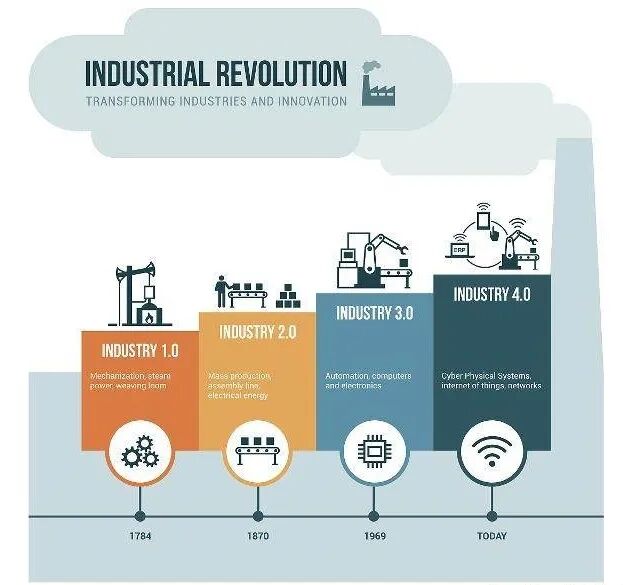
Xu Guangxian, known in China for his work on rare earths, said: The twenty-first century is a century in which information science, synthetic chemistry, and life science flourish together.
In a time of rapid scientific and technological change, new research can improve everyday life. Behind those results lies the sustained exploration of basic science.
If you have the chance to open that door, do not hurry to leave. Perhaps the fascination of science is waiting inside.
Contributors: Escape the Pit (跳出天坑), Phone Out of Power (手机没电), Friday (星期五), Soy-Sauce Tomato (酱油西红柿)
Editors: Calorie (卡路里), Fantuan (饭团)
Audio editor: Honey Peach Oolong (蜜桃乌龙)
Interviewer: Honey Peach Oolong (蜜桃乌龙)
Recording: Honey Peach Oolong (蜜桃乌龙)
This article reflects the author's personal views, not those of this website. The original manuscript credits images to the internet and requests contact for removal if they infringe rights.
Restoration revision, 2026-10-10: The full discussion and credits are retained. The funding age limits are scoped to the relevant program, biomaterial safety is qualified, the 2018 siRNA milestone is checked, and employment, gender ratios, and industry forecasts remain the interviewees' historical perspectives.
Supplementary references
Sources and editorial history
Restored from a complete historical article exported from the PhDSciNet Official Account.
Editorial revision: Restoration revision, 2026-10-10: The full discussion and credits are retained. The funding age limits are scoped to the relevant program, biomaterial safety is qualified, the 2018 siRNA milestone is checked, and employment, gender ratios, and industry forecasts remain the interviewees' historical perspectives.