

Historical interview: The following preserves the research experiences and personal views expressed in the original manuscript.
Research restoration note: This historical interview describes YY's original research project. Experimental formulations and findings are not guarantees about marketed products or instructions for handling food-processing by-products at home.
The PhDSciNet Interview Series
A Useful Fact: No Additives Does Not Necessarily Mean Healthier
What comes to mind when you hear food additives—citric acid, sodium benzoate, potassium sorbate? Does an ingredient list look like a minefield? To appeal to consumers who fear additives, manufacturers have introduced products marketed as healthy and additive-free. Even at higher prices, consumers may willingly pay for health and naturalness.
But are food additives really something to fear?
The science communicator's background: A PhD researcher in food science at the University of Guelph, Canada. Research interest: Apple pomace as a functional ingredient in yogurt.
#1 When fruit meets yogurt
The fruit in yogurt
Commercial yogurt may contain whole fruit or fruit preparations. We wanted to test whether a relatively coarse raw material could serve a functional purpose in yogurt. Among dairy products, we thought yogurt was especially suitable and needed this approach, since many commercial yogurts contain thickeners that some consumers prefer to avoid.
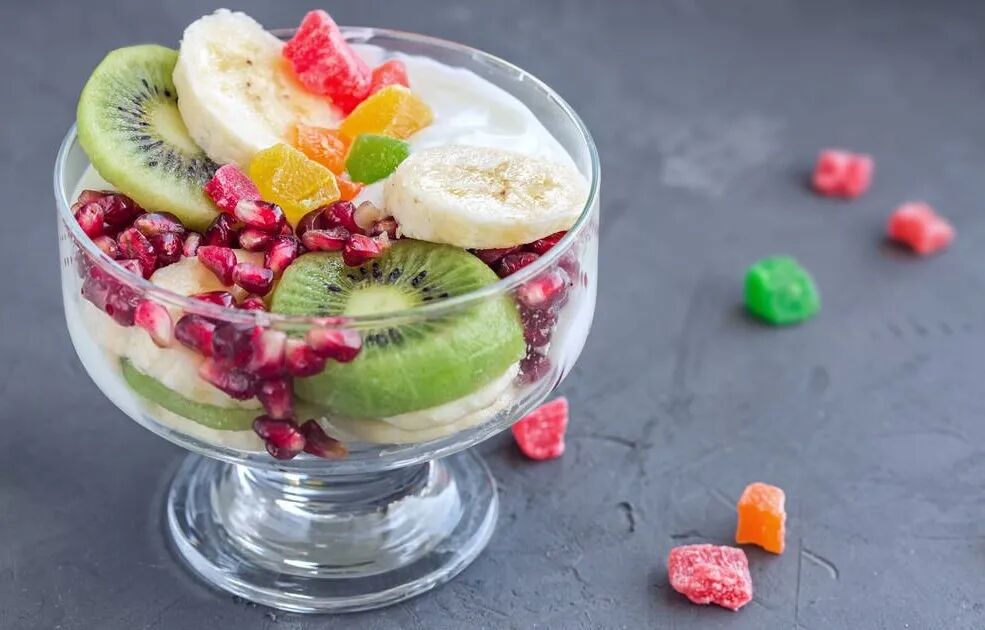
Fruit residues that can turn waste into a resource
Fruit residues, such as cranberry or pomegranate pomace, often contain substantial polyphenols and dietary fiber, including soluble components. Many soluble fibers can function as hydrocolloids, thickening or forming gels. Fruit pomace therefore has potential as a food ingredient derived from natural materials.
I have seen research using orange, dragon-fruit, papaya, and other Southeast Asian fruit residues, but much of it was exploratory rather than large-scale production. From what I had seen at the time, orange and apple residues seemed among the more feasible options for scaling up.
For Canada, using apples seems more feasible. Canada produces apples, and apple-juice processing generates substantial by-products that have not always been fully used, often going into animal feed. The original interview's claims about domestic supply and Canada's global production ranking were not verified here and are not presented as current statistics.
Apple pomace from juice production may have potential as a food ingredient because it contains dietary fiber. But a processing area described as aseptic does not by itself make every by-product ready to eat: the raw material, hygienic handling, treatment, and final food safety still need assessment. Investigating pomace as a natural stabilizer fits interest in clean labels and reusing by-products.
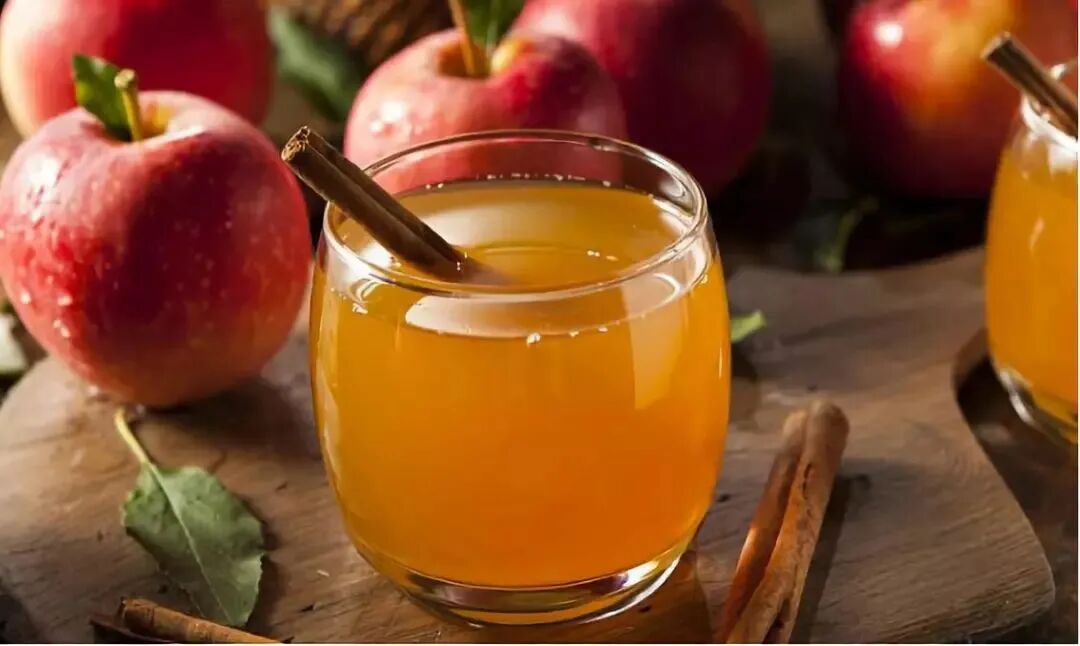
Apple pomace—our choice!
First, I think this gives agricultural and fruit-processing by-products another use. It offers processors of apple juice, cider vinegar, and cider more opportunities to reuse material that would otherwise be wasted.
Second, apple pomace offers yogurt companies an alternative ingredient to explore. It could also be used in baked products, such as muffins and loaf bread, to increase their fiber content.
This was actually my master's project. I had previously interned in a dairy-processing lab and was interested in many aspects of dairy products. My master's lab also worked on dairy fermentation and microbiology. When I joined, one topic was improving yogurt's functionality and stability during storage, and that led us to consider apple pomace.

Use the varieties together!
We did not favor a particular variety. The material came from a Canadian juice producer and included the residues from all the apple varieties they processed. Selecting only one variety would reduce the feasibility of using the whole by-product stream. That was part of our question: how can we use the material with minimal processing and without excessive sorting by variety?
It was an exploratory experiment. Turning apple pomace into a mass-produced ingredient still requires further processing and development.

#2 Apple pomace: A promising candidate
Make use of the fruit and reduce waste
Apple pomace contains insoluble fiber. When ground, these fibers can work with soluble fiber to help absorb water and stabilize a structure. Which parts of the material are suitable for food use still depends on processing and safety assessment; this should not be read as an instruction to eat every part of an apple without distinction.
What we mainly wanted to use was the dietary fiber and polyphenols. Some polyphenols are associated with plant cell-wall components, which can make separation difficult. This can help explain why pomace, especially peel-containing material, retains polyphenols. Their distribution and whether they are bound or extractable vary; it is not the case that nearly all apple polyphenols are always bound to fiber. Further disruption and extraction can change how they are recovered.
How did we do it?
Apples brown, and browning can change their polyphenols. We first used blanching—brief treatment in boiling water—to reduce the activity of enzymes involved in browning. Blanching is not the same as complete sterilization. We then froze, dried, and ground the material into fine powder, around 265 micrometers in size.
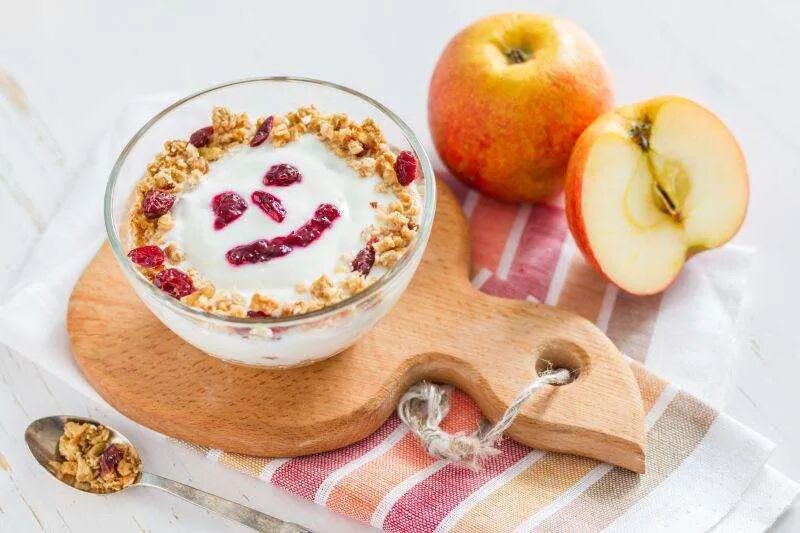
We did not want excessive processing, focusing on drying and grinding. We then separated the powder into different size fractions and tested its properties. We found that it could thicken, was mildly acidic, and contained a certain amount of polyphenols. Those properties made it a competitive candidate among naturally derived ingredients.
Our aim was to improve yogurt's functionality. We first added pomace to milk and ran a series of tests, finding some thickening without excessive premature coagulation of the milk proteins.
We then tested three types of yogurt. In our experiments, one finding was a shorter fermentation time; another was greater viscosity and body. Ordinary non-Greek yogurt can be relatively soft, and the pomace gave a useful thickening effect.
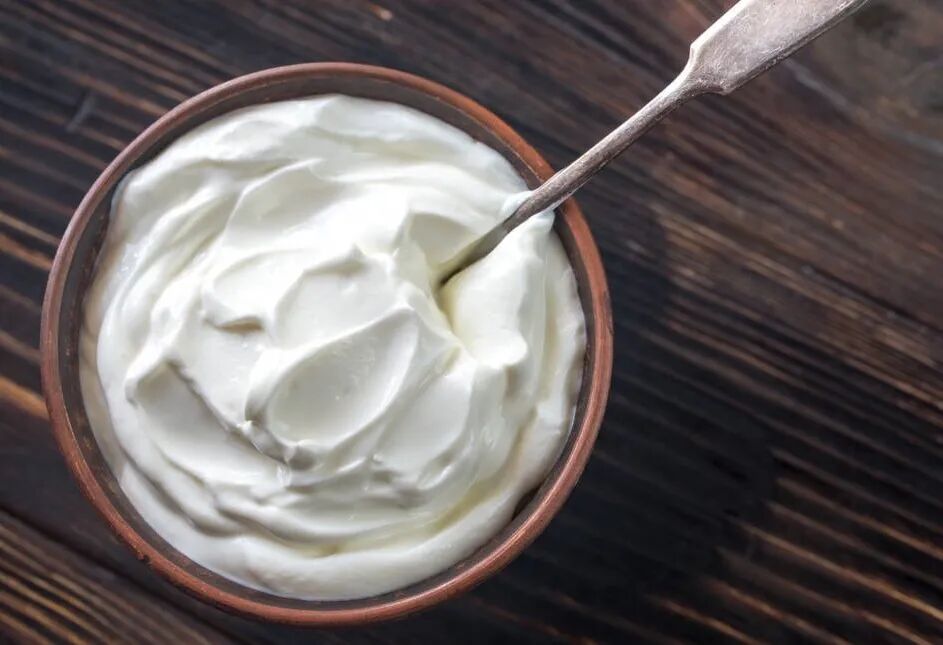
Exploring combinations with different yogurts
There are many yogurt products, with major categories including set yogurt, stirred yogurt, and yogurt drinks. Other products, such as Greek-style yogurt, can be developed through differences in cultures, milk composition, protein concentration, and processing.
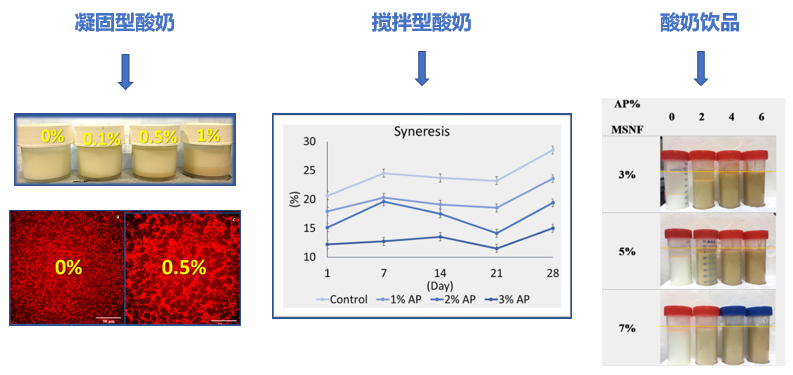
For set yogurt, we added apple pomace to the liquid milk mixture, mixed it evenly, and then added cultures for fermentation. We monitored the process with rheological measurements to detect gel formation. A pH around 4.6 is close to the isoelectric point of casein, and acidification helps the yogurt gel form. In our experiment, adding pomace shortened fermentation time.
For stirred yogurt, we fermented the milk first and added the pomace powder during stirring afterwards.
For yogurt drinks, we also fermented the yogurt first, then added pomace powder and continued processing. Those were our three different approaches. Adding fruit or fruit preparations to these types of commercial yogurt also follows corresponding processing routes.
#3 A combination with potential: More than the sum of its parts
A more stable structure
We used texture analysis to assess properties such as viscosity, consistency, adhesiveness, uniformity, and gel firmness. Different yogurt-making methods showed improvements after pomace was added. In set yogurt, for example, its particular fermentation process meant that adding 0.5% improved gel consistency in our tests. Pomace can affect protein structures differently in different gel networks.
Yogurt drinks are more diluted systems and may need stabilizers to limit separation. In our experiments, adding some pomace powder increased viscosity and helped keep the system more stable. This effect should not be explained simply by saying that apples are mildly acidic: fiber, particle characteristics, and interactions with proteins also matter. Possible nutritional and cost benefits still need evaluation for a particular product.
Improving stability during storage
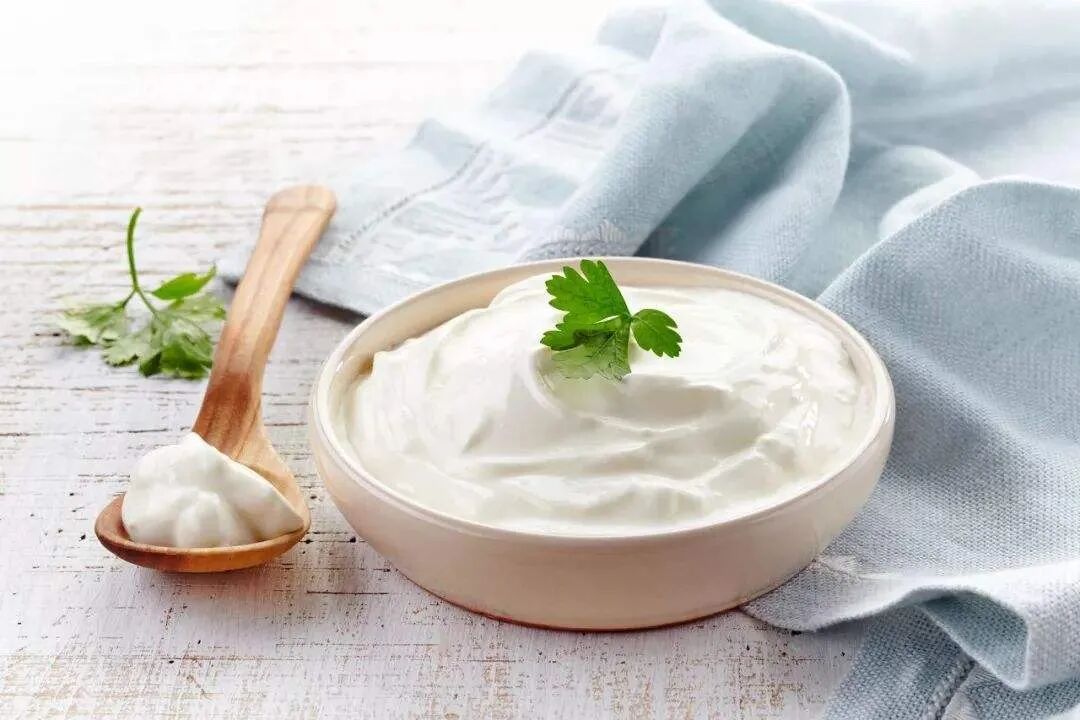
Another finding in our experiment was improved stability during storage, particularly less whey separation. That does not by itself demonstrate a longer microbiologically safe shelf life. Establishing a product's shelf life requires suitable safety and quality assessment.
You may have noticed a watery layer on yogurt after stirring or storage and wondered whether it had spoiled. It may simply be whey separation: the protein gel changes during storage and holds water less effectively, so liquid collects on the surface.
Whey separation by itself does not mean spoilage, and stirring can redistribute the liquid. But this appearance alone cannot prove that the yogurt is safe. Follow storage and use-by instructions, and do not eat a product showing signs of spoilage or mishandling. In our experiment, the pomace's fiber helped retain water and support the structure, reducing separation during storage.

Food additives can modify texture and help maintain quality. Their safety depends on the substance, amount, intended use, and suitable assessment; natural origin alone does not guarantee that a food is safer or healthier. What possibilities might combining these approaches offer?
Apple pomace is one candidate. As an ingredient derived from fruit-processing by-products, it offers a route to more sustainable material use while meeting some processing needs and consumer preferences. Those possibilities still require proper product development and safety evaluation.
The combination of pomace and yogurt looked promising in the study—potentially more than the sum of its parts. It is a direction worth exploring in food-ingredient research, rather than a guarantee that every such product will be healthier.
Science communicator: YY
Editors: Fantuan (饭团), Calorie (卡路里)
Audio editor: Honey Peach Oolong (蜜桃乌龙)
Interviewers: Fantuan (饭团), Calorie (卡路里)
Recording: Honey Peach Oolong (蜜桃乌龙)
This article reflects the author's personal views, not those of this website. The original manuscript credits images to the internet and requests contact for removal if they infringe rights.
Restoration revision, 2026-10-10: The full research account and credits are retained. Corrections address claims that an aseptic workplace automatically makes by-products edible, that blanching is sterilization, that natural means healthy, that whey separation proves safety, and that improved physical stability establishes a safe shelf life. Findings are limited to the original experiments described by the interviewee.
Supplementary references
- FDA: Food Additives and Safety Evaluation
- FDA: Food Chemicals and Amounts
- National Center for Home Food Preservation: Blanching and Enzyme Inactivation
Sources and editorial history
Restored from a complete historical article exported from the PhDSciNet Official Account.
Editorial revision: Restoration revision, 2026-10-10: The full research account and credits are retained. Corrections address claims that an aseptic workplace automatically makes by-products edible, that blanching is sterilization, that natural means healthy, that whey separation proves safety, and that improved physical stability establishes a safe shelf life. Findings are limited to the original experiments described by the interviewee.